
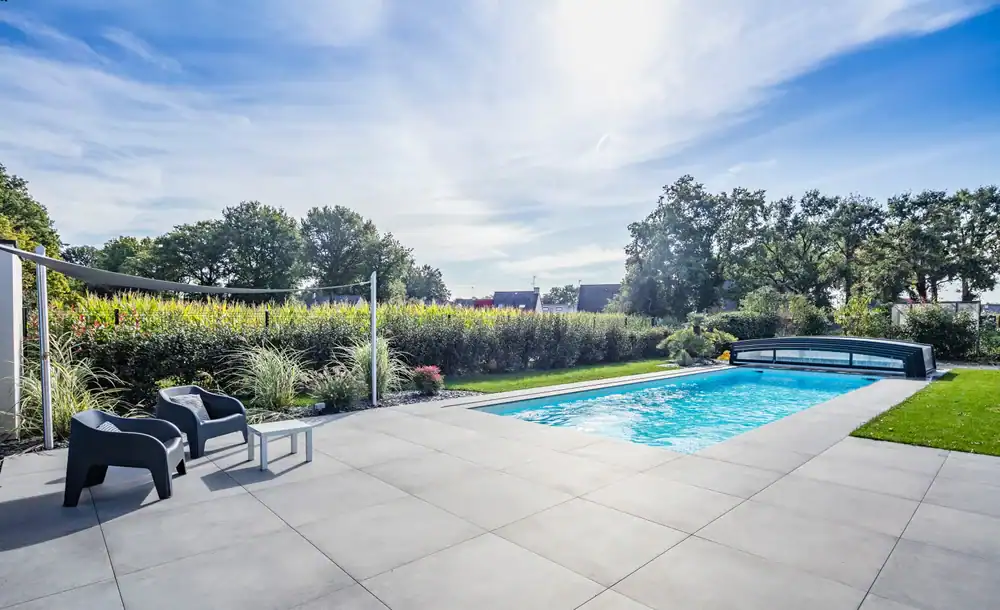

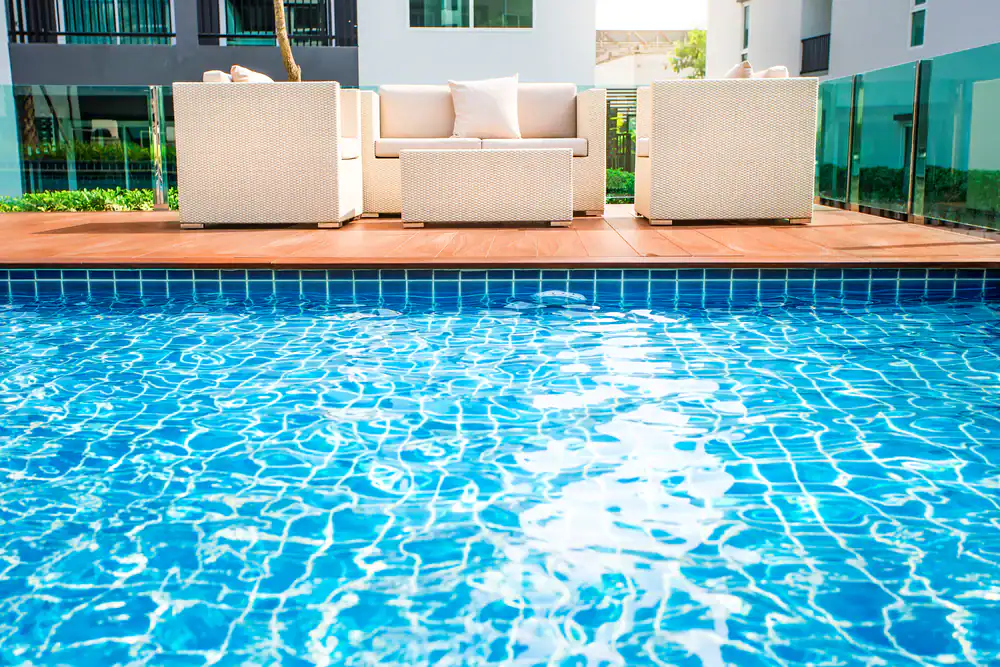
Your pool should be where memories are made, not where accidents happen. When your current deck is cracked, uneven, or dangerously slippery when wet, every pool day becomes a worry instead of pure enjoyment.
The right pool patio pavers change everything. You get a surface that stays safe even when soaked, drainage that actually works, and materials built to handle whatever Long Island weather throws at them. No more standing water, no more hot spots that burn bare feet, and definitely no more wondering if someone’s going to slip.
Your family deserves a pool deck that works as hard as it looks good. Professional installation with proper base preparation and drainage design means you’re investing in years of worry-free pool time, not just another project that’ll need fixing next season.
Since 2003, we’ve been the go-to choice for homeowners throughout Suffolk and Nassau Counties who want pool projects done right the first time. We’ve completed over 200 successful installations, and our track record speaks for itself.
What sets us apart isn’t just experience—it’s how we approach every job. When other contractors give you a quick estimate and disappear, we take time to understand your specific drainage challenges, your family’s safety concerns, and how you actually use your pool space. Our owner stays involved in every project, ensuring the same attention to detail that’s earned us loyal customers for over twenty years.
Bridgehampton’s unique coastal conditions require contractors who understand how salt air, freeze-thaw cycles, and heavy summer use affect pool deck materials. We’ve seen what works and what fails, and we only recommend solutions that’ll still look great and perform safely years down the road.
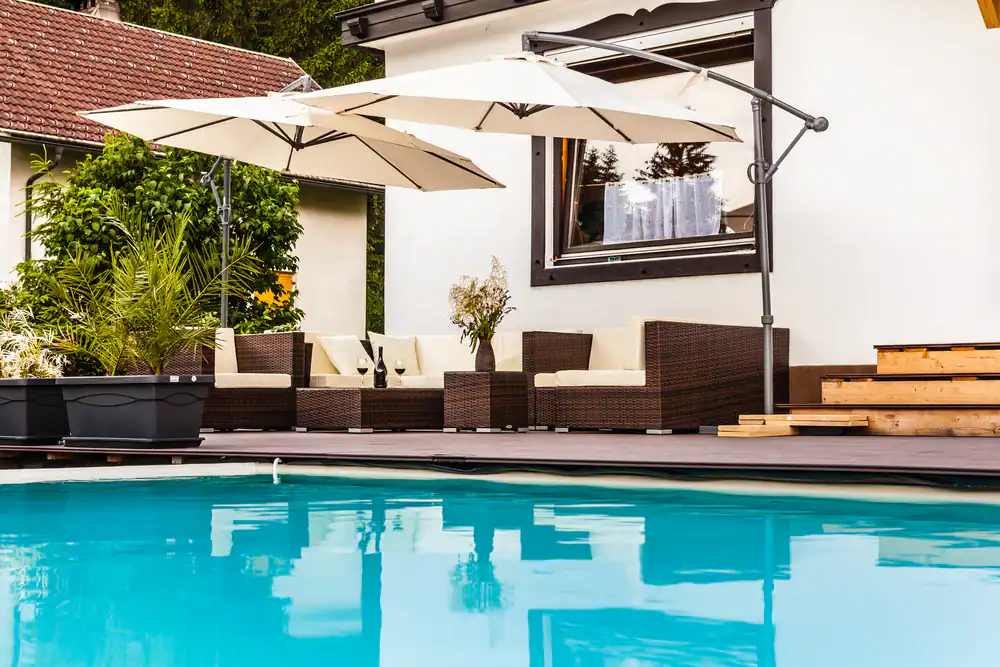
Every successful pool deck starts with understanding what went wrong with your current setup. We inspect your existing deck, identify drainage problems, and measure how water currently flows around your pool area. This isn’t about covering up issues—it’s about fixing them permanently.
Next comes proper base preparation. We remove failed materials, grade for correct drainage slope, and install a compacted base that won’t shift or settle. This foundation work might not be glamorous, but it’s what separates installations that last from those that fail within a few seasons.
Then we install your chosen pavers with precise spacing and proper jointing materials. Every piece is level, every joint is sealed correctly, and water flows exactly where it should—away from your pool and toward drainage areas. We finish by testing the entire surface and walking you through maintenance that’ll keep everything performing perfectly.
The whole process typically takes 3-5 days depending on your deck size, and you’ll have a surface that’s ready for immediate use once we’re done.
Ready to get started?
Your pool deck needs to handle everything from kids running around soaking wet to adults carrying drinks and food. That means slip-resistance that works even when surfaces are completely saturated, not just when they’re damp.
We specialize in textured pavers and natural stone options that provide reliable grip without being rough on bare feet. Materials like travertine and specially finished concrete pavers give you the traction you need while staying comfortable for lounging and walking. These aren’t just safer—they stay cooler under direct sunlight, which matters during those blazing Long Island summer days.
Proper drainage integration is just as crucial as surface texture. We install slight slopes and drainage channels that move water away from walking surfaces quickly. No more puddles that turn into slip hazards, and no more water sitting against your pool’s structure where it can cause long-term damage.
For Bridgehampton’s coastal environment, we also focus on materials that resist salt air corrosion and handle freeze-thaw cycles without cracking. Your investment needs to perform reliably year after year, not just look good for the first season.
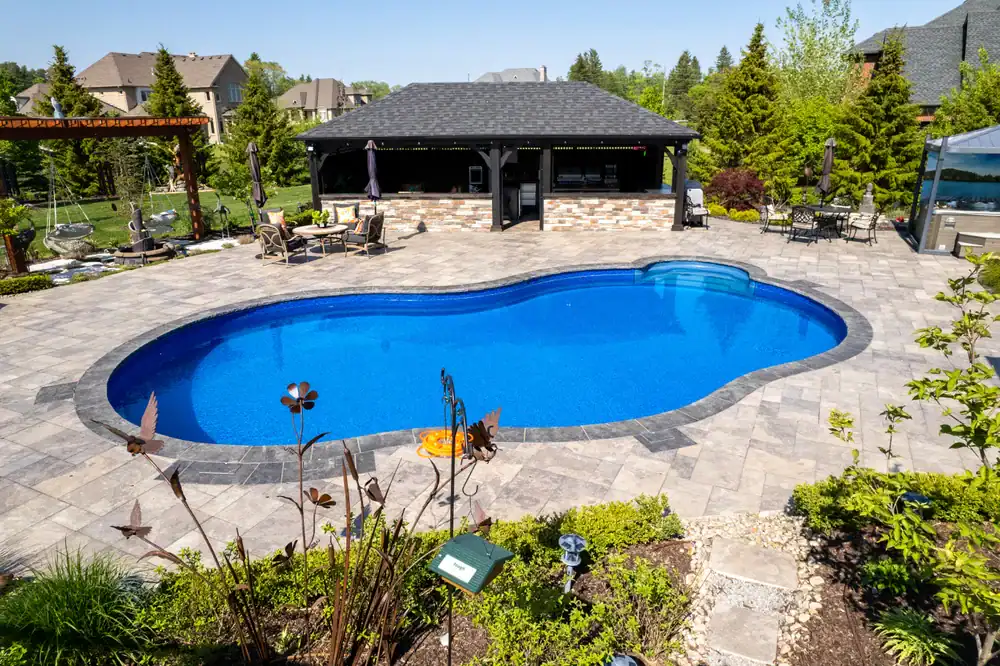
Pool deck pavers offer several safety advantages over poured concrete, especially around water. The biggest difference is slip resistance—pavers can be manufactured or selected with textured surfaces that provide reliable grip even when completely wet, while smooth concrete becomes dangerously slippery.
Pavers also handle thermal expansion better than large concrete slabs. Instead of developing cracks that create trip hazards, individual pavers can move slightly with temperature changes without compromising the surface integrity. This is particularly important in Long Island’s climate where we see significant temperature swings.
The jointing system between pavers also provides better drainage than solid concrete. Water moves through and around pavers more effectively, reducing standing water that creates slip hazards and preventing the pooling that can lead to algae growth and staining.
Proper drainage starts with correct grading during installation. We create a slight slope away from the pool—typically about 1/4 inch per foot—so water naturally flows toward designated drainage areas rather than pooling on the deck surface or against the pool structure.
We also install drainage channels or deck drains at strategic locations, especially in areas where natural slope isn’t sufficient. These systems capture water and direct it away from both the pool and your home’s foundation. The key is planning these drainage paths before installation begins, not trying to fix problems afterward.
For pool coping installation, we pay special attention to the transition between the pool edge and deck surface. Proper caulking and sealing prevent water from getting behind the pool structure, while the coping itself is angled to direct splash water back into the pool or toward drainage areas. This integrated approach prevents the water infiltration issues that cause expensive structural problems down the road.
Long Island’s climate demands materials that can handle freeze-thaw cycles, salt air exposure, and intense summer heat without failing. Natural stone options like travertine and limestone perform exceptionally well because they’re naturally slip-resistant and stay cooler underfoot than concrete alternatives.
High-quality concrete pavers are also excellent choices, especially those manufactured with air entrainment that helps them resist freeze damage. Brands like Cambridge and Unilock engineer their products specifically for northeastern climates and offer warranties that back up their performance claims.
We avoid softer materials that absorb too much moisture, as these can crack during freeze cycles. We also recommend sealing certain stone types to enhance their resistance to staining and moisture penetration, particularly important in coastal areas like Bridgehampton where salt exposure is constant.
Most pool deck paver installations take 3-5 working days, depending on the size of your deck and complexity of the drainage requirements. Smaller decks around above-ground pools might be completed in 2-3 days, while large in-ground pool surrounds with multiple elevation changes can take a full week.
The timeline includes proper base preparation, which is crucial but time-consuming. We don’t rush this phase because inadequate base work is the primary cause of paver failure. Weather can also affect scheduling—we won’t install pavers in rain or when freezing temperatures are forecast, as this compromises the installation quality.
We provide detailed timeline estimates during our initial consultation and keep you informed of progress throughout the project. Most homeowners are surprised how quickly the transformation happens once installation begins, but the key is allowing adequate time for each phase to be completed properly.
In many cases, yes—this is actually one of the major advantages of paver systems over poured concrete. Individual pavers can be removed and replaced without disturbing the surrounding surface, making repairs much more cost-effective and less disruptive.
However, successful partial replacement depends on several factors. If the original installation had proper base preparation and the damage is limited to surface pavers, replacement is straightforward. But if underlying drainage or base issues caused the damage, we need to address those problems to prevent recurring failures.
We also need to consider paver availability—if your original pavers are discontinued or significantly faded, perfect color matching might not be possible. During our assessment, we’ll evaluate whether partial replacement makes sense or if a complete renovation would provide better long-term value and appearance.
Pool deck pavers are relatively low-maintenance compared to other decking options, but some routine care keeps them performing and looking their best. Regular cleaning with a pressure washer or stiff brush removes algae, dirt, and organic stains that can make surfaces slippery.
Joint sand will gradually wash out over time, especially in the first year after installation. We recommend checking and refreshing joint sand annually, and resealing the entire surface every 2-3 years depending on exposure and use. This prevents weed growth and maintains the structural integrity of the paver system.
For natural stone pavers, periodic sealing helps resist staining and makes routine cleaning easier. We provide specific maintenance guidelines based on your chosen materials and can handle ongoing maintenance if you prefer professional service. The key is staying ahead of minor issues rather than waiting for problems to develop.
Other Services we provide in Bridgehampton