
Your driveway looked great when it was installed. Then a few winters hit, and now you’re dealing with cracks, puddles that won’t drain, or pavers that have shifted out of place.
It’s not just annoying. It’s embarrassing when guests pull up, and it’s costing you money every time you patch it instead of fixing the real issue.
The problem isn’t always the material. It’s how it was installed. Suffolk County’s sandy soil and high water table require specific base preparation and drainage work that most contractors skip because it takes more time and costs them more money upfront.
When you work with a driveway installation company in Aquebogue that understands North Fork conditions, you get proper foundation work, the right materials for coastal weather, and a driveway that actually lasts. No more emergency repairs. No more standing water. Just a clean, solid surface that holds up year after year.
Ageless Chimney started in 2006, but we’ve been serving Long Island homeowners with masonry work since 2003. That’s over two decades of working on North Fork properties, learning what holds up and what doesn’t.
Every job has an owner on site. Not a crew you’ll never see again—an actual owner who’s accountable for the work. We’re licensed, insured, and bonded, and we’ve worked on over 200 homes across Suffolk County.
Aquebogue homeowners deal with specific challenges: longer driveways, coastal weather, high water tables, and soil that shifts if the base isn’t done right. We’ve seen what happens when contractors rush through prep work, and we’ve fixed plenty of those jobs. You’re not getting a sales pitch from us—you’re getting straight answers about what your driveway actually needs.
First, we assess your current driveway and the soil underneath. If there’s poor drainage or an inadequate base, we address that before anything else goes down. Skipping this step is why driveways fail early.
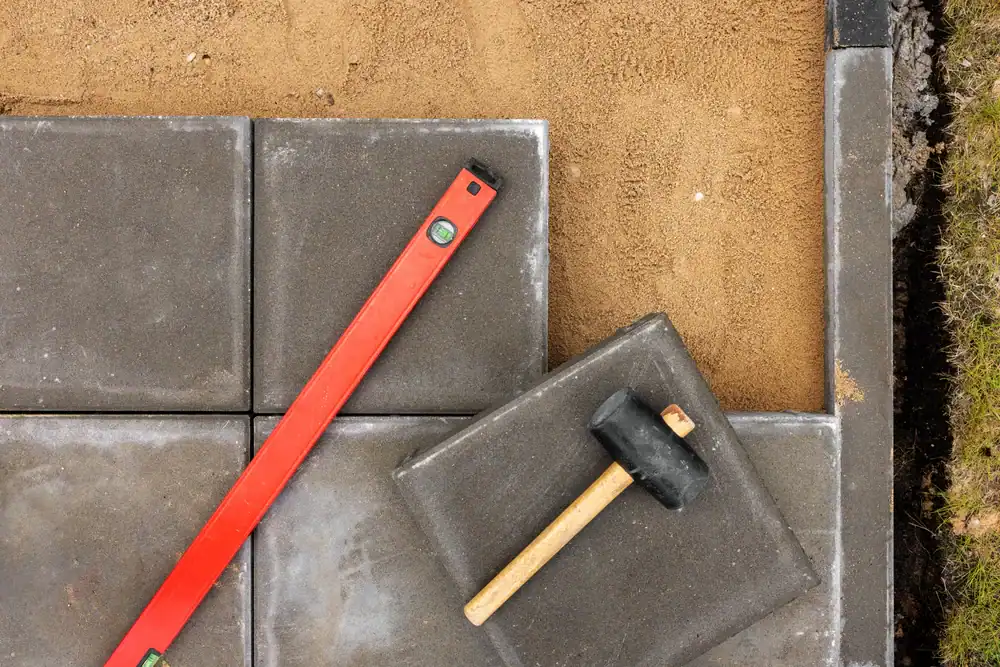
Next, we excavate and prepare a proper foundation. For paver driveways, that means three layers: a reinforced concrete or compacted aggregate base, a mortar bed, and the pavers themselves, all mortar-jointed on top. The entire assembly is about a foot thick on undisturbed soil. For concrete or asphalt driveways, the base work is just as critical.
Then we install your chosen material—whether that’s pavers, concrete, or asphalt—and add any Belgian block borders or cobblestone aprons you want for edging and curb appeal. Belgian blocks create a solid barrier that prevents your driveway from crumbling at the edges, which is especially important on longer Aquebogue driveways.
Finally, we make sure drainage is handled correctly. Even small puddles that sit for hours after rain mean the slope or base wasn’t done right. Water penetration during freeze-thaw cycles creates a pumping action that undermines everything, so we build in proper runoff from the start.
Ready to get started?
You get a full assessment of your property’s drainage, soil conditions, and any existing damage before we start. No surprises halfway through the job.
You get proper base preparation that’s built for Suffolk County’s soil and water table. That’s the difference between a driveway that lasts 10 years and one that lasts 30.
You get material options that make sense for North Fork weather. Pavers offer design flexibility and easier repairs down the line. Concrete gives you a clean, modern look with lower maintenance. Belgian block edging adds durability and stops erosion before it starts. We’ll walk through what works best for your property and your budget.
Aquebogue properties often feature longer driveways and more exposure to coastal conditions than other parts of Long Island. That means your driveway needs to handle more wear, more water, and more freeze-thaw cycles. We account for that in every install—choosing materials that resist salt air, building in drainage solutions for heavy storms, and making sure the base won’t shift when the ground freezes.
You also get a free estimate, and we’ll beat any written estimate you bring us. An owner is on every job, so if something needs adjusting or you have a question, you’re talking to someone who can actually make decisions.
It depends on the material and how well the base was prepared. A concrete driveway installation in Suffolk County should last 25 to 30 years if the foundation work is done correctly. Asphalt typically lasts 15 to 20 years with occasional resealing. Paver driveways can last 30 years or more because individual pavers can be replaced if one cracks, and they handle freeze-thaw cycles better than solid surfaces.
The real variable is the base. If a contractor skips proper excavation or doesn’t account for drainage, even the best materials will fail early. Suffolk County’s sandy soil and high water table mean you need a thicker, more stable base than you’d use in other parts of the country. That’s not optional—it’s the difference between a driveway that holds up and one that starts sinking or cracking within five years.
North Fork weather accelerates wear. Coastal humidity, salt air, and constant freeze-thaw cycles all work against your driveway. Materials need to resist not just temperature swings, but also moisture penetration and corrosion. That’s why we choose specific products for this area and why proper drainage is non-negotiable.
Water is the main culprit. When water gets into cracks or under the surface, it expands when it freezes. That expansion creates pressure that breaks apart concrete, shifts pavers, and undermines the base. Then it thaws, and the cycle repeats. Over time, that freeze-thaw action destroys driveways that weren’t built to handle it.
Poor drainage makes it worse. If water pools on your driveway or doesn’t run off properly, it’s constantly working its way underneath. Suffolk County’s high water table means moisture is always present, so if the base wasn’t compacted correctly or the slope is off, you’re going to see problems fast.
Inadequate base preparation is the other major issue. Some contractors use too little aggregate, don’t compact it enough, or skip the reinforced base layer entirely to save time. When the ground freezes and shifts, there’s nothing solid holding the driveway in place. You end up with sinking sections, cracks, and a surface that deteriorates way faster than it should.
Fixing these problems after the fact is expensive because you’re essentially rebuilding the driveway. That’s why getting the base and drainage right the first time matters so much. It’s not the exciting part of the job, but it’s the part that determines whether your driveway lasts 10 years or 30.
Each material has trade-offs depending on what you care about most. Pavers give you the most design flexibility and are easier to repair because you can replace individual pieces without redoing the whole driveway. They handle freeze-thaw cycles well and resist cracking better than solid surfaces. The downside is they cost more upfront and require occasional re-leveling if the base shifts.
Concrete gives you a clean, modern look with less maintenance over time. It lasts longer than asphalt and doesn’t need resealing every few years. The trade-off is that when concrete cracks, repairs are more visible and harder to blend in. It also costs more than asphalt but less than pavers in most cases.
Asphalt is the most affordable option and works well if you’re on a budget. It’s easier to install and repair, but it requires resealing every 3 to 5 years to protect against water damage and UV wear. In North Fork’s coastal climate, asphalt breaks down faster than other materials because of salt air and temperature swings.
For Aquebogue properties, we usually recommend pavers or concrete because they hold up better long-term in this climate. Belgian block borders work with any material and add a layer of protection that keeps edges from crumbling. If you’re not sure what makes sense for your property, we’ll walk through the pros and cons based on your driveway’s size, slope, and how much traffic it gets.
It depends on what’s causing the problem. If the base has settled unevenly or water has eroded the foundation, you need to address that before fixing the surface. Sometimes that means lifting the existing material, re-grading and compacting the base, and reinstalling everything properly. Other times, the damage is too extensive and a full replacement makes more sense.
For paver driveways, sinking sections can often be lifted, the base re-leveled and compacted, and the pavers reinstalled. That’s one of the big advantages of pavers—they’re modular, so repairs don’t require tearing out the entire driveway. Concrete and asphalt are harder to fix because you can’t just lift a section. You either grind it down, patch it, or replace the whole slab or section.
Sinking driveway repair in Aquebogue often involves drainage work too. If water isn’t running off properly, it’s going to keep eroding the base no matter how many times you re-level the surface. We look at where water is pooling, where it’s supposed to go, and whether the slope needs adjusting. Fixing drainage at the same time you fix the sinking prevents the same problem from coming back.
The cost of repair versus replacement depends on how much of the driveway is affected and whether the base is salvageable. If it’s just one section, repair usually makes sense. If the whole driveway is sinking or the base was never done right to begin with, replacement is often the better long-term investment.
Belgian blocks create a solid edge that keeps your driveway from crumbling over time. Without a border, asphalt and concrete edges break apart from traffic, weather, and ground movement. Pavers can shift outward if there’s nothing holding them in place. Belgian blocks act as a permanent barrier that contains everything and prevents erosion.
They’re made from granite, so they don’t crack, fade, or break down like other edging materials. They handle freeze-thaw cycles, salt exposure, and heavy traffic without deteriorating. That makes them ideal for North Fork driveways where coastal weather accelerates wear on everything else.
Belgian block borders also improve drainage by creating a defined edge where water can run off instead of pooling along the sides of your driveway. On longer Aquebogue driveways, that’s especially important because you need water moving away from the surface, not sitting there and seeping into the base.
From a curb appeal standpoint, they add a finished, high-end look that makes your driveway stand out. The rugged split faces and clean lines give you that classic, polished appearance that fits well with North Fork’s traditional home styles. They work with any driveway material—pavers, concrete, or asphalt—and they’re one of those upgrades that pays off both in durability and resale value.
Yes. We’re one of the few contractors in Suffolk County that offers true 24-hour emergency service. If a section of your driveway collapses, a major crack opens up, or drainage failure causes flooding, we can get someone out to assess the damage and stabilize the situation quickly.
Most driveway problems don’t happen overnight—they build up over time. But when they do reach a critical point, they tend to get worse fast, especially during storms or freeze-thaw cycles. If water is actively eroding your base or a sinking section is making your driveway unsafe, waiting weeks for a repair appointment isn’t an option.
Emergency repairs focus on stopping further damage and making the area safe to use while we plan a permanent fix. That might mean temporarily filling a collapsed section, redirecting drainage, or stabilizing pavers that have shifted. Once the immediate problem is handled, we’ll walk you through what needs to happen long-term to prevent it from happening again.
Not every driveway issue requires emergency service, but if you’re dealing with something that’s getting worse by the day or making your property unsafe, don’t wait. Give us a call, and we’ll let you know whether it needs immediate attention or if it can be scheduled normally.
Other Services we provide in Aquebogue