

You’re tired of watching your driveway deteriorate. The salt air eats away at the surface. Winter freeze-thaw cycles create new cracks every season. Water pools in the wrong spots because the drainage was never done right in the first place.
Here’s what changes: proper base preparation that accounts for Long Island’s soil conditions. Materials selected specifically for coastal exposure. Drainage planned before we break ground, not after problems show up.
Your driveway stops being a maintenance problem. It handles the temperature swings from below freezing to 90-plus degrees without developing stress cracks. When you track road salt home in winter, it sits on the surface instead of working its way into the material and breaking it down from the inside.
We’ve worked on East Hampton properties long enough to understand what fails and why. The village homes near Main Street have different drainage challenges than oceanfront properties. The seasonal temperature swings and salt exposure aren’t just talking points—they’re factors we account for in every installation.
You’re not getting a crew that learned about coastal construction from a manual. We’ve seen what happens when contractors use standard techniques in a non-standard environment. The cracked driveways, the drainage failures, the premature deterioration—we fix those problems regularly.
Our approach is straightforward: assess your property’s specific conditions, recommend what actually makes sense for your situation, and install it correctly the first time.
We start with your property’s drainage patterns and soil conditions. Most driveway problems trace back to water that wasn’t managed correctly from day one. We map where water flows during heavy rain and design the base preparation to handle it.
Next comes material selection. If you’re near the ocean, certain materials will outlast others by decades. We walk through the realistic lifespan and maintenance requirements of each option—pavers, concrete, brick, Belgian block borders. You decide what makes sense for your property and budget.
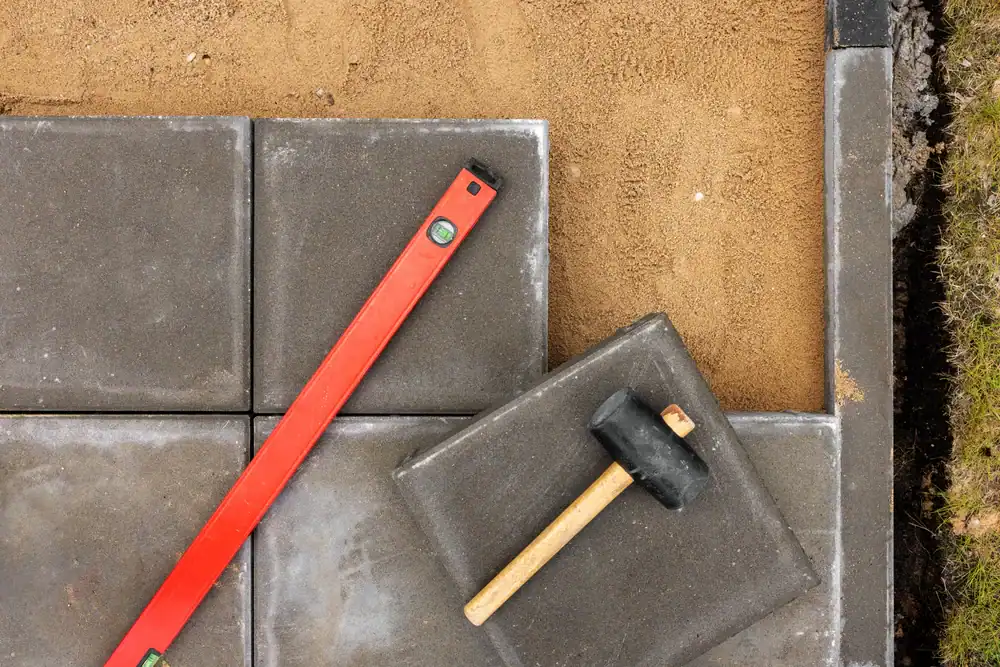
The installation follows a sequence that matters: excavation to proper depth, base material that won’t shift, correct grading for drainage, and surface installation with attention to expansion joints and edge restraints. Each step gets done right because skipping or rushing any of them creates problems you’ll deal with for years.
Timeline depends on size and complexity, but you’ll know the schedule upfront. We coordinate any necessary permits with East Hampton officials and keep your property clean throughout the process.
Ready to get started?
You get a driveway designed for East Hampton’s specific conditions. That means accounting for the salt air that accelerates deterioration, the freeze-thaw cycles that crack inferior installations, and the soil conditions that cause settling if the base isn’t prepared correctly.
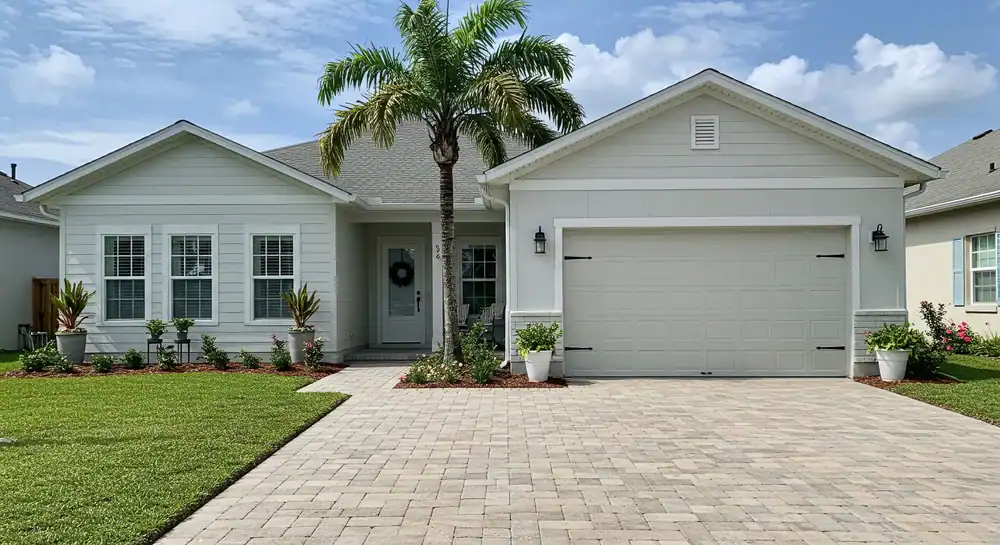
Material options include concrete, pavers, brick, and cobblestone—each with different performance characteristics in coastal environments. Pavers handle freeze-thaw better because each unit moves independently rather than cracking as a single slab. Concrete costs less upfront but requires more maintenance in salt air. We explain the tradeoffs without pushing you toward the most expensive option.
Drainage solutions are built into every installation. We grade for proper runoff, install edge restraints that prevent material shift, and ensure water moves away from your foundation. For properties with challenging drainage, we incorporate permeable pavers or additional subsurface solutions.
You also get realistic maintenance guidance. Some materials need periodic sealing in coastal conditions. Others require joint sand replenishment. We tell you what to expect so you’re not surprised three years in when normal maintenance comes due.
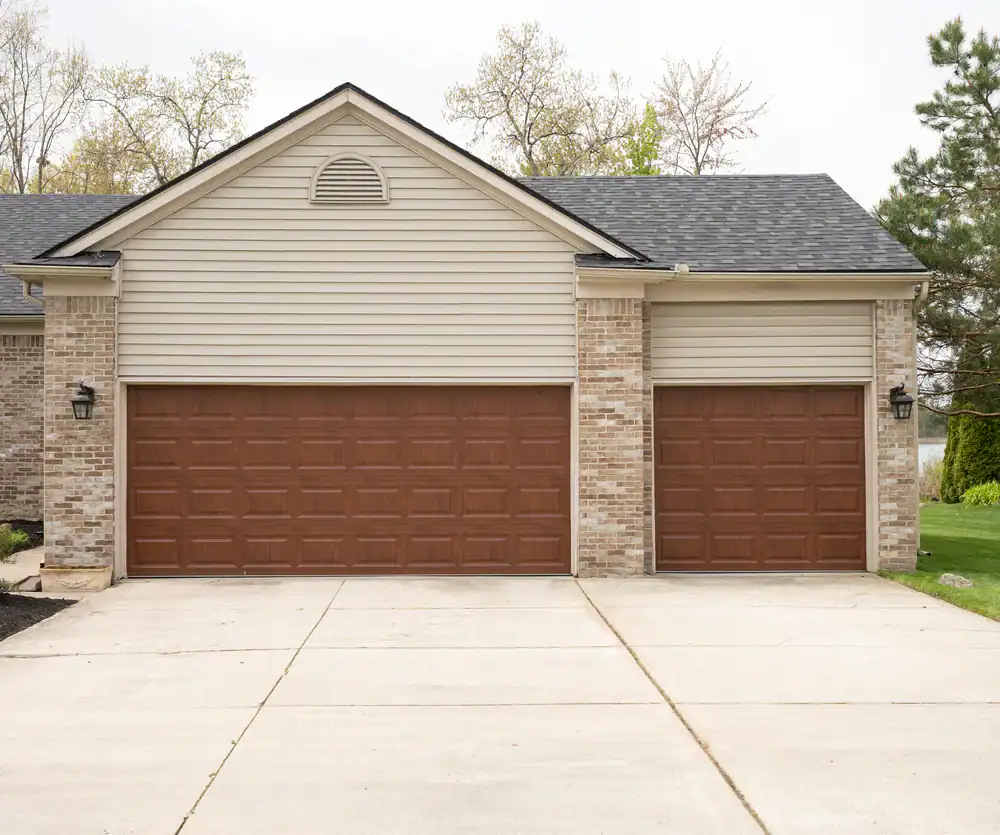
A properly installed paver driveway in East Hampton typically lasts 25-30 years, sometimes longer with basic maintenance. The key word is “properly installed”—that means correct base depth, proper compaction, and edge restraints that prevent shifting.
Pavers handle coastal conditions better than concrete because each unit moves independently during freeze-thaw cycles. When temperatures drop below freezing and rise above 90 degrees, concrete expands and contracts as one piece, creating stress points that become cracks. Pavers flex individually, so that stress doesn’t build up.
Salt air affects pavers differently too. Road salt and ocean spray sit on the surface rather than penetrating into the material. You can rinse it off. With concrete, salt works its way into the porous surface and breaks down the binder from inside.
Maintenance is minimal—occasional joint sand replenishment and rinsing during winter months. Some homeowners choose to seal pavers for color protection, but it’s not required for structural integrity.
Sinking driveways in Nassau County usually trace back to inadequate base preparation or poor drainage. When the base material isn’t compacted properly or isn’t thick enough for the soil conditions, it shifts under the weight of vehicles. Water infiltration makes it worse—once water gets into the base layer, it washes away the supporting material and creates voids.
Long Island soil varies significantly. Some areas have sandy soil that drains well but shifts easily. Other areas have clay that holds water and expands when it freezes. If your contractor doesn’t account for your specific soil type during base prep, you’ll see settling within a few years.
Drainage issues compound the problem. Water that pools on or near your driveway eventually works its way down into the base. During winter, that water freezes and expands, pushing material around and creating more voids. When it thaws, you get settling.
Fixing a sinking driveway usually requires addressing the base, not just the surface. That often means removal and reinstallation with proper base depth and drainage solutions. Patching the surface might look better temporarily, but it doesn’t solve the underlying problem.
It depends on your priorities and budget. Concrete costs less upfront—typically $7-13 per square foot for a standard installation in Nassau County. Pavers run $17-20 per square foot for quality concrete pavers. For a standard two-car driveway, that’s roughly $4,200-$7,800 for concrete versus $10,200-$12,000 for pavers.
Here’s what you get for that price difference: pavers last longer in coastal conditions and handle freeze-thaw cycles better. When damage does occur, you replace individual pavers rather than cutting out and patching concrete. Repairs blend in seamlessly instead of leaving visible patch marks.
Concrete works fine if you’re budget-conscious and willing to handle more maintenance. You’ll need to seal it every few years in salt air conditions. Cracks will eventually appear—that’s just how concrete behaves through temperature extremes. Some homeowners don’t mind that; others want something more permanent.
Pavers offer more design flexibility too. You can create patterns, borders, and custom looks that aren’t possible with concrete. If your property is high-end and you want the driveway to match that aesthetic, pavers typically deliver better curb appeal.
Drainage planning happens before we break ground. We assess your property’s natural water flow during heavy rain—where does water come from, where does it go, and where does it want to pool. Then we design the driveway grade and base to work with those patterns instead of fighting them.
Proper grading means your driveway slopes away from your home and garage at the correct pitch—enough to move water but not so much that it’s noticeable or uncomfortable to walk on. We also grade to prevent water from collecting at the apron where your driveway meets the street.
For properties with challenging drainage, we incorporate additional solutions. That might mean permeable pavers that let water pass through to the base layer, or it might mean subsurface drainage systems that collect and redirect water before it becomes a problem. Some East Hampton properties near the ocean need more aggressive drainage management because of the water table and soil saturation.
Edge restraints play a role too. When the driveway edges aren’t properly secured, water infiltration causes the base to wash out from the sides. We install edge restraints that keep everything contained and prevent that lateral erosion.
The goal is a driveway that doesn’t develop ice patches in winter, doesn’t channel water toward your foundation, and doesn’t create puddles that accelerate surface deterioration.
Yes, adding Belgian block borders or cobblestone aprons to an existing driveway is possible, but it depends on your current driveway’s condition and edge stability. If your driveway edges are already failing or if the base has deteriorated, adding decorative borders won’t fix the underlying problems—it’ll just look good temporarily.
Belgian block creates a clean, upscale edge that’s popular in East Hampton for good reason. It defines the driveway boundary, prevents edge material from spreading, and adds a finished look that complements the village’s architectural style. Installation involves excavating along the driveway edge, setting the blocks in concrete, and ensuring they’re level and properly aligned.
Cobblestone aprons at the street entrance create a distinctive transition point. They’re durable, handle the stress of the street-driveway interface well, and add character. The installation is more involved than it looks—the base needs to be prepared correctly, and the stones need to be set at the right depth to match your existing driveway height.
Timing matters. If your driveway is nearing the end of its lifespan, it often makes more sense to plan the borders as part of a full driveway replacement. That way everything is built together with proper integration, and you’re not investing in borders that you’ll have to work around or remove in a few years when the main driveway needs replacement.
Most driveway work in East Hampton requires a building permit, especially if you’re changing the driveway footprint, altering drainage patterns, or doing a full replacement. The permit process involves submitting plans that show the driveway dimensions, materials, grading, and drainage approach.
East Hampton has specific requirements about impervious surface coverage on residential properties. If your new driveway increases the amount of impervious surface, you might need to demonstrate how you’re managing stormwater runoff. That’s where permeable pavers or drainage systems come into play—they can help you meet requirements while still getting the driveway you want.
Properties in historic districts or near coastal zones sometimes face additional review. The village wants to ensure that new construction fits the neighborhood character and doesn’t create drainage or erosion issues that affect neighboring properties.
We handle the permit coordination as part of our service. We know what East Hampton officials want to see in the plans, how to present drainage solutions that meet their requirements, and how to navigate the approval process without unnecessary delays. You don’t need to figure out the bureaucracy—we take care of that so your project moves forward on schedule.
Other Services we provide in East Hampton