

Concrete cracks. It’s not a question of if, but when. Water seeps in, freezes, expands, and turns hairline cracks into chunks of broken surface. You’ve probably seen it on your current driveway.
Pavers move independently when the ground shifts. That means no large-scale cracking, no emergency repairs, and a surface that actually improves with age as the base settles. Individual units can be replaced if needed without tearing up the entire driveway.
Proper installation matters more than the material itself. We excavate to the right depth, install a compacted base that drains correctly, and slope everything so water moves away from your foundation. That’s what keeps your driveway from sinking, cracking, or turning into a skating rink every winter.
Ageless Chimney started with chimneys and expanded into masonry because the same principles apply: build it right the first time, or you’ll be fixing it forever. Bobby and Sherwood founded this company as childhood friends who understood Long Island’s unique conditions.
We’re not a national franchise. We’re a local driveway installation company that knows what salt air does to materials, how sandy soil behaves, and why drainage matters more here than almost anywhere else. An owner is on every job because we don’t trust your property to a crew chief you’ll never meet.
Fishers Island properties need custom solutions. Curved driveways, integration with existing stone walls, Belgian block aprons that match your home’s character. We’ve handled it all across Nassau and Suffolk County for over 15 years.
First, we assess your current driveway and property layout. We’re looking at drainage patterns, soil conditions, and how the new surface will integrate with your landscaping. If your old driveway is concrete, we remove it completely and haul it away.
Excavation goes deep enough to install a proper base. For most Long Island properties, that means 8-10 inches of compacted gravel that allows water to drain through instead of pooling on the surface. We slope everything correctly so water moves away from your home.
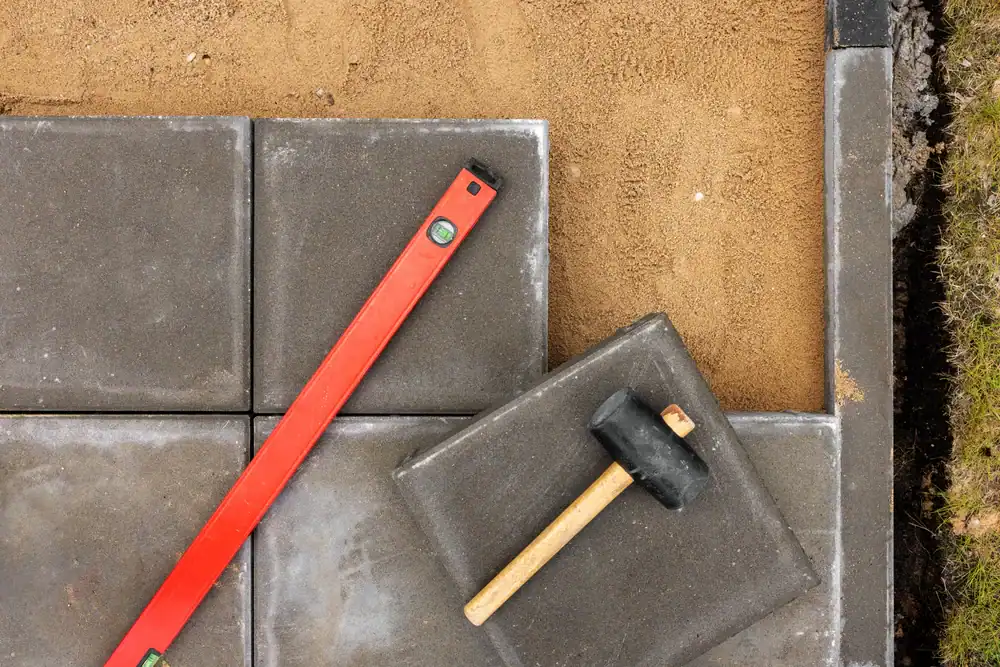
Paver installation starts with edge restraints that keep everything locked in place. Each paver gets set by hand, leveled, and checked. We use polymeric sand in the joints that hardens when wet, preventing weeds and keeping pavers from shifting. For concrete driveways, we pour in sections with control joints that manage cracking.
The final step is compaction and sealing if you’ve chosen pavers. Most driveway projects on Fishers Island take 3-5 days from start to finish, depending on size and complexity.
Ready to get started?
Material selection comes first. We’ll show you concrete pavers, brick, and natural stone options that work in coastal environments. Belgian block borders add a finished look that matches Fishers Island’s architectural character. You’re not picking from a catalog—we source materials that handle salt exposure and temperature swings.
Drainage solutions get built into every installation. That includes proper sloping, permeable joint sand, and sometimes additional drainage systems if your property has standing water issues. Poor drainage destroys driveways faster than anything else on Long Island.
We handle permits, coordinate with local requirements, and manage the entire timeline. You’ll know when we’re starting, how long it takes, and what to expect each day. Most paver driveway projects can be scheduled within 2-3 weeks, with winter and early spring having the shortest wait times.
Fixing cracked concrete driveways or sinking driveway repair often requires complete removal and reinstallation. Patching fails because the underlying problem—poor base preparation or drainage—remains. We fix it correctly so you’re not dealing with the same issue in two years.
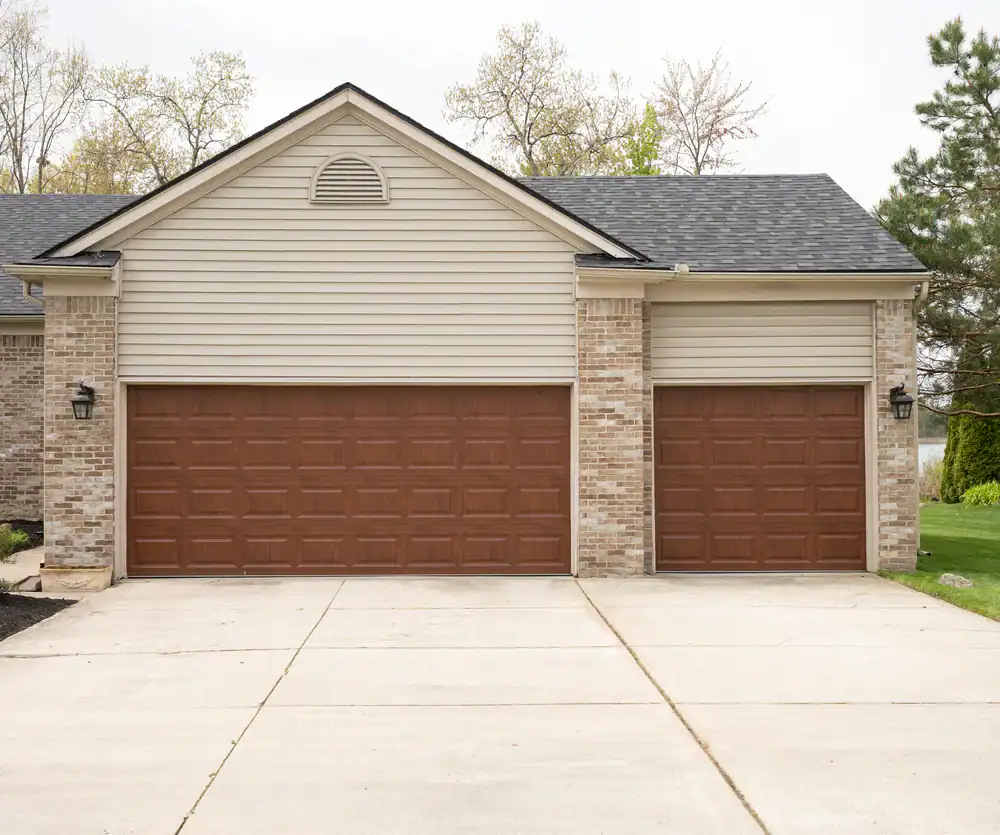
Pavers outlast concrete in coastal environments because they handle movement without catastrophic failure. Concrete driveways on Long Island typically show significant cracking within 5-7 years due to freeze-thaw cycles and soil settlement. Pavers can last 25-30 years or more with minimal maintenance.
The difference comes down to how each material responds to stress. Concrete is a single monolithic surface—when it cracks, the damage spreads. Pavers are individual units that move independently, absorbing ground shifts without transferring stress to neighboring pieces.
Salt air accelerates concrete deterioration by penetrating the surface and corroding rebar. Pavers don’t have internal reinforcement to corrode, and individual damaged units can be replaced without disturbing the rest of the driveway. That’s a significant advantage for Fishers Island properties exposed to constant salt spray.
Driveways sink when the base material wasn’t properly compacted or when water washes away the foundation over time. Long Island’s sandy soil compounds the problem because it shifts more easily than clay-based soils found in other regions.
Prevention starts with excavation depth and base material. We remove 8-10 inches of existing material and replace it with crushed stone that gets compacted in layers. Each layer is checked for proper density before adding the next. Skipping this step is why cheap installations fail within a few years.
Drainage is the other critical factor. Water pooling under your driveway will eventually wash away base material and create voids. We slope the base away from your foundation and ensure water has somewhere to go. For properties with serious drainage issues, we install additional systems that channel water away from the driveway entirely.
Paver driveways in Nassau County typically run $17-20 per square foot installed. A standard two-car driveway (about 600 square feet) costs $10,000-15,000 depending on material choice and site conditions. Concrete driveway installation runs slightly less at $12-15 per square foot but requires replacement sooner.
Price varies based on excavation requirements, drainage complexity, and material selection. Natural stone costs more than concrete pavers. Belgian block borders add $30-40 per linear foot. If we’re removing old concrete, disposal adds to the total cost.
Fishers Island properties often need custom solutions that affect pricing. Curved driveways require more labor. Difficult access means smaller equipment and longer installation times. We provide detailed estimates after seeing your property because guessing leads to change orders nobody wants.
Minor surface cracks can be patched, but most concrete driveways showing significant damage need full replacement. If you have multiple cracks wider than a quarter-inch, sections that have sunk or heaved, or surface scaling from freeze-thaw damage, patching won’t solve the underlying problem.
Concrete fails because the base wasn’t adequate or drainage is poor. Patching the surface doesn’t address either issue. You’ll spend money on repairs that fail within a year or two, then pay for replacement anyway. We’re honest about when repair makes sense and when it’s throwing money away.
Brick driveway replacement or switching from concrete to pavers makes sense if your current driveway is beyond repair. The installation process is the same—complete removal, proper base preparation, and new surface. You get a longer-lasting result and avoid the crack-patch-crack cycle that concrete driveways create.
Spring and fall offer ideal conditions—moderate temperatures and lower chance of rain delays. But winter and early spring actually have the shortest wait times because most homeowners don’t think about driveway work when it’s cold.
We can install driveways year-round as long as the ground isn’t frozen. Pavers can be set in temperatures down to 40 degrees. Concrete requires warmer conditions, generally above 50 degrees, to cure properly. Winter installations mean faster scheduling and sometimes better pricing.
Summer brings heat that makes concrete cure too quickly and can affect worker productivity. We work through it, but spring and fall remain the sweet spot for driveway installation. If you’re planning a project, booking 2-3 weeks ahead secures your spot regardless of season.
Drainage gets addressed in every installation because it’s the primary factor in driveway longevity. We slope the surface and base to move water away from your home. Permeable joint sand between pavers allows water to drain through instead of pooling on top.
Some properties need additional drainage solutions beyond basic sloping. If you have standing water, poor soil drainage, or water that runs toward your foundation, we install channel drains, French drains, or catch basins that redirect water to appropriate areas.
Long Island properties face unique challenges with drainage because of sandy soil and high water tables. Water moves through sand quickly but can also wash away base material if not managed correctly. We’ve handled everything from simple regrading to complex drainage systems that protect both your driveway and foundation from water damage.
Other Services we provide in Fishers Island