

You’re looking at 50+ years before you need to think about replacement. That’s what proper installation gets you when paver driveway contractors actually understand Long Island soil and weather.
Concrete cracks here. It’s not if, it’s when. Freeze-thaw cycles, coastal moisture, and the way our soil shifts—it all works against traditional concrete driveways in Suffolk County.
Pavers flex. They move with the ground instead of fighting it. If one ever does crack, you replace that single paver. Not the whole section. Not the whole driveway. You’re not tearing up your yard again in fifteen years because someone cut corners on the base or didn’t account for drainage.
You’ll also stop dealing with ice dams at the garage door and puddles that turn into skating rinks every January. Proper grading and drainage solutions mean water goes where it’s supposed to—away from your foundation, your walkways, and your headaches.
We’ve handled masonry projects across Islip Terrace and Suffolk County since 2006. We’ve watched this area grow, and we know what works here and what doesn’t.
Every job is owner-supervised. Bob personally oversees installations because the foundation work is where most companies fail you. If the base isn’t right, nothing else matters.
We’re fully licensed, insured, and bonded. We pull permits. We follow local codes. We don’t disappear after the check clears. You’re working with a local driveway installation company that’s been in your neighborhood for nearly two decades, not a crew that showed up last month.
First, we remove your old driveway completely. No shortcuts, no paving over problems. If your concrete is cracked or your asphalt is sinking, there’s a reason—and it’s usually what’s underneath.
We excavate down to stable soil, then build the foundation that should have been there from the start. That means proper base material, correct depth for Long Island conditions, and grading that sends water away from your house. This is where most driveway builders in Nassau County try to save money. It’s also where driveways fail.
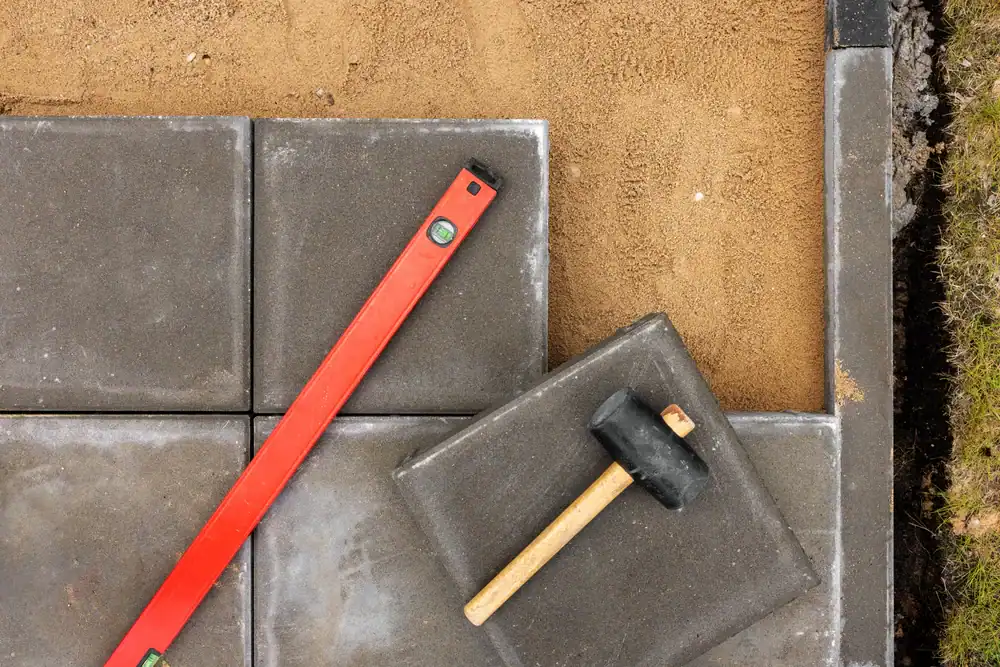
Then we install your pavers, brick, or concrete with Belgian block borders if you want them. Everything gets compacted correctly. Joints get filled with polymeric sand that locks pavers in place and keeps weeds out.
You’ll know the timeline before we start. You’ll know when to move your cars. And you’ll have a driveway that doesn’t need major work again in your lifetime.
Ready to get started?
Complete removal and disposal of your existing driveway. Excavation to proper depth based on your soil conditions—not some generic number. A foundation built with the right base materials and compaction for Long Island’s freeze-thaw cycles.
Professional grading so water drains away from your foundation and garage. This isn’t optional in Islip Terrace, NY. Poor drainage is why you’re replacing your driveway in the first place.
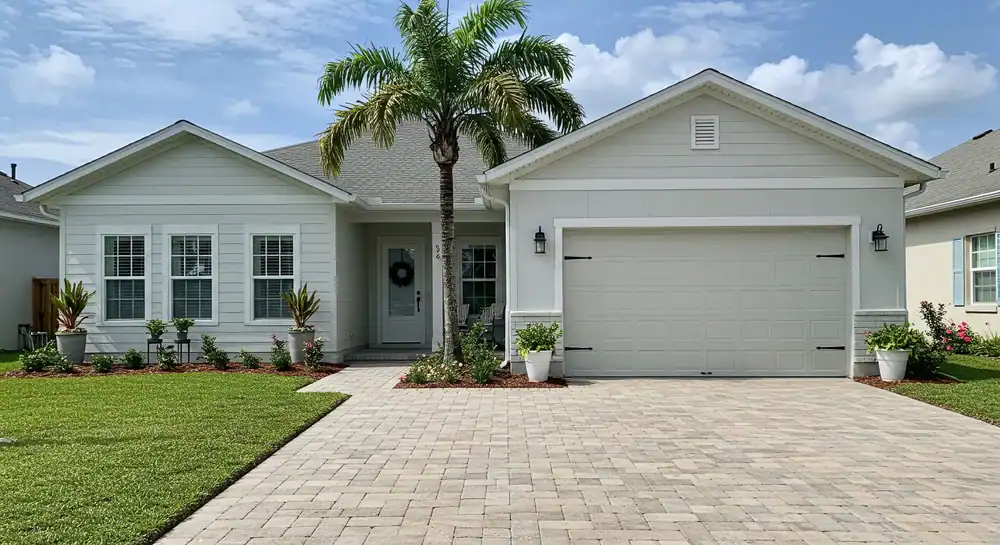
Installation using premium materials from Belgard or Cambridge—pavers engineered for Northeast weather. Or if you’re going with concrete driveway installation in Suffolk County, we use the right mix and control joints to minimize cracking.
You also get options: cobblestone driveway aprons for a classic look, Belgian block borders that define edges and prevent spreading, or brick driveway replacement that matches your home’s architecture. Everything is installed to code, with permits pulled and inspections passed. And it’s all guaranteed.
Fifty years or more if it’s installed correctly. That’s not marketing talk—that’s what properly installed pavers do when the foundation is built right for our climate.
The key is in how they handle freeze-thaw cycles. Concrete fights against the ground movement and cracks. Pavers flex slightly with the soil, so they don’t break. Each paver can move independently without affecting the ones around it.
You will need to reseal them every few years and refill joints occasionally. But that’s maintenance, not replacement. Compare that to concrete that needs full section replacement when it cracks, or asphalt that needs resurfacing every 8-12 years. The math isn’t even close when you look at total cost over thirty years.
Usually it’s the base—either it wasn’t deep enough, wasn’t compacted right, or the wrong materials were used. Long Island soil shifts, especially with our wet springs and freeze-thaw cycles. If your foundation can’t handle that movement, your driveway fails.
Poor drainage makes it worse. Water that doesn’t drain away saturates the base material, weakens it, and accelerates settling. That’s why you see driveways with dips near the garage or sections that sink along the edges.
The other issue is shortcuts during installation. Proper excavation and base prep take time and cost money. Some driveway contractors in Islip Terrace, NY skip steps to win bids. You save a few thousand now and spend twice that fixing it in five years. We excavate to the right depth, use the right base materials, compact everything properly, and grade for drainage. That’s why our driveways don’t sink.
Depends on what’s causing it and how bad it is. Minor settling along edges can sometimes be addressed by lifting pavers, adding base material, and reinstalling. But if the whole driveway is sinking or if concrete has cracked and settled, you’re looking at replacement.
Here’s why: sinking means the foundation failed. You can patch the surface, but the problem is underneath. Trying to save a failed base just delays the inevitable and often costs more in the long run.
With sinking driveway repair in Long Island, the honest answer is usually replacement with a properly built foundation. That’s not the answer you want to hear, but it’s the one that actually solves the problem. We’ll tell you straight up during the estimate whether repair makes sense or if you’re throwing money away.
For pavers, you’re typically looking at $17-20 per square foot for quality installation. A standard two-car driveway around 600 square feet runs $10,200-12,000. Concrete driveway installation in Suffolk County runs less up front—usually $8-12 per square foot—but factor in shorter lifespan and higher maintenance.
Price varies based on material choice, site conditions, and how much prep work is needed. If we’re dealing with drainage issues or need extra excavation because your soil is problematic, that adds cost. Belgian block borders, cobblestone aprons, and custom patterns also increase the price.
We’re not the cheapest option in Nassau County. You can find someone who’ll do it for less. But you’re not hiring us to do it twice. You’re paying for proper excavation, quality materials, correct installation, and a driveway that lasts fifty years instead of fifteen. That’s the actual value calculation.
Yes. Long Island gets significant precipitation, and Islip Terrace properties often have drainage challenges because of how the land sits. If water doesn’t drain away from your driveway, it saturates the base, accelerates freeze-thaw damage, and creates ice problems in winter.
Proper drainage solutions for Long Island driveways mean grading the surface so water runs off, not pools. It means making sure downspouts aren’t dumping water onto your driveway. And sometimes it means installing drainage systems to move water away from problem areas.
This is part of why we do site evaluation before giving you a price. Your neighbor’s driveway might not need special drainage work, but yours might because of how your property slopes or where water naturally flows. We coordinate with local codes and make sure water goes where it should. Skipping this step is how you end up with ice dams at your garage door and a driveway that fails early.
Pavers handle our climate better. Concrete will crack here—it’s just a matter of when. Freeze-thaw cycles, salt exposure, and ground movement all work against concrete in Suffolk County.
When concrete cracks, you’re replacing entire sections. If it’s stamped or decorative concrete, good luck matching the color and pattern. With pavers, individual units can be replaced without affecting anything around them. The driveway flexes with ground movement instead of fighting it.
Concrete costs less initially, and if budget is tight, it’s not a bad choice—as long as you know you’re looking at repairs or replacement in 15-20 years. Pavers cost more up front but last 50+ years with minimal maintenance. For fixing cracked concrete driveways, the usual recommendation is switching to pavers during replacement so you’re not dealing with the same problem again in fifteen years.
Other Services we provide in Islip Terrace