

Most driveways in Montauk fail because contractors don’t account for what salt air and freeze-thaw cycles do to asphalt and concrete. You end up with cracks by year two, water pooling after every storm, and repair bills that add up fast.
When we install a driveway, you’re getting foundation work designed for sandy coastal soil. That means deeper excavation than standard jobs, drainage planning that prevents water from undermining your base, and materials chosen specifically to resist the corrosion that ocean air causes.
The difference shows up when your neighbors are calling for sinking driveway repair and yours is still level. It shows up when winter road salt doesn’t eat through your surface. And it shows up in your property value when buyers see a driveway that looks like it was installed last year, not ten years ago.
Ageless Chimney started as a masonry and chimney company serving Long Island. We’ve spent over 15 years working in coastal conditions, which means we understand what salt air does to mortar, how freeze-thaw cycles crack foundations, and why standard installation methods don’t hold up in Montauk, NY.
When we expanded into driveway work, we brought that same approach: do it right the first time, use materials that match the environment, and don’t cut corners on the foundation. Every job is owner-managed, so you’re not dealing with a rotating crew that doesn’t know your property.
We’re licensed and insured across Suffolk County and Nassau County. Most of our work comes from referrals, which tells you what you need to know about how the finished product holds up.
We start with a site visit to look at your soil, drainage patterns, and how your property sits relative to the street. Montauk’s sandy soil drains fast, but it also shifts, so we need to see what we’re working with before we quote the job.
Once you approve the estimate, we excavate deeper than most driveway contractors do. Coastal installations need a thicker base to handle moisture and prevent settling. We’re typically going 10-12 inches down, then building up with compacted gravel in layers. Each layer gets compacted separately so you don’t end up with soft spots that sink later.
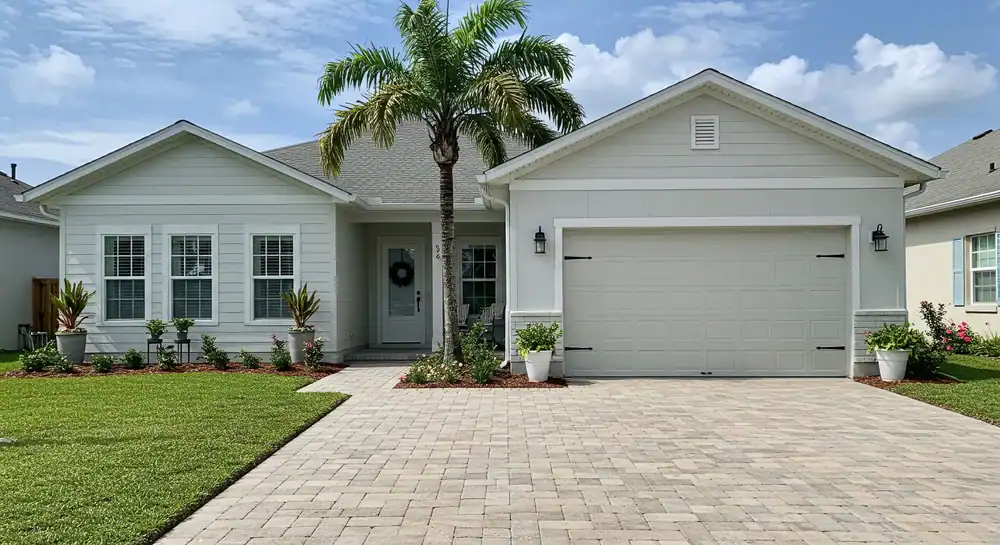
After the base is set, we install your surface—whether that’s pavers, poured concrete, or brick. For paver driveway installations in Montauk, NY, we use polymeric sand in the joints to resist washout during heavy rain. For concrete driveway installation in Suffolk County, we add reinforcement and use air-entrained mixes that handle freeze-thaw cycles without spalling.
The whole process takes anywhere from three days to a week depending on size and complexity. You’ll know the timeline upfront, and we’ll walk you through what to expect at each stage.
Ready to get started?
We handle full custom driveway replacement in Montauk, NY—everything from demo and excavation to final grading. That includes hauling away old materials, installing new drainage if your current setup isn’t working, and adding features like cobblestone driveway aprons or Belgian block borders if you want a more finished look.
Material options depend on your budget and what you’re trying to accomplish. Paver driveways run $18-25 per square foot but give you the most design flexibility and the easiest repairs if you ever need to access utilities underneath. Concrete driveway installation in Suffolk County typically costs $10-15 per square foot and works well if you want a clean, modern look. Brick driveway replacement in Montauk, NY sits somewhere in the middle and holds up well in coastal conditions if it’s installed with the right base.
If you’re dealing with an existing driveway that’s sinking or cracking, we also handle repairs. Fixing cracked concrete driveways usually means resurfacing or patching, but if the foundation is compromised, you’re better off replacing it. We’ll tell you honestly which route makes sense. Driveway drainage solutions for Long Island properties often involve adding French drains, regrading the slope, or installing channel drains at the base to redirect water away from your foundation.
It depends entirely on the material and how it’s installed. Asphalt driveways in Montauk, NY typically last 12-15 years before they need resurfacing, but that assumes proper maintenance and sealcoating every few years. Salt air accelerates deterioration, so if you’re not staying on top of it, you’ll see cracks and surface damage sooner.
Concrete driveways last longer—usually 20-25 years—but they’re more prone to cracking if the base wasn’t done right or if freeze-thaw cycles get into existing joints. Once concrete cracks, it’s harder to repair than asphalt.
Paver driveways are the most durable option for coastal areas. They flex with ground movement instead of cracking, and individual pavers can be replaced if one gets damaged. With proper installation and a solid base, you’re looking at 30+ years before you need to think about replacement. The upfront cost is higher, but the longevity usually makes up for it.
Sinking happens when the base underneath your driveway wasn’t compacted properly or when water washes away the foundation material. In Montauk, NY, sandy soil makes this more common because water drains through it quickly and can create voids under the surface.
If your driveway was installed without enough base material or without proper compaction, you’ll see settling within the first few years. Low spots collect water, which makes the problem worse because that water keeps eroding the base. Eventually, you’re looking at sinking driveway repair or full replacement.
The fix depends on how bad it is. Minor settling can sometimes be addressed by mudjacking (pumping material under the slab to lift it) or by removing and reinstalling pavers with additional base material. Major sinking usually means the whole section needs to be redone. Proper installation prevents this by using a thick, well-compacted base and making sure drainage directs water away from the driveway instead of letting it pool underneath.
Yes. Montauk’s sandy soil drains fast, but that doesn’t mean your driveway will. Water needs somewhere to go, and if your property slopes toward your house or if the driveway itself doesn’t have proper pitch, you’ll end up with pooling and erosion.
Most driveway drainage solutions for Long Island involve grading the driveway so it slopes away from your house and toward the street or a drainage area. We’re usually aiming for a 2% slope—enough to move water without being noticeable when you’re driving on it. If your property doesn’t naturally drain well, we’ll add French drains along the edges or install a channel drain at the bottom to catch runoff.
Coastal properties also deal with higher water tables and storm surge, so we’re planning for heavy rain events, not just typical weather. That might mean installing permeable pavers that let water drain through the surface, or it might mean connecting your driveway drainage to an existing system. Every property is different, so we evaluate it during the site visit and recommend what actually makes sense for your situation.
Pavers are the best option if you want something that handles both salt air and freeze-thaw cycles without cracking. They’re individual units, so they move independently when the ground shifts. That flexibility prevents the kind of cracking you see with poured concrete. Salt doesn’t damage pavers the way it eats through asphalt or causes concrete to spall.
Concrete is the second-best choice if it’s installed with air-entrained mix and proper reinforcement. The air pockets let water expand when it freezes without cracking the surface. You’ll still need to seal it every few years to protect against salt, but it holds up reasonably well in Montauk, NY.
Asphalt is the most affordable option, but it requires the most maintenance in coastal areas. Salt and UV exposure break down the binder that holds asphalt together, so you’re looking at sealcoating every 2-3 years and eventual resurfacing. If you’re planning to stay in your house long-term, asphalt ends up costing more over the life of the driveway because of the upkeep.
For a standard 600-square-foot driveway, you’re looking at $1,800-$7,200 for asphalt, $6,000-$9,000 for concrete, and $10,800-$15,000 for pavers. Those ranges depend on site conditions, how much excavation is needed, and whether we’re adding drainage or other features like cobblestone aprons or Belgian block borders.
Coastal installations cost more than inland jobs because the base work is more involved. We’re excavating deeper, using more compacted gravel, and spending extra time on drainage planning. If your property has poor access or if we need to haul away a lot of old material, that adds to the cost.
The cheapest option upfront isn’t always the best value. Asphalt needs maintenance every few years, and if it fails early because the base wasn’t done right, you’re paying for repairs or replacement sooner than you should. Concrete and pavers cost more initially but require less ongoing maintenance and last significantly longer in Montauk’s climate. We’ll walk you through the real costs—not just installation, but what you’ll spend over 10-20 years—so you can make a decision that actually fits your budget.
It depends on what’s wrong and what’s causing it. Surface cracks in asphalt can usually be filled and sealed if the base is still solid. Concrete cracks can be patched or resurfaced if they’re not too widespread. But if the foundation is failing—meaning the base is washing out, the driveway is sinking, or there are major drainage issues—repairs are just a temporary fix.
We’ll assess your driveway during the site visit and tell you honestly whether fixing cracked concrete driveways makes sense or whether you’re better off replacing it. If the damage is localized to one area and the rest of the driveway is in good shape, a partial replacement might be an option.
Paver driveways are the easiest to repair because you can pull up individual pavers, fix the base underneath, and reinstall them without touching the rest of the driveway. That’s one reason they’re worth the upfront investment for coastal properties—you’re not locked into full replacement if something goes wrong. For sinking driveway repair in Montauk, NY, we’ll dig down to see what’s happening with the base and either add material to stabilize it or recommend replacing that section if the damage is too extensive.
Other Services we provide in Montauk