
You’re dealing with water that won’t drain, cracks spreading across your concrete, or pavers sinking into the ground. Every winter makes it worse. Every spring reveals new damage.
Here’s what changes when drainage actually works and your base is built right: water flows away from your foundation instead of pooling near your garage. Your driveway stays level instead of turning into a patchwork of sunken sections. Ice doesn’t form in the same spots every winter, creating a safety hazard you’re tired of salting.
The right materials and proper installation mean you’re not calling for repairs every few years. Pavers that can be individually replaced if damaged. Asphalt that melts snow faster because it absorbs heat. Concrete that lasts decades when the base underneath is done correctly. You get a driveway that handles what Long Island throws at it without constant maintenance.
Ageless Chimney started with chimneys and masonry, which taught us everything about how water moves around your property and what happens when it doesn’t. That expertise translates directly to driveway work in Oakdale, NY, where coastal humidity and clay-heavy soil create drainage problems most contractors don’t fully understand.
We’re licensed, bonded, and every crew member carries workers’ insurance. The owners are on-site for every project because we’ve learned that’s the only way to guarantee the work meets our standards. We’ve been serving Nassau and Suffolk County homeowners for nearly two decades, and most of our business comes from referrals.
Oakdale properties sit in a unique position with coastal exposure and higher property values that demand quality work. You’re not looking for the cheapest option. You’re looking for someone who understands that a $600,000 home deserves a driveway that matches.
First, we assess your current situation. If you’ve got drainage issues, we need to understand where water is going and why. If sections are sinking, we need to know what’s happening with your sub-base. This isn’t a quick walk-around—we’re looking at grade, soil conditions, and how water flows across your property.
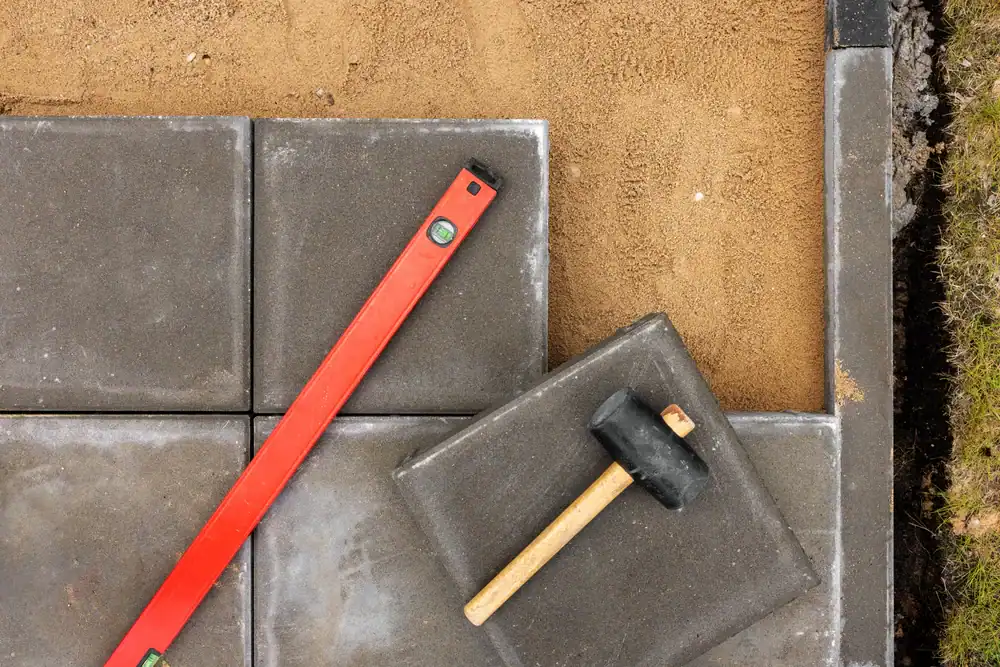
Next comes demolition and base prep. This is where most problems start or get prevented. We excavate deep enough to address soil issues, especially with Long Island’s clay content that holds water. Heavy-duty machinery compacts the base in layers. We install proper drainage—not just hoping water finds its way off your driveway, but engineering it to flow where it should.
Then we install your chosen material. Asphalt, concrete, pavers, cobblestone, Belgian block—whatever fits your budget and goals. Each has different installation requirements, and we follow industry standards that account for Long Island’s freeze-thaw cycles. The final result is a driveway that looks clean and performs correctly, with grading that moves water away from your foundation and a base that won’t shift or settle.
Ready to get started?
Asphalt driveways cost less upfront and melt snow faster because the black surface absorbs heat. You’ll need resealing every 3-5 years and full replacement around 15-20 years. It’s the practical choice if you want solid performance without premium pricing.
Concrete lasts longer—closer to 30 years—and needs less maintenance. It costs more initially but holds up better against Long Island’s coastal salt air. Cracks can happen with freeze-thaw cycles, but proper installation with the right base minimizes that risk.
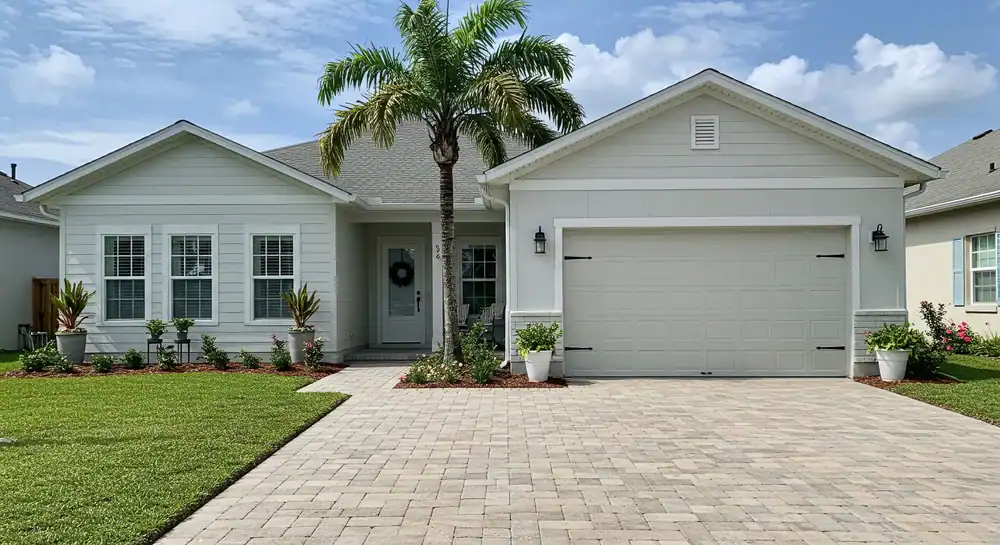
Paver driveways in Oakdale, NY offer the longest lifespan, often 25-75 years with minimal maintenance. Individual pavers can be replaced if damaged without disturbing the rest of your driveway. They handle drainage better because water seeps through the joints instead of pooling on the surface. The upfront cost is higher, but lifetime costs often end up lower when you factor in repairs and replacement.
Sinking driveway repair depends on what’s causing the problem. Sometimes it’s a sub-base issue that requires rebuilding sections. Sometimes it’s soil settlement that needs addressing before we can fix the surface. We don’t patch over problems—we fix what’s causing them so you’re not dealing with the same issue next year.
Most residential driveway installations in Oakdale, NY take 2-5 days depending on size, material, and site conditions. Asphalt driveways are typically faster—demolition and base prep take 1-2 days, then asphalt installation and compaction take another day. You can usually drive on it within 24-48 hours, though we recommend waiting 3-5 days for full curing.
Concrete driveways take longer because of curing time. Installation happens in 1-2 days, but you’ll need to wait 7 days before driving on it. Full strength takes about 28 days.
Paver driveways take 3-5 days for most projects. Base prep is the same as other materials, but laying pavers is more detailed work. The advantage is you can use your driveway immediately after installation—no curing time needed. Weather affects timelines, especially with Long Island’s humidity and temperature swings. We won’t pour concrete if temperatures drop too low, and heavy rain delays base prep work.
Long Island’s clay-heavy soil is the main culprit. Clay expands when wet and contracts when dry, creating movement underneath your driveway. Add in freeze-thaw cycles where water gets into small cracks, freezes, expands, and makes those cracks bigger—you’ve got the perfect conditions for damage.
Poor drainage makes everything worse. Water that pools on or under your driveway saturates the base material and soil. When that water freezes, it creates heaving. When it thaws, you get settling. Over years, this creates the sinking sections and cracks you’re seeing.
Inadequate base prep during original installation is the other major cause. If the base wasn’t compacted properly or wasn’t thick enough for your soil conditions, it will settle over time. Some driveways in Oakdale, NY were installed decades ago before current standards, and they’re simply reaching the end of their lifespan. Coastal salt air and humidity accelerate deterioration for all materials. The 65-70% humidity levels we get here, combined with salt exposure, break down asphalt and concrete faster than in drier climates.
It depends on what’s causing the damage and how widespread it is. If you’ve got isolated cracks in concrete or a small sunken section, repairs might work. But if the problem is your base or drainage, patching the surface won’t fix anything—you’re just delaying the inevitable and wasting money on temporary fixes.
Here’s how to think about it: if more than 25-30% of your driveway has issues, replacement usually makes more financial sense. Repairs on top of a failing base will fail again. If your driveway is 15-20 years old for asphalt or 25-30 years old for concrete, you’re near the end of its expected lifespan anyway.
Paver driveways are different. Individual pavers can be lifted and replaced without disturbing surrounding areas. If your base is solid and just a few pavers have cracked or settled, repairs work well. We assess the base condition first. If we see drainage problems or base failure, we’ll tell you straight—repairs won’t hold, and you need to address the underlying issue. Most homeowners in Oakdale, NY appreciate knowing the real situation rather than spending money on fixes that won’t last.
There’s no single “best” material—it depends on your priorities and budget. Each material handles Long Island’s coastal climate differently.
Asphalt performs well in our freeze-thaw cycles and melts snow faster than other options. It’s the most affordable upfront but needs regular maintenance. Expect resealing every 3-5 years and replacement around 15-20 years. If you want solid performance without premium pricing, asphalt makes sense.
Concrete lasts longer and needs less maintenance, but it costs more initially. It holds up better against salt air than asphalt. Cracks can still happen with freeze-thaw cycles, but proper installation minimizes that risk. It’s a good middle ground between cost and longevity.
Pavers handle drainage better than any solid surface because water seeps through joints instead of pooling. They last the longest—often 25-75 years—and individual pavers can be replaced if damaged. The upfront cost is highest, but lifetime costs are often lowest when you factor in maintenance and replacement. For Oakdale, NY properties where aesthetics and property value matter, pavers are worth considering. The key is proper installation regardless of material. A poorly installed paver driveway will fail faster than a well-installed asphalt driveway.
Asphalt driveways typically run $6-12 per square foot installed. A standard two-car driveway (about 600 square feet) costs $3,600-7,200. That includes demolition, base prep, and installation.
Concrete driveways cost $10-15 per square foot, so that same 600-square-foot driveway runs $6,000-9,000. You’re paying more upfront but getting longer lifespan and less maintenance.
Paver driveways in Oakdale, NY range from $18-25 per square foot installed, putting a 600-square-foot driveway at $10,800-15,000. Premium materials like cobblestone or Belgian block borders add to the cost. These prices assume standard conditions. If we need to address drainage issues, remove extra material, or deal with difficult access, costs go up.
Base prep is where you don’t want to cut corners. Proper excavation, drainage installation, and compacted base material cost more but prevent the expensive repairs you’re trying to avoid. Most Oakdale properties benefit from investing in quality installation rather than choosing the cheapest option. Your property value and the cost of future repairs make that math work out clearly.
Sometimes, but it depends on what’s causing the drainage issue and how your driveway is currently graded. If water is pooling because your driveway slopes toward your foundation or garage instead of away from it, we need to address the grade. That usually means replacement because you can’t change the slope without changing the surface.
If the drainage problem is water running onto your driveway from other areas of your property, we might be able to install channel drains, catch basins, or redirect water flow without full replacement. These solutions work when your driveway itself is structurally sound but water management around it needs improvement.
For paver driveways with drainage issues, sometimes we can lift sections, improve the base, and reinstall the same pavers. This works when the pavers are in good condition but the base has settled or wasn’t installed with proper drainage initially. Long Island’s clay soil makes drainage critical. Water that doesn’t drain properly will cause problems no matter what material you choose. We look at your entire property’s water flow, not just your driveway in isolation. That’s where our experience with masonry and foundation work gives you an advantage—we understand how water moves around your whole property and what happens when it doesn’t go where it should.
Other Services we provide in Oakdale