
You’re tired of looking at that cracked concrete every time you pull in. The uneven sections where your driveway has settled make you worry about tripping, about what guests think, about whether it’s damaging your foundation.
Here’s what changes when your driveway actually works: water drains where it should instead of pooling near your foundation. You’re not patching the same cracks every spring. Your home looks the way it should from the street.
Orient’s location on the North Fork means your driveway faces constant moisture from the bay, salt air that accelerates deterioration, and winter freeze-thaw cycles that turn small cracks into major problems. The driveway installation company you choose needs to understand how these conditions affect material selection, base preparation, and drainage design.
We’ve been handling masonry and hardscaping work on Long Island since 2006. We know what holds up here and what fails in three years. Whether you need a full custom driveway replacement in Orient, NY or you’re fixing a sinking driveway that’s pulling away from your garage, the approach is the same: proper base work, appropriate materials for coastal conditions, and drainage that accounts for Long Island’s weather patterns.
Ageless Chimney started when two childhood friends, Bobby Bruno and Sherwood Adams, decided to build a company that did masonry work the right way. That was 2006. We’re still here, still owner-managed, still working throughout Nassau and Suffolk County.
You’ll find us on Angie’s List with solid ratings and an A+ with the BBB. Every job gets managed by one of the owners, not handed off to whoever’s available. We’re licensed, insured, and bonded, which matters more than most homeowners realize until something goes wrong.
Orient presents specific challenges that generic driveway builders miss. The coastal humidity affects curing times for concrete. The proximity to the water means you need better drainage design than you’d need ten miles inland. Winter salt from the roads compounds the salt air you’re already dealing with. These aren’t small details when you’re looking at a 20-year investment.
We start with a free estimate where we actually look at your property’s drainage, soil conditions, and what’s causing your current driveway to fail. Most problems start below the surface, so that’s where we focus first.
Once you decide to move forward, we pull any permits required by the Town of Southold and schedule the work. Demo and removal happen first if you’re replacing an existing driveway. Then comes base preparation, which is where most cheap installations cut corners. We excavate to proper depth, install the right base material for Long Island soil conditions, and compact everything in lifts. This is what prevents your new driveway from settling in two years.
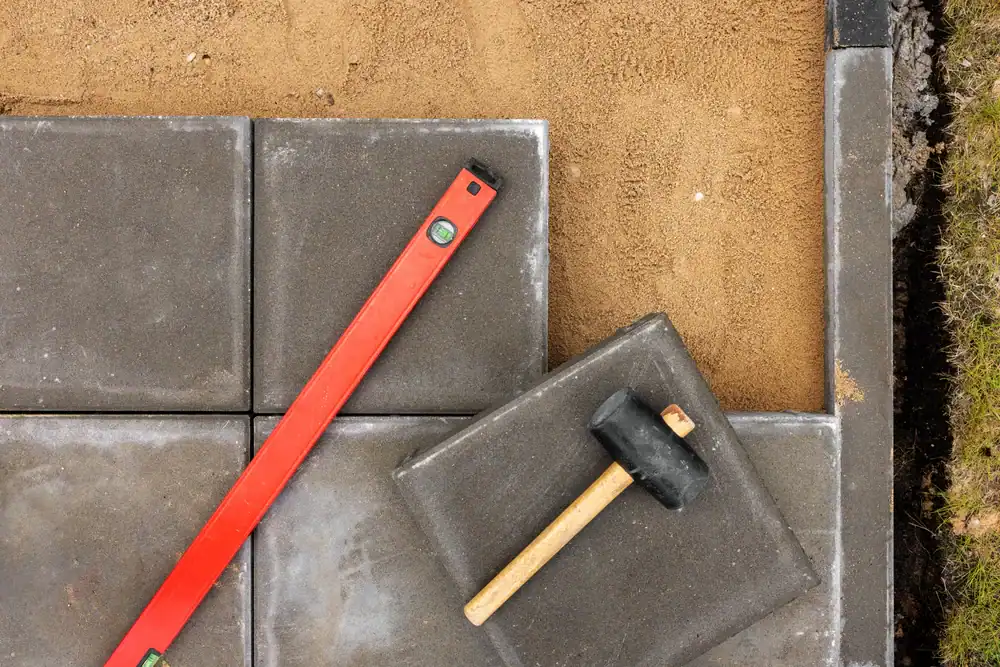
For paver driveway installations in Suffolk County, the process includes edge restraints, a proper sand bed, and polymeric sand in the joints to prevent weed growth and shifting. For concrete driveway installation in Suffolk County, we’re controlling the mix design, reinforcement placement, and curing process to handle freeze-thaw cycles. Brick driveway replacement and cobblestone driveway aprons require different techniques, but the base work remains critical regardless of surface material.
Drainage solutions get built in during base prep, not added as an afterthought. We’re grading away from your foundation, installing channel drains where needed, and making sure water goes where it should. The final result is a driveway that looks right and functions correctly in Orient’s climate.
Ready to get started?
You’re getting a complete installation, not just surface work. That means proper excavation, engineered base installation, drainage integration, and your choice of materials: pavers, concrete, brick, cobblestone aprons, or Belgian block borders.
For homes in Orient dealing with sinking driveway repair, we’re addressing why it’s sinking before we fix the surface. Usually that means soil stabilization, improved drainage, or rebuilding the base section that’s failed. Fixing cracked concrete driveways works the same way: we determine whether you need spot repairs, resurfacing, or full replacement based on the extent of damage and underlying cause.
Material selection matters more on Long Island than in drier climates. Concrete needs air entrainment to survive freeze-thaw cycles. Pavers need to be rated for your climate zone. Brick needs to be hard-fired, not the softer varieties that crumble after a few winters. We’re specifying materials that last here, not materials that look good in a catalog.
Driveway drainage solutions for Long Island properties often require more than basic grading. The water table sits high in coastal areas. Heavy rains can overwhelm inadequate drainage quickly. We’re installing proper pitch, catch basins where needed, and making sure runoff doesn’t create problems for you or your neighbors. Every installation includes cleanup and a written guarantee. We beat any written estimate you’ve received from another licensed, insured contractor doing comparable work.
Lifespan depends entirely on material choice and installation quality, but you should expect 20-30 years from concrete, 25-40 years from pavers, and 30-50 years from brick or cobblestone when installed correctly for Long Island conditions.
The key phrase is “installed correctly.” Orient’s coastal location means your driveway faces moisture exposure, salt air, and freeze-thaw cycles that accelerate deterioration. Concrete without proper air entrainment will start spalling within five years. Pavers installed over an inadequate base will settle and shift. Any material installed without proper drainage will fail prematurely regardless of quality.
What kills driveways on Long Island isn’t usually the surface material—it’s water infiltration, base failure, and freeze-thaw damage. When water gets into cracks or under the surface and freezes, it expands and causes more damage. This cycle repeats every winter. Proper installation includes base preparation that drains water away, materials rated for freeze-thaw resistance, and surface design that sheds water instead of collecting it. That’s the difference between a driveway that lasts 15 years and one that lasts 35.
Sinking happens when the soil or base material under your driveway compresses, shifts, or washes away. In Orient, the most common causes are inadequate base preparation, poor drainage, and soil conditions that weren’t properly addressed during installation.
Long Island soil varies significantly even within small areas. Some locations have sandy soil that drains well but doesn’t compact firmly. Others have clay that holds water and expands when wet, then contracts when dry. If the contractor who installed your driveway didn’t account for your specific soil type, settling is almost inevitable. Water infiltration accelerates the process—when water gets under your driveway, it can wash away base material or soften the soil, creating voids that cause sections to drop.
Fixing a sinking driveway means addressing the underlying cause, not just lifting the surface. Sometimes that requires mudjacking or polyurethane foam injection to fill voids and raise settled sections. Other times it means removing the failed section, stabilizing the soil, rebuilding the base properly, and reinstalling the surface. The right approach depends on how extensive the damage is and whether the base can be salvaged. A proper evaluation tells you whether you’re looking at a repair or a replacement.
Replace it if more than 25% of the surface is damaged, if you’re seeing widespread settling or heaving, or if the cracks are wider than a quarter-inch and actively growing. Repair makes sense for isolated cracks, minor surface damage, or cosmetic issues that don’t indicate structural problems.
Here’s how to evaluate what you’re dealing with: small hairline cracks are normal and can be sealed to prevent water infiltration. Larger cracks that run across the entire width of your driveway usually indicate base failure or soil movement underneath. If sections have settled at different heights, that’s a base problem that repair won’t fix. Spalling—where the surface is flaking or pitting—happens when water gets into the concrete and freezes, and it typically means the concrete wasn’t properly mixed for freeze-thaw resistance.
In Orient’s climate, patching concrete rarely lasts more than a few years because the conditions that caused the original damage are still present. If your driveway is more than 20 years old and showing significant cracking, replacement usually makes more financial sense than ongoing repairs. You’re getting a new base, proper drainage, and concrete mixed correctly for Long Island weather. That said, if you have a newer driveway with isolated damage, targeted repairs can buy you another decade before replacement becomes necessary.
Concrete costs less upfront and provides a clean, uniform look, but it will crack eventually and repairs are visible. Pavers cost more initially but last longer, handle freeze-thaw better, and individual units can be replaced without visible patches. Brick offers the longest lifespan and best aesthetics but comes with the highest installation cost.
Concrete driveways in Suffolk County typically run $8-15 per square foot installed, depending on thickness, reinforcement, and finish. You’re getting a monolithic surface that’s poured in place and cures for about a week. The advantages are lower cost and faster installation. The disadvantages are inevitable cracking—all concrete cracks, it’s just a matter of when—and the fact that repairs never quite match the original surface. In coastal areas like Orient, you need air-entrained concrete with proper reinforcement, which adds cost but prevents premature failure.
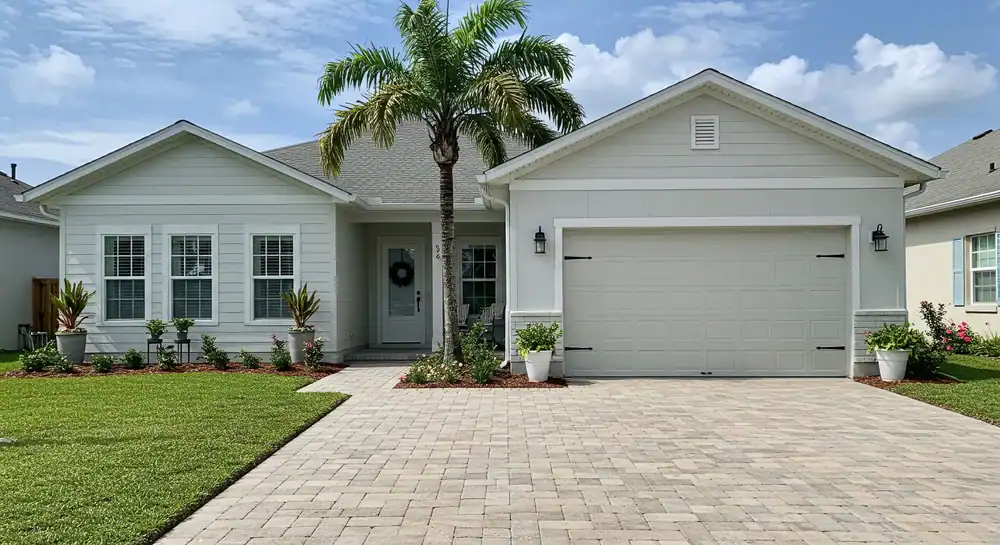
Paver driveways run $15-30 per square foot depending on the paver style and pattern complexity. Individual pavers can expand and contract with temperature changes without cracking. If one gets damaged or stained, you replace just that unit. The interlocking design distributes weight better than concrete, which means less cracking from vehicle loads. Brick driveways cost $20-40 per square foot but can last 50 years when installed correctly. The look is distinctive and the material actually gets better with age. For all three options, the base preparation costs the same—that’s not where you save money. You’re choosing between surface materials based on budget, aesthetics, and how long you plan to stay in the home.
Drainage gets designed into the installation from the start, not added later as a fix. We’re grading the driveway surface to shed water toward appropriate drainage points, sloping away from your foundation and garage, and installing subsurface drainage where needed to handle groundwater.
Orient’s location means you’re dealing with a high water table and significant rainfall, especially during nor’easters. Your driveway needs to handle both surface runoff and water that’s moving through the soil underneath. Surface drainage is straightforward—we’re building in a minimum 2% slope so water runs off instead of pooling. The direction matters: water needs to flow toward the street, a drainage swale, or a catch basin, never toward your foundation or into your neighbor’s yard.
Subsurface drainage is where most installations fail. If groundwater is present or if your soil doesn’t drain well, we’re installing a proper stone base that acts as a drainage layer, possibly with perforated pipe to move water away from the driveway area. Channel drains get installed across the driveway where water tends to collect, like at the transition from street to driveway or in front of garage doors. These aren’t expensive additions, but they prevent thousands in water damage and foundation problems down the road. Proper drainage design means your driveway dries quickly after rain, doesn’t ice over as readily in winter, and doesn’t channel water where it’ll cause problems.
Most driveway replacements and new installations in Orient require a building permit from the Town of Southold. The specific requirements depend on the scope of work, whether you’re changing the driveway footprint, and how close you are to wetlands or other regulated areas.
We handle the permit application process as part of the job. That includes submitting site plans, drainage plans, and any other documentation the building department requires. Permit costs typically run $200-500 depending on project scope. The town wants to ensure proper drainage, adequate setbacks from property lines, and compliance with stormwater management regulations. These aren’t arbitrary rules—they’re designed to prevent drainage problems that affect neighboring properties and to protect water quality in the surrounding bays.
Inspection happens after installation, before we consider the job complete. The building inspector verifies that the work matches the approved plans and meets code requirements. Some homeowners try to skip permits to save money or time, but that creates problems when you sell the house or if a neighbor complains. Unpermitted work can result in fines and required removal. More importantly, permits ensure the work is done correctly. The inspection process catches problems that might not be obvious until years later when they’re expensive to fix. We’re licensed contractors who pull permits for every job that requires them—it’s part of doing the work right.
Other Services we provide in Orient