

You’re tired of looking at cracked concrete. The kind that makes your home look dated and chips away at your property value every time a neighbor drives by.
Here’s what changes when you work with local driveway contractors who actually understand Nassau County’s soil conditions. Your new paver driveway flexes when the ground shifts instead of cracking. Water drains away from your foundation instead of pooling near it. And you stop worrying about freeze-thaw cycles turning small cracks into expensive problems.
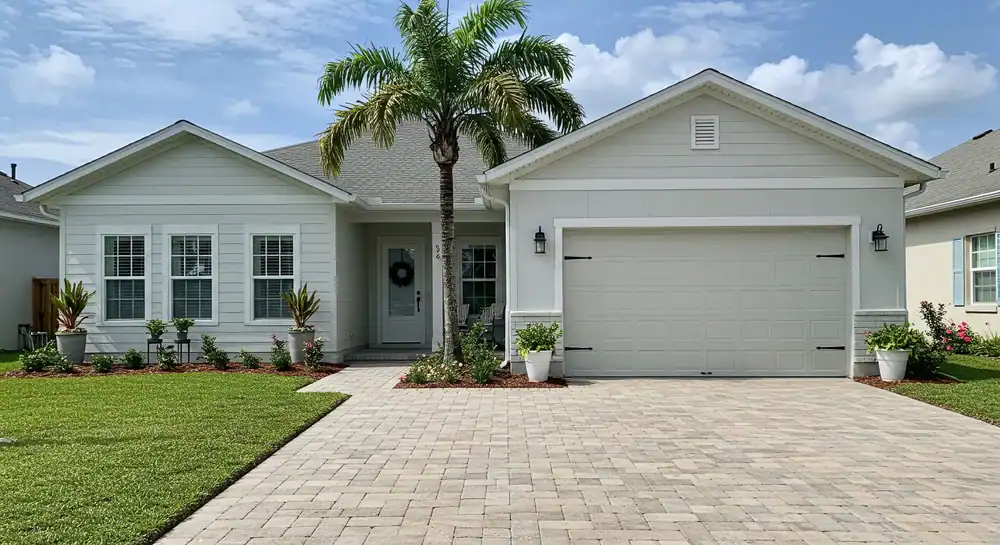
Properly installed paver driveways last 25 to 50 years. That’s double what you’ll get from concrete and triple the lifespan of asphalt. The difference isn’t the materials alone—it’s knowing how to prep the base for Long Island’s clay soil and coastal climate. When the installation is done right, your driveway becomes something neighbors notice for the right reasons.
Ageless Chimney started as a masonry company, and driveway work is a natural extension of what we’ve always done. We’re not the guys who show up, slap down some pavers, and disappear.
Every job is handled by an owner. That means the person who quotes your project is the same person making sure the base is compacted correctly and the drainage slopes away from your house. We’re licensed, insured, and bonded—and we’ve earned Angie’s List Super Service awards for six straight years.
The Belgian block installations you see around Rockville Centre that are 30-plus years old and still look perfect? That’s the standard we’re building to. Not the cheapest option, but the one that actually lasts.
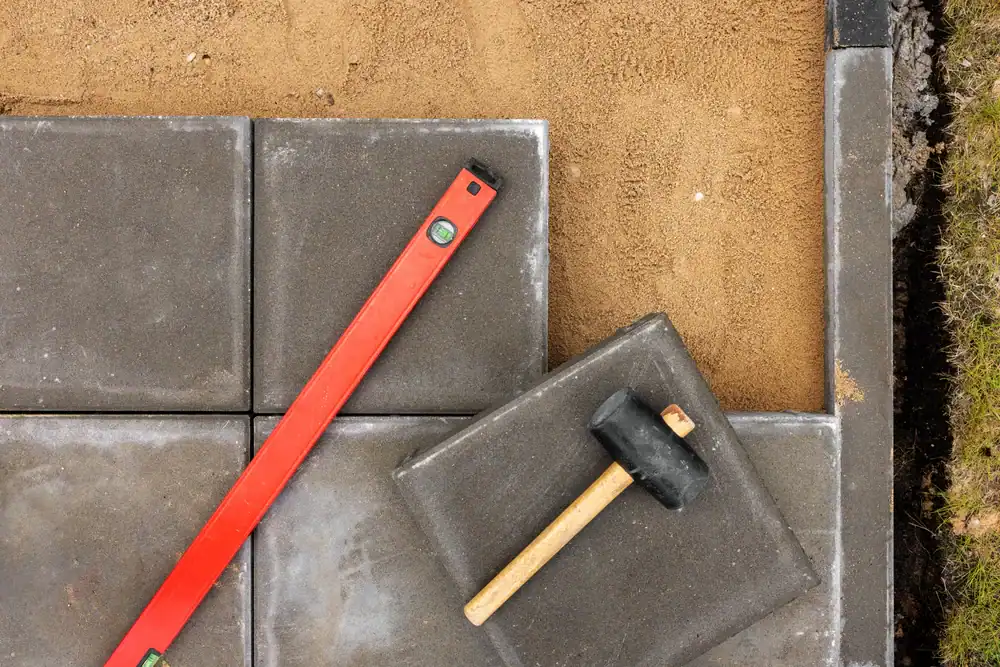
We start with the base—because that’s where most driveway problems actually begin. Long Island’s clay soil doesn’t drain well, so we excavate deep enough to install a proper stone base that handles water and ground movement. This isn’t optional if you want a driveway that lasts.
Next comes grading and drainage. We slope everything away from your foundation and make sure water has somewhere to go. Pooling water is how driveways fail early, so we build this in from the beginning.
Then we install your pavers—whether that’s brick, cobblestone, or Belgian block borders. Each piece is set level and tight. The edges get locked in so nothing shifts over time. When we’re done, your property looks cleaner than when we started. No mess left behind, no shortcuts taken, and a driveway you’ll actually want to show off.
Ready to get started?
You’re not just getting pavers dropped on dirt. You’re getting a complete system that handles everything Long Island throws at it.
That includes proper excavation for Nassau County’s clay soil, which slows drainage to a crawl after heavy rain. It includes a compacted stone base that won’t settle or shift when the ground freezes and thaws. And it includes grading that directs water away from your home—not toward your foundation where it causes real problems.
If you’re dealing with a sinking driveway or fixing cracked concrete, we address what caused the failure in the first place. Sometimes that’s poor base prep. Sometimes it’s drainage that was never planned correctly. We don’t just cover up the problem—we fix it so it doesn’t come back.
You also get material options that make sense for Rockville Centre. Larger format pavers and mixed materials are trending in Nassau County because they create visual interest without looking overdone. We’ll walk you through what works for your home and your block, not just what’s easy for us to install.
Paver driveways last 25 to 50 years when installed correctly. Concrete driveways typically last 15 to 20 years, and asphalt driveways last 12 to 15 years before they need major repairs or replacement.
The difference comes down to how each material handles ground movement. Concrete is rigid—when Long Island’s clay soil shifts or freezes and thaws, concrete cracks. Asphalt is more flexible but breaks down faster, especially with salt exposure from our coastal climate.
Pavers flex with ground movement instead of cracking. And if one paver does get damaged, you replace that single piece instead of tearing out an entire slab. That’s why you see Belgian block driveways around Rockville Centre that are decades old and still look great.
Clay soil and poor drainage cause most driveway problems in Nassau County. Clay doesn’t drain well, so water sits under your driveway longer than it should. When that water freezes, it expands and pushes everything up. When it thaws, the ground settles unevenly—and that’s how you get cracks and sinking.
The other issue is base preparation. If the stone base under your driveway isn’t deep enough or properly compacted, it shifts over time. That creates low spots where water pools, which speeds up deterioration.
Fixing a sinking driveway means addressing both problems. You need a base that’s built for clay soil, and you need grading that moves water away from the driveway entirely. Patching the surface without fixing what’s underneath just delays the same problem.
Cost depends on size, material, and how much prep work your property needs. A standard two-car driveway with quality pavers typically runs higher than asphalt but less than stamped concrete—and it lasts significantly longer than both.
If you’re replacing a failing driveway, the cost also depends on whether we’re fixing drainage issues or dealing with poor soil conditions. Those aren’t extras—they’re part of making sure your new driveway doesn’t fail the same way your old one did.
We offer free estimates and a price guarantee. If you get a written estimate from another licensed contractor, we’ll beat it. But the goal isn’t to be the cheapest—it’s to give you a driveway that’s still solid and attractive 20 years from now. That’s worth more than saving a few hundred dollars upfront.
Yes. Drainage is built into every driveway project we do, not added as an afterthought. Poor drainage is one of the main reasons driveways fail early in Nassau County, so we treat it as a core part of the job.
We grade your driveway so water flows away from your house and toward the street or another drainage point. If your property has clay soil that doesn’t absorb water quickly, we account for that in the base design. Sometimes that means adding drainage channels or adjusting the slope more than usual.
Water pooling near your foundation isn’t just a driveway problem—it’s a structural risk. If we see drainage issues during the estimate, we’ll tell you what needs to happen to fix it. You’ll know the full scope before we start, not halfway through the job.
Yes, we install Belgian block borders and cobblestone driveway aprons on existing driveways. It’s a common upgrade in Rockville Centre because it adds that classic, finished look that matches the neighborhood’s style.
Belgian block is also functional. It creates a clean edge that keeps your driveway pavers or asphalt from spreading over time. The blocks are set in concrete, so they stay put even with freeze-thaw cycles and regular use.
If your current driveway is in good shape but needs a visual upgrade, adding Belgian block borders is a smart move. If the driveway itself is failing—cracked, sinking, or draining poorly—we’ll talk through whether it makes more sense to replace the whole thing. Either way, you’ll get an honest assessment of what’s worth doing.
If you’re seeing widespread cracking, sinking sections, or water pooling regularly, replacement usually makes more sense than repair. Small cracks can be patched, but if the base is failing or the drainage was never done right, those patches won’t hold.
Here’s a simple test: if more than 30% of your driveway has visible damage, or if the same spots keep cracking after repairs, the problem is structural. That means the base or drainage needs to be redone—and at that point, you’re better off replacing it.
We’ll walk your property during the estimate and tell you exactly what we’re seeing. If repair makes sense, we’ll say so. If replacement is the smarter long-term move, we’ll explain why. You’re not getting a sales pitch—you’re getting an honest evaluation from someone who’s been doing this work in Nassau County for years.
Other Services we provide in Rockville Centre