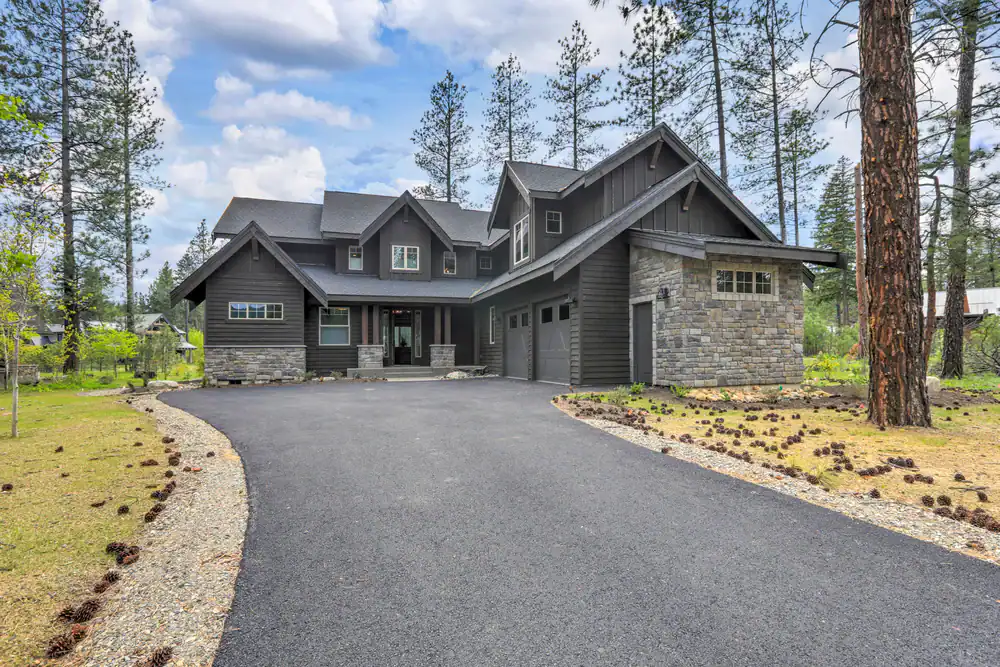

You stop worrying about freeze-thaw damage turning small cracks into expensive problems. That’s what happens when your driveway contractor in South Floral Park, NY understands how water moves, how bases settle, and what Long Island winters actually do to improperly installed surfaces.
Your cars have room. Three-vehicle households are standard here, and your driveway should reflect that without looking like a parking lot.
Water goes where it’s supposed to go—away from your foundation, not toward it. Poor drainage doesn’t just damage driveways. It floods basements, cracks foundations, and creates mold problems that cost thousands more than the driveway itself. Proper grading and drainage solutions during installation prevent all of that.
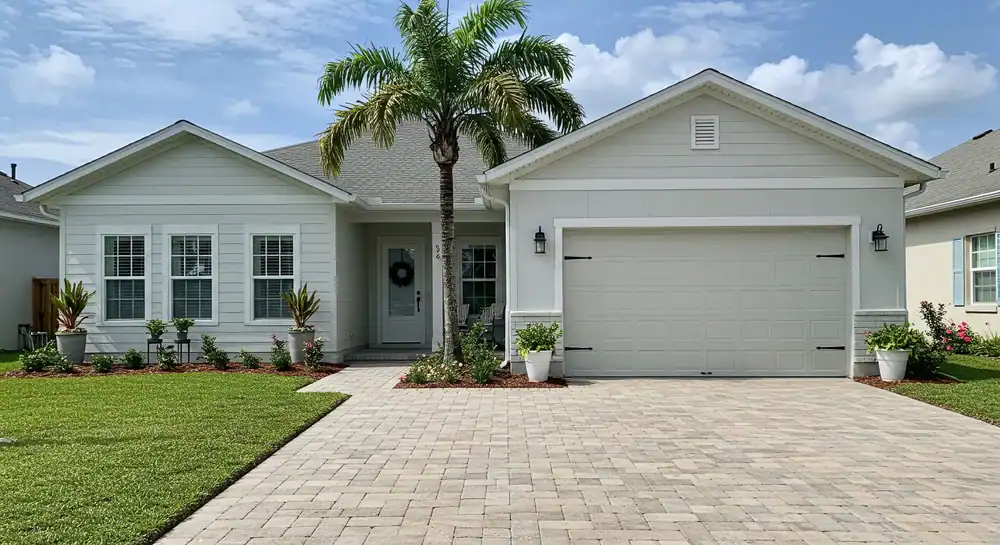
You get curb appeal that actually affects your property value. Real estate agents in Nassau County will tell you—homes with quality paver or Belgian block installations sell faster and command higher offers than identical homes with cracked asphalt.
We started serving Long Island homeowners nearly two decades ago. We’re licensed, insured, and owner-operated, which means you’re not dealing with a different crew every day or wondering who’s accountable when questions come up.
South Floral Park homes average 60+ years old. We know what that means for your property—settling foundations, outdated drainage, driveways that were poured when standards were different. Your neighborhood has everything from classic colonials to updated modern designs, and your driveway installation should work with your home’s architecture, not against it.
We handle the permitting. South Floral Park has specific requirements, and navigating them efficiently is part of what you’re paying for. You shouldn’t have to figure that out yourself.
First, we measure everything and talk about what you actually want. Not what we think you should want—what works for your property, your vehicles, and your budget. You get a clear estimate with no surprise costs later.
Then we excavate properly. That means going deep enough to create a stable base that won’t shift when the ground freezes and thaws. Most driveway problems start here, with contractors cutting corners you can’t see until it’s too late.
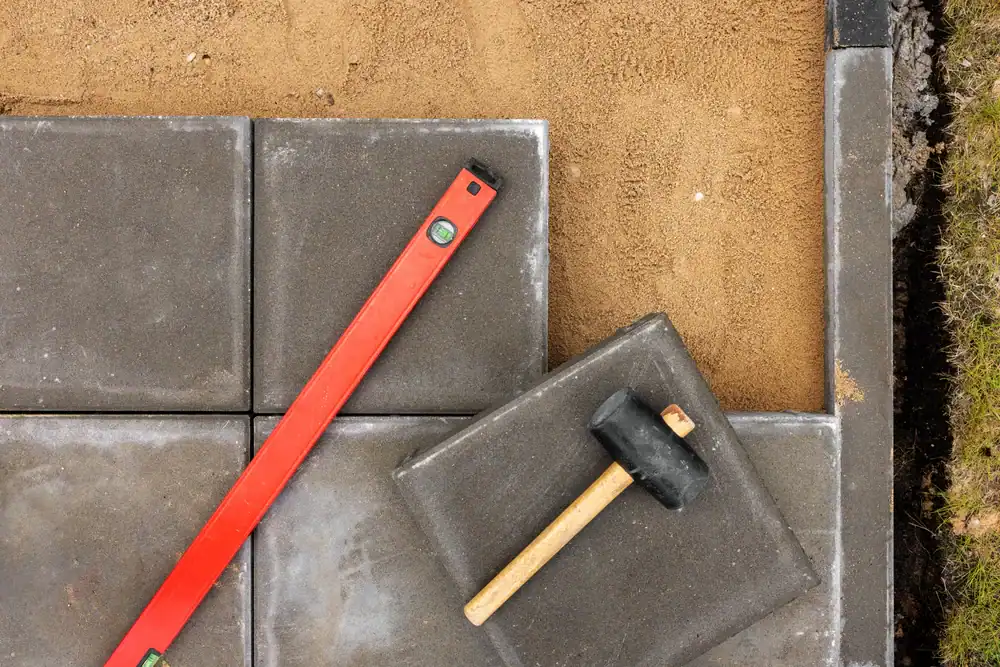
For paver driveway installations in South Floral Park, NY, we use a three-layer method: excavation, reinforced concrete base, mortar bed, then precision paver setting. For concrete driveway installation in South Floral Park, NY, we focus on proper thickness, rebar reinforcement, and control joints that prevent random cracking. Belgian block borders get set in concrete, not sand, so they stay put.
Drainage gets built in from the beginning. We grade everything so water moves away from your home and toward appropriate runoff areas. This isn’t optional—it’s the difference between a 15-year driveway and a 30-year one.
We clean up completely. Your property should look better than when we arrived, not like a construction zone for weeks after we leave.
Ready to get started?
You’re not just getting a new surface. You’re getting a complete site assessment that identifies drainage issues, foundation risks, and structural problems before we start. That’s how you avoid expensive surprises.
Material selection matters more in South Floral Park, NY than in other areas. With median property values over $578,000, your driveway should match the investment you’ve made in your home. We work with pavers, concrete, brick, cobblestone, and Belgian block—whatever fits your aesthetic and functional needs.
Driveway widening is common here because families own an average of three cars. We can expand your existing footprint without making it look like an addition. Sinking driveway repair in South Floral Park, NY addresses the underlying base problems, not just the visible settling.
Timing matters. Installing between May and September gives the materials time to cure properly before winter hits. Long Island’s freeze-thaw cycles are brutal, and rushing a fall installation just to get it done creates problems you’ll see by spring.
You get maintenance guidance that actually helps. Most homeowners don’t know when to reseal, how to prevent ice damage, or what products to avoid. We tell you exactly what to do and when.
Asphalt driveways last 15-20 years when installed correctly with proper base preparation and drainage. That’s the realistic expectation for Long Island’s climate, not the 30-year claims some contractors make.
Paver driveways last 25-30 years with minimal maintenance because individual pavers can be replaced if damaged, and the interlocking design handles freeze-thaw movement better than solid surfaces. Concrete falls somewhere in the middle at 20-25 years, assuming it was poured thick enough with proper reinforcement and control joints.
The key word in all of this is “properly installed.” Most driveways fail early because of base problems, poor drainage, or inadequate thickness—not because the surface material wore out. When you see a 10-year-old driveway that’s already cracking and settling, it’s almost always an installation issue, not a material issue.
Freeze-thaw cycles are the biggest culprit. Water seeps into small cracks, freezes, expands, and makes those cracks bigger. This happens every winter in South Floral Park, NY, and it’s why proper sealing and drainage matter so much.
Poor base preparation is the second issue. If the excavation wasn’t deep enough or the base material wasn’t compacted properly, the driveway will settle unevenly as the ground shifts. You’ll see this as dips, cracks along the edges, or sections that sink near the garage.
Drainage problems accelerate everything. Water pooling on or under your driveway weakens the base, creates erosion, and gives freeze-thaw cycles more ammunition. This is why we grade everything during installation to move water away from the surface and your foundation.
Tree roots, heavy vehicles, and age all contribute, but those three factors—freeze-thaw, base prep, and drainage—cause most of the driveway damage we see in Nassau County.
If you’re dealing with isolated cracks or small settled sections, repairs make sense. We can patch concrete, replace individual pavers, or address specific drainage issues without tearing everything out.
But if you’re seeing multiple problems—widespread cracking, significant settling, drainage issues, and surface deterioration—replacement becomes more cost-effective than ongoing repairs. Here’s why: each repair addresses a symptom, not the underlying cause. If your base is failing or drainage was never done right, you’ll keep patching forever.
A good rule is this: if repair costs exceed 50% of replacement cost, or if you’re looking at your third round of repairs in five years, replacement makes more financial sense. You’re essentially paying for a new driveway in installments while still driving on a deteriorating surface.
We’ll tell you honestly which makes sense for your situation. There’s no point in selling you a full replacement if repairs will actually solve the problem.
Asphalt runs $5-8 per square foot installed in Nassau County. A standard two-car driveway (about 600 square feet) costs $3,000-$5,000 depending on base prep requirements and drainage work.
Concrete costs more at $8-12 per square foot because of material costs and labor intensity. That same 600-square-foot driveway runs $5,000-$7,500. Paver installations start around $15-25 per square foot because of the precision work involved, putting a typical driveway at $9,000-$15,000.
Belgian block borders add $30-50 per linear foot. Cobblestone aprons run higher because of material costs and installation complexity.
These are ranges, not quotes. Your actual cost depends on current driveway condition, drainage requirements, property access, and material selection. We give you a clear estimate after seeing your property—no guessing, no surprise charges later.
Yes, most driveway installation and replacement projects in South Floral Park, NY require permits. The village wants to ensure proper drainage, setback compliance, and that your new driveway doesn’t create runoff problems for neighboring properties.
Permit requirements vary based on project scope. A complete replacement typically needs a building permit. Expanding your driveway footprint may require site plan approval. Even some repair work needs permits if you’re changing drainage patterns or working near property lines.
We handle the permitting process as part of your project. That includes preparing the necessary documentation, submitting applications, and coordinating inspections. You don’t need to figure out what forms to file or who to call at the village office.
Working without permits creates problems if you ever sell your home. Title searches reveal unpermitted work, and buyers either walk away or demand price reductions to cover the cost of bringing everything up to code retroactively.
Pavers handle freeze-thaw cycles better than any other option because the interlocking design allows for slight movement without cracking. Individual pavers can shift microscopically as the ground freezes and thaws, then settle back into place. If one does crack, you replace that paver, not the entire driveway.
Concrete works well if it’s installed with proper thickness (at least 4 inches, preferably 5-6 for this climate), adequate reinforcement, and control joints every 10 feet. Those joints give the concrete predetermined places to crack as it expands and contracts, preventing random cracking across the surface.
Asphalt is the most affordable option and performs adequately with regular maintenance—sealing every 2-3 years and crack filling as needed. It’s more susceptible to freeze-thaw damage than pavers or concrete, but proper installation and maintenance extend its life significantly.
The “best” material depends on your budget, aesthetic preferences, and how long you plan to stay in your home. We’ll walk you through the pros and cons of each option for your specific property and let you decide what makes sense.
Other Services we provide in South Floral Park