

You’re tired of the same cycle. Cracks appear after winter. Water pools near your garage. The surface looks faded and embarrassing when neighbors drive by.
A properly installed driveway changes that. You get a surface that drains correctly, handles freeze-thaw cycles without breaking apart, and actually adds to your home’s value instead of detracting from it. The right materials and foundation work mean you’re not calling someone back in two years to fix the same problems.
Springs homeowners deal with coastal humidity and harsh winters that destroy poorly installed driveways. When the foundation is done right—with proper excavation depth, compacted stone base, and drainage planning—your driveway flexes with temperature changes instead of cracking. That’s the difference between a 5-year fix and a 25-year solution.
We started as a chimney company, but we’ve been handling driveway installation and masonry work across Suffolk County for nearly two decades. Bobby Bruno and Sherwood Adams built this company on the idea that every job gets owner attention—not a crew you never see again.
We’re licensed, insured, and bonded. We’ve worked on over 200 Long Island homes. And we understand what Springs properties face: sandy soil that shifts, salt air that corrodes, and winters that test every installation.
You’re not getting a sales pitch from someone who disappears after signing. You’re working with masons who’ve seen what works in this climate and what fails in three years.
First, we come out for a free estimate. We look at your current driveway, drainage issues, soil conditions, and what you’re trying to accomplish. You get a written quote that won’t change unless you change the scope.
Once you approve, we typically start within 2-3 weeks. We excavate 8-10 inches deep—deeper if your soil or drainage requires it. Then we install a compacted gravel base that drains properly and won’t shift under weight. This foundation work is what separates driveways that last from ones that fail.
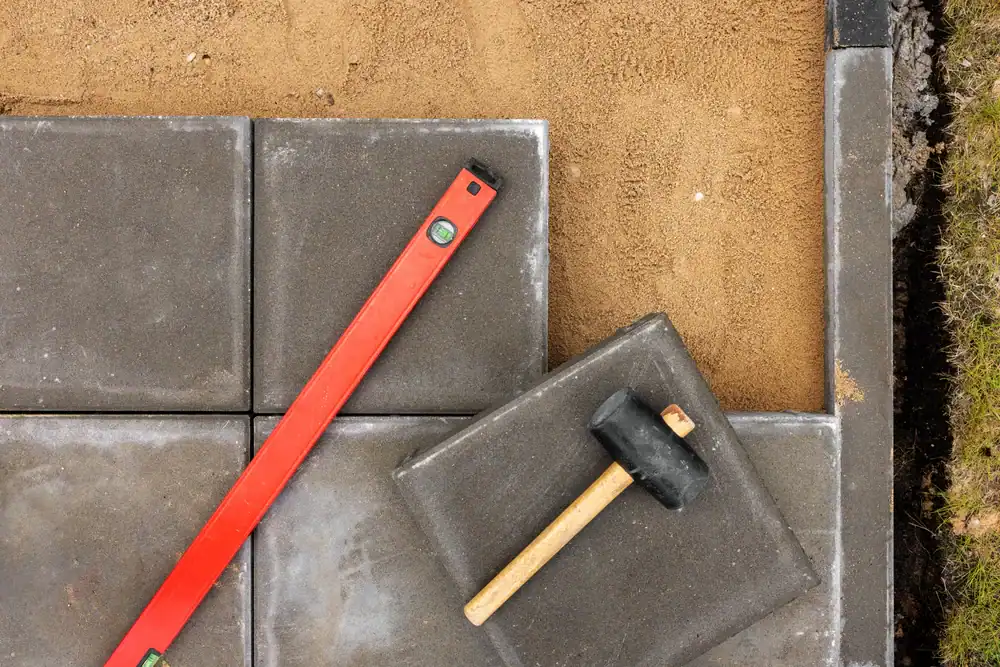
For paver driveways in Springs, NY, we set each paver on a sand bed with proper spacing, then install Belgian block borders to prevent edge shifting. For concrete driveway installation in Suffolk County, we pour in sections with control joints and proper slope for drainage. Every installation accounts for Long Island’s freeze-thaw cycles.
The job takes anywhere from a few days to a week depending on size and complexity. We handle permits, coordinate with your schedule, and clean up completely when we’re done.
Ready to get started?
You have options: pavers, concrete, Belgian block borders, cobblestone driveway aprons. Each works differently in Long Island’s climate, and the right choice depends on your property, budget, and how you use your driveway.
Paver driveways handle freeze-thaw cycles better than most materials because individual pavers can flex without cracking the entire surface. If one gets damaged, you replace that paver—not the whole driveway. We install them with proper base depth and edge restraints so they don’t shift or sink over time.
Concrete works well when installed correctly with proper thickness, reinforcement, and control joints. The key is the foundation and drainage. Springs sits on sandy soil that shifts, so we excavate deep enough to reach stable ground and install a base that won’t settle.
Belgian block borders aren’t just decorative—they’re functional. They create permanent edges that handle plowing and salt exposure without deteriorating. They also prevent pavers from shifting outward over time, which is a common failure point in cheaper installations.
We also handle sinking driveway repair Springs, NY and fixing cracked concrete driveways Springs, NY when full replacement isn’t necessary. Sometimes the foundation is solid but the surface needs work. We assess honestly and recommend what actually makes sense for your situation.
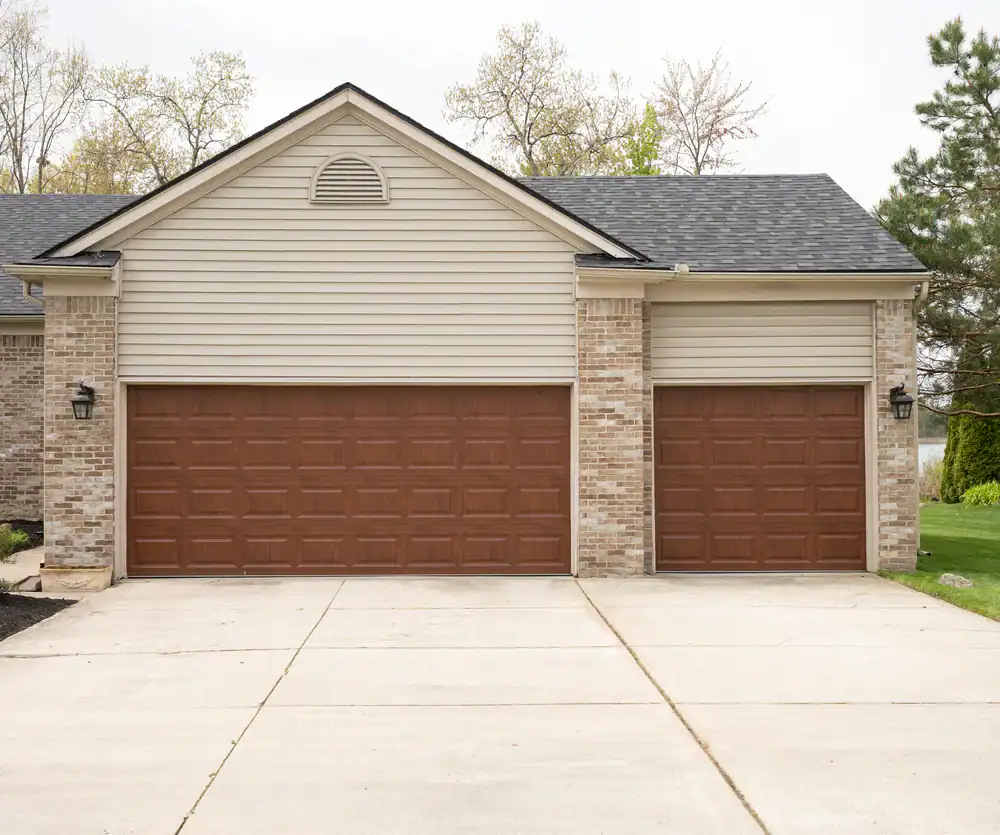
A properly installed paver driveway easily lasts 25-30 years in Long Island’s climate. Concrete driveways typically last 20-25 years when the foundation work is done correctly and drainage is handled properly.
The lifespan depends entirely on installation quality. If the contractor cuts corners on excavation depth or uses inadequate base materials, you’ll see problems within 5 years. Springs’ freeze-thaw cycles destroy driveways that don’t have proper foundation support and drainage.
We excavate deep enough to reach stable soil, install compacted stone base layers that drain well, and use materials rated for coastal conditions. That’s why our installations last decades instead of needing replacement after a few harsh winters.
Water is the main culprit. Springs gets freeze-thaw cycles that cause water to seep into small cracks, freeze, expand, and create bigger cracks. Poor drainage makes this worse by keeping water around the foundation instead of directing it away.
Suffolk County’s sandy soil also shifts and settles over time. If the contractor didn’t excavate deep enough or didn’t compact the base properly, the driveway sinks as the soil underneath shifts. This creates low spots where water pools, which accelerates the damage.
Salt air from the coast corrodes certain materials faster than inland areas experience. That’s why we use materials rated for coastal exposure and install proper drainage systems that move water away from your foundation. Fixing the drainage problem prevents the cycle from repeating.
A standard two-car driveway typically runs $2,500-5,000 for concrete, or $3-7 per square foot for pavers, depending on excavation depth, drainage requirements, and site accessibility. Belgian block borders, cobblestone aprons, and custom patterns increase the cost.
The price depends on what your property needs. If we’re dealing with poor drainage, unstable soil, or significant excavation, the cost goes up because the work required goes up. We don’t cut corners to hit a lower price—we do the work that ensures your driveway lasts.
You’ll find cheaper quotes from contractors who skip foundation work or use thinner materials. Those driveways fail within a few years, and you end up paying twice—once for the cheap installation and again for the replacement. We give you a written estimate that reflects the actual work required, and we guarantee we won’t be undersold by competitors offering the same quality installation.
Yes. Drainage is critical in Springs because poor drainage destroys even well-built driveways. We evaluate your property’s slope, soil conditions, and water flow patterns, then design drainage solutions that move water away from your driveway and foundation.
This might mean installing proper elevation and slope in the driveway itself, adding drainage channels along the edges, or coordinating with your landscaping and sprinkler systems. Every property is different, and Springs’ sandy soil drains differently than other areas.
We also handle sinking driveway repair when drainage problems have caused settling. Sometimes we can fix the drainage and stabilize the existing driveway. Other times, the damage is too extensive and replacement makes more sense. We assess honestly and recommend what actually solves the problem instead of just patching symptoms.
Both work well when installed correctly, but they handle Long Island’s climate differently. Pavers flex with freeze-thaw cycles without cracking because each piece moves independently. If one gets damaged, you replace that paver instead of the whole surface. They also handle salt exposure well and offer more design options.
Concrete is typically less expensive upfront and works great for straight driveways without curves. The key is proper thickness, reinforcement, and control joints that allow for expansion and contraction. Concrete also requires less maintenance than pavers once it’s installed.
For Springs specifically, many homeowners choose pavers because they handle coastal conditions better and offer easier repairs if something does go wrong. But concrete makes sense if budget is tight and the driveway design is straightforward. We walk through both options during the estimate and explain what makes sense for your specific property and how you use your driveway.
Most projects start within 2-3 weeks of approval, depending on our current schedule and permit requirements. Springs requires permits for certain driveway work, and we handle that process as part of the project.
Weather affects timing too. We don’t install driveways in freezing temperatures or heavy rain because the materials won’t set properly. Spring and fall are typically the busiest seasons, so scheduling during summer or early fall often means faster start times.
Once we start, most driveway installations take 3-7 days depending on size, excavation requirements, and whether we’re dealing with drainage issues or other complications. We schedule around your needs and keep you updated throughout the process. You’re not left guessing when we’ll show up or when the job will be finished.
Other Services we provide in Springs