
You get a pool that increases your home value by 8-15% in the Nassau County market. That’s the financial side, and it matters when you’re making a $50,000+ investment.
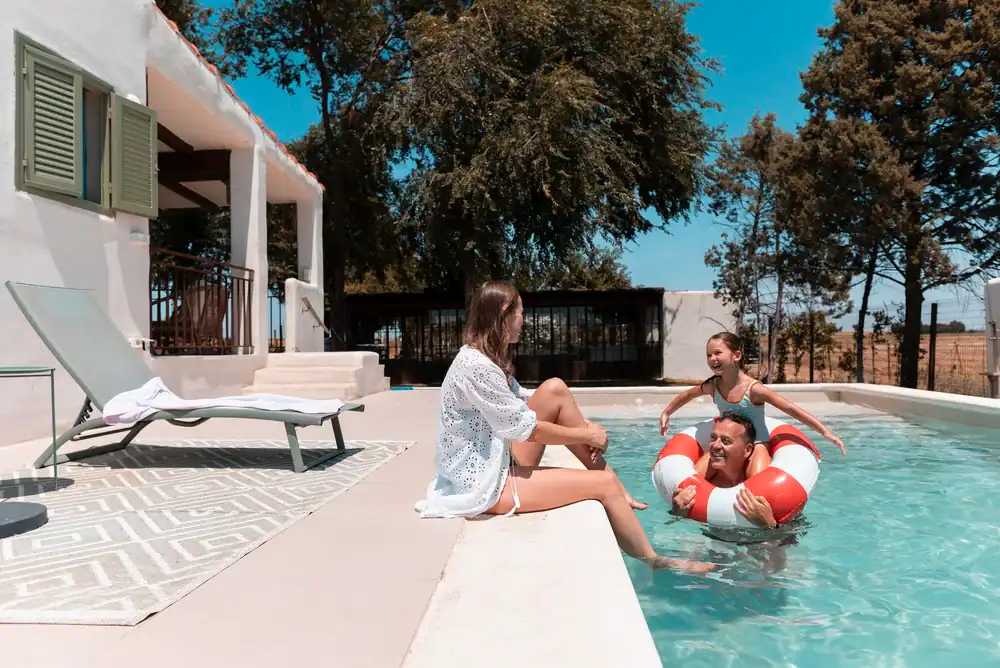
But here’s what you actually use: a backyard that works for your family. Summer evenings where the kids are outside instead of glued to screens. Fourth of July gatherings where people actually want to stay. A space that feels like vacation without the airport hassle or hotel costs.
The difference between a good pool project and a nightmare comes down to three things. First, someone who knows Brookville’s soil conditions and drainage requirements without guessing. Second, a builder who handles Nassau County permits and zoning without you becoming a part-time code expert. Third, a team that shows up when they say they will and communicates throughout the 6-8 week build timeline.
You’re not looking for the cheapest option. You’re looking for the one that doesn’t turn into a six-month ordeal with surprise costs and contractors who stop returning calls.
We started as a masonry company serving Nassau County homeowners who needed contractors they could actually trust. That was nearly 20 years ago. We expanded into complete outdoor living projects, including in-ground pool construction, because our clients kept asking for someone who’d handle the whole job without farming it out to random subcontractors.
Every project has an owner on-site. Not just at the beginning for the sales pitch, but throughout the build. When you’re dealing with excavation in Brookville, you need someone who understands that the North Shore means potential rocky terrain and grading challenges that the South Shore doesn’t have.
We work with gunite, fiberglass, and vinyl liner construction. The choice depends on your property, your timeline, and your budget. We’ll tell you what makes sense for your specific situation, not just what’s easiest for us to install.
First, we look at your property and talk through what you want. Not a sales pitch, an actual conversation about layout, size, depth, and how you’ll use the space. We measure setbacks, check drainage, and figure out what’s realistic given your lot.
Then comes design and permits. We handle all Nassau County permit requirements and zoning compliance. This isn’t the exciting part, but it’s where most projects either move smoothly or turn into a bureaucratic mess. We submit everything, handle the back-and-forth with the building department, and keep you updated without drowning you in paperwork.
Excavation starts once permits clear. Depending on your property, this might mean dealing with groundwater, removing rocks, or building retaining walls for grade changes. The hole gets dug, plumbing and electrical lines go in, and then we build the pool structure itself—whether that’s gunite, fiberglass shell, or vinyl liner with steel walls.
The final phase covers coping, tile, decking, and any pool patio masonry or surrounding hardscape. This is where the project goes from construction site to actual backyard. Most builds take 6-8 weeks from excavation to completion, assuming weather cooperates and materials arrive on schedule.
Ready to get started?
A complete pool project means design services, all necessary permits, professional excavation, plumbing and electrical installation, pool construction, and final landscaping coordination. You’re not juggling five different contractors or trying to figure out who’s responsible when something doesn’t line up.
We handle custom pool coping and tile, concrete pool surrounds, and any pool retaining walls needed for your property’s grading. In Brookville and the surrounding Nassau County area, properties often have elevation changes that require thoughtful grading and drainage solutions. That’s not an add-on conversation halfway through the project. It’s part of the initial planning.
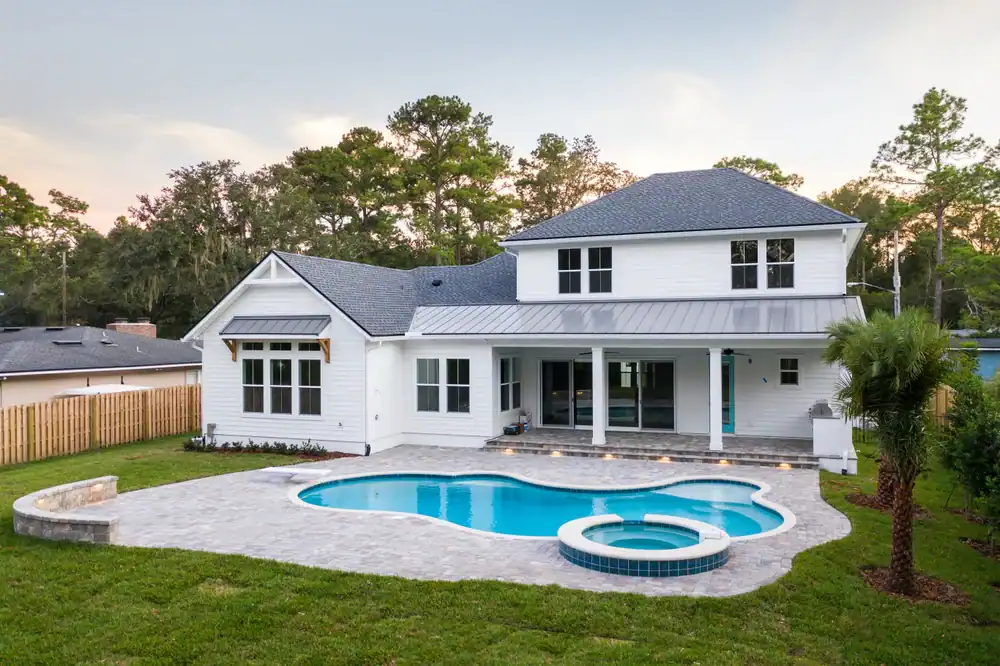
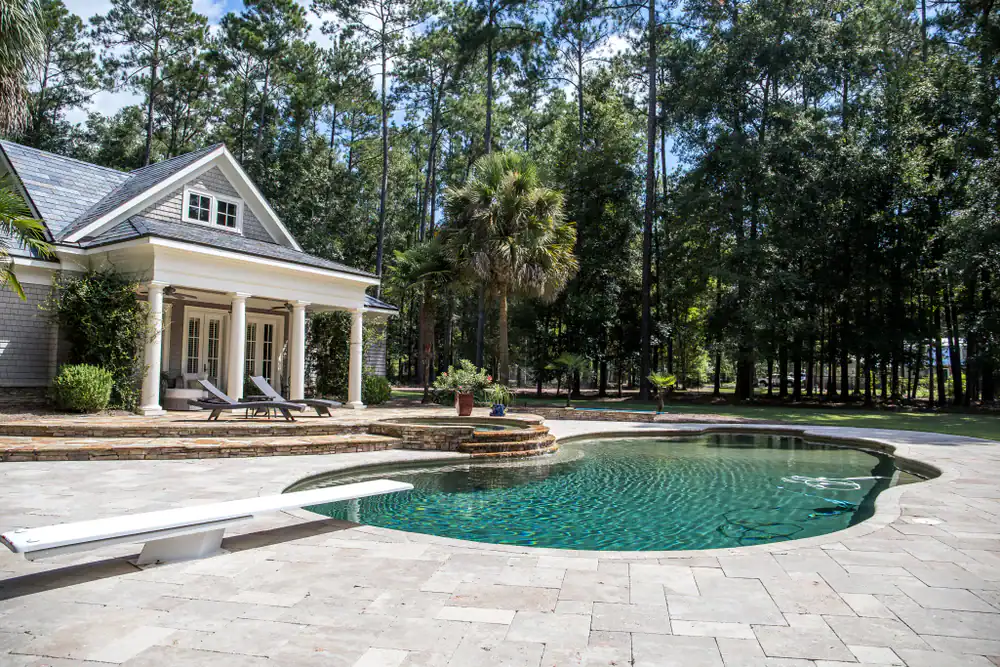
For homeowners who want more than just a rectangle of water, we design complete backyard poolscapes that include patios, walkways, and outdoor living areas. The goal is a coordinated space, not a pool dropped into a yard with everything else figured out later. We work with pavers and sealers that hold up to Long Island’s coastal conditions—salt air and moisture aren’t kind to cheap materials.
You also get regular communication. Not radio silence until we show up for the next phase. You’ll know what’s happening, when it’s happening, and if anything changes. That shouldn’t be a special feature, but based on what we hear from homeowners about previous contractors, apparently it is.
Most custom in-ground pools take 6-8 weeks from excavation to completion. That timeline assumes normal weather, no major material delays, and permits that clear without complications.
The permit process itself adds time before construction starts. Nassau County requires zoning approval, building permits, and sometimes health department sign-off depending on your property’s septic system. That process typically takes 2-4 weeks, but it can stretch longer if there are questions about setbacks or variances.
Weather is the wildcard. Heavy rain stops excavation work and delays concrete pours. If you’re starting a project in April, you’re likely swimming by early June. If you start in June, you might not be ready until August. That’s why most people who want to use their pool the same summer start the conversation in late winter or early spring.
You need a building permit from your local town or village, and that permit requires zoning approval first. The zoning review checks setback requirements—how far the pool must be from property lines, your house, and septic systems. Most Nassau County properties require at least 10 feet from side and rear property lines, but every municipality has specific rules.
If you’re in a homeowners association, you’ll also need HOA approval before applying for permits. Some associations have restrictions on pool size, fencing style, or equipment placement. Get that approval in writing before spending money on design plans.
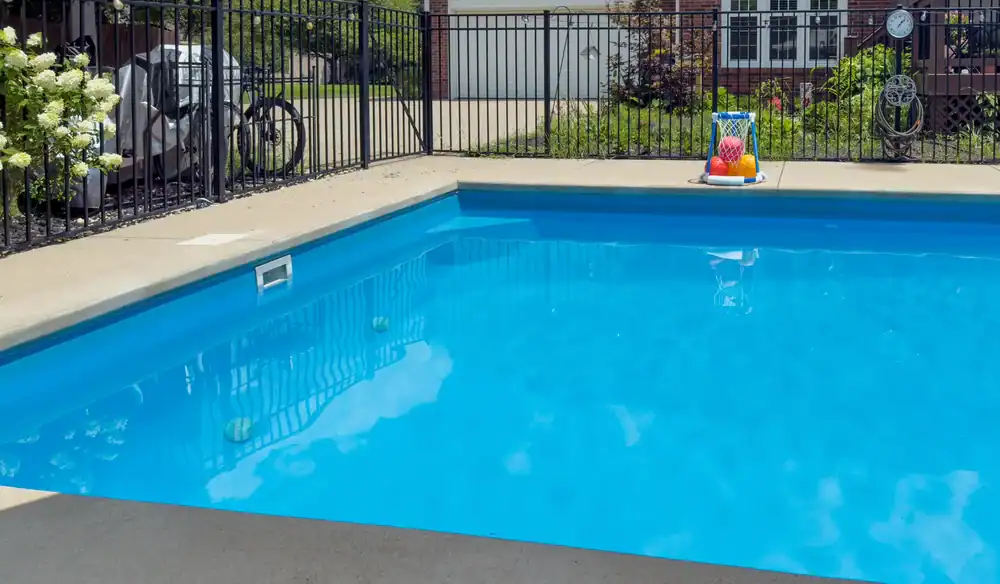
You’ll also need electrical and plumbing permits for the pool equipment, and a fence permit if you’re installing new perimeter fencing. Nassau County requires barrier protection around pools—either a fence around the pool itself or a fence around your entire yard, depending on your property layout. We handle all of this permit coordination so you’re not making multiple trips to the building department or trying to interpret code requirements yourself.
Custom in-ground pools in Nassau County typically run $50,000 to $100,000+ depending on size, construction type, and site conditions. A basic 16×32 vinyl liner pool with standard coping and concrete deck sits at the lower end. A gunite pool with custom tile, natural stone coping, and extensive patio work pushes toward the higher end.
Your property affects cost more than most people expect. If we hit groundwater during excavation, we need dewatering equipment and additional time. Rocky soil means slower digging and potentially blasting or hammering. Significant grade changes require retaining walls. These aren’t upsells—they’re responses to what’s actually underground.
Construction type matters too. Vinyl liner pools cost less upfront but need liner replacements every 7-10 years at $4,000-$5,000 each time. Fiberglass shells install faster but limit your shape options. Gunite offers the most design flexibility and longevity but takes longer to build and costs more initially. There’s no universally “best” choice, just tradeoffs based on your priorities and budget.
Gunite pools are built on-site using sprayed concrete over a rebar frame. This construction method lets you build any shape or depth you want. The surface gets plastered, and you can choose from various finishes including standard plaster, aggregate, or tile. Gunite pools last decades with proper maintenance, but they take the longest to build—usually 6-8 weeks—and cost the most upfront.
Fiberglass pools arrive as a one-piece shell that gets craned into your excavated hole. Installation is fast, often just 2-3 weeks from excavation to completion. The smooth gelcoat surface resists algae better than plaster, which means less chemical use and easier maintenance. The downside is you’re limited to pre-manufactured shapes and sizes, and the shell width restricts delivery to certain properties.
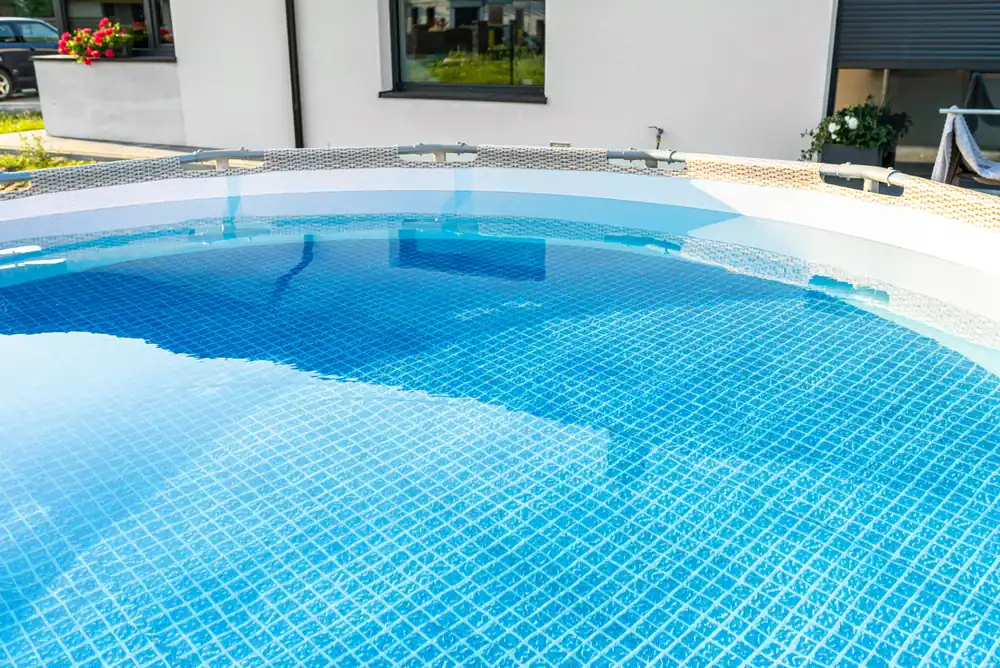
Vinyl liner pools use steel, polymer, or aluminum walls with a custom-fitted vinyl liner. They cost less initially and feel smooth underfoot, but the liner needs replacement every 7-10 years. You can puncture the liner with sharp objects, and repairs are visible. The lower upfront cost appeals to budget-conscious homeowners, but factor in long-term liner replacement costs when comparing options.
Pools typically increase home value by 8-15% in Nassau County according to local real estate data, but that’s not guaranteed return on investment. You’re unlikely to recoup 100% of your construction costs when you sell. Think of a pool as an amenity that makes your home more attractive to buyers with families, not a pure financial investment.
The value boost depends heavily on your neighborhood. In areas where most homes have pools, not having one actually hurts your resale value. In neighborhoods where pools are rare, you might not see much value increase because buyers in that area aren’t expecting or looking for pools.
The real value is what you get while you live there. If you use the pool regularly for 10-15 years, host gatherings, and genuinely enjoy your backyard more, that’s worth something beyond resale numbers. If you’re installing a pool purely to increase home value and plan to sell within a few years, the math probably doesn’t work in your favor.
Weekly maintenance includes testing and balancing water chemistry, skimming debris, brushing walls, and vacuuming the pool floor. You’ll also need to clean the skimmer and pump baskets, backwash or clean the filter regularly, and check equipment for any issues. Most Nassau County homeowners either hire weekly service at $120-$180 per month or handle it themselves with about 2-3 hours of work per week.
Chemical costs run roughly $30-$60 per month during swim season depending on pool size and usage. You’ll need chlorine or salt for a saltwater system, pH adjusters, alkalinity increaser, calcium hardness increaser, and algaecide. Testing kits or test strips are essential—guessing at chemical levels leads to algae blooms, cloudy water, or equipment damage.
Seasonal maintenance matters too. Pools need proper closing in fall with winterizing chemicals, lowering water level, blowing out plumbing lines, and covering. Spring opening involves removing the cover, refilling, starting up equipment, and shocking the water. Many homeowners pay $300-$500 for professional opening and closing rather than risk damaging equipment or dealing with a green swamp when warm weather hits.
Other Services we provide in Brookville