
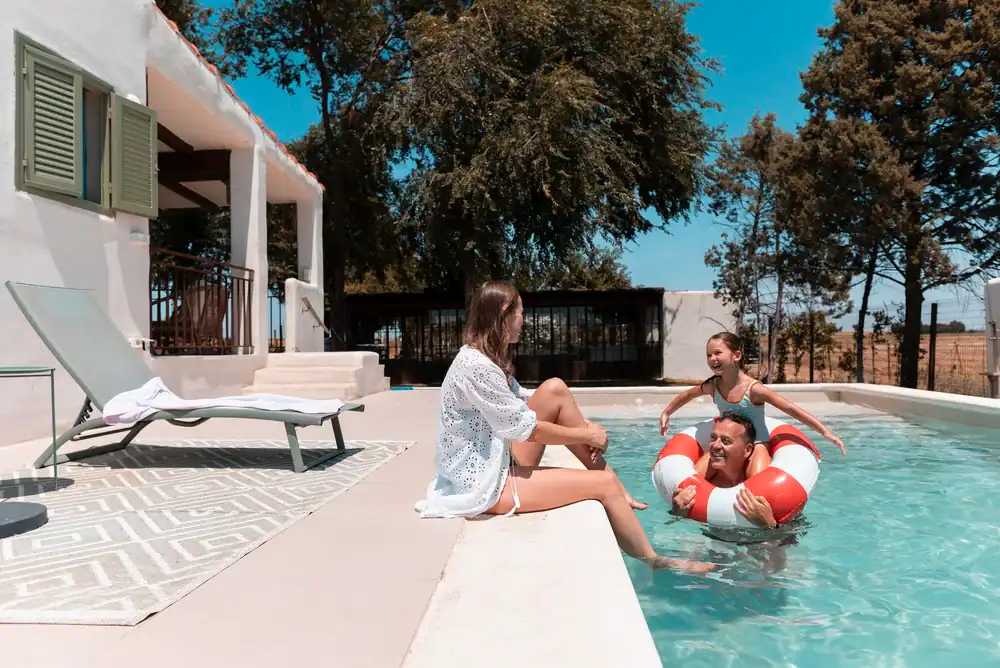

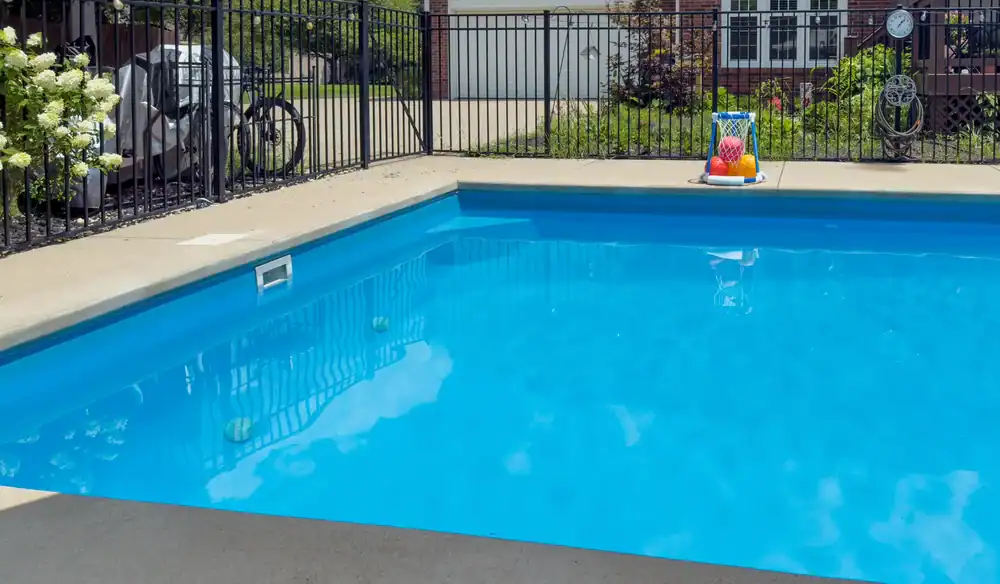
You’re not just adding water to your yard. You’re creating the spot where your kids will beg to stay outside longer, where summer weekends stretch into evenings, and where you’ll actually use your backyard instead of just mowing it.
A custom in-ground pool in Glen Cove, NY changes how your property feels and functions. The National Association of Realtors puts the value increase between 8% and 15%, but that’s not why most people do it. They do it because their home becomes the gathering place. Fourth of July with the grill going and everyone in the water. Saturday mornings that don’t require packing the car and fighting beach traffic.
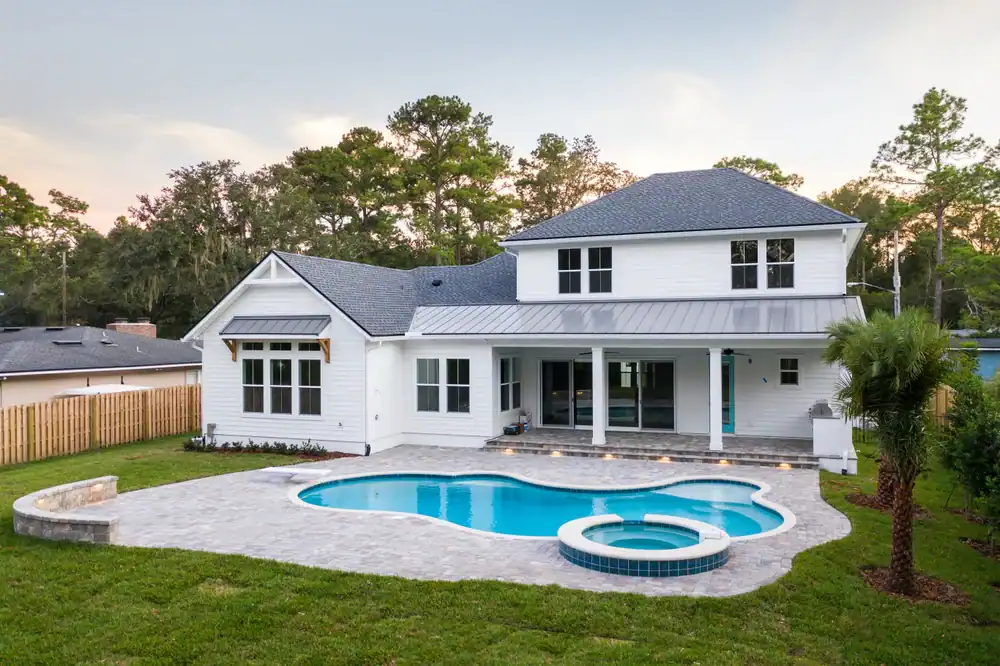
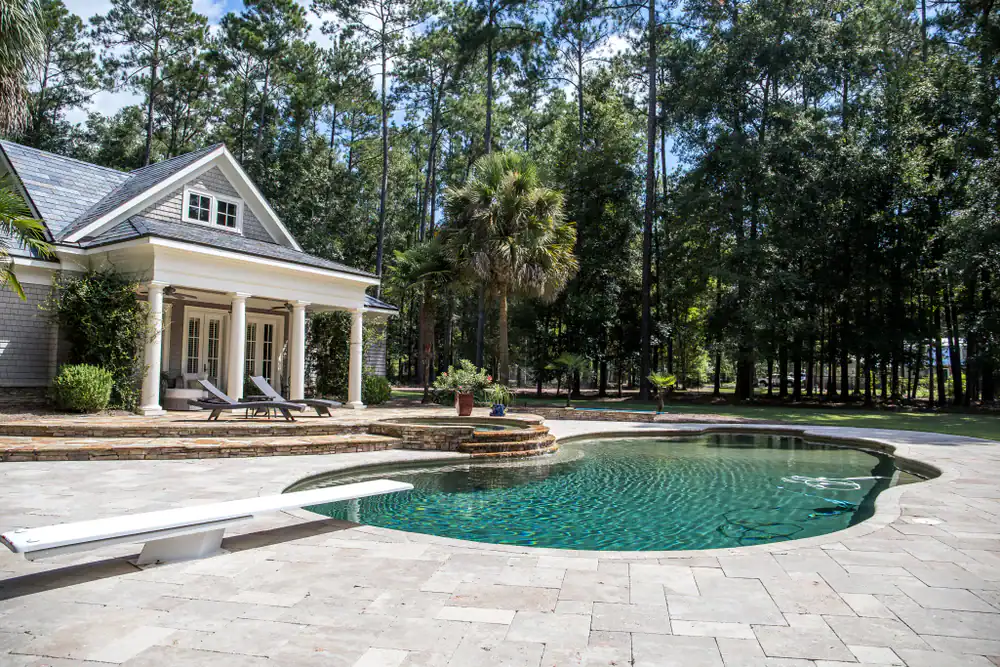
The pool itself is only part of it. Complete backyard poolscapes in Nassau County include the patio, the seating areas, the lighting, the landscaping that ties it together. When it’s done right, it doesn’t look like something got dropped into your yard. It looks like it was always supposed to be there.
And when you’re choosing to invest in your current home instead of moving, the pool becomes the centerpiece of that decision. Mortgage rates and housing shortages have made renovation the smarter play for a lot of families. The backyard is where that investment shows up every single day.
Ageless started in 2006, and for nearly two decades we’ve been working with homeowners across Nassau and Suffolk Counties. We’re not a national franchise or a crew that shows up from three states away. We know Glen Cove, NY. We know the soil conditions, the permit requirements, the inspectors, and the weather patterns that affect how a pool needs to be built here.
Every project is managed by an owner. That means when you call, you’re talking to someone who’s accountable for the outcome, not a salesperson who disappears after the contract is signed. We’re licensed, insured, and bonded. We carry an A+ rating with the BBB, and we’ve earned it by showing up and doing what we said we’d do.
You’re trusting someone to dig up your backyard and spend months working on your property. That’s not a small decision. We treat it like the investment it is.
First, we come out and look at your yard. Not every property is the same. North Shore homes in Glen Cove, NY might have rocky soil or slopes that need retaining walls. South Shore properties deal with high groundwater. We assess what you’re working with before we talk about design.
Once we know what we’re dealing with, we design the pool and the surrounding space. That includes the patio, the coping, the grading, and any masonry work like outdoor kitchens or fire features. Everything gets planned as one cohesive project, not a pool with stuff added on later.
Then we handle the permits. Nassau and Suffolk Counties both require building permits for in-ground pool installation, and the process isn’t simple. We manage the applications, the inspections, and the back-and-forth with local building departments. Our relationships with those offices keep things moving.
Construction takes two to four months depending on the scope. Excavation, plumbing, electrical, pool shell installation, backfill, masonry, and final grading. We do all of our custom masonry installations with our own in-house crews, so there’s no waiting on subcontractors or dealing with coordination issues between multiple companies.
When it’s done, you get a final walkthrough, equipment training, and a pool that’s ready to use. No surprises, no shortcuts.
Ready to get started?
A Suffolk County pool installation company that knows what it’s doing doesn’t just dig a hole and drop in a shell. You’re getting a complete outdoor living space, and that requires more than one trade.
We handle the excavation and grading first. Long Island’s soil conditions vary wildly, and ground settling is one of the biggest long-term problems homeowners face. Sandy soil shifts. Moisture levels change. Concrete and gunite crack under that kind of stress. We use construction methods that account for those conditions from the start, including proper compaction and drainage planning.
Custom pool coping and tile in Nassau County is where the design really shows up. Coping is the cap around the pool edge, and it takes a beating from freeze-thaw cycles, pool chemicals, and constant foot traffic. We install it right so it doesn’t crack, shift, or need replacement in five years. The tile work is the same. It’s not just decorative. It protects the pool structure and makes maintenance easier.
Concrete pool surrounds in Suffolk County need to handle weather, water, and heavy use. We pour and finish concrete that’s mixed and cured for Long Island’s climate. If you want pavers instead, we use Cambridge Pavers with ArmorTec for a surface that won’t sink, separate, or grow weeds through the joints.
Pool retaining walls and grading come into play when your yard isn’t flat. A lot of Glen Cove, NY properties have elevation changes that require structural support. Retaining walls aren’t optional in those cases. They’re what keeps your patio from sliding and your pool from cracking under soil pressure.
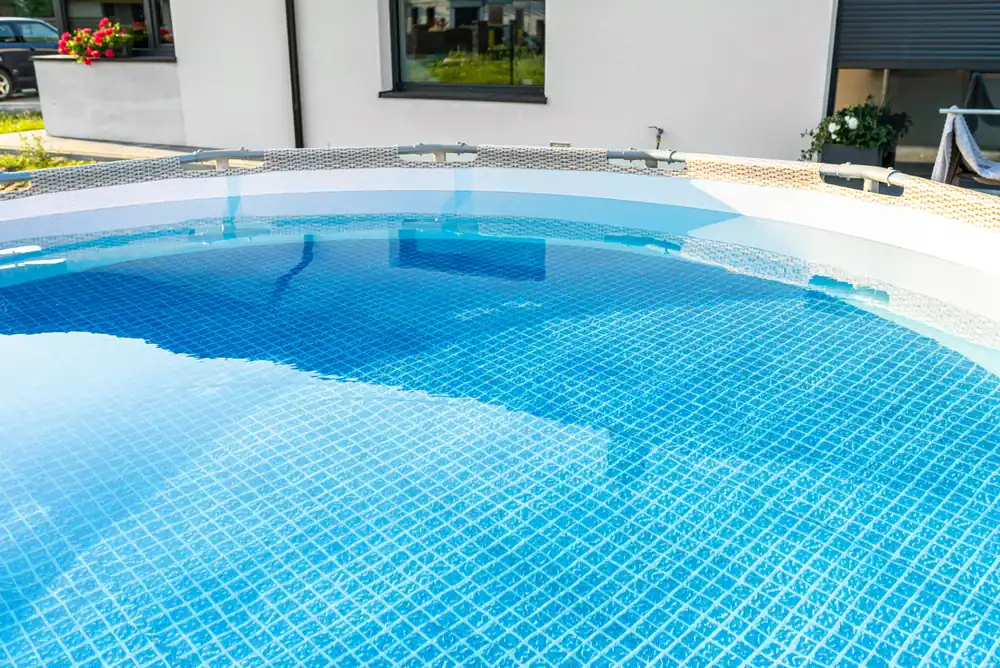
The average cost for in-ground pool installation runs between $39,000 and $70,000, with most projects landing around $55,000. That’s the pool itself. When you add pool patio masonry in Nassau County, custom coping and tile, concrete surrounds, and any grading or retaining wall work, you’re looking at a higher number.
The range exists because every yard is different. If you’re on the North Shore with rocky soil and a slope, you’ll need excavation equipment that can handle ledge rock, plus retaining walls to manage the grade. If you’re dealing with high groundwater on the South Shore, the construction process involves dewatering and additional drainage work. Those aren’t upsells. They’re requirements based on your property’s conditions.
Size matters too. A small plunge pool costs less than a 20×40 pool with a spa and custom tile work. The type of pool affects price as well. Fiberglass pools install faster and handle freeze-thaw cycles better than concrete, but concrete gives you more shape flexibility. We walk you through those tradeoffs during the design phase so you know exactly what you’re paying for and why.
From start to finish, you’re looking at two to four months. That timeline includes design approval, permit processing, excavation, installation, masonry work, and final inspections.
Permits are usually the wildcard. Nassau and Suffolk Counties each have their own zoning laws and review processes. Some towns move faster than others. We submit the applications and handle the follow-up, but we can’t control how long the building department takes to issue the permit. That’s why most experienced pool builders in Suffolk County and Nassau County recommend starting the process in the fall or winter if you want the pool ready for the following summer.
Once permits are in hand, the physical work moves at a predictable pace. Excavation takes a few days. Plumbing and electrical rough-in takes another few days. Pool shell installation depends on the type—fiberglass goes in fast, concrete takes longer to form and cure. Backfill, compaction, and grading happen next. Then comes the masonry work: coping, patio, any retaining walls or custom features. Final grading, landscaping, and equipment startup wrap it up.
Weather can slow things down. You can’t pour concrete in a freeze, and heavy rain turns a construction site into a mud pit. We build buffer time into the schedule, but Long Island weather does what it wants.
Yes. Both Nassau and Suffolk Counties require building permits for in-ground pool installation, and Glen Cove, NY has its own local requirements on top of that. You can’t skip this part.
The permit process involves submitting site plans, engineering drawings, and proof of setback compliance. Setbacks are the required distances between your pool and your property lines, your house, and any septic systems or utilities. Those distances vary depending on your zoning district. If your property is in a flood zone or has wetlands nearby, you’ll need additional approvals.
One of the most challenging aspects of pool installation on Long Island is navigating the patchwork of local regulations. What’s allowed in one village might be restricted in the next town over. We handle the permit applications as part of our service because we’ve done it hundreds of times. We know what the building departments want to see, and we have relationships with the inspectors who review the plans.
Skipping permits or trying to build without approval isn’t worth the risk. You’ll get caught during a resale inspection or a neighbor complaint, and then you’re looking at fines, forced removal, or expensive retroactive permitting. We never suggest cutting corners on permits.
Fiberglass pools handle Long Island’s freeze-thaw cycles better than concrete. The material is flexible, so it expands and contracts with temperature changes without cracking. Concrete pools, especially gunite, develop structural issues over time because the material is rigid and the soil underneath shifts.
Suffolk County and Nassau County both deal with ground movement. Sandy soil compacts and settles. Moisture levels change with the seasons. When a concrete pool shell can’t flex with that movement, it cracks. Those cracks let water seep into the surrounding soil, which makes the settling worse. You end up with a repair cycle that costs thousands of dollars and never really stops.
Fiberglass also requires less maintenance. The smooth surface doesn’t hold algae the way concrete does, so you’re using fewer chemicals and spending less time scrubbing. The finish lasts longer too. Concrete pools need resurfacing every 10 to 15 years. Fiberglass doesn’t.
The tradeoff is shape flexibility. Fiberglass pools come in pre-manufactured shells, so you’re choosing from existing designs. Concrete can be formed into any shape you want. For most families, the durability and lower maintenance of fiberglass outweigh the design limitations. But if you’ve got a specific vision and the budget to maintain it, concrete is still an option.
Yes, and it makes sense to do it all at once. Complete backyard poolscapes in Nassau County include more than just the pool. Outdoor kitchens, fire pits, pergolas, and seating areas turn the space into something you’ll use for more than swimming.
We do all of our custom masonry installations with in-house crews. That means the same team building your pool patio is building your outdoor kitchen or fireplace. There’s no coordination lag between subcontractors, no waiting for another company to fit you into their schedule, and no finger-pointing if something doesn’t line up right.
The design process accounts for all of it from the beginning. We’re looking at traffic flow, utility access, seating arrangements, and how the different elements work together visually. An outdoor kitchen needs gas lines, electrical, and water supply. A fire feature needs proper ventilation and clearance from combustible materials. Pool retaining walls and grading might be necessary to create level areas for those features if your yard has slopes.
Building everything together also saves money. The excavation equipment is already on site. The permit applications cover the whole project. The masonry crew is already scheduled. Trying to add an outdoor kitchen two years later means mobilizing a whole new project, pulling new permits, and dealing with the disruption all over again. Do it once, do it right, and start using the whole space immediately.
Check their credentials first. They need to be licensed with Nassau or Suffolk County consumer affairs, and they need to carry liability insurance and workers’ compensation coverage. Ask to see proof. If they hesitate or make excuses, walk away.
Look at how long they’ve been working in the area. A custom in-ground pools Suffolk County contractor who’s been around for a decade or more has a track record you can verify. They’ve dealt with local soil conditions, local building departments, and local weather. They know what works and what doesn’t. A company that just started or one that’s based two hours away is learning on your dime.
Ask who’s managing your project. If it’s a salesperson who disappears after you sign, that’s a red flag. You want an owner or a dedicated project manager who’s accountable for the outcome and available when you have questions.
Get references and look at completed projects. Not just photos—actual addresses where you can see the work in person if possible. Talk to past customers about how the process went, whether the timeline was accurate, and how the company handled any issues that came up.
Finally, make sure they’re handling permits as part of the contract. We handle permits as part of the job, and they’re included in the price. Any pool installation company in Nassau County that tries to make permits your problem is either inexperienced or trying to cut corners.
Other Services we provide in Glen Cove