
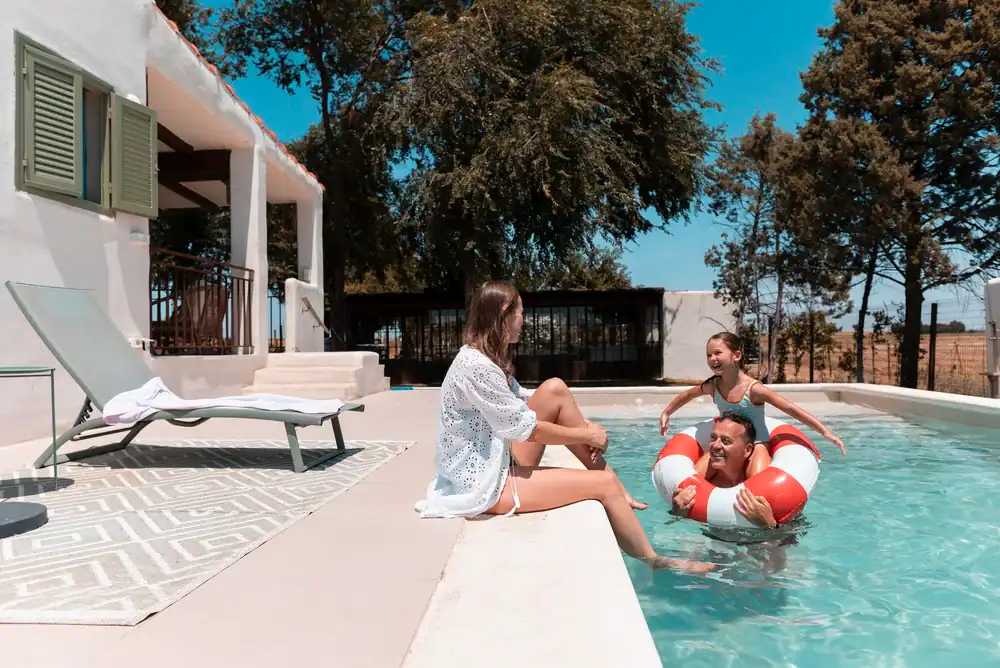

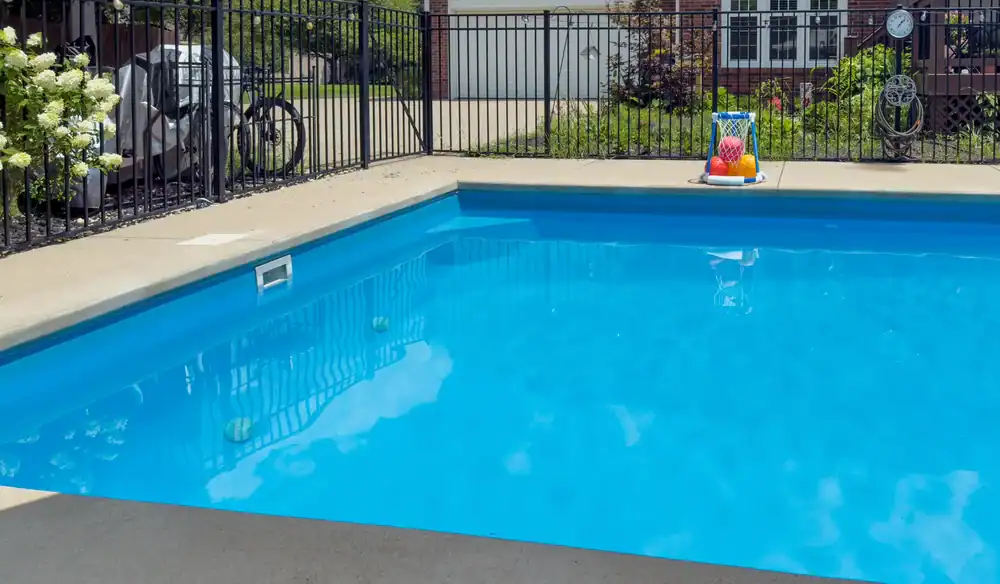
You’re not just getting a hole filled with water. You’re getting a backyard that works for how you actually live—whether that’s hosting summer weekends, cooling off after work, or finally having a reason to stay home instead of fighting beach traffic.
The pool itself is built to handle what Long Island throws at it. Freeze-thaw cycles in winter. Sandy or clay-heavy soil that shifts. High water tables on the South Shore. These aren’t surprises to us, and they won’t become problems for you later.
And when the project’s done, you’re not staring at a construction zone. The grading is clean, the patio is level, the coping is set, and the landscaping ties it all together. You get the finished result, not a half-done job that needs three more contractors to make it usable.
We’ve been working in Nassau and Suffolk County for over two decades. We started in masonry and expanded into complete backyard poolscapes because the two go hand-in-hand—and most pool companies don’t know how to handle the stonework, grading, or drainage that makes or breaks a project in Hempstead.
We’re not a national franchise. We’re local, and we know the soil conditions, permit processes, and building departments across Long Island. That means fewer delays, fewer change orders, and fewer headaches for you.
If you’re in Hempstead or anywhere in Nassau County, you’ve probably seen our work. We’ve built pools in backyards with terrible drainage, tight lot lines, and tricky elevation changes. The kind of jobs that require actual problem-solving, not just a template.
First, we come out and look at your property. Not just measurements—we’re checking soil type, drainage, setbacks, and how your yard sits relative to neighbors and utilities. That tells us what’s possible and what’ll cause problems down the line.
Then we handle the design and permits. You tell us what you want, we draw it up, and we submit everything to the Town of Hempstead or your local building department. We’ve done this enough times that we know what gets approved and what gets kicked back.
Once permits clear, excavation starts. Depending on your soil, that might mean dealing with groundwater, grading for proper drainage, or pulling out rocks and clay. The pool shell goes in—gunite, fiberglass, or vinyl liner depending on what you chose—and then plumbing, electrical, and filtration get installed.
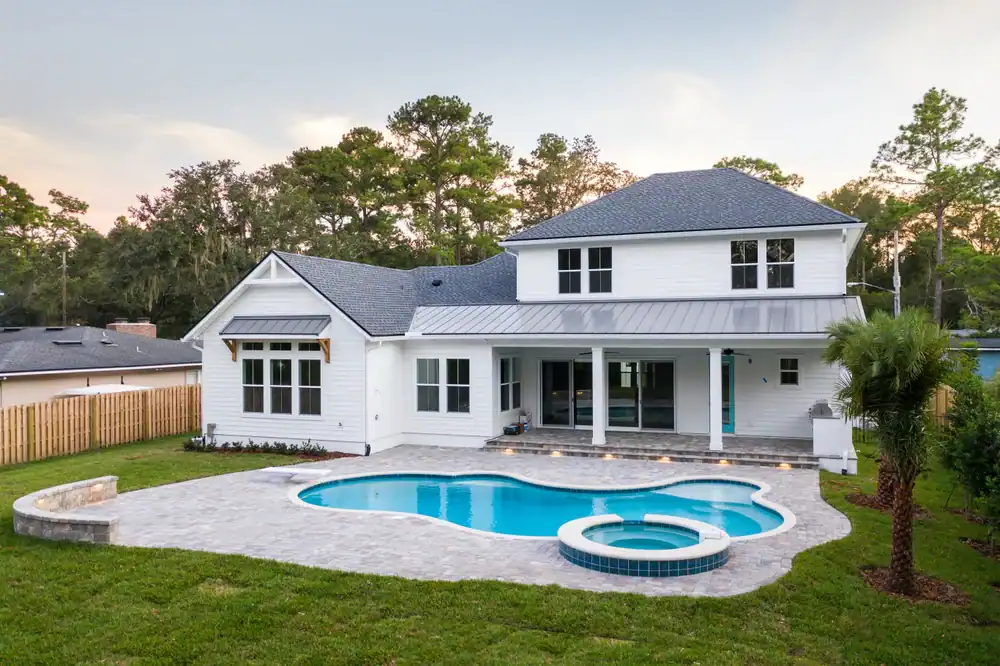
After that, it’s coping, patio work, and any retaining walls or grading that finish the space. We’re not handing you a pool surrounded by dirt. You’re getting the complete install, and it’s built to last through Long Island winters without cracking, shifting, or failing in year three.
Ready to get started?
You’re getting design, permits, excavation, the pool itself, all plumbing and electrical, and the finished surround. That includes pool coping and tile, patio masonry, and any necessary retaining walls or grading to make the yard functional.
We work with gunite, fiberglass, and vinyl liner pools depending on your budget and how you want the pool to perform. Gunite is fully custom and handles any shape. Fiberglass is lower maintenance and faster to install. Vinyl liner is the most affordable and still built to last if the base is done right.
For the patio and pool deck, we use concrete or pavers depending on your preference. Pavers handle freeze-thaw better and are easier to repair if you ever need to access plumbing. Concrete is clean and modern but requires proper base prep in Hempstead’s soil to avoid cracking.
If your yard has elevation changes, we build retaining walls to level the space and manage drainage. That’s critical in Nassau County where heavy rain can flood a poorly graded pool deck or erode your landscaping. We slope everything away from the pool and your house so water goes where it’s supposed to.
Most custom in-ground pools take six to eight weeks from excavation to completion. That timeline assumes permits are already approved and weather cooperates.
Permits are the wildcard. The Town of Hempstead can take anywhere from two to six weeks depending on their workload and whether your design needs revisions. If you’re in a historic district or near wetlands, add time for additional approvals.
Once we break ground, excavation takes a few days unless we hit groundwater or ledge rock. The pool shell itself—whether it’s gunite, fiberglass, or vinyl—goes in over the next week or two. Then plumbing, electrical, coping, and patio work happen in stages. If you’re adding retaining walls, a pergola, or custom landscaping, that extends the timeline, but we’ll map that out upfront so you know what to expect.
All three types—gunite, fiberglass, and vinyl liner—can handle Long Island winters if they’re installed correctly. The difference is in maintenance, customization, and cost.
Gunite is the most durable and fully customizable. You can build any shape, depth, or feature you want. It requires more maintenance because the surface is porous, so you’ll use more chemicals and need to resurface every 10 to 15 years. But it’s the longest-lasting option and handles freeze-thaw cycles without issue if the plumbing is winterized properly.
Fiberglass is low-maintenance and smooth, so it uses fewer chemicals and resists algae better. The downside is you’re limited to pre-made shell shapes, and if the ground shifts, the shell can crack. That’s why soil prep is critical in Hempstead, where sandy or clay soils move more than stable ground.
Vinyl liner pools are the most affordable and still last 20+ years if the base is compacted correctly. The liner itself needs replacing every 7 to 10 years, but that’s a manageable cost compared to gunite resurfacing. It’s a solid choice if you want a pool without the premium price tag.
If your yard has any slope or elevation change, you probably do. Retaining walls serve two purposes: they level the space so your pool deck is usable, and they prevent soil erosion that can undermine your pool structure over time.
In Nassau County, a lot of properties have natural grades that drain toward the street or neighboring lots. If we’re installing a pool on a slope, we need to cut into the hill and build a retaining wall to hold back the soil. Without it, you’re looking at erosion, shifting pavers, and potential drainage problems that flood your pool deck during heavy rain.
Retaining walls also let us create tiered patios or separate pool areas from the rest of your yard. That’s useful if you want a defined entertainment space or need to work around setback requirements in Hempstead. We build them with concrete block, natural stone, or poured concrete depending on the height and your aesthetic preference. They’re engineered to handle the load and drainage so they don’t fail in five years.
You’ll need a building permit, electrical permit, and possibly a health department approval depending on your property and pool type. If you’re adding a fence—which is required by code—that’s a separate permit too.
The Town of Hempstead requires a site plan showing the pool location, setbacks from property lines, and how drainage will be handled. They want to see that the pool meets zoning requirements and won’t create runoff issues for neighboring properties. If you’re in a flood zone or near wetlands, expect additional review from the planning or conservation board.
Electrical work has to be inspected separately because pool wiring involves GFCI protection and bonding requirements for safety. The health department sometimes gets involved if you’re installing a larger pool or spa that affects your septic system, though that’s less common in Hempstead where most homes are on municipal sewer.
We handle all of this. You’re not making calls to the building department or figuring out what forms to file. We submit everything, track approvals, and schedule inspections so the project keeps moving.
Most custom in-ground pools in Nassau County run between $50,000 and $100,000 depending on size, type, and what you’re including in the project. A basic vinyl liner pool with a concrete patio sits at the lower end. A gunite pool with custom coping, paver deck, retaining walls, and integrated landscaping pushes toward the higher end.
The pool shell itself is only part of the cost. You’re also paying for excavation, which gets expensive if we’re dealing with high groundwater or rocky soil. Plumbing and electrical add several thousand. The patio or deck around the pool is another major line item, especially if you’re using natural stone or premium pavers.
Permits, engineering, and design work add to the total too, but those costs prevent bigger problems later. Skipping proper grading or drainage to save money upfront usually means you’re paying more to fix it in a few years when water starts pooling or your patio settles.
We’ll give you a detailed estimate after seeing your property. That way you know what you’re actually paying for and where you have flexibility if you need to adjust the budget.
Yes, but it depends on your lot size, setbacks, and how much space you need around the pool for a usable deck. Hempstead has zoning rules that dictate how close a pool can sit to property lines, and you’ll need room for equipment, fencing, and access.
Small pools—sometimes called cocktail pools or spools—are an option if your yard is tight. These are typically 10 to 15 feet long, designed more for cooling off than lap swimming. You can still add jets, heating, and a small patio to make the space functional.
The bigger challenge in a small yard is usually drainage and access for equipment. We need to get an excavator in to dig the hole, and we need somewhere for the dirt to go. If your yard is fenced with narrow side gates, that complicates things. And once the pool is in, we need to grade the area so water doesn’t run toward your foundation or your neighbor’s property.
We’ve done plenty of pools on compact lots in Nassau County. It’s about designing smart and working within the constraints. If your yard can fit a pool, we’ll tell you. If it can’t, we’ll tell you that too before you spend money on permits.
Other Services we provide in Hempstead