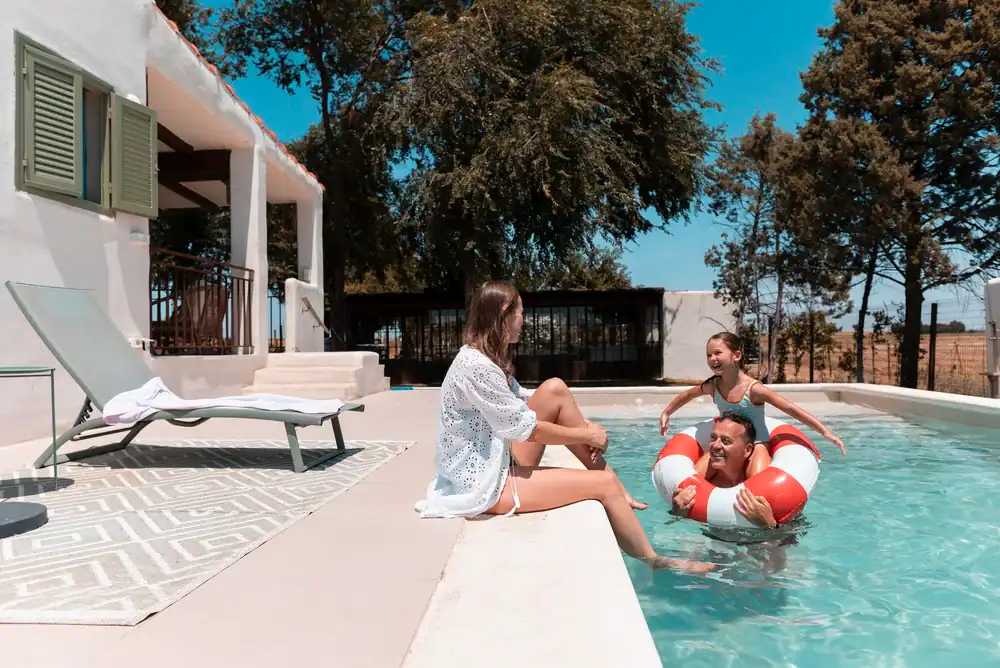

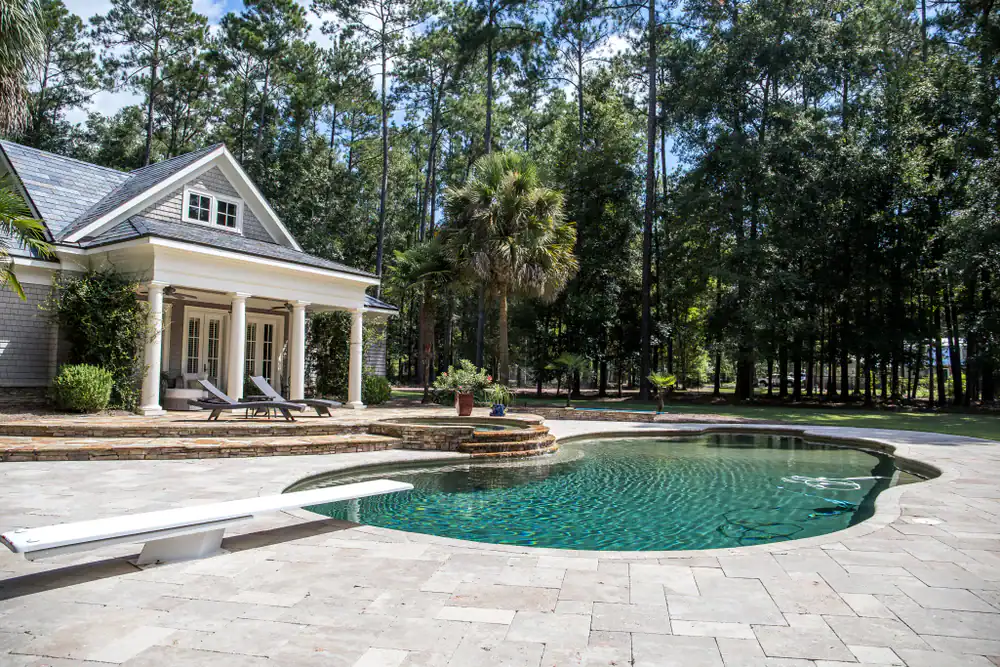
You’re not just adding a pool. You’re creating the space where your family will spend every summer weekend, where your kids will learn to swim, and where you’ll finally have a reason to stay home instead of fighting beach traffic.
That means the pool itself needs to fit your yard’s layout and your family’s actual needs. The patio masonry around it should handle Long Island winters without cracking apart in three years. And the whole project should happen without turning your property into a construction zone for six months.
When we do this work correctly, you end up with a backyard that increases your home’s value while giving you a space you’ll actually use. Not just a hole in the ground with water in it.
We handle the full scope of custom in-ground pools in Nassau County, from excavation and gunite installation to the final masonry details that most contractors rush through. We’re local to Island Park, which means we already know what Nassau County’s building department requires, how the soil conditions affect your timeline, and why your neighbor’s pool cracked after two winters.
You’re working with the same crew from start to finish. No subcontractors showing up halfway through who’ve never seen your property before. That’s how we keep quality consistent and timelines realistic.
Island Park homeowners have specific concerns about setbacks, drainage, and working within smaller lot sizes. We’ve handled those constraints enough times to design around them without compromising what you’re trying to build.
You’ll start with a site evaluation where we measure your yard, check utility lines, and talk through what you’re actually trying to accomplish. Not what we want to sell you—what makes sense for your space and how you’ll use it.
From there, we handle the permit process with Nassau County or Suffolk County, whichever applies. That includes surveys, engineering stamps, and the back-and-forth with the building department so you’re not stuck figuring out setback requirements on your own.
Once permits clear, excavation starts. We dig, set the steel framework, and spray the gunite shell. After the shell cures, we install your custom pool coping and tile, then move into the concrete surrounds and pool patio masonry that tie everything together.
The final phase covers equipment installation, startup, and a walkthrough so you know how to maintain what we just built. Most projects in Island Park take eight to twelve weeks depending on weather and inspection schedules, but we’ll give you a realistic timeline upfront based on your specific scope.
Ready to get started?
You’re getting the pool itself—gunite construction with steel reinforcement, custom shaped to fit your yard. That includes the plumbing, filtration system, and all the equipment needed to keep water clean without you spending an hour every weekend on maintenance.
The masonry work covers your pool coping, which is the edge material that caps the pool shell, plus any tile accents you want for the waterline. We also build out the concrete pool surrounds and patio space using materials that handle freeze-thaw cycles, because Long Island winters will destroy cheaper options in a few seasons.
For properties in Nassau County and Suffolk County with grading issues, we include retaining walls and drainage solutions so water doesn’t pool against your foundation or flood the yard every time it rains. Some projects need additional landscape grading or steps to connect the pool area with the rest of your property—we handle that too.
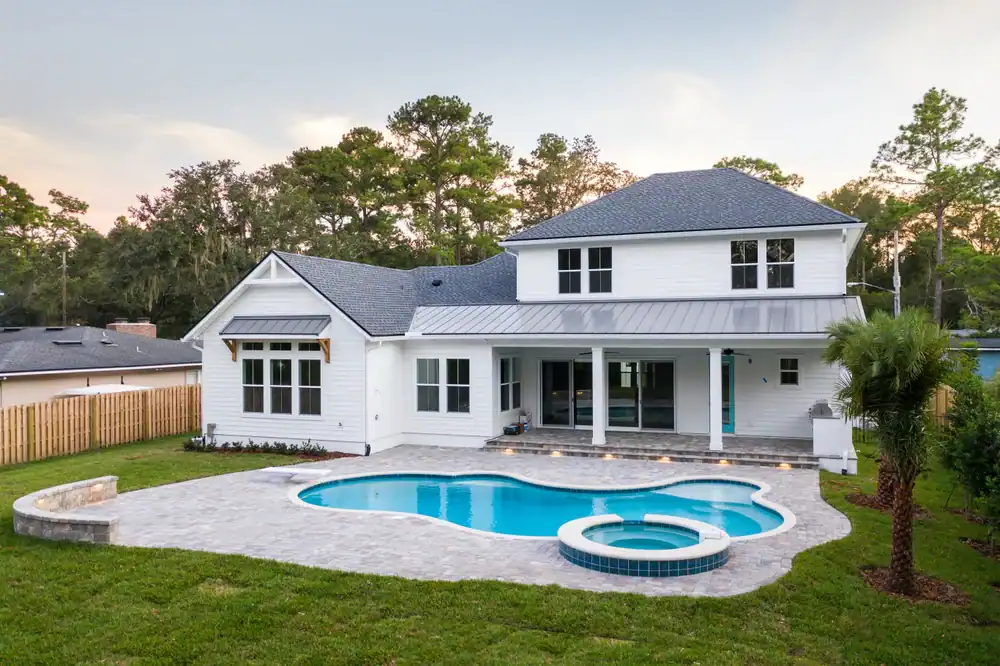
The goal with complete backyard poolscapes is to deliver a finished space, not just a functional pool surrounded by dirt and temporary fencing. When we’re done, you should be able to walk outside and use it, not spend another summer coordinating with three other contractors to finish what we started.
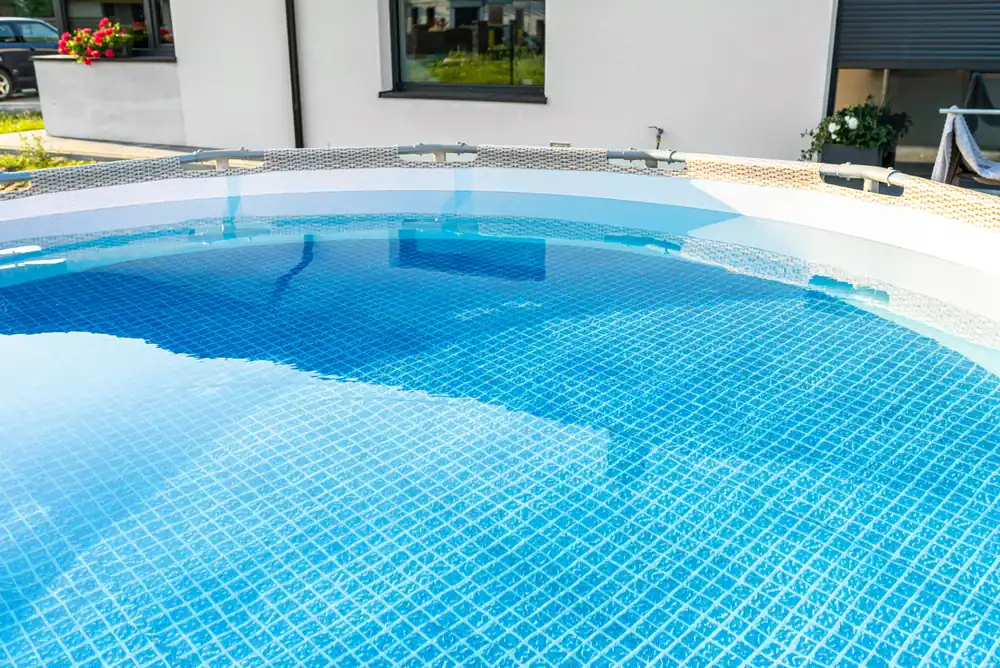
Most custom in-ground pool projects in Island Park take between eight and twelve weeks from the day we break ground to the day you can swim. That timeline assumes normal weather, no delays from the building department, and a straightforward site without major grading or utility complications.
The permit phase happens before that timeline starts, and it usually adds another three to four weeks depending on how quickly Nassau County processes the application. If you’re in a historic district or need variances for setbacks, expect longer.
Weather impacts the schedule more than most people realize. We can’t pour gunite in freezing temperatures, and heavy rain delays excavation. That’s why most pool construction in Nassau County happens between late spring and early fall. If you’re planning for next summer, you’ll want to start the conversation by late winter so permits are ready when the ground thaws.
A standard gunite pool with basic coping and a simple patio typically starts around $60,000 to $75,000 in Suffolk County. That covers excavation, steel and gunite, standard equipment, and basic finishes. If you’re adding custom tile, upgraded coping materials, or expanding the patio with extensive masonry work, you’re looking at $85,000 to $120,000 or more.
The biggest variables are size, shape, and site conditions. A kidney-shaped pool with a shallow end and standard dimensions costs less than a freeform design with a deep end, swim-out ledge, and custom water features. Properties with poor drainage, high water tables, or limited access for equipment add cost because they require more labor and problem-solving.
Financing options exist if you’d rather spread payments out, and some homeowners roll the project into a home equity line since the pool increases property value. We’ll give you a fixed quote after the site evaluation so you know exactly what you’re spending before we start digging.
Yes. Nassau County requires a building permit for any in-ground pool, and the process involves submitting a site survey, engineered plans, and proof that your pool meets setback requirements from property lines. You’ll also need to show that the design complies with safety codes, which usually means including a fence or barrier.
The county will inspect the project at multiple stages—after excavation, after steel placement, after gunite, and again before final approval. If you skip the permit or try to build without one, you’ll face fines and potentially have to remove the pool or bring it up to code at your own expense, which costs more than doing it right the first time.
We handle the permit application and coordinate inspections as part of the installation process. That includes dealing with the building department if they have questions or need revisions to the plans. Most homeowners don’t want to spend weeks navigating county bureaucracy, and mistakes in the application just delay your project further.
Natural stone or poured concrete coping holds up better than pavers in Long Island’s freeze-thaw cycles. Pavers can shift and crack when water seeps between joints and freezes, which happens every winter here. Stone and concrete expand and contract as one unit, so you’re not dealing with individual pieces moving around.
For tile, porcelain or glass tiles rated for exterior use handle temperature swings without cracking or fading. Cheaper ceramic tiles might look fine initially, but they’ll chip and discolor after a few seasons of exposure to pool chemicals and weather. Waterline tile takes the most abuse since it’s constantly wet and dry, so that’s where material quality matters most.
Custom pool coping and tile should also account for slip resistance, especially if you have kids or plan to host gatherings. Polished stone looks great but turns into a skating rink when wet. We’ll recommend finishes that balance appearance with safety so you’re not choosing between the two.
A well-built in-ground pool typically increases home value by 8% to 15% in Island Park and similar Nassau County markets, according to the National Association of Realtors. For a home valued at $540,000, that’s roughly $43,000 to $81,000 in added value. The return depends on the quality of the installation, how well the pool integrates with your property, and whether buyers in your area view pools as an asset or a maintenance burden.
In Island Park specifically, pools are seen as desirable because lot sizes support them and the climate gives you a solid four to five months of swim season. Buyers looking at homes in this price range expect outdoor living spaces, and a finished pool with quality masonry work checks that box better than a deck or basic patio.
That said, a poorly installed pool or one that looks dated can actually hurt resale value because buyers see it as a problem they’ll need to fix. That’s why the installation quality and material choices matter—not just for your enjoyment, but for protecting your investment if you sell down the road.
Yes, but it requires more planning than a standard installation. Nassau County has setback requirements that dictate how far the pool must sit from property lines, and on smaller lots, that doesn’t leave much room for both the pool and a functional patio area. We design around those constraints by adjusting the pool shape, using space-efficient layouts, and sometimes incorporating retaining walls to maximize usable area.
Access is another consideration. If your yard has limited entry points or tight side yards, we need to plan how equipment gets in and out. Some properties require smaller excavators or hand-digging in certain areas, which adds time but makes the project possible when a larger site would be easier.
The goal with complete backyard poolscapes on smaller lots is to create a space that feels open and usable, not cramped. That means being strategic about where the pool sits, how the patio flows around it, and what landscaping or grading work helps the whole area feel larger than it is. We’ve done enough of these projects in Island Park to know what works and what creates problems later.
Other Services we provide in Island Park