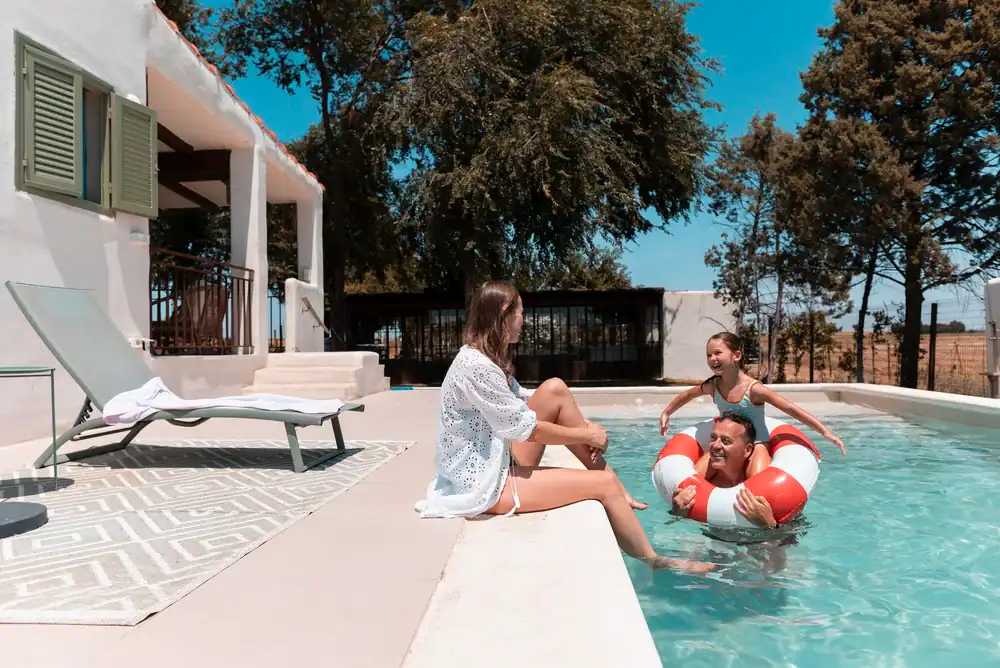

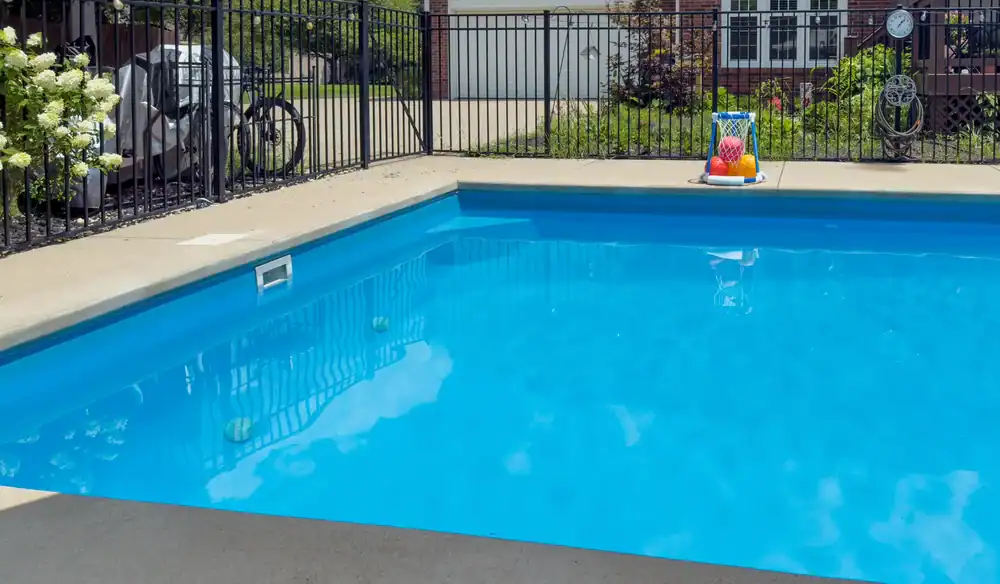
You’re not just adding water to your yard. You’re creating a space where summer weekends happen, where your kids want to be home, and where you can actually relax after work instead of thinking about the next project.
The right pool setup increases your property value by 7-15%, according to the National Association of Realtors. That’s an average of $30,000+ added to your home’s worth in this area. But the real return is having a backyard you’ll use instead of one you avoid.
When the masonry work is done right—coping that drains properly, pavers that don’t shift, retaining walls that actually hold—you’re not calling someone back in two years. You’re swimming.
We’ve been handling in-ground pool builds across Nassau County and Suffolk County long enough to know that what works in one town doesn’t always work in another. Port Washington properties come with their own set of challenges—soil composition, water tables, setback rules that vary by neighborhood.
We’re the crew that shows up, handles the permits, digs where it’s safe to dig, and builds the pool surround so it lasts. No subcontractors. No surprises halfway through the job.
You’re working with people who’ve done this in your area before, and who know the difference between doing it fast and doing it right.
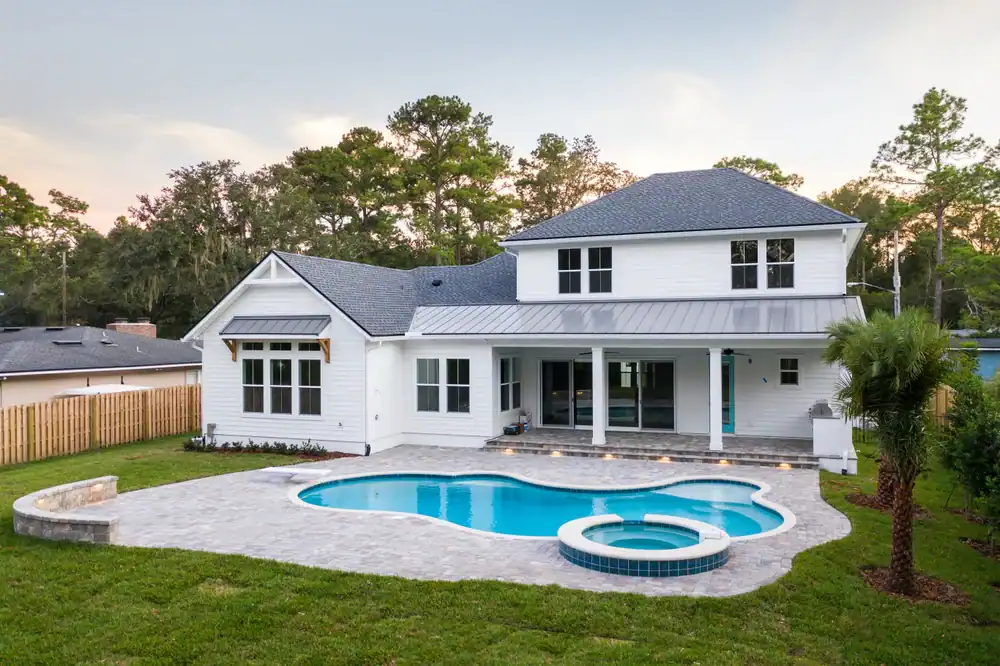
First, we walk your property and figure out what’s possible. That means checking soil conditions, measuring setbacks, and talking through what you actually want versus what fits your lot. If there’s a drainage issue or a property line concern, you’ll know before we start digging.
Then we handle the permits. Nassau County and Suffolk County each have their own requirements, and the timeline runs anywhere from 4-6 weeks depending on the town. We submit everything, track approvals, and keep you updated so you’re not guessing when work starts.
Once permits clear, excavation begins. We’re looking at soil type, grading for proper drainage, and making sure the base is stable before any concrete or masonry goes in. After the pool shell is set, we build out your patio, install coping and tile, and handle any retaining walls or grading adjustments.
The typical timeline from contract signing to finished pool is 12-16 weeks. Most of that is permitting and scheduling. The actual construction—excavation to final inspection—usually takes 6-8 weeks if conditions cooperate.
Ready to get started?
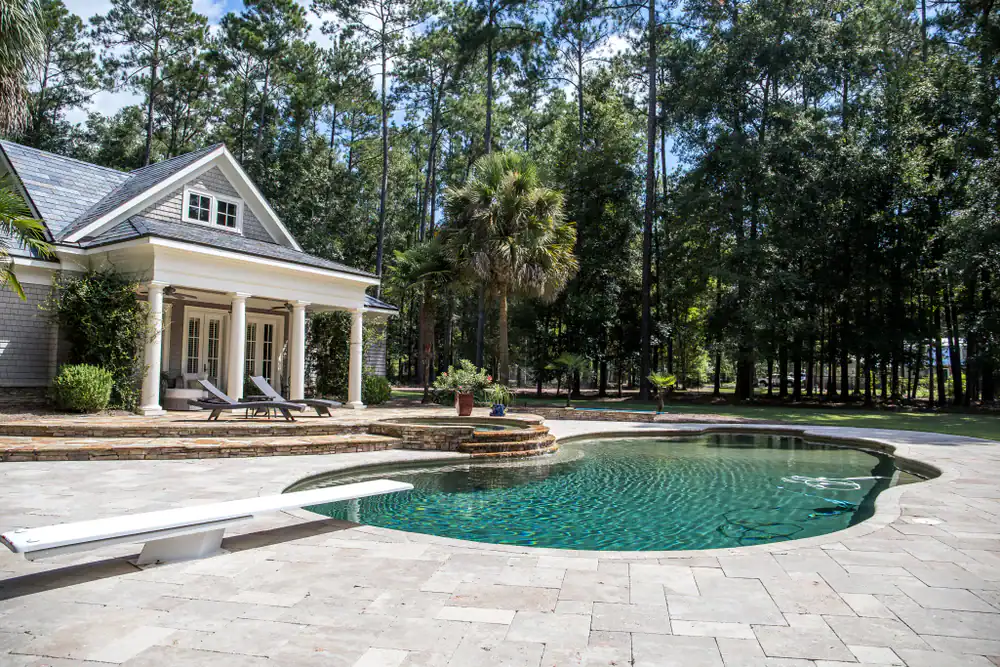
You’re getting the full build—design consultation, permit handling, excavation, pool installation, and all the masonry work that makes it functional. That includes custom pool coping using materials that handle freeze-thaw cycles, concrete pool surrounds or paver patios depending on your preference, and any retaining walls or grading needed to manage water flow.
In Port Washington, we’re often working with properties that have elevation changes or tricky drainage patterns. The masonry work isn’t just aesthetic—it’s structural. Properly installed coping with a slight overhang manages water runoff. Pavers set on a compacted base don’t shift when the ground freezes. Retaining walls hold back soil during heavy rain.
We also handle the details most homeowners don’t think about until it’s too late: electrical for pool equipment, plumbing that won’t crack in winter, and drainage systems that prevent water from pooling near your foundation. It’s a complete backyard poolscape, not just a hole with water in it.
Port Washington properties, with a median value near $976,000, deserve pool builds that match the investment you’ve already made in your home. We’re not cutting corners to hit a price point—we’re building something that adds value and lasts.
Expect 4-6 weeks for most Nassau County towns, but it varies. The permit process includes safety compliance checks, setback verification, and electrical inspections. Some towns move faster than others—Hempstead runs on a different timeline than smaller villages.
We submit all the paperwork, handle any requests for additional documentation, and track approvals so you’re not calling the building department yourself. If there’s a delay, it’s usually because the town needs a survey update or has questions about setback distances. We deal with it.
The key is starting early. If you want the pool ready by summer, you need to begin conversations in late winter or early spring. Waiting until May means you’re competing with everyone else who just decided they want a pool.
You’ve got sandy soil that shifts, clay that doesn’t drain, and rocky areas that require more excavation work. Ground conditions in Port Washington can vary from one property to the next, and that affects both the excavation cost and the drainage strategy.
Sandy soil requires a stable base and proper compaction before any concrete or masonry work happens. Clay soil holds water, so we’re installing drainage systems to prevent pooling around the pool or patio. Rocky soil means more time with excavation equipment and sometimes blasting, depending on what’s below the surface.
We do a soil analysis before we dig. That tells us what we’re working with and how to build the pool so it doesn’t settle, crack, or develop drainage problems two years later. It’s not glamorous, but it’s the difference between a pool that lasts and one that becomes a problem.
Maybe. It depends on your lot size, property lines, and where you want the pool. Port Washington has setback requirements that dictate how far the pool must be from your property line, your house, and any septic systems. Corner lots often have stricter rules.
If your property doesn’t meet standard setback distances, you’ll need to apply for a variance. That adds time to the process—usually a few weeks for a hearing and approval. We’ll tell you upfront if a variance is likely based on your property layout.
Most residential properties can fit a pool without a variance if the design is planned correctly. That’s why the initial site visit matters. We’re measuring, checking zoning maps, and figuring out what works before you commit to a design that won’t get approved.
Gunite is sprayed concrete—it’s durable, fully customizable, and the go-to for high-end luxury pools. But it’s also the most expensive option. About 70% of pools on Long Island are sand bottom construction, which costs less and works well for most residential properties.
Gunite makes sense if you want a custom shape, built-in features like benches or swim-outs, or a pool that’s designed to be a showpiece. For a standard rectangular or kidney-shaped pool, sand bottom construction gives you a solid build at a lower price point.
The construction method affects timeline and cost, but both types can last decades if the excavation, drainage, and masonry work are done right. We’ll walk through options based on your property, budget, and what you’re actually trying to achieve with the space.
Pool coping typically runs $30-$60 per linear foot depending on material—bluestone, limestone, and custom stone options cost more than standard concrete. Patio masonry around the pool varies based on square footage and material choice, but expect $15-$40 per square foot for quality pavers or stamped concrete.
In Nassau County, we’re often working with premium materials like Cambridge or Nicolock pavers, Techobloc products, or natural stone. These materials handle freeze-thaw cycles better than cheaper options and don’t crack or shift as easily when the ground moves.
The coping isn’t just decorative—it’s the edge that manages water drainage and protects the pool structure. Properly installed coping with a bullnose edge and slight overhang directs water away from the pool and prevents freeze damage in winter. Cutting costs here usually means repairs later.
Start the conversation in late winter or early spring if you want the pool ready for summer. Permitting takes 4-6 weeks, and construction takes another 6-8 weeks. If you wait until the spring rush, you’re looking at delays and a tighter construction calendar.
Fall and winter are actually ideal for design and permitting. Contractors are less slammed, building departments move faster, and you’re ahead of the crowd when construction season opens. By the time weather allows excavation, your permits are already approved.
Long Island weather limits excavation and concrete work during freezing temperatures, so most construction happens between April and October. But planning, design, and permit work can happen year-round. The earlier you start, the more control you have over timing and the better chance you have of swimming by July.
Other Services we provide in Port Washington