
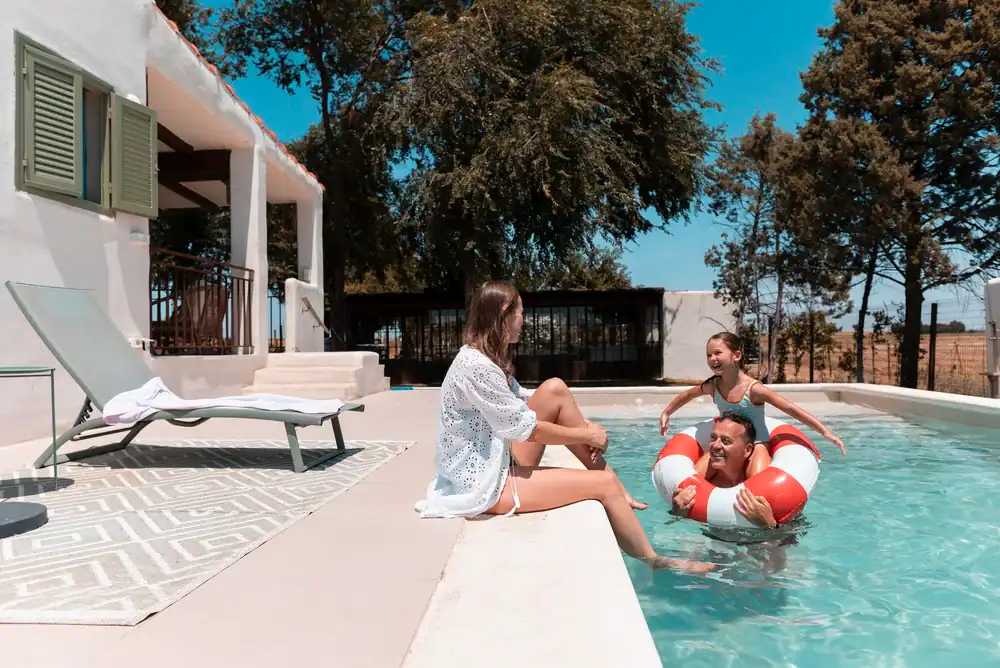

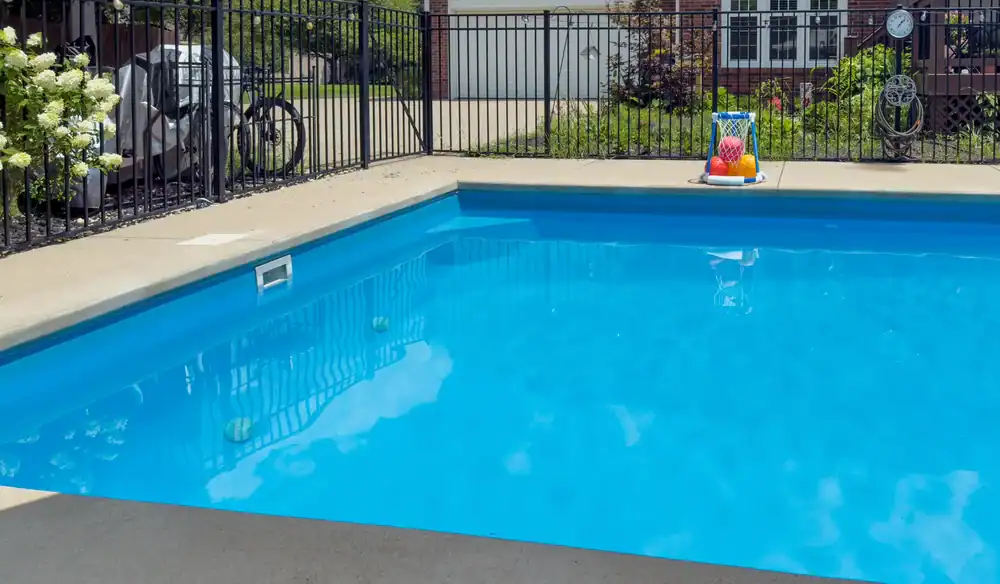
You’re not just adding water to your yard. You’re creating the space where your family actually wants to spend time—where summer weekends happen, where you stop looking for excuses to leave the house.
A well-built in-ground pool in Sands Point, NY means no drainage issues two seasons in, no cracked coping because someone skipped the soil analysis, and no surprise repair bills that make you regret the whole project. It means a pool that fits your property, your style, and your budget from day one.
When the construction is handled by in-ground pool builders who understand Nassau County’s ground conditions—the sandy soil that shifts, the clay that holds water, the setback rules that change by district—you get a finished product that lasts. Not one that looks great in photos but fails the first time the weather turns.
We’ve been working in Sands Point, NY and across Nassau County long enough to know what works and what doesn’t when you’re dealing with Long Island’s unique construction challenges. We’re not learning on your property.
You’re working with a Nassau County pool installation company that handles everything in-house—excavation, permits, plumbing, masonry, final grading. No subcontractors you’ve never met showing up unannounced. No finger-pointing when something needs to be fixed.
Sands Point homeowners expect quality that matches their investment. That’s what you get here—complete backyard poolscapes that don’t cut corners, and communication that doesn’t go dark the second you sign the contract.
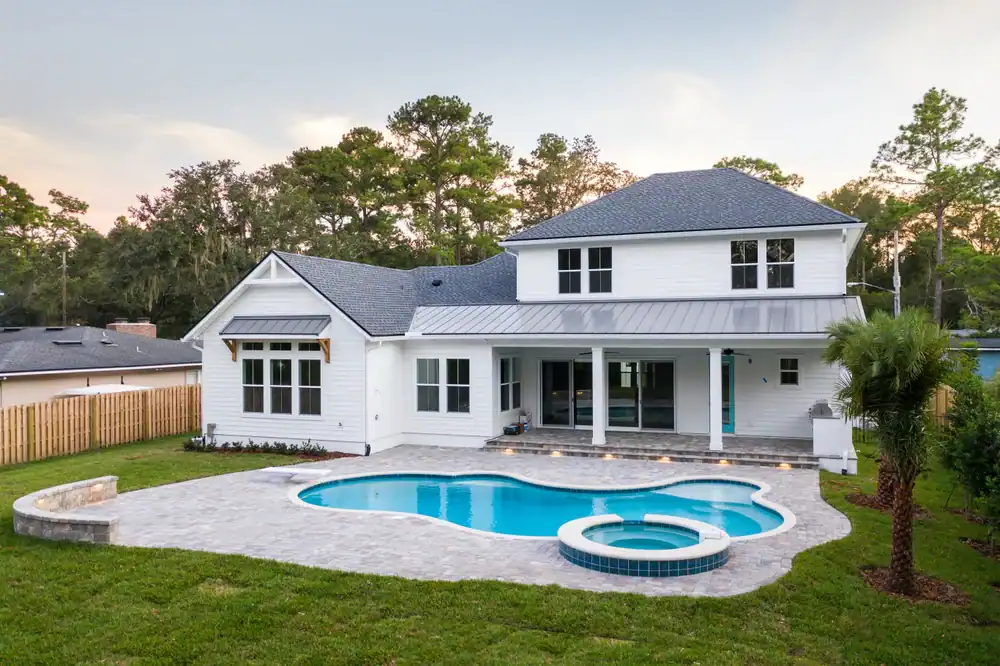
First, we look at your property and test the soil. Not every yard in Sands Point, NY drains the same way, and we need to know what we’re working with before we start digging. This step determines whether you need additional drainage, how deep we can go, and what construction method makes the most sense.
Next, we handle your permits. Nassau County requires building, electrical, and plumbing permits for in-ground pool installation, and the approval process typically takes two to three weeks. We submit everything, follow up with the county, and make sure you’re not sitting around waiting because paperwork got lost.
Then we excavate, install your pool shell—whether that’s gunite, fiberglass, or vinyl liner—and build out the surrounding hardscape. Pool patio masonry in Nassau County isn’t just about looks. It’s about proper grading so water drains away from your house, coping that can handle freeze-thaw cycles, and materials that won’t crack under Long Island weather.
Finally, we finish with custom pool coping and tile, concrete pool surrounds, any retaining walls or grading work your yard needs, and a final inspection. Most projects take eight to ten weeks from start to finish, assuming weather cooperates and permits come through on schedule.
Ready to get started?
You’re getting a full-service build. That means design consultation, soil testing, all permits, excavation, pool installation, and the masonry and hardscaping that turns a hole in the ground into a finished outdoor space.
In Sands Point, NY, that also means understanding local requirements—setback rules, drainage codes, HOA restrictions if they apply. Nassau County is strict about compliance, and you don’t want to find out halfway through construction that something wasn’t filed correctly.
We work with gunite, fiberglass, and vinyl liner pools depending on what fits your budget and timeline. Gunite gives you the most design flexibility but costs more and takes longer. Fiberglass installs faster and requires less maintenance. Vinyl is the most affordable upfront but you’ll replace the liner every seven to ten years.
Beyond the pool itself, you’re also getting pool retaining walls and grading if your yard has elevation changes, custom tile work, and concrete surrounds that are poured and finished to handle Long Island winters. This isn’t a pool dropped into your yard with some pavers thrown around it. It’s a complete backyard poolscape designed to last.
Most custom in-ground pools in Nassau County run between $50,000 and $90,000 depending on size, materials, and how much site work your property needs. If you’ve got rocky soil, high groundwater, or major grading issues, expect to be on the higher end.
Vinyl liner pools are the most affordable option upfront, usually starting around $40,000 to $50,000 for a basic install. Fiberglass pools run $50,000 to $70,000 depending on the shell you choose. Gunite is the most expensive—often $70,000 and up—but it gives you complete design freedom and the longest lifespan if it’s built correctly.
What drives cost more than anything is your yard. If we need to bring in fill, install drainage systems, or build retaining walls because your property slopes, that adds to the budget. Same goes for custom tile work, upgraded coping materials, or adding features like waterfalls or built-in spas.
Plan on eight to ten weeks from the day we break ground to the day you’re swimming. That assumes normal weather, no permit delays, and no surprises once we start digging.
The permit process in Nassau County usually takes two to three weeks before we can even start. Once we have approvals, excavation and pool installation take about four to six weeks depending on the construction type. Gunite takes longer because the concrete needs time to cure. Fiberglass goes faster since the shell is pre-made.
After the pool is in, we spend another two to three weeks on masonry, coping, decking, and final grading. If you’re adding a pool house, outdoor kitchen, or extensive landscaping, that extends the timeline.
Weather is the wildcard. Heavy rain delays excavation. Freezing temperatures in early spring or late fall slow down concrete work. If you want your pool ready for summer, you need to start the process in late winter or early spring—not in May when you suddenly realize you want to swim in July.
It depends on your budget, timeline, and how much customization you want. There’s no universal “best” option, but there’s usually a best fit for your specific situation.
Gunite pools give you the most flexibility. You can build any shape, any depth, any custom features you want. They last the longest—30 years or more if maintained properly—and they handle Long Island’s freeze-thaw cycles better than other materials. The downside is cost and time. Gunite is expensive and takes longer to install because you’re essentially building a concrete structure from scratch.
Fiberglass pools are the low-maintenance option. The shell is manufactured off-site and dropped into your excavated hole, so installation is faster. The smooth surface resists algae better than concrete, which means less chemicals and less scrubbing. But you’re limited to pre-made shapes and sizes, and if the shell ever cracks, repairs are complicated.
Vinyl liner pools are the most budget-friendly upfront. They’re comfortable underfoot, and if you damage the liner, replacement is straightforward. But you will replace that liner every seven to ten years, and that’s a $4,000 to $6,000 expense each time. Over 20 years, a vinyl pool often costs as much as gunite when you factor in liner replacements.
Yes. Nassau County requires building permits, electrical permits, and plumbing permits for any in-ground pool installation. You’ll also need to meet setback requirements, which dictate how far the pool must be from your property lines, house, and septic system if you have one.
Setback rules vary by district, but in most residential areas of Sands Point, NY, you’re looking at a minimum of ten feet from side and rear property lines. If you’re in a historic district or have HOA rules, there may be additional restrictions on pool placement, fencing, and even the materials you can use.
The permit process takes two to three weeks on average, assuming everything is submitted correctly the first time. If the county kicks back your application because something’s missing or doesn’t meet code, that adds time.
We handle all of this. You’re not filling out forms, calling the building department, or trying to figure out what “Zone A flood area compliance” means. We submit the paperwork, coordinate inspections, and make sure everything is approved before we start digging.
You’re looking at regular chemical balancing during swim season, weekly cleaning, and proper winterization before the first freeze. Long Island’s climate creates specific challenges—spring pollen that clouds the water, summer heat that accelerates algae growth, and winter freezing that can crack pipes if the pool isn’t closed correctly.
During the summer, you’ll test and adjust your water chemistry two to three times per week. You’ll skim debris, vacuum the bottom, and clean the filter. If you don’t want to do this yourself, pool service companies charge $100 to $200 per month for weekly maintenance.
Winterization is critical here. You need to drain water below the skimmer line, blow out the plumbing lines, add winterizing chemicals, and cover the pool before temperatures drop below freezing. If water is left in the pipes and it freezes, you’re looking at expensive repairs come spring.
Every few years, you’ll need to resurface a gunite pool (usually every 10 to 15 years), replace a vinyl liner (every 7 to 10 years), or re-seal the coping and deck if water is getting underneath. These aren’t surprises—they’re normal wear and tear. But they’re also why choosing quality materials and proper installation matters from the start.
Yes, but it requires more site work than a flat lot. We’ll need to build pool retaining walls to hold back soil, install proper drainage so water doesn’t pool behind the walls, and possibly bring in fill to level out the pool deck area.
Sloped properties actually offer some design advantages. You can build a raised pool with an infinity edge, create multiple tiers with the deck and landscaping, or use the elevation change to add a waterfall feature. But all of that costs more than a simple rectangular pool on flat ground.
The bigger concern with slopes is drainage. Water naturally runs downhill, and if your pool is at the bottom of a slope, you need a drainage system that diverts runoff away from the pool area. Otherwise, every time it rains, you’re dealing with mud, debris, and water that throws off your pool chemistry.
We do a full site evaluation before we give you a price. That includes looking at grading, drainage, soil stability, and how much excavation and retaining wall work your yard actually needs. You’ll know the real cost upfront—not after we’ve already started digging.
Other Services we provide in Sands Point