

You’ll have a pool that fits your yard, your budget, and your vision. Not a cookie-cutter design that ignores how your property drains or what your soil actually does when you dig six feet down.
The construction holds up because it was built for Long Island conditions—not dropped in like it’s Arizona. Your permits clear without delays. Your drainage works. And when you’re hosting that first summer barbecue, the pool looks like it’s always been there.
Most importantly, you’re not dealing with callbacks, cracks, or contractors who ghost you after the check clears. You’re using your pool. That’s the outcome that matters.
We’ve been serving South Farmingdale, NY and the surrounding Suffolk and Nassau County areas for nearly two decades. We started with chimneys, expanded into hardscaping and patios, and now we’re bringing that same approach to in-ground pool construction.
We’re not new to working with Long Island soil, zoning boards, or homeowners who’ve been burned by contractors before. We know what it takes to get permits approved in Nassau County. We know how to build on sandy soil that shifts and clay that doesn’t drain.
You’re working with a local crew that shows up, does the work, and sticks around after. That’s not marketing talk—it’s how we’ve stayed in business this long.
It starts with a site visit. We look at your yard, test your soil, talk through what you want, and figure out what’s actually possible given your property and budget. No guessing. No selling you something that won’t work.
Next comes design and permits. We handle the paperwork—building, electrical, plumbing—and work with Nassau or Suffolk County to get everything approved. This usually takes two to three weeks. You’re not chasing down inspectors or figuring out variance applications.
Then we excavate. Depending on your soil, we’ll install the drainage system that keeps your pool from turning into a sinkhole. We build the pool structure—gunite, fiberglass, or vinyl liner, depending on what makes sense for your site. Then comes plumbing, electrical, coping, decking, and final grading.
Most custom in-ground pools in South Farmingdale take six to eight weeks from start to finish. You’ll know the timeline upfront, and we’ll keep you updated when things change.
Ready to get started?
You’re getting more than a hole with water in it. Every project includes site prep, excavation, drainage systems designed for Long Island soil, and the pool structure itself. We also handle all the finish work—custom pool coping and tile, concrete pool surrounds, and any grading needed to make sure water flows away from your house.
If you want a full backyard transformation, we build that too. Pool patio masonry in Suffolk County and Nassau County is something we’ve been doing for years. Retaining walls, outdoor kitchens, pergolas—we can design a complete outdoor space that works together.
In South Farmingdale and across Long Island, properties vary wildly. Some lots are flat and sandy. Others have clay, slopes, or drainage issues that need serious attention. We adjust the approach based on what your property needs, not what’s easiest for us to install.
And because we’re local, we know what actually adds value here. Pools in Nassau County increase home value by 8-15% when done right. That means proper construction, quality materials, and designs that fit the neighborhood.
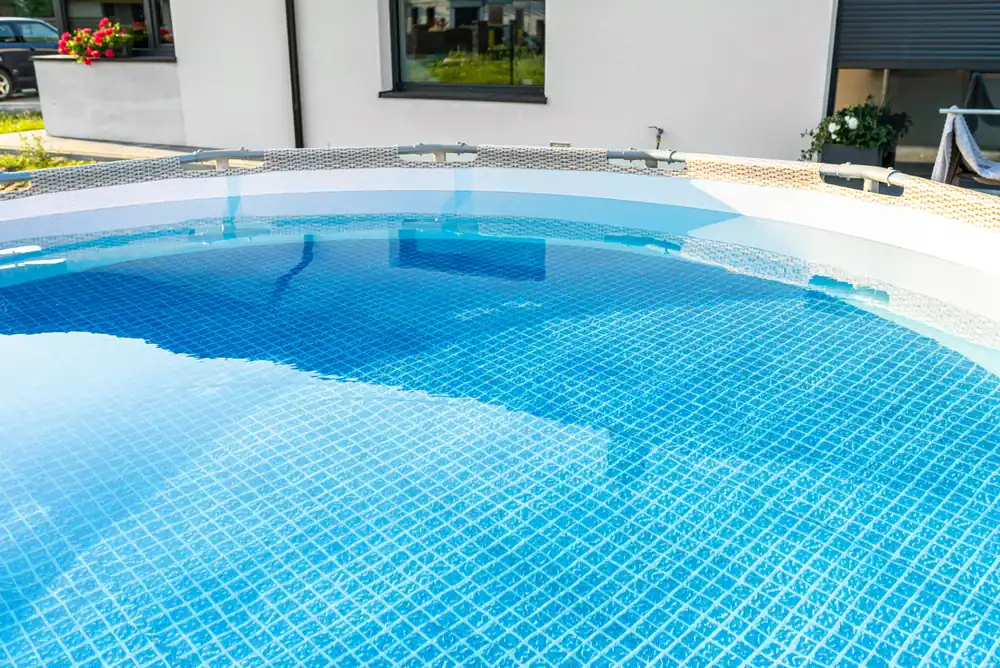
Most custom in-ground pools in South Farmingdale and the surrounding Nassau County area run between $50,000 and $100,000, depending on size, materials, and site conditions. The average is around $66,000.
But here’s what affects that number: your soil type, how much grading and drainage work is needed, whether you’re adding a patio or other hardscaping, and what kind of pool you’re building. Gunite pools offer the most design flexibility but cost more. Fiberglass pools install faster and require less maintenance. Vinyl liner pools are the most budget-friendly upfront but need the liner replaced every 7-10 years.
If your property has challenging soil—like clay that doesn’t drain or sandy soil that shifts—you’ll need a more robust drainage system and possibly deeper excavation. That adds cost, but it also prevents major problems down the road. You’re not saving money if your pool cracks in year three because the contractor skipped proper site prep.
You’ll need a building permit, an electrical permit, and a plumbing permit from Nassau County. The approval process typically takes two to three weeks, assuming your plans meet zoning requirements and setback rules.
Setbacks are the big issue most homeowners don’t expect. Your pool has to be a certain distance from your property line, your house, and sometimes your septic system. In South Farmingdale, these rules vary depending on your lot size and zoning district. If your yard is tight, you might need a variance, which adds time and requires a hearing with the zoning board.
We handle all of this. You’re not filling out forms or sitting in municipal offices. We submit the plans, coordinate with inspectors, and make sure everything’s approved before we break ground. If there’s an issue, we know how to address it without starting over.
From excavation to the first swim, most in-ground pools in South Farmingdale take six to eight weeks. That includes construction time, inspections, and final landscaping.
Permitting happens before that and usually adds another two to three weeks. So if you’re starting from scratch—design, permits, construction—you’re looking at roughly two to three months total.
Weather can delay things, especially if we hit a stretch of heavy rain during excavation. Soil conditions also matter. If we encounter groundwater or need to bring in additional fill, that adds a few days. But you’ll know the timeline upfront, and we’ll update you if anything changes. The goal is to get your pool finished and functional without rushing through the steps that actually matter—like proper drainage and curing time for concrete.
It depends on your specific property, but about 70% of pools on Long Island are sand-bottom construction, which works well with our soil conditions. Gunite pools are the most popular because they handle ground movement better than rigid fiberglass and offer full design customization.
If your yard has sandy soil that shifts, gunite is flexible enough to move slightly without cracking. If you’re dealing with clay that holds water, you’ll need a serious drainage system regardless of pool type—but gunite gives you more options for how that system integrates with the pool structure.
Fiberglass pools work too, especially if you want a faster install and lower maintenance. They’re delivered in one piece and dropped into the excavation, so there’s less on-site construction. Vinyl liner pools are the most affordable upfront, but the liner needs replacement every several years, and they’re more prone to damage from ground movement.
We test your soil before recommending a pool type. You’re not guessing based on what looks good in a brochure—you’re building what actually works for your property.
Yes, but not dollar-for-dollar. According to the National Association of Realtors, pools increase home value by 8-15% in markets like Nassau County. For a $500,000 home, that’s roughly $40,000 to $75,000 in added value.
But here’s the reality: you’re probably not getting back the full cost of the pool when you sell. A $66,000 pool might add $50,000 in resale value. The return depends on your neighborhood, the quality of the installation, and whether buyers in your area expect pools.
In South Farmingdale and surrounding Long Island communities, pools are common and desirable. Families want them. They’re a selling point. But only if the pool is well-built, well-maintained, and doesn’t come with obvious issues like poor drainage or cracked decking.
The bigger value isn’t always financial—it’s the years of use you get out of it. If you’re planning to stay in your home and you’ll actually use the pool, the return on investment is measured in summer barbecues, not just appraisal numbers.
Look for a contractor who’s actually built pools on Long Island and knows how to handle local soil conditions, permitting, and zoning. You want someone who’s been in business for years, not someone who just added pools to their service list last season.
Ask about their process for soil testing and drainage. If they’re not talking about groundwater levels or how they’ll handle clay vs. sand, that’s a red flag. Long Island soil is tricky, and contractors who don’t account for it end up with pools that crack, settle, or flood.
Check their licensing and insurance. Make sure they pull permits and handle inspections—don’t work with anyone who suggests skipping that step. And talk to previous customers if you can. Not just the ones they refer you to, but actual homeowners in your area who’ve had their pool for a few years.
You’re also looking for clear communication. Do they explain what’s happening and why, or do they just tell you to trust them? A good contractor walks you through the process, gives you a realistic timeline, and doesn’t disappear when problems come up.
Other Services we provide in South Farmingdale