

You’ll have a pool that doesn’t crack in three years because someone skipped the soil analysis. You’ll have proper drainage so your yard isn’t a swamp every spring. And you’ll have a backyard people actually want to spend time in—not just a pool, but the patio, the coping, the grading, all of it working together.
Most in-ground pool builders in Suffolk County will sell you on the pool itself. We focus on what happens after: how it holds up through freeze-thaw cycles, how the masonry ages, whether your investment actually adds value to your home or becomes a maintenance nightmare.
Your property value can increase 8-15% with the right installation. But that only happens when the work is done correctly from excavation to final inspection. If the permit process gets mishandled or the contractor cuts corners on the structural work, you’re not building equity—you’re inheriting problems.
We’ve been handling pool installation in Stony Brook and across Suffolk County for years. We’re licensed and insured in Nassau and Suffolk Counties, which means we’re not cutting corners on permits or trying to talk you out of doing things the right way.
Stony Brook properties come with their own challenges—sandy soil that shifts, groundwater issues, setback requirements that vary by neighborhood. We’ve worked through all of it. You’re not our testing ground.
We don’t do high-pressure sales or fake urgency. You’ll get a straight answer about what your yard needs, what it’ll cost, and how long it’ll actually take. If you want to move forward, great. If not, you’ll at least know what you’re dealing with.
First, we come out and look at your property. We’re checking soil conditions, drainage, setbacks, and access for equipment. This isn’t a sales pitch—it’s an actual site evaluation. You’ll know if your yard has issues before we start digging.
Next, we handle the permit process. Suffolk County requires specific approvals, and the timeline can range from 2 to 12 weeks depending on your town. We manage that so you’re not making calls to the building department every other day.
Once permits clear, we excavate. This is where soil analysis matters. If you’ve got clay that doesn’t drain or a high water table, we address it during excavation—not after the pool’s already in and you’re dealing with water problems.
Then comes the structural work: plumbing, electrical, the shell itself. We work with gunite, fiberglass, and vinyl liner construction depending on what makes sense for your property and budget. After that, it’s coping, patio masonry, grading, and any additional features like retaining walls or outdoor kitchens.
You’ll get regular updates throughout. No radio silence until we show up asking for final payment.
Ready to get started?
You’re getting design work, permits, excavation, the pool structure, all plumbing and electrical, and the final grading. We also handle pool patio masonry in Suffolk County—the coping, the surround, the hardscape that ties everything together.
If your yard needs retaining walls or grading work to make the pool functional, that’s part of the conversation up front. We’re not surprised by it halfway through and hitting you with change orders.
Stony Brook properties often need custom pool coping and tile work to match the home’s existing aesthetic. We’ll walk you through material options—natural stone pavers, concrete surrounds, custom masonry—and explain what holds up best in Long Island’s climate. Some materials look great in a showroom and crack after one winter. We’ll tell you which ones actually last.
Energy-efficient systems are standard now. Variable-speed pumps, efficient heaters, proper insulation on plumbing lines. It’s not an upsell—it’s how you avoid paying a fortune to heat and run the thing every summer. We’ll also discuss warranties: structural work, equipment, materials. You should know what’s covered and for how long before you sign anything.
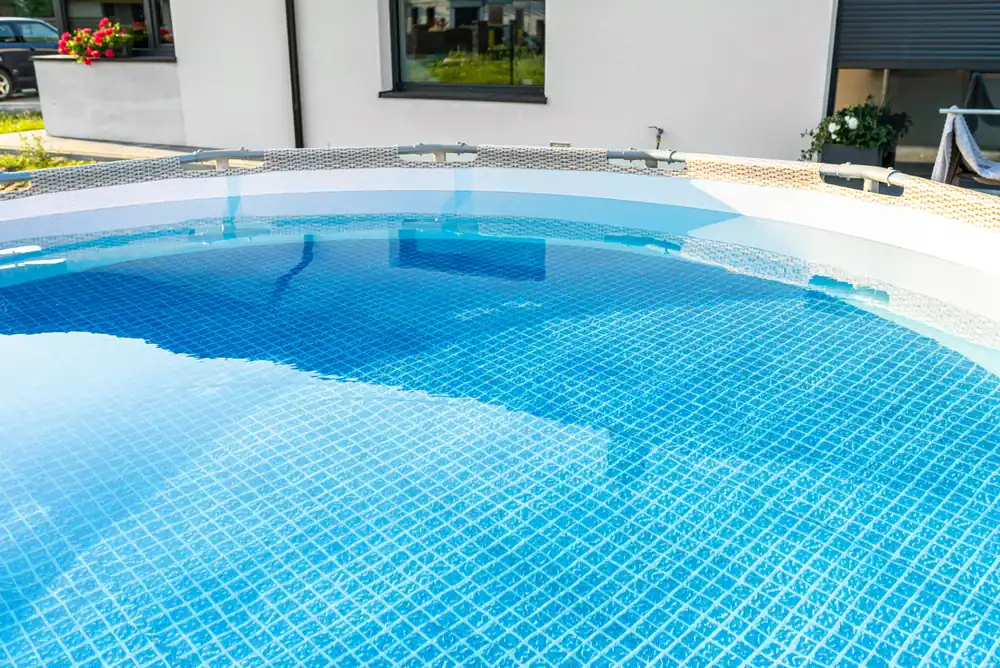
Permit approval is the wildcard. Suffolk County permits can take anywhere from 2 to 12 weeks depending on your specific town and whether there are any site complications. Once permits are in hand, the actual construction typically takes 8 to 12 weeks for a standard installation.
Weather impacts the timeline, especially during excavation and concrete work. Spring installations are popular because you’re aiming to have the pool ready by summer, but that also means contractors are busy and weather can be unpredictable.
If you’re adding custom features—outdoor kitchens, extensive masonry work, complex grading—that extends the timeline. We’ll give you a realistic schedule during the estimate, not an optimistic one that falls apart the minute we hit a rainy week.
You’ve got sandy soil that shifts, clay that doesn’t drain, and groundwater levels that vary wildly depending on where you are in Stony Brook. Sandy soil is easier to excavate but requires proper compaction and structural support so the pool doesn’t settle unevenly over time.
Clay soil is the opposite problem—it holds water, which means you need aggressive drainage solutions or you’ll have hydrostatic pressure pushing against the pool shell. High water tables require dewatering during construction and sometimes permanent drainage systems to prevent the pool from literally floating out of the ground.
We do soil analysis before excavation. It’s not optional. Skipping that step is how you end up with cracks, shifting, and expensive repairs three years down the line. Every property is different, and the soil conditions dictate the construction approach.
You need coping—that’s the cap around the pool edge. Whether it’s custom depends on what you want the finished product to look like and how long you want it to last.
Basic poured concrete coping is functional. It’s the budget option. Custom stone coping or pavers look better, hold up better through freeze-thaw cycles, and give you more flexibility with the overall design. If you’re investing $50,000+ in a pool, cheaping out on the coping and patio masonry is where a lot of projects start looking unfinished.
The masonry work around the pool—the patio, any retaining walls, the tie-in to existing hardscape—that’s what makes it feel like part of your property instead of something dropped into your yard. In Suffolk County, natural stone and custom masonry are popular because they age well and match the aesthetic of higher-end homes. We’ll show you options and explain the cost difference so you can make an informed decision.
You’re looking at $30,000 to $70,000 for most residential installations, but that range is almost meaningless without knowing what you’re building. A basic vinyl liner pool with minimal features is on the lower end. A custom gunite pool with stone coping, extensive patio work, and integrated features like waterfalls or outdoor kitchens is on the higher end or beyond.
Soil conditions affect cost. If we hit rock or need significant drainage work, that adds to the excavation budget. Permit fees, material choices, size, depth, and features all move the number.
We’ll give you a detailed estimate that breaks down where the money goes. You should know what you’re paying for excavation, what you’re paying for materials, what you’re paying for labor. If a number seems high, we’ll explain why. If there’s a less expensive option that still gets you what you need, we’ll tell you that too.
Warranties cover different parts of the project. Structural work—the pool shell, the excavation, the foundational elements—typically carries a longer warranty than equipment. Pumps, heaters, and filters have manufacturer warranties that vary by brand.
If something goes wrong during the warranty period, you call us. We’ll come out, assess the issue, and handle the repair if it’s covered. If it’s a maintenance issue or something outside the warranty scope, we’ll tell you that up front.
The key is working with in-ground pool builders in Nassau County and Suffolk County who are actually licensed and insured. If a company disappears a year after your install, that warranty is worthless. We’ve been doing this long enough that we’ll still be here when you need us.
You can start the process in fall or winter—that’s actually smart. Permit processing, design work, and planning can all happen during the off-season when contractors aren’t slammed. By the time spring hits, you’re ready to break ground.
Actual construction in winter is tricky. You can excavate in cold weather, but concrete work has temperature limitations. Gunite and poured concrete need specific conditions to cure properly. Freezing temperatures compromise the structural integrity.
Most pool installation companies in Suffolk County will tell you to start the conversation in fall, finalize everything over winter, and begin construction in early spring. That way you’re swimming by summer instead of starting the process in May and hoping to be done by August.
Other Services we provide in Stony Brook