

When your boiler and flue are both clean, your system runs the way it was meant to. Heat transfers more efficiently, fuel burns more completely, and the exhaust that needs to leave your home actually does. For Locustwood homeowners running oil heat through aging chimney systems, that difference shows up on your fuel bill every single month.
The homes along Locustwood Boulevard and throughout the Locustwood-Gotham area were built predominantly in the 1930s and 1940s. That means the chimney infrastructure connecting your boiler to your roofline may be eight decades old possibly with original clay tile liners, or no liner at all. A dirty flue in a system like that doesn’t just hurt efficiency. It creates a real carbon monoxide risk, because combustion gases have nowhere clean to go.
Annual boiler chimney cleaning also protects the equipment itself. Soot and scale are corrosive. They accelerate wear on heat exchanger surfaces and restrict airflow in ways that force your boiler to work harder than it should. Over time, that’s what shortens boiler life not just age. Staying on top of it keeps the system running longer and keeps you out of the position of replacing a boiler in the middle of a Nassau County January.
We’ve earned Angie’s List and BBB awards for six consecutive years. That’s not a one-time rating it’s a track record built job by job, home by home, across Nassau County. The kind of recognition that only holds up if the work consistently holds up.
We operate out of Levittown, which puts us roughly fifteen to twenty miles from Locustwood via Hempstead Turnpike. We carry Nassau County-specific licensing, liability insurance, and workers’ compensation not just a general contractor’s license, but the credentials that actually apply to the county where your home sits. Our own educational content tells consumers to ask for exactly that. We meet our own standard.
What you’ll notice in our reviews is consistent: our technicians show up on time, explain what they’re doing, clean up completely when they’re done, and tell you honestly what you need and what you don’t. In a neighborhood where the Locustwood-Gotham Civic Association has been holding contractors accountable since 1929, that kind of straightforwardness isn’t optional. It’s expected.

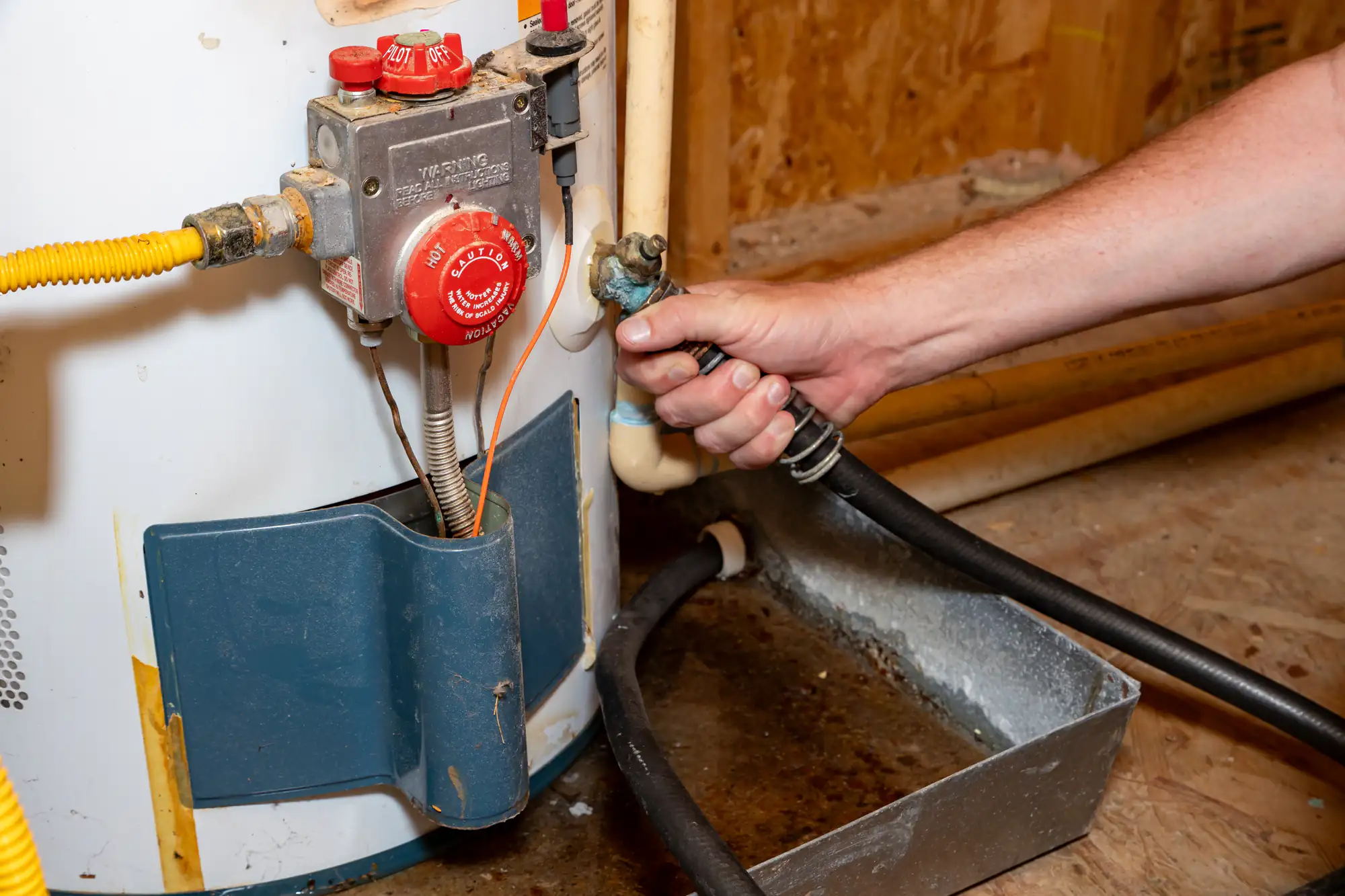
The visit starts with a full visual inspection of your boiler, piping, and connections. We’re looking for corrosion, leaks, and anything that signals a problem before touching a single component. For homes in Locustwood’s older housing stock, this step matters more than most people realize older systems can have issues that aren’t obvious until someone who knows what to look for actually looks.
From there, the heat exchanger, burners, and ignition system get cleaned. Soot and combustion deposits get removed from the surfaces where heat transfer actually happens. A combustion analysis follows this is where the air-to-fuel ratio gets measured and adjusted, which directly affects both efficiency and the completeness of combustion. Incomplete combustion is what produces excess carbon monoxide, so this step isn’t optional.
The flue inspection and cleaning covers the exhaust pathway from the boiler through the chimney. This is the part most HVAC companies skip entirely, because they’re not chimney specialists. We are. We check for blockages, cracks, and draft problems then clean the flue so exhaust gases move the way they’re supposed to. Safety controls get tested, and you get a clear explanation of anything that needs attention. The whole visit typically takes one to two hours for a residential system.
Ready to get started?
Locustwood runs on oil heat. That’s the documented reality for the neighborhood’s older homes, and it matters for boiler cleaning because oil combustion produces significantly more soot than natural gas. The buildup happens faster, it’s denser, and it coats heat exchanger surfaces in ways that directly drag down efficiency. Research shows that just one millimeter of soot on boiler heat transfer surfaces can reduce efficiency by three to four percent and raise flue gas temperatures by twenty to twenty-five degrees Celsius. In a home that burns hundreds of gallons of oil per heating season, that inefficiency adds up quickly.
What we cover is the full system not just the burner unit, but the flue, the liner, and the exhaust pathway all the way to the chimney top. For Locustwood homes that sat adjacent to years of Belmont Park construction activity, with heavy machinery vibration running through the ground nearby, having the chimney flue and masonry inspected as part of the cleaning visit is especially worth doing. Construction vibration is a known contributor to mortar joint deterioration in older brick chimneys, and a compromised flue is not something you want to discover after the heating season starts.
We also handle nest and obstruction removal, cap inspection, and liner assessment during the visit. All materials we use or install are UL listed. If something needs repair, you’ll hear about it clearly with an honest explanation of what’s actually necessary, not a list designed to maximize the invoice.

Once a year is the standard recommendation, and for Locustwood specifically, that schedule makes a lot of sense. The neighborhood’s housing stock is predominantly from the 1930s and 1940s, which means older boiler systems, older flue infrastructure, and in many cases oil heat a fuel that produces more soot per burn cycle than natural gas. Annual cleaning keeps that buildup from reaching the point where it causes real efficiency loss or safety problems.
There’s also a practical warranty consideration. Most boiler manufacturers require documented annual professional maintenance to keep the warranty valid. Skipping a year doesn’t just mean double the buildup the following year it can mean your warranty coverage is void if something goes wrong. Scheduling once a year, ideally during the summer when the boiler is off and there’s no disruption to your heat, keeps you covered on both fronts.
This is one of the most common points of confusion for homeowners in oil-heated neighborhoods like Locustwood. When your oil delivery technician or burner service company comes out, they’re typically servicing the burner unit the mechanical component that ignites and burns the fuel. That’s a legitimate and necessary service. But it’s not the same as cleaning the chimney flue, inspecting the liner, or clearing the exhaust pathway that runs from your boiler through your walls and up through the roofline.
Those are two separate systems, and they both need attention. A burner that’s running cleanly can still be venting into a partially blocked or deteriorating flue and that’s where carbon monoxide risk lives. We cover the chimney side of the equation, which is the part most HVAC and oil service companies don’t touch. If your oil company flagged something during a visit, or if it’s been more than a year since anyone looked at your flue, that’s the gap we’re built to fill.
Yes, and the effect is measurable. Research shows that just one millimeter of soot on boiler heat exchanger surfaces reduces efficiency by three to four percent. For a home in Locustwood running oil heat through a Long Island winter a heating season that runs from October through April that efficiency loss translates directly into fuel you’re paying for but not fully using. Oil prices on Long Island aren’t cheap, and a three to four percent waste margin adds up over a full heating season.
The flue side of the equation matters too. A partially blocked or heavily sooted flue restricts the draft that pulls combustion gases out of the system. When that draft is restricted, your boiler has to work harder to maintain temperature, which further reduces efficiency and accelerates wear on the system. Cleaning both the boiler and the flue restores the system to its designed operating conditions which is where efficiency actually lives.
For the cleaning itself, there’s no permit required in most residential situations. But the contractor performing the work especially any inspection, liner assessment, or repair work that comes out of the visit should hold county-specific licensing for Nassau County. New York doesn’t issue a single statewide chimney contractor license that covers every county. Nassau County has its own licensing requirements, and a contractor who holds a license in Suffolk County or a general home improvement license isn’t necessarily authorized to do chimney work in Nassau County.
We hold Nassau County-specific licensing, along with liability insurance and workers’ compensation coverage. If you’re ever unsure about a contractor’s credentials, ask for a Certificate of Insurance not just a verbal confirmation and verify that their license is valid for Nassau County specifically. That’s the standard our own educational content recommends, and it’s the standard we meet ourselves.
A few things are worth paying attention to between annual cleanings. If your heating bills are climbing without an obvious explanation no change in thermostat settings, no unusual cold snap reduced boiler efficiency from soot buildup is a likely contributor. If the boiler is running longer cycles to reach temperature, or if you’re noticing uneven heat distribution through the house, those are signs the system is working harder than it should.
On the chimney side, visible soot around the boiler’s draft hood or flue connection is a clear signal. So is a persistent smell of combustion in the house, which can indicate that exhaust gases aren’t venting properly. For Locustwood homes near Belmont Park, where years of nearby construction activity may have affected older masonry, it’s also worth watching for any visible crumbling or discoloration around the chimney exterior that can point to flue deterioration that affects draft performance. If you’re seeing any of these signs, don’t wait for the annual appointment. Call and have it looked at.
Yes. We offer 24/7 emergency service, and that’s not just a line on a website. There are documented customer accounts of our technicians arriving within hours on nights when temperatures were around thirty degrees and the heat was completely out. For a family in a pre-war Locustwood home with minimal insulation and an oil boiler that’s stopped working in the middle of January, that response time is the difference between a rough night and a genuinely dangerous situation.
Locustwood sits at the western edge of Nassau County, close to the Queens border, and we operate out of Levittown putting us within reasonable emergency response distance via Hempstead Turnpike. If your boiler goes down during a cold snap and you need someone who can assess the full system not just the burner, but the flue and the exhaust pathway we’re equipped to handle it. Emergency calls are taken seriously here, not routed to a voicemail queue.
Other Services we provide in Locustwood