

A dirty boiler doesn’t announce itself. It just quietly costs you more higher fuel bills, slower heat recovery, and a system that’s working harder than it should every time the temperature drops. By the time something breaks, you’ve already paid for it a dozen times over in wasted energy and wear.
For building owners and property managers in Newtown, the stakes are higher than in most places. NYC law requires that buildings maintain minimum indoor temperatures from October 1 through May 31 68°F during the day, 62°F overnight. A boiler that’s running inefficiently or carrying a season’s worth of soot buildup is a compliance risk, not just a comfort issue. One DOB violation costs far more than an annual cleaning ever will.
Newtown’s housing stock adds another layer to this. A significant portion of the neighborhood’s pre-war and mid-century multi-family buildings run on steam heat systems that were deliberately oversized when they were built and that accumulate soot faster than modern equipment. When one boiler heats an entire building, a dirty system doesn’t leave one family cold. It leaves every tenant without heat. Annual professional boiler cleaning keeps those systems running the way they were meant to, before the heat season puts them to the test.
We’re based in Bethpage and hold county-specific licensing for Nassau County, Suffolk County, and Queens County. That last one matters here. A lot of contractors work Long Island and assume Queens is close enough. It isn’t Queens is New York City, and the licensing, the building codes, and the regulatory expectations are different. We carry the credentials to work legally and properly in Newtown, not just nearby.
We’ve earned an “A” rating with the BBB and Angie’s List award recognition for six consecutive years. That’s not a one-time snapshot it’s a track record built on real jobs, real customers, and real results across hundreds of service calls. Our technicians carry liability insurance and workers’ compensation, all materials we install are UL listed, and every visit includes an honest assessment of what your system actually needs not a checklist of upsells.
For Newtown building owners dealing with aging steam boilers, DOB compliance deadlines, and the density of occupied units depending on one system, that combination of credentials and straight talk is exactly what the situation calls for.
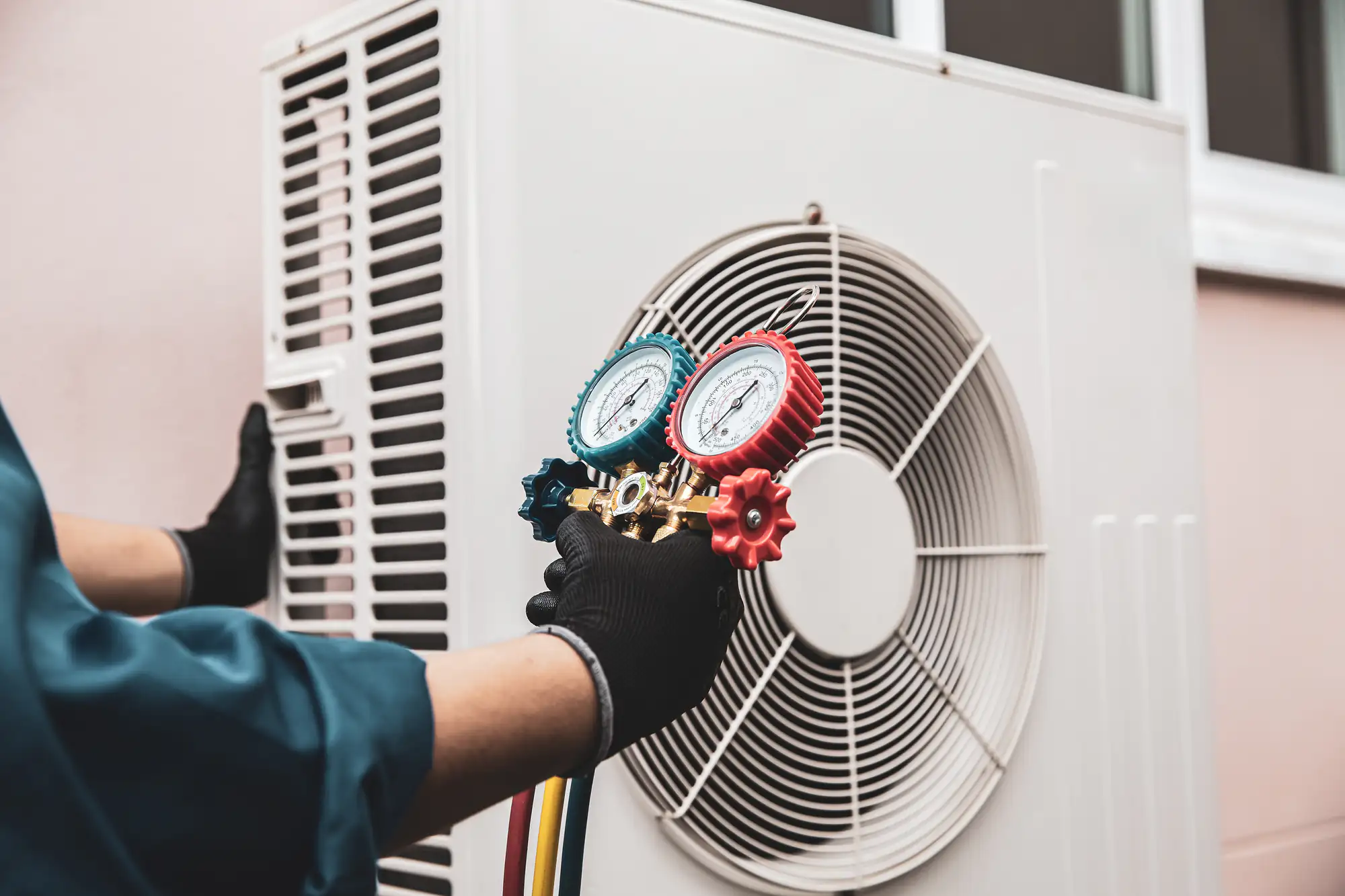
When we arrive for a boiler cleaning in Newtown, the work starts with a full visual inspection the boiler itself, the piping, connections, and any visible signs of corrosion, leaks, or damage. This isn’t a quick once-over. In older Queens buildings where systems have been running for decades, what we find during the inspection often shapes everything that follows.
From there, the heat exchanger and burners get cleaned removing the soot and debris that reduce heat transfer and force your boiler to burn more fuel for the same output. A combustion analysis follows, measuring and adjusting the air-to-fuel ratio so the system is burning cleanly and efficiently. We test pressure levels, safety controls, thermostats, and electrical connections. Then comes the part most HVAC companies skip entirely: the flue. The chimney flue and exhaust pathway get inspected and cleaned, clearing out any soot buildup, blockages, or in Newtown’s dense urban environment bird nests and debris that pigeons and starlings regularly deposit in building exhaust systems.
By the time we’re done, you have a clean system, a clear flue, and a written record of the work the kind of documentation that matters when you’re managing a building subject to NYC DOB requirements and the October 1 heat season deadline. Most residential boiler cleanings take approximately one to two hours. We clean up completely before leaving.
Ready to get started?
Our boiler cleaning service covers the complete exhaust system, not just the mechanical unit. That distinction is especially relevant in Newtown, where many buildings have boiler flues and chimney liners that haven’t been professionally inspected in years. Soot accumulation in the flue doesn’t just reduce efficiency it creates a genuine carbon monoxide risk. In a multi-unit building where one flue serves multiple floors, a blockage doesn’t endanger one household. It endangers everyone in the building.
The service includes burner and heat exchanger cleaning, combustion analysis and adjustment, flue inspection and cleaning, safety control testing, pressure checks, and nest or obstruction removal when present. All materials we use or install during the visit are UL listed and compliant with NYC building code which matters for building owners navigating DOB filings and Local Law 97 emissions requirements. If your building is over 25,000 square feet, boiler efficiency directly affects your emissions output and your compliance standing under Local Law 97’s financial penalty structure.
For individual homeowners in Newtown’s detached and semi-detached housing, the service is the same thorough, honest, and documented. If something doesn’t need to be done, you’ll be told that. If something does, you’ll get a clear explanation of what it is and why it matters before any work begins.

NYC has specific requirements for boiler inspections that go beyond what most other municipalities mandate. Buildings with boilers above certain pressure thresholds are required to file annual inspection reports with the NYC Department of Buildings. Failing to comply can result in violations and fines and those violations go on record, which matters if you’re ever selling the building or dealing with a tenant dispute.
Beyond the formal inspection filing, NYC’s heat season mandate runs from October 1 through May 31. During that window, building owners are legally required to maintain indoor temperatures of at least 68°F between 6 AM and 10 PM and 62°F overnight. A boiler that hasn’t been cleaned or serviced before the heat season begins is far more likely to underperform or fail during peak demand and any failure that results in inadequate heat for tenants is a DOB violation waiting to happen. Annual boiler cleaning in Newtown isn’t just good maintenance. For building owners, it’s a compliance strategy.
This is one of the most common misconceptions in the boiler service world, and it’s worth clearing up directly. When your oil delivery company sends a technician for an annual tune-up, they’re servicing the burner unit the mechanical components that handle combustion. That’s valuable work, but it stops at the boiler itself.
What they’re not doing is cleaning the chimney flue, inspecting the liner, or clearing the exhaust pathway that carries combustion gases out of your building. In Newtown’s older multi-unit buildings, those flues accumulate soot and debris independently of how well the burner is running. They’re also where bird nests and urban wildlife obstructions tend to show up a hazard that’s far more common in a dense Queens neighborhood than in a suburban town. A blocked or soot-laden flue can force carbon monoxide back into occupied spaces even when the burner itself is running perfectly. The two services address different parts of the same system, and both matter.
It’s a fair concern, and it’s one that comes up a lot. The honest answer is that most boilers benefit from annual cleaning regardless of how they’re running, because soot buildup happens gradually and silently you won’t notice the efficiency loss until it shows up on your fuel bill or the system fails under load.
Real signs that a cleaning is overdue include: your heating bills have gone up without a clear explanation, the boiler is cycling more frequently than usual, you’re noticing uneven heat distribution across floors or units, or it’s simply been more than a year since the last professional service. What you shouldn’t do is take a technician’s word for it without a clear explanation of what they found. Our technicians are known for telling customers what they don’t need as much as what they do if your system is genuinely clean and in good shape, you’ll hear that. No pressure, no invented problems.
Blocked flues are more common in dense urban neighborhoods like Newtown than most building owners realize. Pigeons, starlings, and other urban wildlife regularly nest in chimney flues and boiler exhaust vents and because these buildings are occupied year-round, a flue that goes unchecked between heating seasons can develop a full obstruction by the time October rolls around.
The warning signs aren’t always obvious. You might notice a faint smell of exhaust or combustion gases in the building, especially on lower floors. Residents may report headaches or fatigue symptoms that warrant immediate attention because they can indicate carbon monoxide exposure. The boiler may be running but struggling to maintain temperature, which can happen when exhaust gases aren’t venting cleanly. In some cases, there are no symptoms at all until the blockage is severe. That’s precisely why flue inspection is part of every boiler cleaning visit we perform not an optional add-on, but a standard part of the service.
For steam boilers in Newtown’s older multi-family buildings, annual professional cleaning is the right standard and for many of these systems, it’s genuinely non-negotiable. Steam boilers that have been in service for decades, often converted from coal to oil and then to gas over the years, were built to a different design standard than modern equipment. They were deliberately oversized, which means they cycle on and off more frequently, generate more soot per hour of operation, and are more sensitive to flue restrictions than a newer, right-sized system would be.
Annual cleaning keeps these systems running at the efficiency they’re capable of, extends their operational life, and critically for building owners creates a documented service record that supports DOB compliance and demonstrates due diligence if a tenant ever raises a heat complaint. Skipping a year doesn’t just mean double the buildup next time. It means a full season of compounding soot, corrosion, and efficiency loss that costs money every month the boiler runs.
Yes and it’s worth understanding why that question matters. New York doesn’t operate on a single statewide contractor license for chimney and boiler flue work. Nassau County, Suffolk County, and Queens County each have their own licensing requirements, and a contractor who is properly licensed to work in Nassau County is not automatically authorized to perform the same work in Queens. We hold county-specific licensing for all three Nassau, Suffolk, and Queens County which means we meet the specific legal requirements to work in Newtown, not just in the Long Island towns closer to our Bethpage base.
For Newtown building owners, this matters beyond formality. If a contractor without proper Queens County credentials performs work on your building and something goes wrong a flue fire, a CO incident, a DOB inspection the liability exposure falls on you as the property owner. Hiring a licensed, insured, and credentialed contractor is how you protect yourself, your tenants, and your building. We also carry liability insurance and workers’ compensation, so you’re covered on that front as well.
Other Services we provide in Newtown