
A dirty boiler doesn’t announce itself. It just quietly burns more fuel, delivers less heat, and edges closer to a failure you’ll only discover at the worst possible moment. Once the system is properly cleaned and inspected, you get a boiler that runs the way it’s supposed to efficiently, reliably, and without the kind of surprises that turn into emergency calls.
For Sagaponack homeowners and property managers, that reliability matters in a specific way. A large portion of properties along Daniels Lane, Parsonage Lane, and Hedges Lane sit vacant from Labor Day through late spring. During those months, soot accumulates in flue passages, moisture works into aging masonry, and nesting animals occasionally find their way into chimney systems that haven’t been recently serviced. By the time the owner returns or the property manager is prepping for summer rental season, the boiler needs to perform from day one not after a service call that could have been avoided.
The coastal setting adds another layer. Sagaponack sits between the Atlantic Ocean and Sagg Pond, and salt air is a year-round reality here. Metal components in boiler systems caps, flashing, liner connectors, exhaust fittings corrode faster in this environment than they would ten miles inland. Annual boiler cleaning catches that corrosion early, before it becomes a component failure or, worse, a combustion gas leak into the living space.
We’ve earned Angie’s List awards and an “A” BBB rating for six consecutive years running. That kind of track record doesn’t happen by accident it comes from showing up on time, doing the job correctly, and leaving the property in better shape than we found it. Those things matter everywhere, but they matter especially in a market like Sagaponack, where the properties are significant and the people responsible for them expect a higher standard.
We’re licensed for Suffolk County and carry full liability insurance and workers’ compensation coverage. For a property manager or estate owner making a hiring decision for a high-value home in Sagaponack, those aren’t formalities they’re the baseline. Every material we install is UL listed and up to code.
What sets us apart from the HVAC companies and general heating contractors serving the East End is the scope of what we actually inspect. Most companies clean the boiler unit and stop there. We handle the complete system from the burner through the flue connector, through the chimney liner, all the way to the top of the stack. In a village where many homes date back to the 19th century and older flue systems were never designed for modern oil burners, that full-system approach isn’t a bonus. It’s the point.

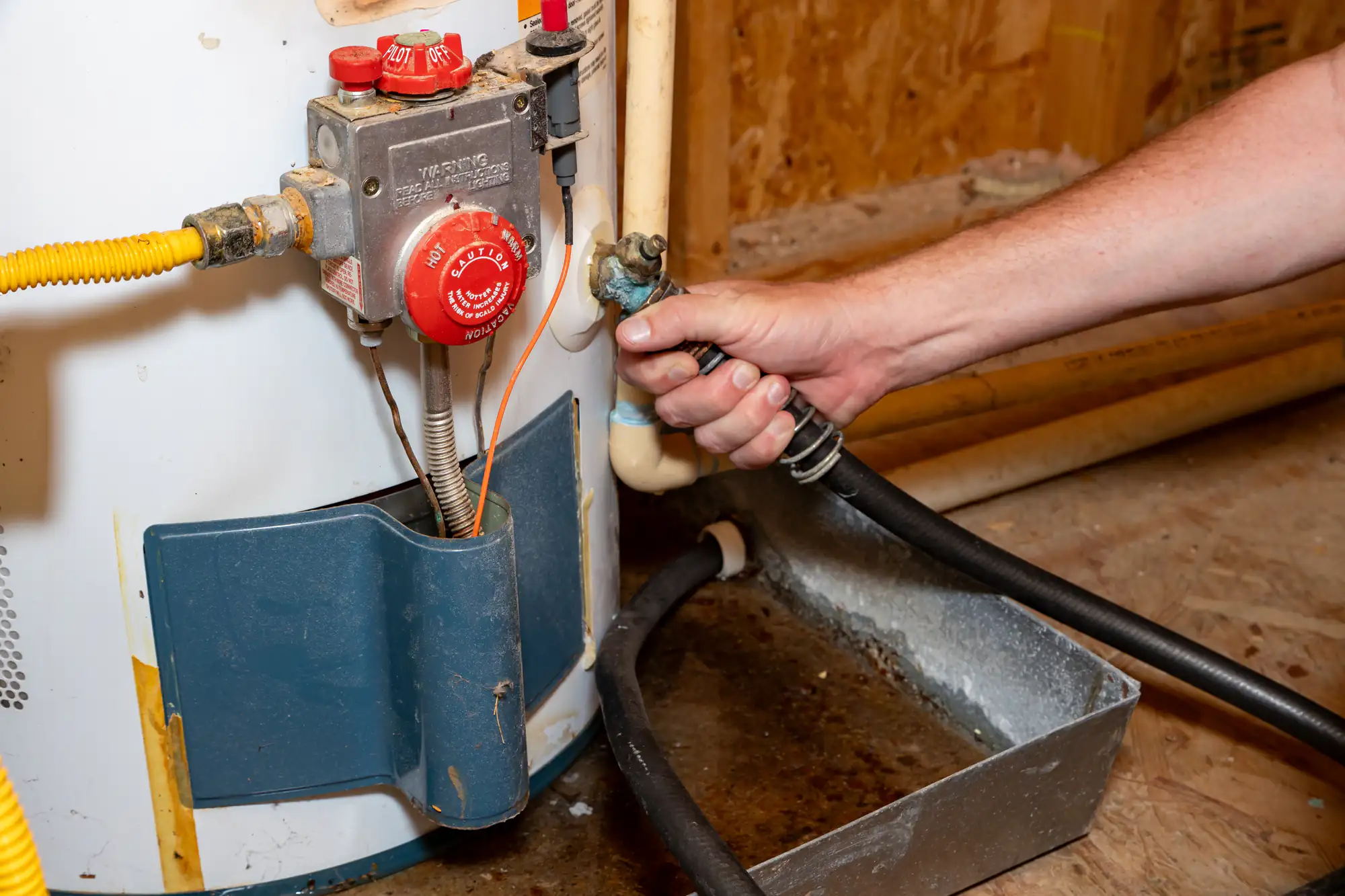
Most residential boiler cleanings take around one to two hours. When our technician arrives, we start with a full visual inspection of the boiler, piping, and connections checking for corrosion, leaks, and any signs of deterioration before a single tool comes out. In Sagaponack’s coastal environment, that initial inspection often turns up early-stage corrosion on metal components that would go unnoticed until it became a real problem. Catching it here, at the start of the visit, is exactly what the service is designed to do.
From there, we clean the heat exchanger, burners, and ignition system removing the soot and combustion debris that builds up in oil-fired systems and gradually reduces how efficiently the boiler transfers heat. A combustion analysis follows, measuring the air-to-fuel ratio and adjusting it for optimal performance. Then comes the flue inspection: checking the liner, looking for blockages, and confirming that combustion gases have a clear, sealed path out of the home.
For properties that have been vacant over winter which describes a significant number of Sagaponack homes this flue check is especially important, since blocked or deteriorated flue passages are a real risk in systems that have sat idle for months.
Safety controls are tested, gas or oil pressure is verified, and the burner is adjusted as needed. Before leaving, we walk through any findings and provide written documentation something property managers can share directly with owners who aren’t on-site.

Ready to get started?
Our boiler cleaning service covers the complete exhaust pathway, not just the mechanical unit. That means the heat exchanger, burners, and ignition system are cleaned, but so is the flue connector, the chimney liner, and everything in between. In Sagaponack’s Historic District where structures dating back to the 1600s and 1700s still stand along Sagg Main Street and in the many 19th and early 20th century homes throughout the village, older flue configurations are common. Some were built for wood smoke and repurposed for oil burners decades later. Those systems need a chimney specialist assessing them, not just an HVAC technician who stops at the boiler unit.
For newer estates the large, high-specification homes built on former potato fields over the past few decades the service is equally thorough. Modern high-efficiency boilers have tighter tolerances than older systems, which means even a modest amount of soot buildup can affect performance. Most manufacturers also require documented annual professional maintenance to keep the warranty valid. Skipping a year doesn’t just mean delayed maintenance it can mean voided coverage.
We serve both residential and commercial properties throughout Suffolk County. Whether you’re a year-round Sagaponack resident, a seasonal homeowner preparing for fall occupancy, or a property manager responsible for maintaining an estate through the off-season, the service is available when you need it including 24/7 emergency availability for situations that can’t wait.

Once a year is the standard recommendation for any oil-fired boiler, and that holds whether the home is occupied year-round or only part of the year. For seasonal properties in Sagaponack, the timing of that annual cleaning matters more than it might elsewhere. A boiler that sits idle from October through May isn’t necessarily in better shape than one that ran all winter soot doesn’t disappear on its own, and systems that are dormant for extended periods can develop blockages from moisture, debris, or animals finding their way into the flue.
The most practical window for seasonal Sagaponack homes is late summer or early fall before the heating season begins and while the property is still accessible. That way, if the inspection turns up a liner issue, a corroded component, or a blocked flue, there’s time to address it before the first cold night. Waiting until the system fails in December or January means dealing with an emergency service call on a compressed timeline, which is a situation that annual cleaning is specifically designed to prevent.
This is one of the most common points of confusion for Long Island homeowners, and it’s worth being direct about it. When your oil delivery company services your burner, they’re working on the mechanical unit the burner head, nozzle, fuel filter, and ignition components. That’s a legitimate and necessary service. What it doesn’t include is the chimney flue, the liner, or the exhaust pathway that carries combustion gases out of your home.
That’s a separate system, and it requires a chimney specialist to inspect and clean it properly. Soot, creosote, and debris accumulate in the flue over time regardless of how well the burner itself is maintained. A blocked or deteriorated flue doesn’t just reduce efficiency it can allow carbon monoxide and other combustion gases to back up into the living space. In Sagaponack’s older homes, where original flue liners may have been in service for 50 to 100 years, the condition of that liner is not something to assume is fine just because the burner was recently tuned. An annual boiler cleaning from us covers both sides of the system.
Yes, and it’s more significant than most homeowners realize. Sagaponack is fully coastal bounded by the Atlantic Ocean to the south and Sagg Pond and Mecox Bay to the north. Salt-laden air is not an occasional condition here; it’s the prevailing environment year-round. Chlorides in salt air accelerate corrosion on metal components at a rate that’s meaningfully faster than what you’d see in an inland community. Chimney caps, flashing, liner connectors, and exhaust fittings are all exposed to this environment continuously.
Components that might last 20 years in a less coastal location can show significant deterioration in 10 to 12 years in Sagaponack. The practical implication is that annual inspection matters more here, not less. When our technician does a full boiler cleaning, they’re also doing a visual inspection of all those components catching early-stage corrosion before it progresses to a failure. A corroded flue fitting that goes undetected isn’t just an efficiency problem; it’s a potential pathway for combustion gases to escape into the home. Catching it at an annual cleaning is the right time, not after it’s already failed.
For most modern boilers, yes or at minimum, it gives the manufacturer grounds to deny a warranty claim. Most boiler manufacturers require documented annual professional maintenance as a condition of keeping the warranty valid. That requirement exists because manufacturers know that a poorly maintained boiler fails faster, and they’re not obligated to cover failures that result from neglect.
This is particularly relevant for Sagaponack homeowners who have recently upgraded to high-efficiency boiler systems. These newer units are more sensitive to soot buildup and combustion imbalances than older systems their tighter tolerances mean that even modest accumulation affects performance. If a component fails on a system that hasn’t had documented annual service, the warranty claim is at risk regardless of how new the equipment is. Keeping a record of annual professional cleaning from a licensed, insured company like ours is the straightforward way to protect that coverage and make sure the documentation holds up if you ever need it.
There are a few things worth paying attention to between annual visits. If your heating bills have increased noticeably without a corresponding change in how you’re using the system, that’s often a sign of soot buildup reducing heat transfer efficiency. A 1mm layer of soot on a boiler’s heat transfer surfaces can reduce efficiency by 3 to 4 percent meaning every gallon of heating oil is delivering less heat than it should.
Other signs include unusual odors when the boiler is running, visible soot around the flue connection or exhaust fittings, the boiler cycling on and off more frequently than usual, or a system that’s slow to reach temperature. Any of these warrants a call before the annual visit rolls around. For properties that have been vacant for an extended period which is common in Sagaponack it’s also worth having the system inspected before firing it up for the season, particularly if it’s been more than 12 months since the last cleaning.
We actively service Sagaponack and the surrounding East End communities. We’re licensed for Suffolk County, which covers Sagaponack and the broader Town of Southampton area. We’ve established a presence in this market this isn’t a territory we occasionally reach; it’s one we’ve committed to serving.
For property managers and homeowners coordinating service for estates along NY 27 and the village lanes off Montauk Highway, our scheduling flexibility and 24/7 emergency availability mean you’re not limited to a narrow service window. Whether you’re planning ahead for fall occupancy, coordinating a pre-summer rental inspection, or dealing with an unexpected issue at a property that’s been vacant over winter, we’re reachable and responsive. Suffolk County licensing, full liability insurance, workers’ compensation coverage, and six consecutive years of Angie’s List and BBB recognition are the credentials that make the decision straightforward for anyone managing a high-value Sagaponack property.
Other Services we provide in Sagaponack