
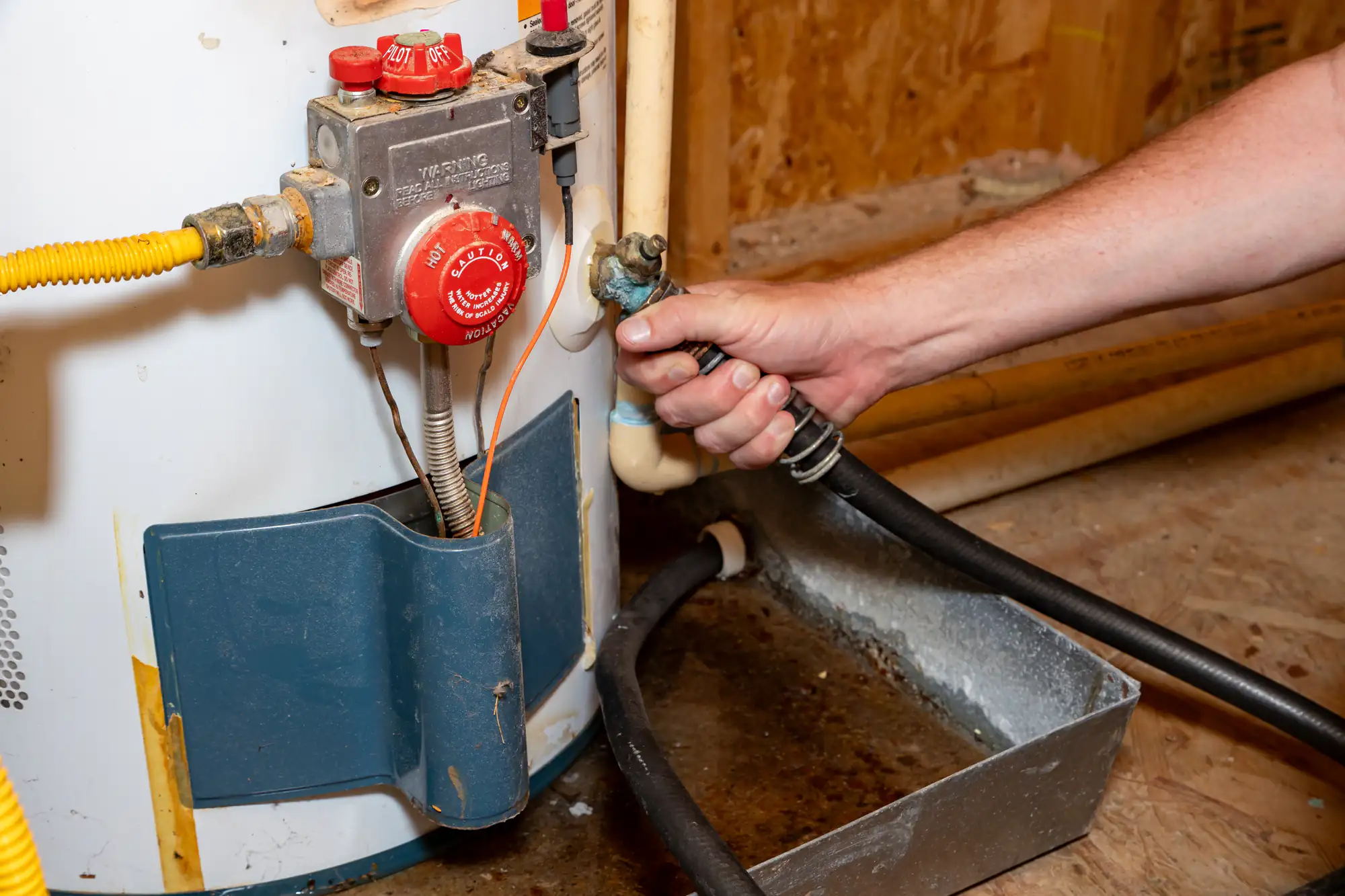


When your boiler and flue are both clean and clear, your heating system runs the way it was designed to. Combustion is efficient, heat transfer is unobstructed, and the exhaust pathway does what it’s supposed to move combustion gases out of your home safely. That’s the baseline.
A layer of soot just one millimeter thick on your boiler’s heat transfer surfaces can reduce efficiency by three to four percent and push flue gas temperatures up significantly. In a coastal environment like Shinnecock Hills where salt air off the bay accelerates corrosion on metal components year-round that buildup compounds faster than it does inland. The result is higher fuel consumption, more wear on your system, and a carbon monoxide risk that doesn’t announce itself.
For properties in Art Village that sit vacant through stretches of the year, there’s an added layer of risk. When a boiler is dormant for months, condensation forms inside the flue, soot absorbs moisture, and the exhaust pathway can develop blockages from debris or nesting. Firing that system up without a cleaning first isn’t just inefficient it’s a real safety concern. Annual boiler cleaning eliminates that risk before it becomes a problem.
We’ve earned Angie’s List and BBB awards for six consecutive years. That’s not a one-time rating it’s a sustained track record built across hundreds of service calls on Long Island, including homes throughout Art Village and the surrounding Suffolk County area. When you’re managing a historically designated property in Art Village, that kind of consistency matters more than a company with a few recent five-star reviews.
What sets us apart from the HVAC generalists serving the Southampton area is scope. Local heating companies service the mechanical boiler unit. We’re a chimney specialist meaning the flue liner, masonry chimney, and full exhaust pathway are part of every service call, not an afterthought. For Art Village’s original cottages, some of which have chimney structures dating back to the 1890s, that distinction is everything.
We hold county-specific licensing for Suffolk County, carry both liability insurance and workers’ compensation, and use only UL-listed materials on every job. You’re not letting a stranger into a multi-million-dollar historic property on faith alone the credentials are there to verify.

The visit starts with a full visual inspection of the boiler, piping, and connections checking for corrosion, leaks, and any visible signs of wear. In Art Village’s coastal environment, corrosion on metal components is a specific thing to look for, not a generic checkbox. Salt-laden air off Shinnecock Bay works on boiler hardware year-round, and what looks fine from a distance sometimes tells a different story up close.
From there, we clean the heat exchanger and burners to remove soot and debris that restrict heat transfer. A combustion analysis follows measuring and adjusting the air-to-fuel ratio so the system runs at its designed efficiency, not somewhere below it. We inspect the flue for blockages, cracks, and proper venting, and clean the chimney of any accumulated soot, debris, or nesting material. For the older masonry chimneys common in Art Village’s original cottages, that flue inspection is particularly important original clay tile liners and century-old mortar joints require a trained eye, not a quick pass.
Safety controls are tested before the job is complete: pressure valves, thermostats, seals, and electrical connections. You get a clear picture of your system’s condition and any recommendations for follow-up work in writing, before anything additional is quoted.

Ready to get started?
Art Village was designated a Hamlet Heritage Resource Area by the Southampton Town Board in 2012. That designation reflects what anyone who’s spent time here already knows the properties in this enclave are not standard Long Island residential stock. The original cottages were built between 1891 and 1903, many by architects like Grosvenor Atterbury, and they’ve been layered with retrofit systems over more than a century. Boiler cleaning in Art Village isn’t a one-size-fits-all job.
Our service covers the full system: burner cleaning, heat exchanger cleaning, flue inspection and cleaning, combustion analysis, safety control testing, and a written assessment of the system’s condition. For properties in the Shinnecock Hills area with older chimney configurations original masonry, retrofit stainless liners, or clay tile flues the inspection component is especially thorough. The goal isn’t just to clean what’s accessible; it’s to understand what the system actually looks like and flag anything that warrants attention before it becomes a repair.
For seasonal and second-home owners along Montauk Highway and throughout the Art Village enclave, we also handle pre-season boiler preparation so when you arrive in the fall and turn the heat on for the first time in months, the system has been properly serviced and is ready to run.

The short answer is yes not because the boiler itself is necessarily different, but because the chimney systems connected to it often are. The original cottages in Art Village date back to the 1890s and early 1900s, and many of them have chimney structures that reflect that age. You might be looking at original clay tile flue liners, older masonry with deteriorating mortar joints, or a retrofit stainless steel liner installed at some point over the past few decades. Each of those configurations behaves differently and requires a trained eye to assess properly.
A general HVAC technician who services standard boilers in newer suburban homes isn’t necessarily equipped to evaluate what they’re looking at in a 130-year-old chimney. We specialize in chimney systems specifically not just the mechanical boiler unit which means the flue inspection and cleaning are done with the same level of attention as the burner and heat exchanger work. For a historically designated property in Art Village, that specialist approach isn’t optional. It’s the right way to do the job.
It can be, and it’s one of the more common issues we see with seasonal properties in the Southampton area. When a boiler sits dormant for an extended period, condensation forms inside the flue. That moisture mixes with existing soot deposits and creates acidic compounds that corrode the flue liner and heat exchanger surfaces over time. Debris and nesting material can also accumulate in the chimney while the system isn’t in use, creating blockages that aren’t visible until the boiler is fired up.
The risk isn’t just mechanical deterioration it’s also safety. A blocked or partially obstructed flue can cause combustion gases, including carbon monoxide, to back up into the living space when the boiler is first activated after a long idle period. For a property in Art Village that’s been closed up since spring, that first firing of the season carries real risk if the system hasn’t been properly serviced beforehand. Pre-season boiler cleaning ideally scheduled before you return for the fall eliminates that risk entirely and gives you a clear picture of the system’s condition before you need to rely on it.
Salt air is genuinely harder on heating systems than most homeowners realize. The salt-laden moisture that comes off Shinnecock Bay and the Atlantic coast accelerates corrosion on metal components throughout the boiler system burner assemblies, heat exchanger surfaces, flue liners, chimney caps, and flashing. What might take three to five years to show significant wear on an inland Long Island property can develop noticeably faster on a coastal property in Shinnecock Hills.
This doesn’t mean your system will fail prematurely if you stay on top of maintenance it means the maintenance interval matters more here than it does elsewhere. Annual boiler cleaning and inspection gives you a regular opportunity to catch corrosion-related deterioration before it becomes a repair or a replacement. During a professional service visit, our technician can identify early signs of corrosion on key components and flag them while they’re still manageable. Skipping a year in a coastal environment like Art Village isn’t the same as skipping a year in a more forgiving climate the cumulative effect moves faster here.
Most boiler manufacturers require annual professional maintenance as a condition of keeping the warranty valid. This isn’t something that gets flagged until there’s a problem but when a warranty claim is filed after a breakdown, manufacturers will often ask for documentation of annual service. If that documentation doesn’t exist, the claim can be denied. It’s a detail that catches a lot of homeowners off guard because it’s buried in the warranty terms rather than prominently communicated at the time of installation.
For Art Village homeowners with high-value properties, this is worth paying attention to. The cost of annual boiler cleaning which typically runs between $150 and $350 as part of a full service is a fraction of what a major boiler repair costs, and it’s significantly less than a full boiler replacement, which on Long Island can run anywhere from $5,500 to $15,000 depending on the system. Keeping that warranty intact by maintaining a documented annual service record is straightforward risk management, especially for a property where a heating failure in winter has real consequences.
This is one of the most common points of confusion for homeowners on the South Fork who heat with oil. Your oil delivery company typically services the burner unit the mechanical component that ignites and burns the fuel. That’s a legitimate and necessary service, and it covers things like the burner head, nozzle, filter, and ignition system. What it doesn’t cover is the chimney side of the equation: the flue, the liner, the exhaust pathway, and the masonry chimney structure itself.
Those two things are connected your boiler produces combustion gases that have to travel through the flue and out the chimney to exit your home safely. If the flue is obstructed, cracked, or lined with a season’s worth of soot buildup, it doesn’t matter how well-tuned the burner is. The exhaust pathway is a separate system that requires a chimney specialist, not an HVAC technician. We cover both sides: the mechanical cleaning and the full chimney inspection and cleaning, so the entire system from burner to cap is accounted for in a single service visit.
The credentials that matter most in this space are CSIA certification (Chimney Safety Institute of America), county-specific licensing, and verifiable insurance. CSIA certification requires passing a rigorous written exam and ongoing continuing education it’s the industry standard for chimney professionals and the first thing to ask about when you’re evaluating a company. You can verify a technician’s certification directly through the CSIA’s online lookup tool, so it’s not something that can simply be claimed without backing.
Beyond certification, ask specifically about Suffolk County licensing. New York doesn’t issue a single statewide chimney contractor license each county has its own requirements, and a company that’s properly licensed for Nassau County isn’t automatically covered to work in Suffolk County, which is where Art Village falls. You should also ask for a Certificate of Insurance that shows both liability insurance and workers’ compensation coverage. On a historically designated property in Art Village worth several million dollars, you need to know that the contractor on your property is properly covered not just verbally assuring you that they are. We hold Suffolk County licensing, carry both forms of insurance, and use UL-listed materials on every job.
Other Services we provide in Art Village