

Most Williston Park homeowners already know their boiler needs annual attention. What they don’t always realize is that the boiler unit is only half the picture. The flue connected to it running through walls and up through a chimney that may be as old as the home itself accumulates soot, develops cracks in aging mortar, and quietly loses its ability to safely vent combustion gases. Getting the boiler cleaned without addressing the flue is like changing the oil and ignoring the exhaust system.
When we clean the full system, your boiler runs at the efficiency it was designed for. A layer of soot just one millimeter thick on heat transfer surfaces can reduce boiler efficiency by three to four percent and in Williston Park, where oil heat is still the norm on many blocks, that inefficiency shows up directly on your fuel bill every month. Clean the system completely and you recover that efficiency. It’s not a dramatic transformation; it’s a measurable one.
There’s also the matter of what you can’t see. Williston Park homes were built primarily between the 1920s and 1940s, and many of the chimney flues in those homes have been through eighty or more heating seasons. Cracks in flue tiles and deteriorating mortar joints don’t announce themselves they allow combustion gases to migrate into living spaces slowly and silently. Annual professional inspection and cleaning catches those problems before they become emergencies, especially in a dense village where homes sit close together and a compromised flue affects more than just your household.
We’ve earned an “A” rating with the BBB and an Angie’s List award every year for six consecutive years. That kind of track record doesn’t come from doing good work occasionally it comes from doing it consistently, across hundreds of jobs, for homeowners who had every reason to leave a bad review if something went wrong.
We are Nassau County licensed, fully insured, and carry workers’ compensation coverage. For Williston Park homeowners, that last part matters. The village has its own building department, and work performed on heating systems and chimney infrastructure here falls under Nassau County code. You want a company that’s already cleared that bar not one you have to take on faith.
Our team has worked throughout Nassau County, including the older Colonial Revival and Dutch Colonial homes that define Williston Park’s streets. We’ve seen the inside of century-old flues, we know what aging masonry looks like up close, and we don’t pretend a problem doesn’t exist or invent one that doesn’t.
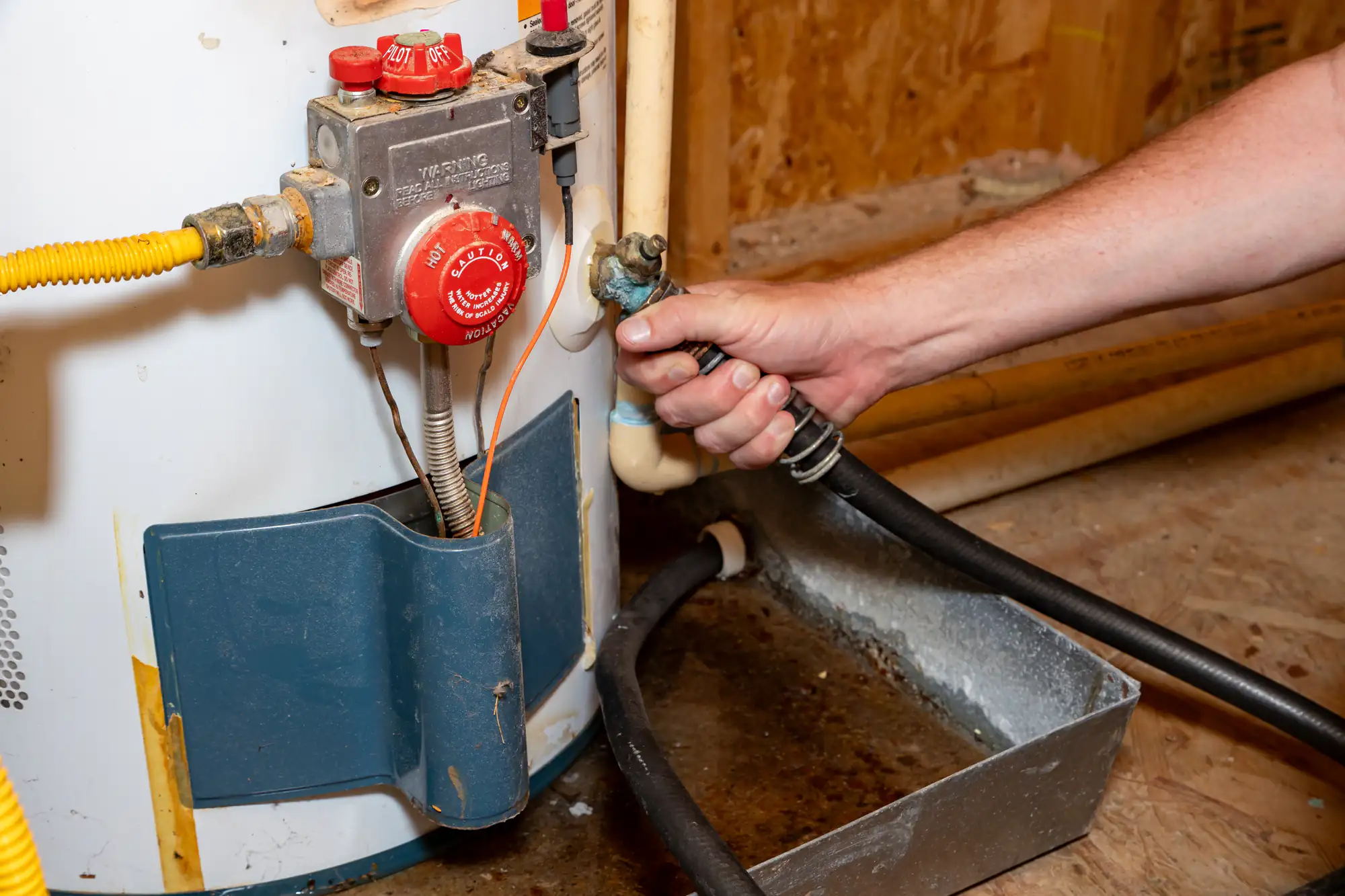
When we arrive at your Williston Park home, the first thing our technician does is a full visual inspection the boiler itself, the piping, the connections, and the flue pathway. In older homes, this step matters more than it does in newer construction. A 1930s Chatlos Colonial may have original flue tiles, aged mortar joints, or a chimney liner that was sized for oil-fired equipment and has never been evaluated since. The inspection establishes what you’re actually working with before any cleaning begins.
From there, our technician cleans the heat exchanger, burners, and ignition components removing the soot and debris that build up over a heating season and reduce the system’s efficiency. A combustion analysis follows, which checks that the air-to-fuel ratio is properly calibrated. This is the step that most HVAC companies skip or rush, and it’s where a significant portion of fuel waste originates.
The flue gets cleaned separately brushed and vacuumed to remove soot and any blockages and the safety controls are tested before we wrap up. Most residential boiler cleanings take between one and two hours. If you’re a commuter catching the Oyster Bay Branch out of East Williston Station in the morning, you can schedule for a time that works around your day.
Fall is the busiest window for scheduling, so summer appointments are worth booking early. The boiler isn’t running during warm months, the work can be done without disrupting your heat, and any issues we find can be repaired before the first cold snap arrives.

Ready to get started?
Every local boiler service provider showing up in Williston Park search results the plumbing and heating companies on Willis Avenue, the HVAC contractors serving Nassau County cleans the mechanical unit and stops there. None of them touch the chimney flue. We do both, which is the only way to fully service a boiler system connected to an aging masonry chimney.
We handle oil boiler cleaning and gas boiler cleaning, which is increasingly relevant in Williston Park as oil-to-gas conversions have become more common in the area. That conversion matters for chimney care. A new gas boiler connected to a flue originally sized and designed for oil-fired equipment can create condensation buildup, accelerated liner deterioration, and backdrafting risk problems a standard HVAC technician won’t flag because they’re not inspecting the chimney side. We evaluate the full exhaust pathway regardless of fuel type.
Every component we install liners, caps, or any other hardware is UL listed and code-compliant with Nassau County requirements. If your home needs a stainless steel liner, a chimney cap, or any repair we identify during the cleaning visit, the materials used will meet the standards your village’s building department recognizes. You won’t find out later that something was done with non-listed materials. That’s not a minor detail when your home is worth what homes in Williston Park are worth.

Once a year is the standard recommendation, and it’s not arbitrary. Most boiler manufacturers require annual professional maintenance to keep the warranty valid skip a year and you may be voiding your coverage without realizing it. Beyond the warranty question, a single heating season generates enough soot and debris to measurably affect efficiency and, in older systems, to accelerate wear on components that are already aging.
For Williston Park specifically, the age of the housing stock makes annual cleaning more important, not less. Homes built in the 1920s and 1930s have chimney infrastructure that has been through decades of thermal cycling, moisture exposure, and soot accumulation. An annual cleaning isn’t just about efficiency it’s the one opportunity each year to have a trained eye look at the condition of the flue tiles, mortar joints, and liner before a small problem becomes a structural one.
The best time to schedule is late summer or early fall, before the heating season begins and before the fall rush fills up available appointment slots.
This is one of the most common points of confusion for Long Island homeowners, and it’s worth being direct about. Your oil delivery company services the burner unit the mechanical components that combust the fuel. That’s a legitimate and necessary service. What they don’t do is inspect or clean the chimney flue that carries combustion gases out of your home.
Those are two different systems requiring two different types of expertise. The chimney side the flue tiles, the liner, the mortar joints, the exhaust pathway from the boiler to the top of the chimney requires a chimney specialist, not an HVAC technician. In a Williston Park home where the chimney may be original to a 1926 or 1935 construction, the flue has its own set of issues that have nothing to do with the burner your oil company just tuned.
If your oil delivery company flagged a problem with your chimney or boiler exhaust during a recent visit, that’s a signal to call us not to assume the burner service covered it.
Yes, and it’s worth understanding how. Carbon monoxide is produced by incomplete combustion when fuel doesn’t burn cleanly, CO is one of the byproducts. A boiler with soot-coated heat transfer surfaces and a poorly calibrated air-to-fuel ratio is more likely to produce elevated CO levels than a clean, properly tuned system. That’s the boiler side of the problem.
The flue side compounds it. A cracked flue tile, a blocked exhaust pathway, or deteriorating mortar in an aging chimney can allow combustion gases including carbon monoxide to migrate into the living space rather than venting safely outside. In a Williston Park home with pre-WWII masonry, both of these failure modes are real possibilities, not theoretical ones. The homes on these streets are beautiful and well-maintained, but the infrastructure inside the walls is old.
Annual boiler cleaning and flue inspection is how you confirm that the exhaust system is doing its job moving combustion gases out of the home, not into it.
Yes and if you’ve recently converted from oil to gas, it may be more important than before. A new boiler doesn’t reset the condition of the chimney it’s connected to. If your home is one of the many in Williston Park that has gone through an oil-to-gas conversion in recent years, your new gas boiler is now venting through a flue that was originally designed for oil-fired equipment. That mismatch matters.
Gas appliances produce cooler, more acidic exhaust than oil burners, which can cause condensation inside an oversized flue and accelerate corrosion of older liner materials. A new boiler also comes with manufacturer warranty requirements. Most manufacturers require documented annual professional maintenance to keep that warranty in force.
Even if your new system is running perfectly, skipping the annual cleaning means you may be accumulating soot in the flue, losing the warranty protection, and missing the annual inspection that would catch any early signs of liner deterioration. The boiler being new doesn’t change what’s happening in the chimney above it.
There are a few specific things worth verifying before you book. First, ask whether the company is licensed for Nassau County not just licensed in general, but specifically for the county your home is in. Williston Park falls under Nassau County jurisdiction, and the village’s own building department oversees permitted work on heating and chimney systems. A company that can’t confirm Nassau County licensing is not the right call for work in this village.
Second, ask about chimney-specific credentials. The Chimney Safety Institute of America (CSIA) offers certification for chimney professionals that requires passing a rigorous exam and ongoing education. This is the credential the industry points to as the baseline standard for anyone inspecting or cleaning chimney flues. Ask for it by name.
Third, confirm that the company carries both liability insurance and workers’ compensation not just one of them. Request a Certificate of Insurance, not just a verbal confirmation. In a village where homes are valued well above $700,000 and sit on compact lots close to neighboring properties, you want to know that any on-site incident is covered before work begins.
A full boiler cleaning visit from us covers the complete system not just the mechanical unit. Our technician starts with a visual inspection of the boiler, piping, and connections, then moves to the heat exchanger, burners, and ignition components, cleaning out the soot and debris that accumulate over a heating season. A combustion analysis is performed to verify that the air-to-fuel ratio is calibrated correctly this is the step that directly affects fuel efficiency and emissions output.
The flue is cleaned separately, which is the part of the service that most local plumbing and heating companies in the Williston Park area don’t offer. The exhaust pathway from the boiler up through the chimney is brushed and vacuumed, and the condition of the liner, flue tiles, and mortar is assessed during the process. Safety controls pressure valves, thermostats, seals, and electrical connections are tested before we leave.
If anything is found that needs repair, you’ll hear about it plainly and honestly. We have a documented track record of telling customers when they don’t need additional work which, in a market where contractor upselling is common, is the kind of thing that keeps homeowners coming back year after year.
Other Services we provide in Williston Park