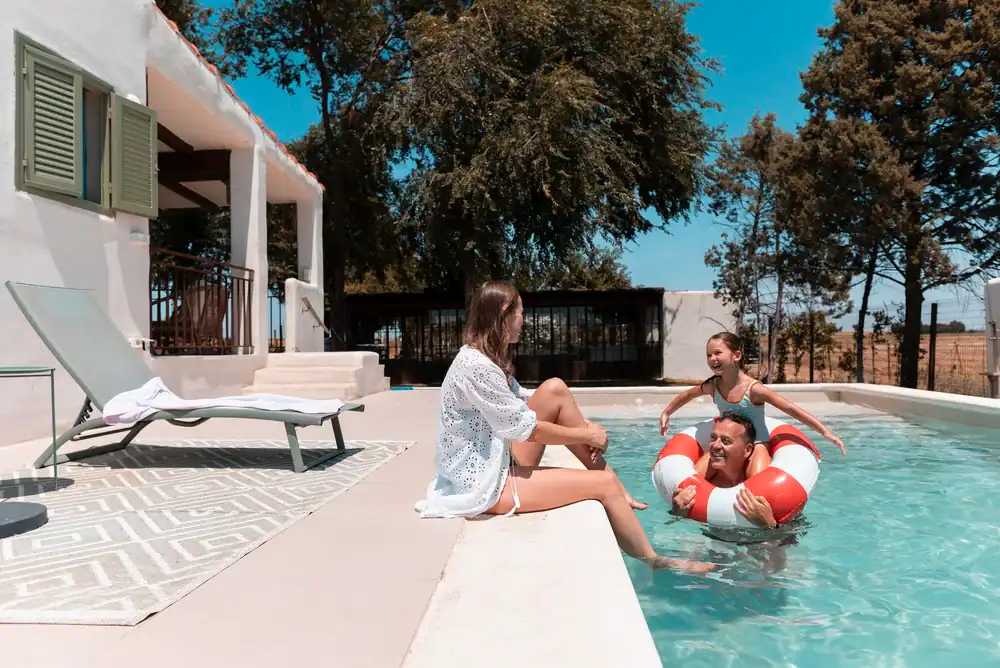

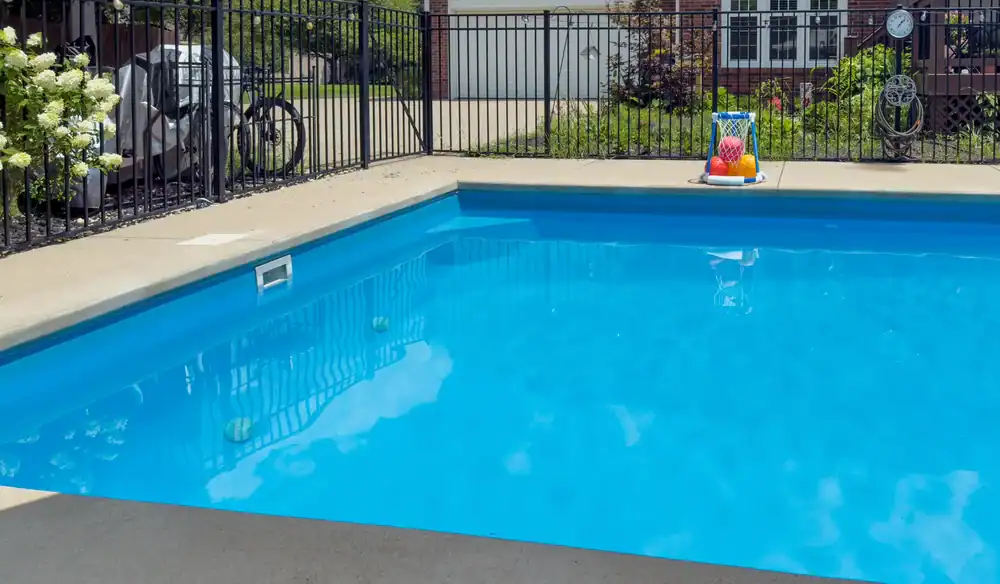
You’re not just getting a hole filled with water. You’re getting a complete backyard poolscape that handles Suffolk County’s ground conditions, drainage challenges, and seasonal weather without falling apart in three years.
That means a poured concrete base under your pool patio—not crushed stone that settles and cracks. It means drainage designed with the right pitch so water flows away from your pool and your house, not back toward your foundation. It means pavers or natural stone rated for pool environments, installed by crews who’ve done this hundreds of times on Long Island.
When the job’s finished, you’ll have a space that works for summer gatherings, quiet evenings after work, and everything in between. No callbacks for sunken pavers. No standing water. No wondering if we cut corners you can’t see yet.
We’ve been serving Suffolk County and Nassau County homeowners for over 40 years. Every job is handled by the owner, which means your project gets the attention it deserves—not passed off to a crew that’s juggling five other installs.
We’re licensed, insured, and bonded. We hold an A+ rating with the BBB and multiple Angie’s List awards. We know East Moriches soil conditions, permit requirements, and what it takes to build a pool that lasts through Long Island winters without cracking, settling, or needing emergency repairs.
You’ll work with people who’ve seen every ground condition Suffolk County can throw at a project—high water tables, rocky soil, drainage nightmares. We’ve handled it all, and we know how to build around it.
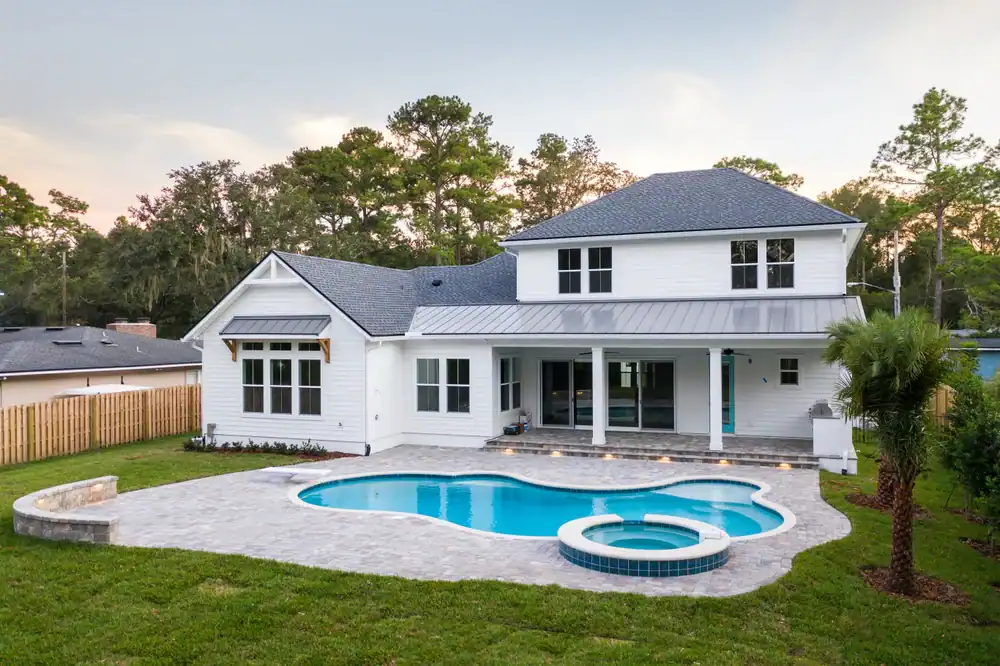
First, we meet at your property to talk through what you want and what your yard can handle. We’ll discuss design options, drainage needs, and any site challenges like slopes or existing landscaping. Then we create a 3D rendering of your complete backyard poolscape so you can see exactly what you’re getting before excavation starts.
Once you approve the design, we handle permits and schedule excavation. Timing matters here—Suffolk County weather impacts every stage, so starting early in the building season means you’re swimming by summer, not waiting until fall. Our in-house crews dig, grade, and prep the site with proper drainage and base work. That’s poured concrete under hardscaping, not shortcuts.
After the pool shell goes in, we build your patio, coping, and any additional masonry—outdoor kitchens, fire features, retaining walls, whatever the design calls for. Everything’s done to code, inspected, and finished on time. You get a final walkthrough, and we don’t leave until you’re clear on maintenance and operation.
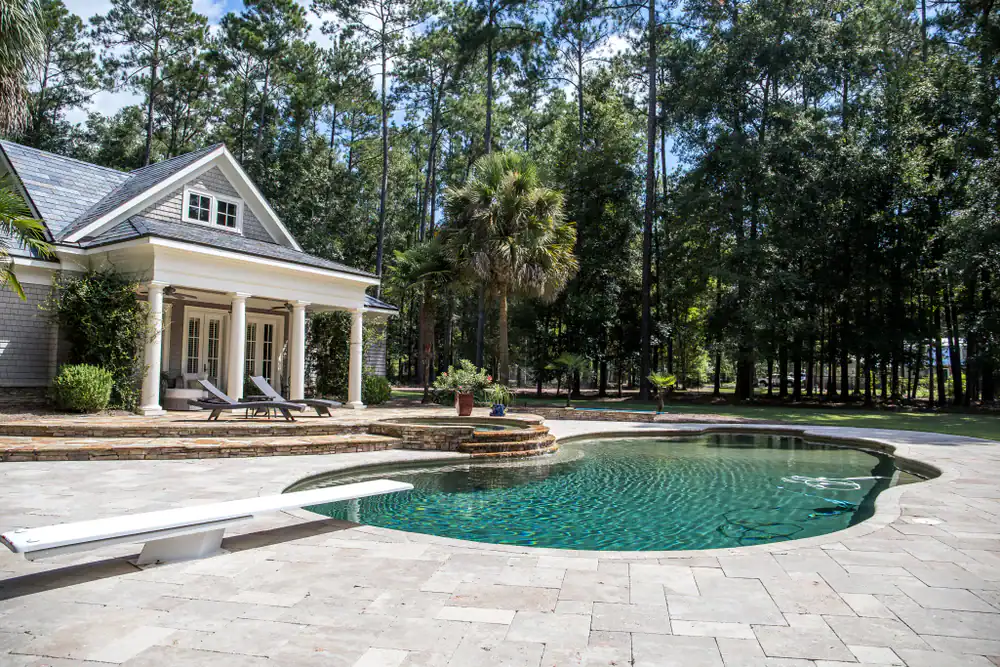
Ready to get started?
A complete in-ground pool installation from us covers everything from excavation to final grading. You’re getting the pool itself, plus all the surrounding masonry and hardscaping that makes it functional and safe. That includes custom pool coping and tile, concrete pool surrounds or paver patios, and proper drainage systems that meet Suffolk County requirements.
We also handle retaining walls and grading if your yard has slopes or elevation changes. Pool patio masonry in Suffolk County has to account for freeze-thaw cycles, so we use materials rated for the climate—Cambridge pavers, natural stone, or stamped concrete depending on your preference and budget. Every installation includes compliance with New York State pool alarm laws and fencing requirements, because a pool that’s not up to code is a liability you don’t need.
East Moriches properties often deal with high water tables, which affects how we build. We’ve installed hundreds of pools on sites with groundwater challenges, and we know how to engineer around it. If your yard has drainage issues now, they’ll only get worse with a pool unless the grading and pitch are handled correctly from day one.
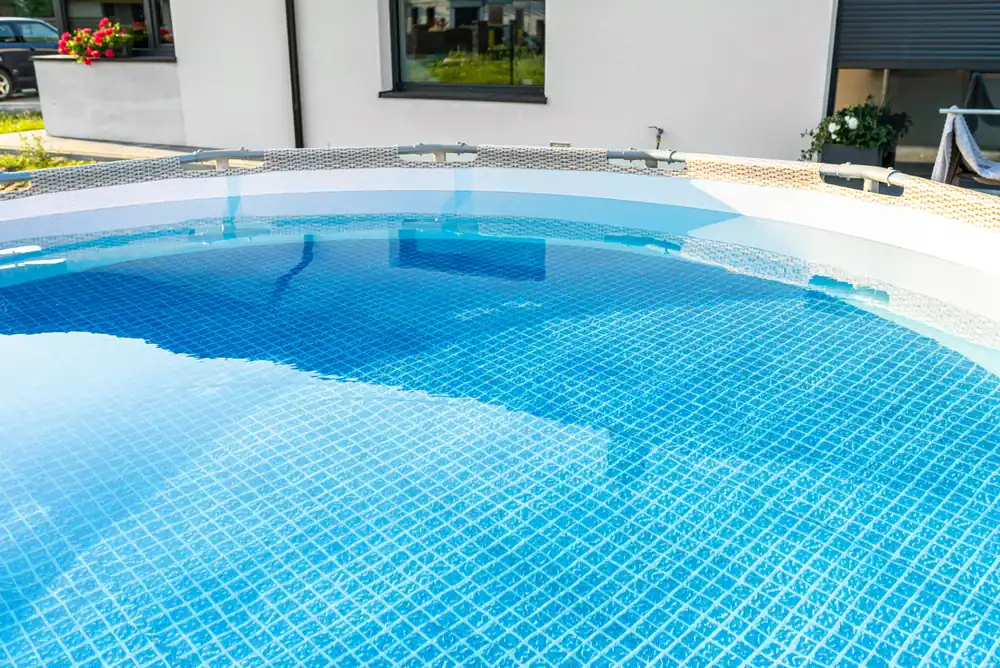
In-ground pool installation in Suffolk County typically ranges from $50,000 to $150,000 depending on size, materials, and site conditions. That’s higher than the national average because Long Island has unique challenges—rocky soil, high water tables, strict permit requirements, and higher labor costs.
A basic vinyl liner pool with minimal hardscaping will land on the lower end. A gunite pool with custom tile, natural stone patio, outdoor kitchen, and retaining walls will push toward the higher end or beyond. The biggest cost variables are excavation complexity, the amount of masonry work, and whether your yard needs significant grading or drainage correction.
We give free estimates and won’t be undersold on comparable work. But if someone’s quoting you half what everyone else is, ask what they’re skipping—because corners get cut somewhere, and you’ll pay for it later in repairs.
Yes. Any in-ground pool in Suffolk County requires a building permit, and skipping that step can result in fines, penalties, and major headaches if the town discovers unpermitted work. The permit process covers structural plans, drainage design, setback requirements, and safety features like fencing and alarms.
New York State law also requires pool alarms on any pool with a depth of at least 24 inches, installed after December 2006. You’ll also need a fence at least four feet high with a self-closing, self-latching gate. These aren’t suggestions—they’re code, and inspectors will check.
We handle the permit process as part of the installation. That includes submitting plans, coordinating inspections, and making sure everything meets Suffolk County and New York State requirements. It adds time to the project, but it’s not optional, and doing it right protects you from legal and financial problems down the road.
A full in-ground pool installation in Suffolk County typically takes 8 to 12 weeks from excavation to final walkthrough, assuming normal weather and no major site complications. That timeline includes permits, excavation, pool shell installation, hardscaping, and finishing work.
Weather is the biggest wildcard. Rain delays excavation. Cold temperatures slow concrete curing. If you want to swim by summer, you need to start the process in late winter or early spring—not May. Contractors book up fast during busy season, and if you’re calling in April, you’re likely looking at a fall completion.
Site conditions also affect timing. If your yard has ledge rock, high groundwater, or drainage issues, excavation takes longer. If you’re adding extensive masonry—outdoor kitchens, fire features, multi-level patios—that adds weeks. We’ll give you a realistic timeline upfront based on your specific project, and we stick to it unless weather or unforeseen site conditions force adjustments.
Pool patios sink or crack because the base wasn’t built correctly. Most failures happen when contractors use crushed stone as a base instead of poured concrete. Crushed stone shifts and settles, especially around a pool where water saturation is constant. Within a few years, pavers drop below the pool coping, creating trip hazards and water drainage problems.
Proper base preparation means excavating to the right depth, compacting the subgrade, and pouring a concrete base before setting pavers or stone. It also means designing drainage with the correct pitch so water flows away from the pool and the house. If the pitch is wrong, water pools on the patio or runs back toward your foundation—both expensive problems to fix after the fact.
We’ve repaired dozens of pool patios in Suffolk County that were installed wrong the first time. It’s not a cheap fix, because you’re tearing out the existing work and starting over. Doing it right from the beginning costs more upfront, but it’s a fraction of what you’ll spend on a full replacement three years later.
Gunite (shotcrete) is the most durable option for Long Island in-ground pools. It handles freeze-thaw cycles better than vinyl, lasts decades with proper maintenance, and gives you full design flexibility for custom shapes and features. Vinyl liner pools are cheaper upfront, but liners need replacement every 7 to 10 years, and they’re more vulnerable to punctures and weather damage.
For pool surrounds and patios, you want materials rated for freeze-thaw and water exposure. Cambridge pavers, natural stone like bluestone or travertine, and high-quality stamped concrete all perform well in Suffolk County’s climate. Cheap pavers or improperly sealed concrete will crack, spall, or stain within a few seasons.
The key isn’t just the material—it’s the installation. Even the best pavers will fail if the base is wrong or the drainage isn’t designed correctly. We use professional-grade materials and install them to manufacturer specs, which means they’ll hold up to Long Island winters, spring pollen, and summer pool chemicals without falling apart.
Yes. High water tables are common in Suffolk County, especially near the coast, and we’ve been building pools on these sites for over 40 years. It requires additional engineering—hydrostatic relief valves, proper drainage systems, and sometimes dewatering during excavation—but it’s absolutely doable.
The main concern with high groundwater is hydrostatic pressure, which can lift an empty pool out of the ground if it’s not designed correctly. We install relief valves in the pool floor that release pressure when the water table rises. We also design drainage systems that manage groundwater around the pool and patio so you’re not dealing with constant wet spots or erosion.
Excavation on high water table sites takes longer because we often need to pump water out during the dig and keep it controlled while we work. It adds cost and time, but it’s necessary to do the job right. If a contractor tells you high groundwater isn’t a big deal, they either don’t know what they’re doing or they’re planning to skip the steps that prevent problems later.
Other Services we provide in East Moriches