

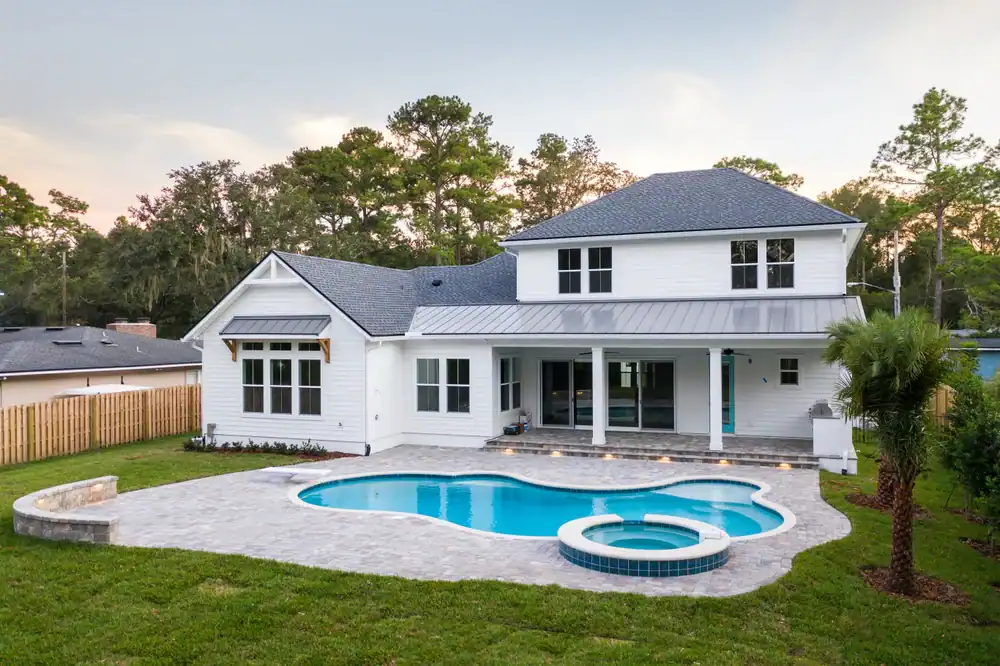
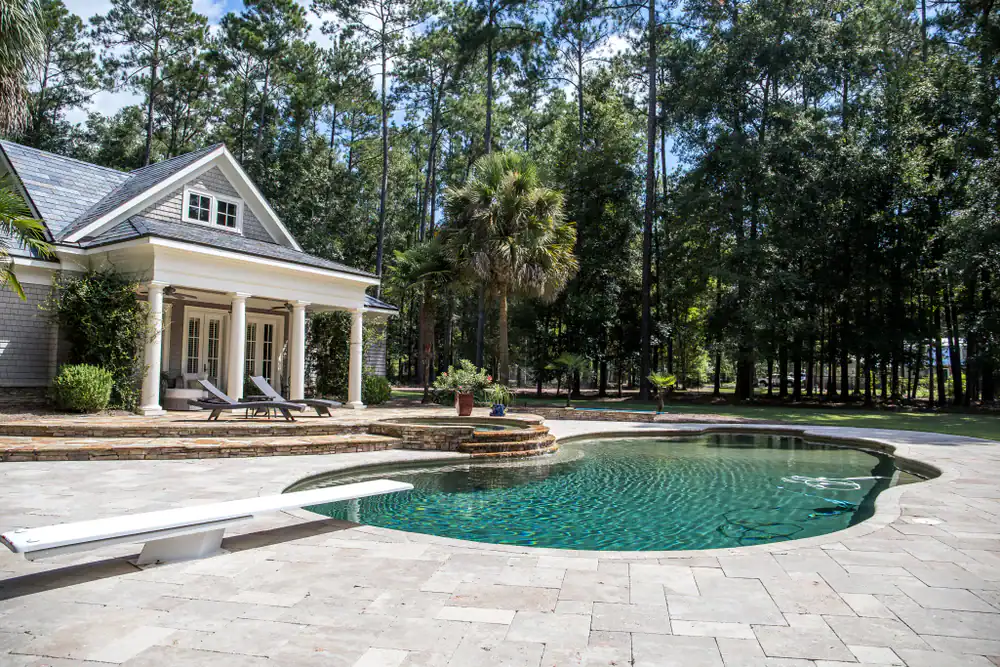
You’re not just getting a hole filled with water. You’re getting a complete backyard poolscape in Suffolk County that doesn’t crack after two winters, doesn’t flood your foundation when it rains, and doesn’t look like someone bolted random pieces together and called it finished.
The pool coping and tile work matches your patio. The grading directs water away from your house, not toward it. The masonry work around the pool looks intentional because we planned it that way from the start.
And when you’re sitting out there on a Saturday afternoon, you’re not thinking about what went wrong during construction. You’re thinking about whether you need another drink.
We started Ageless in 2006, and we’ve been working in East Northport, NY and across Suffolk County ever since. We’re not a crew that shows up for three days and disappears for three weeks. The owners are on your job, and we’re there because we built this business on not leaving people with half-finished projects.
East Northport sits in one of the wealthiest zip codes on Long Island, where the median home is worth over $600,000 and homeownership is at 89%. You didn’t buy here to settle for sloppy work. Neither did your neighbors. That’s why the pool builders who last in this area are the ones who understand that coastal weather, salt air, and freeze-thaw cycles will expose every shortcut you take.
We handle the full scope: gunite pool installation, concrete pool surrounds, custom pool coping and tile in Suffolk County, retaining walls, grading, and the masonry patio work that ties it all together. You get one team that knows how each piece affects the others.
First, we walk your property and talk through what you want, what’s realistic for your yard, and what’s going to cause problems if we don’t address it now. That includes drainage, setbacks, underground utilities, and how the pool fits with the rest of your outdoor space.
Then we handle permits and inspections. Suffolk County has requirements, and we make sure your project meets them before we dig. Once we’re cleared, excavation starts. We’re creating the space for your pool and grading the surrounding area so water moves away from your foundation.
The gunite shell goes in next. This is the structural core of your pool, and it needs to cure properly or you’ll have issues later. After that comes the finish work: tile, coping, decking, and any masonry features like retaining walls or patio surrounds. We’re coordinating all of this so the finished product looks cohesive, not like five different contractors worked in isolation.
You’ll know what’s happening and when. If something changes, you’ll hear about it from us, not from your neighbor who noticed we haven’t been there in a week.
Ready to get started?
You’re getting the pool itself: excavation, gunite shell, plumbing, and filtration systems built to handle Long Island’s water conditions. But a pool by itself in the middle of your yard looks unfinished. That’s why we also handle the pool patio masonry in Suffolk County that surrounds it.
Custom pool coping and tile in East Northport, NY isn’t just decorative. It’s the transition between your pool and your deck, and if it’s not installed correctly, you’ll see cracking, shifting, and water intrusion. We use materials that hold up to freeze-thaw cycles and salt exposure because we’ve seen what fails here.
Concrete pool surrounds, retaining walls, and grading are part of the same conversation. If your yard slopes toward your house, we’re fixing that before water becomes a problem. If you need a retaining wall to create level space for the pool, we’re building it to last, not just to pass inspection.
East Northport homeowners are investing in properties worth over $600,000 on average. The outdoor space is part of that value. When you build a complete backyard poolscape in Nassau County or Suffolk County, you’re not just adding a pool. You’re extending your living space in a way that makes sense for how you’ll actually use it.
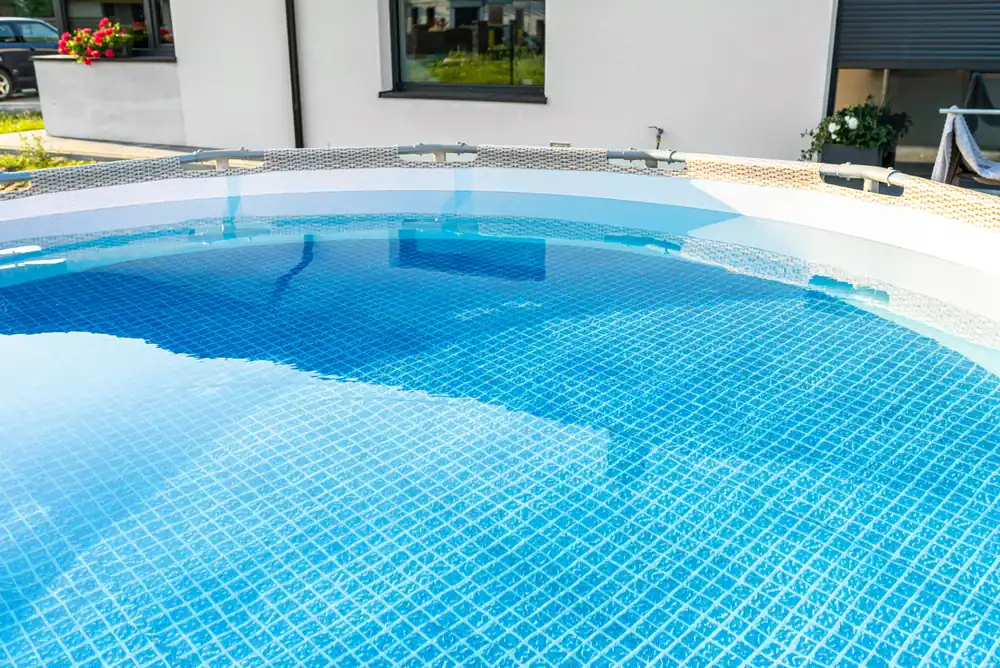
Most in-ground pool installations in Suffolk County run between $50,000 and $90,000, depending on size, features, and site conditions. That includes the pool itself, but also the work around it: grading, coping, tile, and basic decking or patio masonry.
If your yard has drainage issues, needs significant excavation, or requires retaining walls to create level space, that adds to the cost. Same goes for custom features like waterfalls, built-in spas, or high-end tile and coping materials. The number you see advertised is rarely the number you pay, because most yards need more than just a hole and a shell.
We walk your property first and give you a realistic number based on what your specific site requires. No one benefits from a low estimate that doubles once we start digging.
Plan on eight to twelve weeks from the day we break ground to the day you’re swimming. That timeline assumes normal weather, no permit delays, and no surprises underground like ledge rock or old septic systems.
Excavation and gunite installation happen in the first few weeks. Then the shell needs time to cure before we can move forward with plumbing, tile, coping, and decking. If we’re also building retaining walls, patios, or other masonry work, that extends the timeline depending on scope.
Suffolk County permit approvals can add time on the front end. We handle that process, but we don’t control how fast the county moves. If you’re planning to use your pool this summer, start the conversation in early spring.
Gunite pools hold up best to freeze-thaw cycles and the salt air you get this close to the coast. They’re more durable than vinyl liner pools, and they give you more flexibility in shape and depth than fiberglass shells.
Vinyl liners can crack or tear when the ground shifts during winter, and repairs mean draining the pool and replacing the entire liner. Fiberglass is durable, but you’re limited to pre-formed shapes, and if the shell cracks, the repair is expensive and obvious.
Gunite is steel-reinforced concrete that’s sprayed into the excavated hole and shaped to your yard. It’s built on-site, so you’re not trying to fit a pre-made shell into a space that doesn’t quite work. And when it’s finished with quality tile and coping materials that resist salt and freeze damage, it’s the most reliable option for this climate.
Yes. Suffolk County requires permits for in-ground pool installation, and the town of Huntington has specific setback requirements and zoning rules you need to follow. You’ll also need inspections at different stages of construction.
We handle the permit applications and coordinate inspections so you’re not trying to figure out what the county needs or when they need it. If your property has easements, wetlands, or other restrictions, those come up during the permit process, not after we’ve already dug.
Skipping permits isn’t an option. If the county finds out, you’ll be forced to remove the pool or bring it into compliance, which usually costs more than doing it right the first time. And if you ever sell your house, an unpermitted pool will kill the deal or come out of your sale price.
Coping is the cap on the edge of your pool. It’s the material you touch when you’re sitting on the side or pulling yourself out of the water. It needs to be slip-resistant, durable, and properly sloped so water drains away from the pool, not into the deck.
Tile is the band that runs along the waterline inside the pool. It protects the finish from oils, sunscreen, and chemicals that accumulate at the surface. It also makes cleaning easier because tile doesn’t stain or absorb grime the way plaster does.
Both need to be installed correctly or you’ll see cracking, shifting, and water damage. If the coping isn’t sealed properly, water gets behind it and freezes during winter, which pushes the stone or concrete out of place. If the tile isn’t set with the right materials, it pops off. We use materials rated for freeze-thaw cycles and install them so they stay put.
Yes, but it requires grading and possibly retaining walls to create level space and manage water flow. If your yard slopes toward your house, we’re regrading so water moves away from your foundation. If it slopes away, we may need to cut into the hill and build a retaining wall to hold the soil back.
Sloped yards actually give you opportunities for more interesting pool designs. You can build an infinity edge that takes advantage of the elevation change, or create multiple levels with the pool on one tier and a patio or seating area on another.
The key is planning drainage correctly from the start. A pool on a slope that isn’t graded properly will either flood your yard when it rains or send water straight into your basement. We handle the grading, retaining walls, and drainage as part of the pool installation so everything works together.
Other Services we provide in East Northport