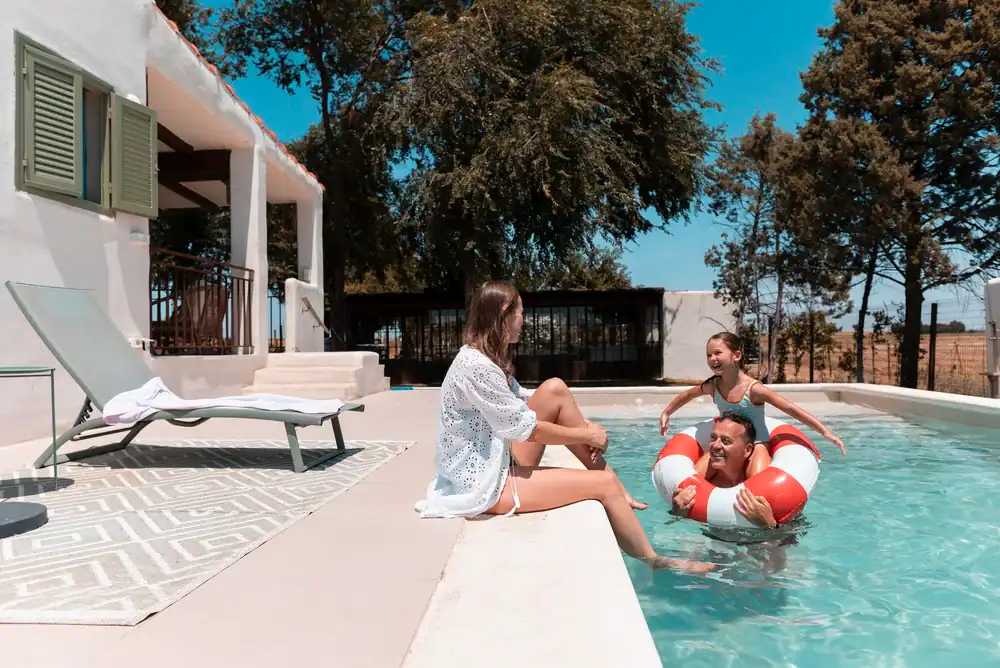

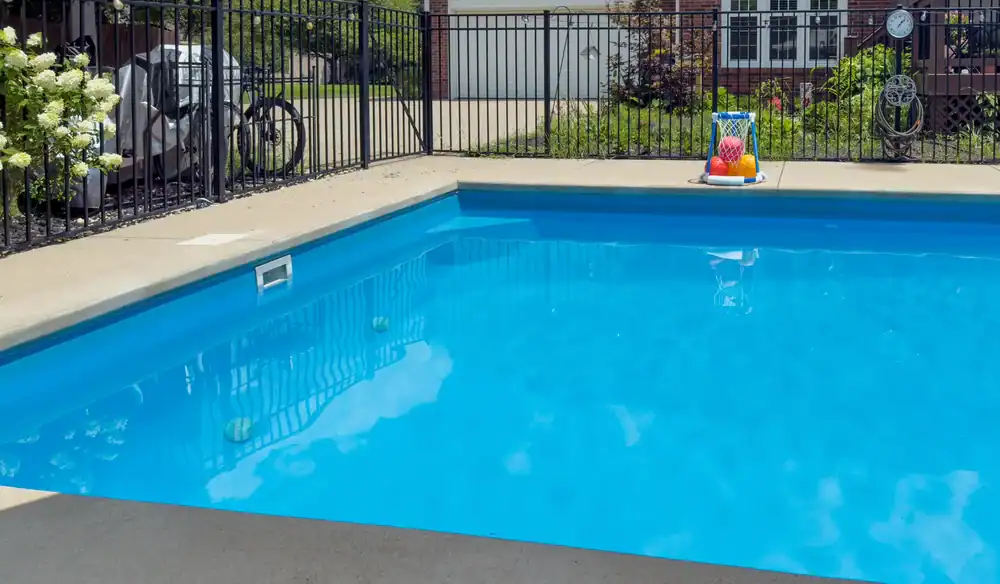
You’re not just adding water to your yard. You’re creating the space where summer happens, where your kids learn to swim, where you actually want to be on a Saturday afternoon.
Most custom in-ground pools in Suffolk County take 6-8 weeks from excavation to completion when you work with a team that handles everything. That means one point of contact, no waiting on subcontractors, and no surprises three weeks in when someone realizes the permit wasn’t filed correctly.
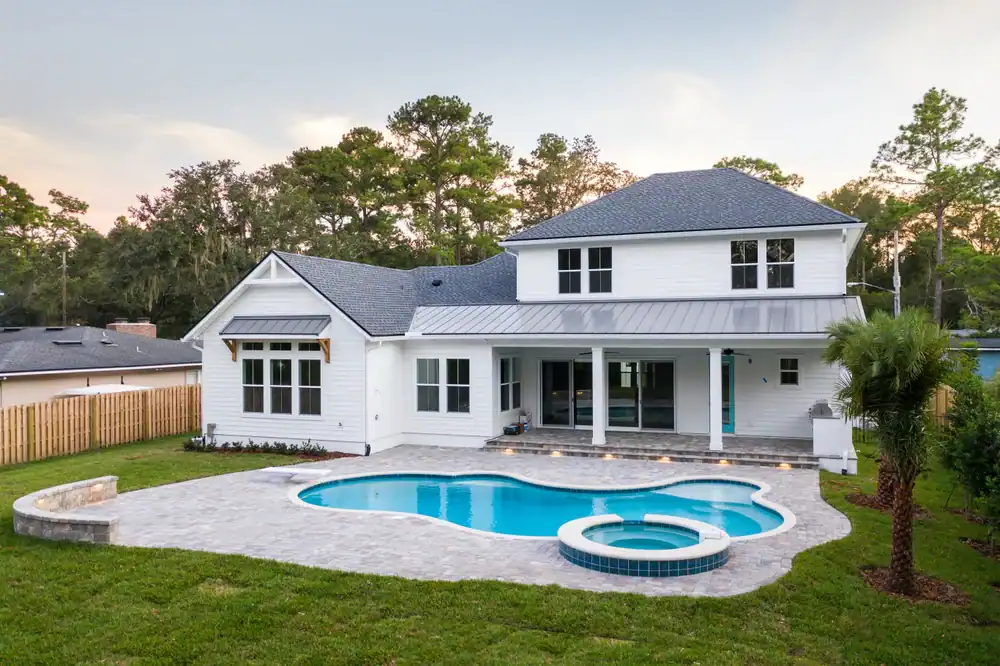
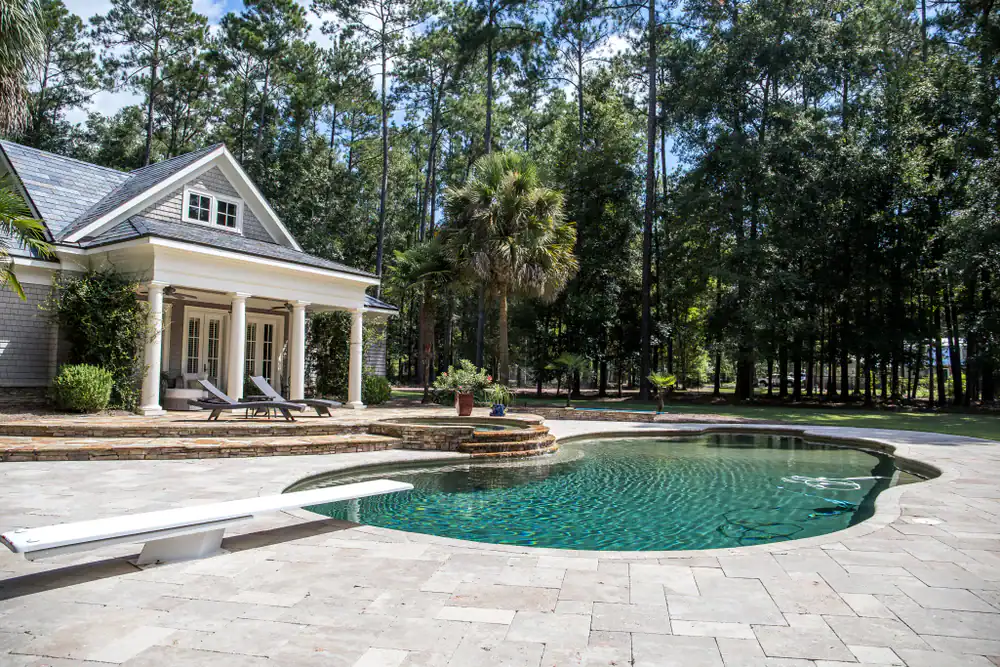
The pool itself is only part of it. Custom pool coping and tile, concrete pool surrounds, pool patio masonry—these details turn a hole with water into something that looks like it belongs in your backyard. Natural stone, waterfalls, integrated lighting. You pick what matters to you, and we build it to last longer than the mortgage.
We handle in-ground pool construction across Nassau County and Suffolk County. Our team knows the permit requirements in both counties, which aren’t the same. What flies in Nassau might get flagged in Suffolk, and vice versa.
Building pools on Long Island isn’t like building them anywhere else. The soil conditions, the water table, the town codes—it all matters. You need someone who’s done this before, in your area, and knows how to get it done without the project dragging into fall.
Holtsville homeowners hire us because the work gets finished. Permits get handled. Inspections pass. And when it’s done, it looks like you spent twice what you did.
You start with a design consultation. What size pool fits your yard? What shape works with your landscaping? Do you want a shallow end for kids, a deep end for diving, or something in between? This is where you make those calls.
Next comes permits. Nassau County requires building, electrical, and plumbing permits. Suffolk County has its own process. The permit approval usually takes 2-3 weeks, and we handle the paperwork so you’re not sitting at town hall trying to figure out setback requirements.
Once permits clear, excavation starts. Our crew digs, grades, and preps the site for the pool shell. Then comes plumbing, electrical, steel reinforcement, and the gunite or concrete application. After that, you’re into finishing work—tile, coping, decking, and any masonry features like retaining walls or outdoor kitchens.
Final inspection happens, you fill it, balance the water chemistry, and it’s ready. Most projects wrap in 6-8 weeks if weather cooperates and permits don’t hit delays.
Ready to get started?
A custom in-ground pool in Suffolk County or Nassau County includes more than the water. You’re looking at pool patio masonry, concrete pool surrounds, custom pool coping and tile, and often pool retaining walls if your yard has any grade to it.
Design trends in 2024 lean toward natural elements. Rocks, waterfalls, plants that soften the hardscape. Geometric shapes with clean lines but surrounded by greenery. It’s modern without feeling cold. Custom liners let you pick patterns and colors that fit your style instead of settling for builder-grade blue.
Eco-friendly options are becoming standard, not upgrades. Solar heating, saltwater chlorination systems, energy-efficient pumps. These features cut your operating costs and reduce the amount of chemicals you’re dumping in every week. You’re also adding value to your property. A well-built pool increases resale value when it’s done right from the start—not patched together or cutting corners on materials.
We coordinate every trade. You don’t manage electricians, plumbers, masons, and landscapers separately. One team handles it, which means fewer delays and no finger-pointing when something needs adjustment.
The permit approval process usually takes 2-3 weeks in Nassau County once all paperwork is submitted correctly. Suffolk County runs on a similar timeline, but every town has slight variations in what they require.
Getting a pool permit fast requires good preparation. You need accurate site plans, engineered drawings, setback measurements, and sometimes soil reports depending on your property. If something’s missing or incorrect, the application gets kicked back and you start over.
Most contractors learn this the hard way. We prepare permit applications with everything the town needs upfront, which keeps the process moving. Pool permits in Long Island last for one year from the issue date, and you can renew them for another year if needed.
What is permitted in Nassau County might be strictly regulated in Suffolk County. While every town is different, there are a few universal requirements you’ll likely encounter, but the specifics vary.
Nassau County generally requires building, electrical, and plumbing permits for pool construction. Suffolk County has similar requirements but different inspectors, different forms, and sometimes stricter setback rules depending on the town.
Fence requirements, drainage plans, and even the type of decking material can be regulated differently between the two counties. A pool builder who works in both areas knows these differences and plans accordingly. You don’t want to design something that won’t pass inspection.
Most custom in-ground pools in Holtsville, NY run between $50,000 and $90,000 depending on size, features, and how much masonry work you’re adding around it. A basic rectangular pool with standard finishes sits at the lower end. Add a waterfall, custom tile, natural stone coping, and an outdoor kitchen, and you’re moving up.
Size matters. A small pool for a compact yard costs less than a large family pool with a spa attached. Depth affects cost too—deeper pools require more excavation and more gunite.
The masonry work around the pool often costs as much as the pool itself. Pool patio masonry, concrete pool surrounds, and retaining walls add up, but they’re also what make the space usable and attractive. Skimping here usually means you’re redoing it in five years.
Yes. Pool retaining walls and grading handle slope issues. In fact, a sloped yard can create opportunities for more interesting designs—elevated decks, tiered patios, or waterfalls that use the natural grade.
We excavate and grade the site to create a level area for the pool. If there’s significant slope, retaining walls hold back the soil and create usable flat space around the pool. This also helps with drainage, which is critical on Long Island where water table levels can be high.
Proper grading ensures water drains away from the pool and your house. Poor grading leads to erosion, flooding, and structural problems down the line. This is one area where experience matters—we’ve handled plenty of challenging yards in Nassau and Suffolk County.
Our crews handle every aspect of pool construction from excavation to final inspection. No subcontractors. That means the same team that digs your pool also installs the plumbing, builds the masonry work, and finishes the tile.
This matters because you’re not waiting on three different companies to coordinate schedules. When one phase finishes, the next starts immediately. Problems get solved on-site instead of turning into a blame game between trades.
It also means quality stays consistent. The masons doing your pool coping are the same people who built your retaining walls. They know how everything fits together, and they’re accountable for the entire project—not just their piece of it.
You’ll need to balance water chemistry weekly, clean the filter regularly, and skim debris off the surface. Most pool owners spend 15-30 minutes a week on basic maintenance during swim season.
Chemical balance matters. pH, alkalinity, and chlorine levels need to stay in range or you’ll end up with algae, cloudy water, or equipment damage. Test strips or a digital tester make this simple. Saltwater chlorination systems reduce the amount of manual chemical dosing you’re doing.
Seasonal maintenance includes opening the pool in spring and closing it in fall. This involves draining lines, adding winterizing chemicals, and covering the pool. Many homeowners hire this out. Equipment like pumps and heaters should be serviced annually to catch small issues before they become expensive repairs.
Other Services we provide in Holtsville