
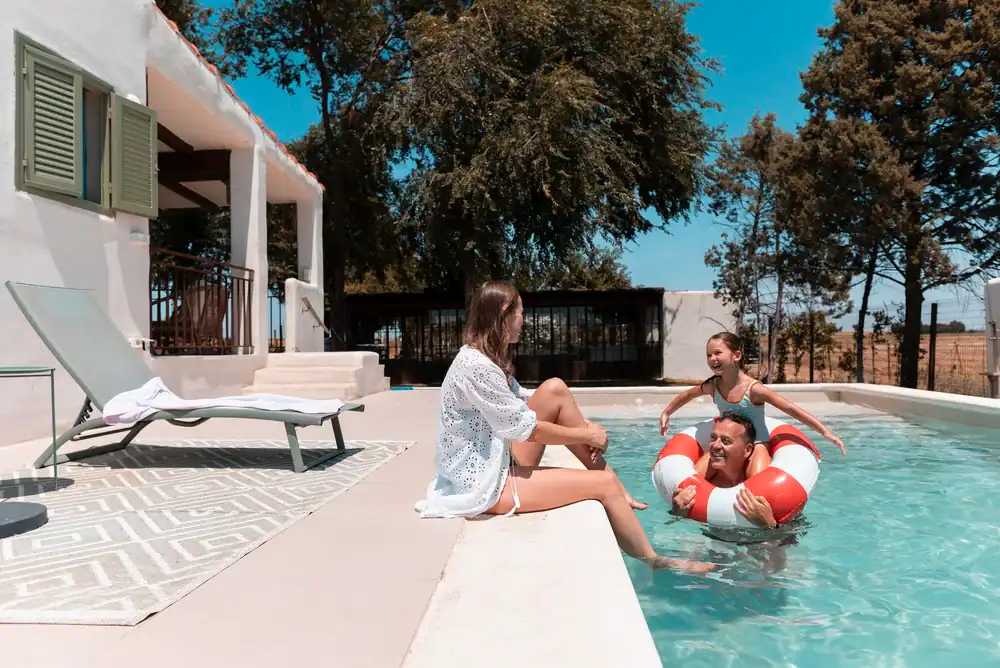

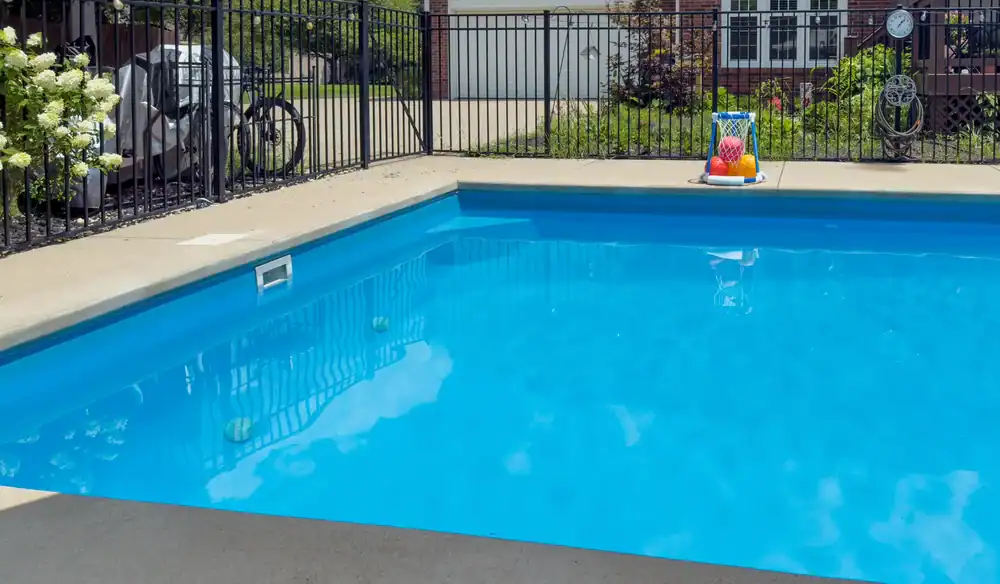
Most pool companies dig a hole and call it done. You’re left figuring out the patio, the coping, the drainage, the landscaping. That’s not how this works.
When we handle your pool installation in Lido Beach, NY, you get the full picture. Custom pool coping and tile that won’t crack after one winter. Pool patio masonry in Nassau County that handles freeze-thaw cycles without buckling. Concrete pool surrounds in Suffolk County designed for drainage, safety, and the way you’ll actually use the space.
This is about creating an outdoor area where your family spends time, not just something that looks good in photos. The pool is the centerpiece. Everything around it needs to work just as hard. That’s where most companies fall short, and where we dig deeper.
We started as a masonry company. We’ve spent over 20 years working with Long Island’s soil conditions, coastal weather, and the reality of what holds up here versus what doesn’t.
That foundation matters when you’re building custom in-ground pools in Suffolk County. You’re not just pouring concrete and hoping for the best. You’re managing groundwater on the South Shore, rocky terrain on the North Shore, and freeze-thaw cycles that destroy poorly installed work within five years.
We bring that masonry expertise into every pool project. You get builders who know how to handle pool retaining walls and grading, who understand why travertine stays cooler than concrete pavers, and who won’t disappear when the permit process gets complicated. Lido Beach homeowners need contractors who show up and finish the job right.
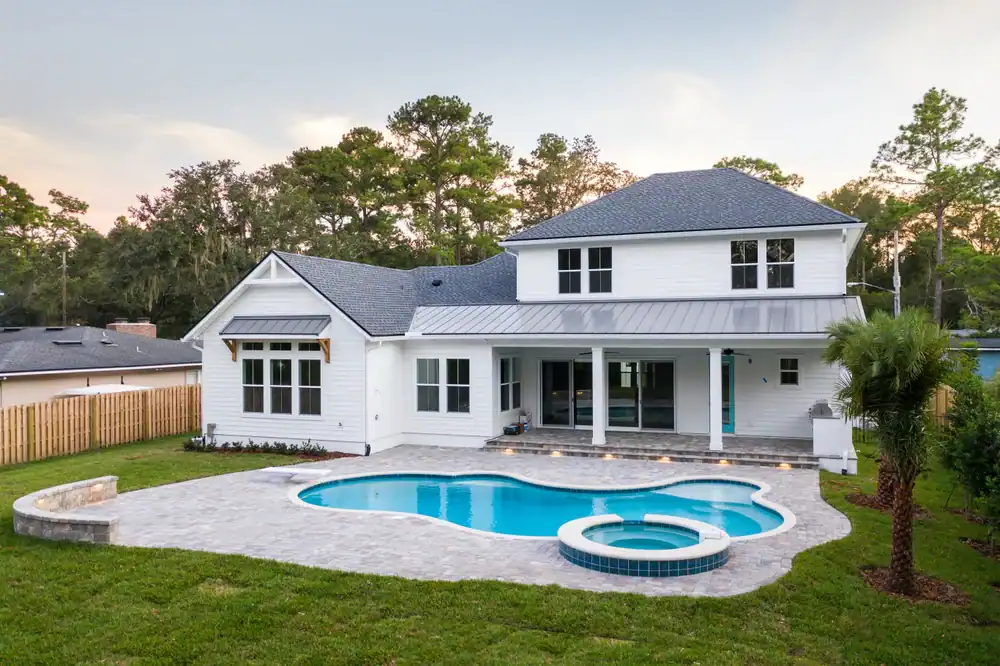
First, we walk your property. Not to sell you anything, but to see what we’re working with. Soil conditions, drainage, access for equipment, utility lines. This is where problems get caught or ignored. We’d rather know now than three weeks into excavation.
Then we design around your space and how you’ll use it. Pool size, shape, depth. Coping material. Patio layout. Water features if you want them. We’re not upselling you on fountains you don’t need. We’re building what makes sense for your yard and your budget.
Permits come next. Nassau and Suffolk Counties have different requirements, and yes, it’s tedious. We handle it. Then excavation starts. If we hit groundwater or rock, we deal with it. That’s part of working on Long Island, and it’s why you hire people who’ve done this before.
Once the pool shell is in, we move to the details. Pool patio masonry in Suffolk County that ties into your existing landscape. Coping that won’t shift. Grading that directs water away from your foundation. The finish work is what separates a pool that lasts from one that becomes a maintenance nightmare.
Ready to get started?
You’re getting more than excavation and a liner. This is full-scope pool construction with integrated masonry work that most pool companies subcontract out or skip entirely.
We handle custom pool coping and tile in Nassau County using materials that survive Long Island winters. Travertine, bluestone, granite, limestone. We install pool surrounds with proper drainage channels between pavers so water doesn’t pool on the surface and create slip hazards. The textured finish gives you traction even when wet, which smooth concrete can’t do.
If your yard has elevation changes, we build pool retaining walls and grading solutions that prevent erosion and manage runoff. We integrate water features if that’s part of your vision—waterfalls, fountains, infinity edges. Not because they’re trendy, but because they’re designed into the overall structure from the beginning.
Lido Beach sits right on the water. Your pool needs to handle salt air, storm drainage, and soil that shifts. We’ve built complete backyard poolscapes in Nassau County for over two decades. The construction process accounts for what this climate does to outdoor structures. That’s not something you get from a contractor who just started working here.
You’re looking at $25,000 to $100,000 for most residential in-ground pool installations in Nassau County, though luxury builds with custom features go higher. That range isn’t vague—it reflects real variables in your project.
Soil conditions matter. If you’re on Lido Beach’s South Shore, there’s a good chance we’ll hit groundwater during excavation. That requires dewatering equipment and adds to the timeline and cost. Rocky soil on the North Shore means more equipment, possibly blasting, and extra labor.
Pool size, depth, and shape affect pricing. So does your material selection for coping, patio pavers, and any water features. A basic rectangular pool with concrete coping costs less than a freeform design with travertine surrounds and an integrated waterfall.
Permits, grading, utility line management, and site access also factor in. If we can’t get equipment into your backyard easily, that’s more work. The smarter move is getting an on-site estimate where we assess your specific property instead of guessing based on averages.
Travertine and bluestone are the top choices for pool coping and tile in Suffolk County, and there are specific reasons why they outperform other materials here.
Travertine stays cool under direct sunlight, which matters when you’re walking barefoot on a 90-degree day. It’s naturally slip-resistant even when wet, and it handles freeze-thaw cycles without cracking the way poured concrete does. Long Island winters are brutal on outdoor surfaces. Travertine’s porous structure allows it to expand and contract without breaking apart.
Bluestone gives you that classic Long Island look with serious durability. It’s dense, holds up to salt air and moisture, and doesn’t require constant sealing to stay functional. For pool patio masonry in Nassau County, bluestone pavers create natural drainage channels between joints that prevent water buildup and reduce slip hazards.
Concrete pavers from brands like Cambridge, Unilock, and Belgard are solid mid-range options if budget is a concern. They’re not as naturally cool as travertine, but they’re more affordable and still offer the slip resistance and drainage benefits you need around a pool. Avoid smooth poured concrete. It gets dangerously slippery when wet and cracks within a few seasons here.
Plan on 8 to 12 weeks from permit approval to completion for most custom in-ground pools in Nassau County. That timeline assumes normal conditions—no major utility conflicts, cooperative weather, and straightforward soil.
Long Island’s construction season runs spring through fall. Winter freezing temperatures stop outdoor concrete work, so if you’re planning a pool, start the conversation in winter. That gets permits handled early and puts you in the schedule for spring excavation. If you wait until May to call, you’re swimming next summer, not this one.
Excavation and pool shell installation take one to two weeks depending on size and site access. Then there’s plumbing, electrical, and inspection timelines that you don’t control. After that comes the masonry work—coping, patio pavers, any retaining walls or grading. That’s another few weeks.
Unexpected issues add time. High groundwater requires dewatering. Hitting rock means bringing in different equipment. Utility lines in the wrong place mean redesigning access. These aren’t excuses—they’re realities of building in Suffolk and Nassau Counties. A contractor who promises a six-week turnaround either hasn’t done this before or isn’t being straight with you.
Yes. You need permits from Nassau County before any excavation starts, and the requirements aren’t optional or negotiable.
Permit requirements cover zoning setbacks, safety regulations, electrical and plumbing inspections, and sometimes homeowner association rules if you’re in a community with an HOA. The process involves submitting site plans, engineering drawings, and proof of contractor licensing and insurance.
Nassau County and Suffolk County have different permit processes and timelines. Some towns add their own layers of approval. It’s not fast, and it’s not simple. That’s why you hire a Suffolk County pool installation company that handles permitting as part of the project. We submit the paperwork, manage the inspections, and deal with any revisions the county requests.
Skipping permits isn’t a shortcut—it’s a liability. If you sell your home and the pool wasn’t permitted, that becomes a disclosure issue and a negotiation problem. If someone gets hurt and your pool wasn’t built to code, your homeowner’s insurance may not cover it. The permit process exists for a reason. It’s tedious, but it protects you.
Long Island’s soil, water table, and weather create challenges that don’t exist in other parts of the country. If your pool builder doesn’t understand that, you’ll see the problems within five years.
The South Shore deals with high groundwater. When we excavate, we’re often dewatering the site to keep the hole dry enough to work in. That’s extra equipment, extra time, and something that has to be factored into the build. The North Shore has rockier soil and elevation changes that require retaining walls and more intensive grading.
Freeze-thaw cycles destroy poorly installed pool surrounds. Water gets into cracks, freezes, expands, and breaks apart concrete or shifts pavers. That’s why concrete pool surrounds in Suffolk County need to be installed with proper base material, drainage, and materials that can handle temperature swings. Travertine and bluestone survive this. Cheap poured concrete doesn’t.
Coastal storms dump inches of rain in hours. Your pool area needs drainage solutions that move water away from the pool and your home’s foundation. That means grading the patio correctly and building in channels that prevent flooding. It also means using slip-resistant materials because wet surfaces around pools are dangerous.
In-ground pool builders in Suffolk County who’ve worked here for decades know these conditions. Companies that just started or that operate across multiple states often don’t. That difference shows up in how long your pool lasts and how much you spend on repairs.
Yes, but it depends on your pool’s structure, plumbing setup, and how the feature integrates with your existing design. Some water features retrofit easily. Others require significant replumbing or structural changes that make the project more complex.
Deck jets and bubblers are simpler additions. They tie into your existing plumbing with minimal excavation and can be added without tearing up your entire patio. Waterfalls and grottos are more involved. They need structural support, dedicated plumbing lines, and often electrical work for lighting. If your pool wasn’t built with these features in mind, adding them means cutting into the pool shell or surrounding masonry.
The better approach is designing water features into your pool from the beginning. That’s when we can plan the plumbing, structure, and aesthetic integration so everything works together. Retrofitting is possible, but it’s more expensive and sometimes limited by your pool’s existing layout.
If you’re considering adding a waterfall or fountain to your pool in Nassau County, we’ll assess what’s feasible based on your current setup. Sometimes it makes sense. Sometimes it’s better to invest that budget into upgrading your pool patio masonry or coping instead. We’ll tell you what actually improves your space versus what just adds cost.
Other Services we provide in Lido Beach