
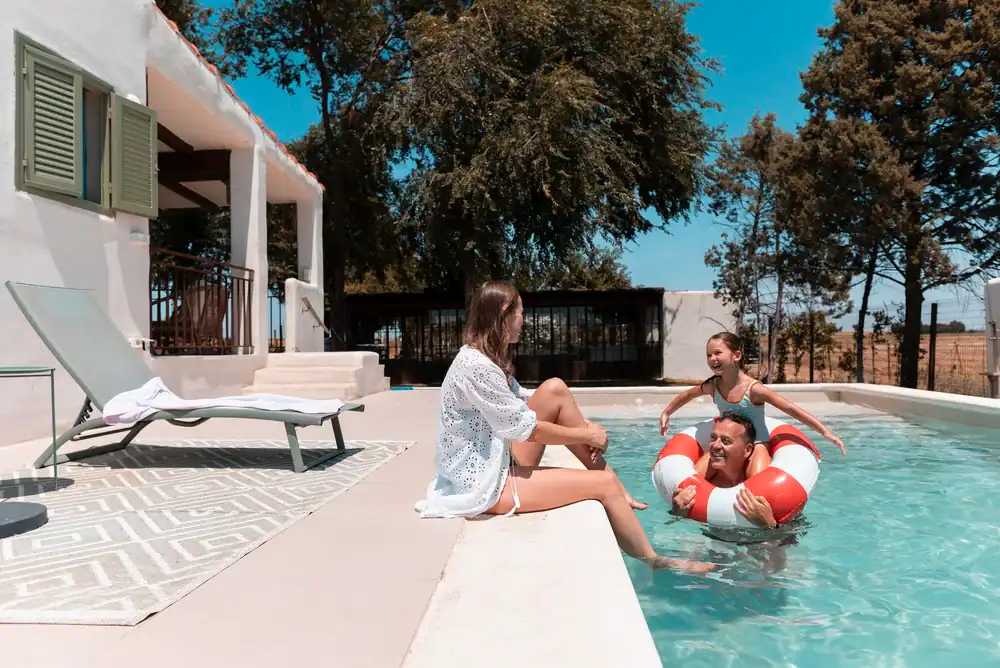

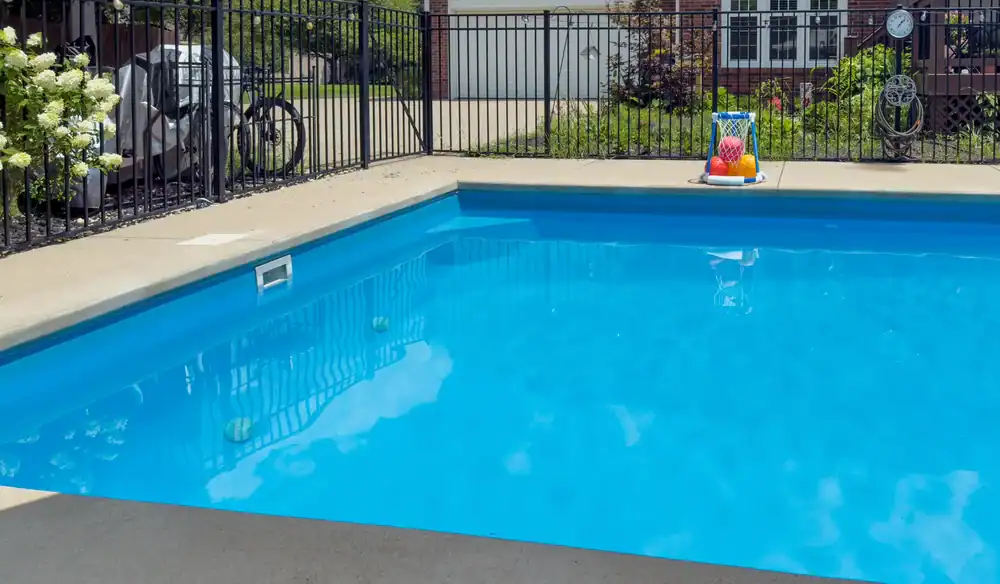
You’re not just getting a hole filled with water. You’re getting a complete backyard poolscape in Manhasset Hills, NY that changes how you use your property from May through September.
That means custom pool coping and tile that matches your home’s style. Concrete pool surrounds built to handle freeze-thaw cycles without cracking in two years. Pool patio masonry in Nassau County that doesn’t settle, shift, or become a tripping hazard because someone cut corners on the base.
It also means working with in-ground pool builders in Nassau County who pull the right permits, coordinate inspections, and don’t disappear when the town inspector shows up. You’ll know what’s happening, when it’s happening, and what it costs before the excavator arrives.
Ageless started with two guys who knew how to build things that last. Nearly two decades later, that’s still what drives every project we take on in Manhasset Hills, NY and across Nassau County.
Every job gets handled by an owner. Not a salesperson who disappears after you sign, not a project manager juggling twelve sites. You’re working with someone who’s been on job sites since before smartphones existed and knows what proper grading looks like.
We’ve built pools in neighborhoods where the average home costs over a million dollars. That means homeowners who expect quality, who ask tough questions, and who know the difference between doing it right and doing it fast. We’re still here because we consistently deliver the first option.
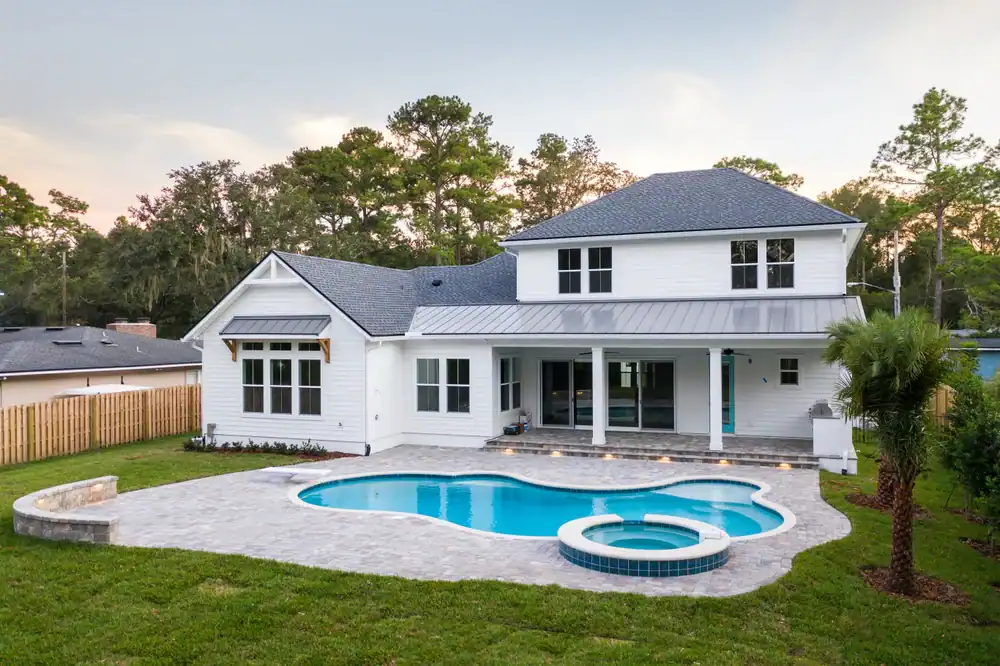
It starts with a site evaluation. We look at your property’s grade, drainage, soil conditions, and setback requirements before talking design. If your yard has challenges, you’ll know up front, not after we’ve already dug.
Once the design is set and permits are pulled, excavation begins. The hole gets dug, steel gets placed, and plumbing lines get run. Then comes the concrete pour for gunite pools or the shell installation for fiberglass, depending on what you chose.
After the structure cures, we handle pool patio masonry in Nassau County, including coping, decking, and any retaining walls needed for proper grading. Electrical and filtration equipment gets installed and inspected. Finally, the pool gets filled, balanced, and you get a walkthrough on how everything works. The whole process typically takes 8-12 weeks, weather depending, and you’ll know where we are every step of the way.
Ready to get started?
When you hire in-ground pool builders in Suffolk County or Nassau County, you should get more than just the pool itself. A complete backyard poolscape in Manhasset Hills, NY means handling everything that makes the space functional and finished.
That includes custom pool coping and tile in Nassau County that creates clean lines and prevents water from undermining your deck. It means concrete pool surrounds built with proper pitch for drainage, so water doesn’t pool against your house foundation. Pool retaining walls and grading get addressed if your yard has elevation changes that could cause erosion or drainage problems.
In Manhasset Hills, where properties often have mature landscaping and established grades, this matters more than in new developments. You’re integrating a major structure into an existing ecosystem. We coordinate with local building departments in Nassau County, handle all inspections, and make sure your installation meets code. You’re not paying for change orders because someone didn’t plan for electrical requirements or setback regulations. The price you agree to is the price you pay, assuming you don’t change the scope mid-project.
Plan on 8-12 weeks from excavation to completion for a standard installation. That timeline assumes normal weather and no major surprises once we dig.
Spring installations often face delays because that’s when everyone wants their pool done, and it’s also when Long Island gets the most rain. If we hit a week of heavy rain during excavation or concrete work, everything stops. You can’t pour concrete in the rain, and you can’t grade properly when the ground is saturated.
Fall installations actually move faster because contractors aren’t slammed and weather is more predictable. You won’t swim that year, but you’ll be first in line for spring startup, and you’ll likely save money because demand is lower. The actual construction timeline doesn’t change much, but the scheduling and weather variables do.
You need a building permit from your local town or village, and in most cases, you’ll need separate permits for electrical and possibly plumbing work. Nassau County is a patchwork of municipalities, and each one has slightly different requirements.
Some villages require a site plan showing setbacks from property lines, existing structures, and septic systems if you’re not on public sewer. Others want engineered drawings for retaining walls over a certain height. Your pool installation company in Nassau County should handle all of this, but it’s your responsibility to make sure they actually do it.
Unpermitted pools create problems when you sell. A home inspector will flag it, and you’ll either need to get retroactive permits (which is expensive and sometimes impossible) or you’ll lose negotiating power with buyers. We pull permits for every job because it protects you and ensures the work gets inspected at critical stages.
Basic vinyl liner pools start around $40,000-$50,000 installed. Fiberglass pools run $50,000-$75,000 depending on size and features. Gunite pools with custom shapes and high-end finishes can easily hit $80,000-$120,000 or more once you add pool patio masonry, lighting, and equipment.
Those numbers include the pool itself, basic coping and decking, equipment, and installation. They don’t include things like pool houses, outdoor kitchens, extensive landscaping, or major grading work if your property needs it. In Manhasset Hills, where lot sizes vary and many properties have elevation changes, site work can add $10,000-$25,000 to the base price.
The cheapest option isn’t always the smartest. Vinyl liners need replacement every 10 years at $4,000-$7,000 per replacement. Gunite needs resurfacing every 10-15 years at similar cost. Fiberglass costs more up front but requires less maintenance and no resurfacing. Think about total cost of ownership, not just the initial check you write.
Gunite pools are concrete sprayed over rebar. They’re fully customizable in shape and size, which is why you see them in high-end installations with custom features. They’re also the most expensive and require resurfacing every 10-15 years because the plaster finish degrades.
Fiberglass pools are pre-manufactured shells that get craned into your excavated hole. Installation is faster, the surface is smooth and algae-resistant, and you never need resurfacing. The tradeoff is you’re limited to available shapes and sizes, and they cost more up front than vinyl.
Vinyl liner pools use a steel, aluminum, or polymer wall structure with a vinyl liner. They’re the cheapest option initially, but that liner needs replacement every decade. The surface is smooth, but it’s also easy to puncture, and repairs are visible. For Manhasset Hills properties where resale value matters, most homeowners choose either fiberglass or gunite.
Your homeowner’s insurance will cover the pool, but your premium will increase. Insurance companies see pools as liability risks, especially if you have a diving board or slide. Expect your annual premium to go up $200-$500 depending on your carrier and coverage limits.
You’ll also need to meet specific safety requirements. New York requires a fence or barrier at least four feet high around the pool with a self-closing, self-latching gate. Some insurance companies require additional safety features like pool alarms or covers to maintain coverage.
Call your insurance agent before you start construction, not after. Some carriers won’t insure homes with pools, or they’ll require specific safety features that affect your design. Finding out after you’ve already built that you need to add a fence you didn’t budget for is an expensive surprise. Get it in writing what your carrier requires and what your new premium will be.
Yes, but there are strict setback requirements. In Nassau County, pools typically need to be at least 20 feet from septic tanks and 50 feet from leach fields, though requirements vary by municipality. If your property is tight, this can limit where the pool can go.
You also can’t drain your pool into your septic system. A typical pool holds 15,000-30,000 gallons, and your septic system isn’t designed to handle that volume. When you need to drain for maintenance or winterization, you’ll need to pump it to the street or use a different approved drainage method.
Before you commit to a design, have us verify your septic location and confirm setbacks with the local building department. Moving a pool design after you’ve fallen in love with a specific layout is frustrating. Getting it right from the start saves time and disappointment.
Other Services we provide in Manhasset Hills