
You’re not just buying a hole filled with water. You’re investing in something that needs to survive freeze-thaw cycles, coastal storms, sandy soil, and high water tables that make Long Island different from anywhere else.
Most pool companies treat every job the same. That’s how you end up with cracked concrete three winters in, drainage problems every spring, or a patio that shifts because nobody accounted for the ground conditions here.
We build custom in-ground pools in Nassau County and Suffolk County with those challenges already factored in. Proper drainage. Frost-protected plumbing. Materials that hold up to salt air and temperature swings. You get a pool that works the way it should, year after year, without the constant repairs that come from cutting corners during installation.
We’ve been serving Nassau County homeowners for over two decades. We started in masonry and expanded into complete backyard poolscapes because the skills overlap more than you’d think—grading, drainage, structural integrity, working with concrete in challenging conditions.
North Haven sits in an area where ground conditions vary block by block. Water tables shift. Soil composition changes. Permit requirements in Nassau County are strict for good reason, and we handle that process so you don’t have to navigate village codes, safety regulations, and inspection schedules on your own.
You’re working with people who know what they’re doing because we’ve done it hundreds of times in your area. Not a national franchise following a generic playbook.
First, we come out to look at your property. We’re checking soil conditions, drainage, setbacks, and how the layout works with your yard. This isn’t a sales pitch—it’s an actual site assessment so we know what we’re dealing with before we quote you.
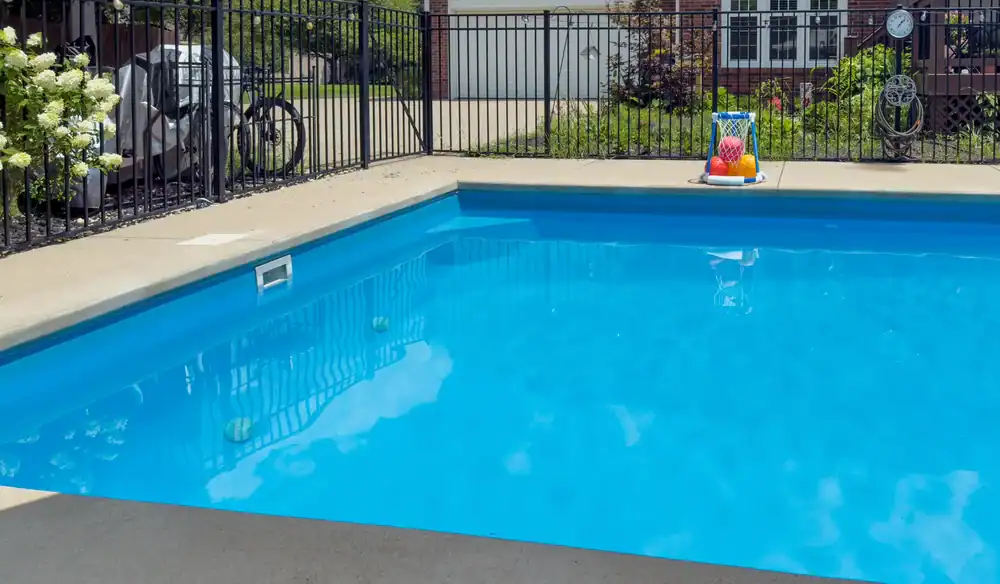
Once you approve the design, we pull permits and handle inspections. Nassau County requires specific safety features—fencing, self-closing gates, pool alarms—and we make sure everything’s compliant before we break ground.
Excavation comes next. Depending on your soil and water table, this can be straightforward or complicated. We grade for proper drainage and prep the site so your pool isn’t fighting against the ground it’s built in. Then we install the pool structure, whether that’s concrete, gunite, or fiberglass, and build out the surrounding poolscape—patios, coping, tile, retaining walls if needed.
Final inspections, startup, and walkthrough. You’ll know how to maintain it, what to watch for, and how everything works before we’re done.
Ready to get started?
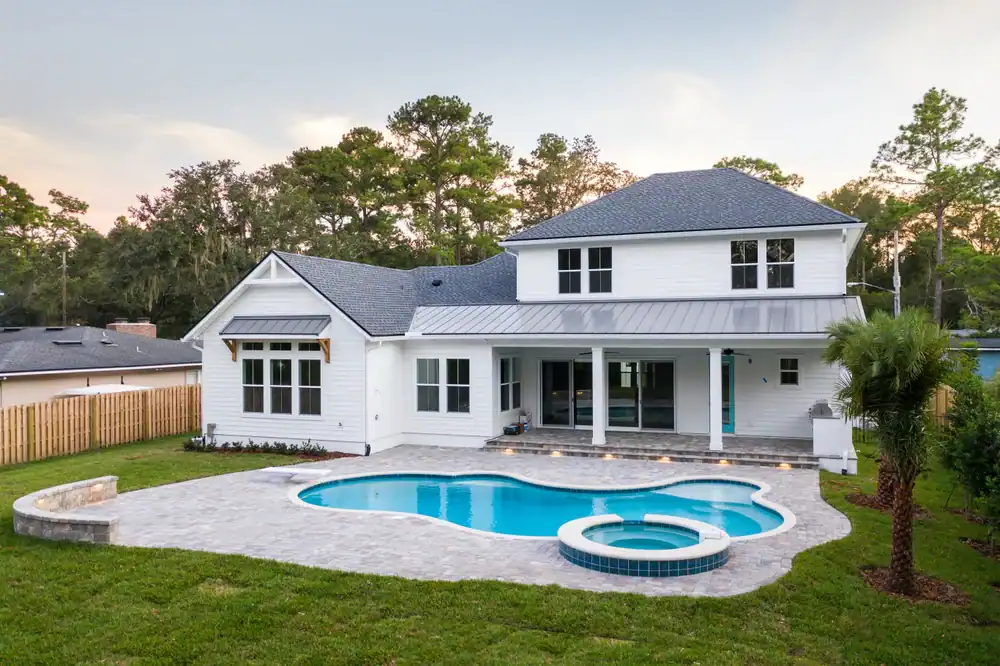
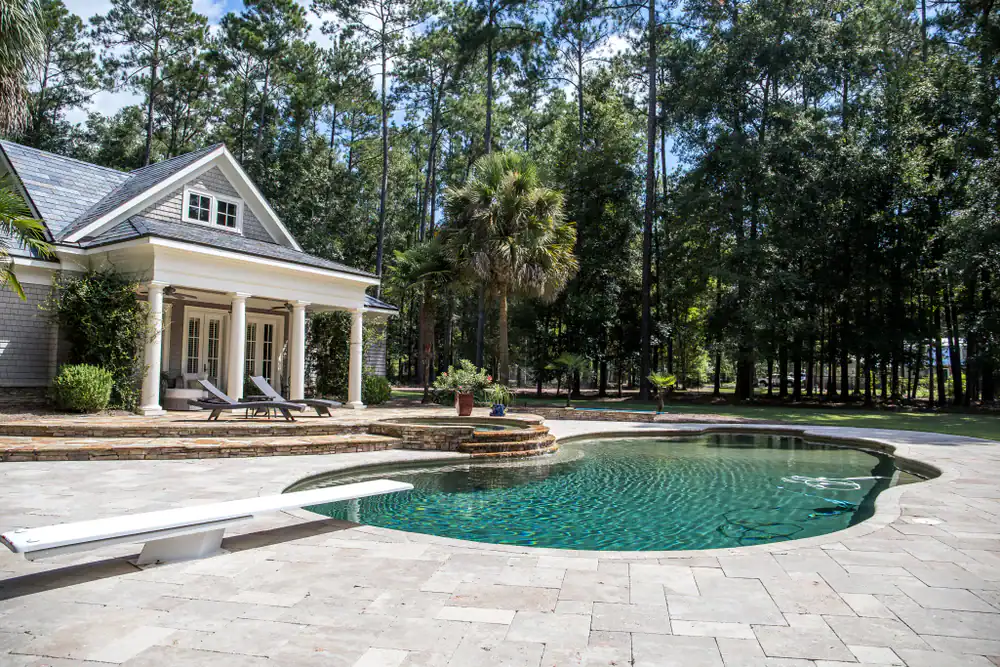
A complete backyard poolscape means more than just the pool itself. You’re getting custom pool coping and tile in Nassau County that matches your home’s style. Pool patio masonry in Suffolk County designed to handle Long Island weather without cracking or settling. Concrete pool surrounds built with proper pitch for drainage so water doesn’t pool on your deck.
If your yard has elevation changes, we handle pool retaining walls and grading to make the space functional and safe. We integrate lighting, water features, and smart controls if that’s what you want. Everything gets planned as one cohesive project, not pieced together by different contractors who may or may not communicate.
North Haven properties often have mature landscaping and established yards. We work around what you want to keep and design the pool to fit your space, not force a cookie-cutter shape that doesn’t make sense for how you’ll actually use it. The end result should feel like it’s always been part of your property.
Expect to spend between $44,500 and $87,500 for a complete in-ground pool installation on Long Island. That range accounts for size, materials, site conditions, and how much additional work your yard needs.
If you’ve got rocky soil, a high water table, or drainage issues, excavation costs go up. If your property requires retaining walls, extensive grading, or upgraded patio materials, that adds to the total. Concrete and gunite pools tend to cost more upfront but last 50 to 100 years with proper maintenance. Fiberglass pools cost less to maintain long-term—about 30 to 50 percent less in chemicals and upkeep.
Permits, inspections, and mandatory safety features like fencing and alarms are part of the cost in Nassau County. We include that in our quotes so there aren’t surprises halfway through the project.
You’ll need a building permit from Nassau County, and depending on your specific location within North Haven, possibly additional approvals from your local village. The permit process covers structural plans, safety compliance, setback requirements, and drainage.
New York State requires pools deeper than 24 inches to have proper fencing—at least four feet high with self-closing, self-latching gates. You’ll also need a pool alarm that’s audible from inside your house. These aren’t optional. Inspectors check for them, and you can’t pass final inspection without meeting those standards.
We handle the permit applications, coordinate inspections, and make sure everything’s code-compliant before, during, and after construction. It’s one less thing you need to track, and it keeps the project moving without delays from missed requirements or rejected plans.
Plan on 8 to 12 weeks from the day we break ground to the day you’re swimming, assuming normal conditions and no major weather delays. That timeline includes excavation, installation, hardscaping, inspections, and final startup.
Long Island’s construction season matters. If you’re starting in late fall or winter, you’re looking at a spring or summer completion because we can’t pour concrete or install certain materials in freezing temperatures. Most people start planning in winter so construction begins in early spring and wraps by summer.
Complications like unexpected ground conditions, permit delays, or custom features can extend the timeline. We’ll give you a realistic schedule upfront and keep you updated if anything changes. Rushing a pool install to hit an arbitrary deadline usually means problems later.
Concrete and gunite pools hold up best long-term if they’re installed correctly with proper freeze protection and drainage. They last 50 to 100 years, handle ground movement better than other materials, and give you full design flexibility for custom shapes and features.
Fiberglass pools are a solid option if you want lower maintenance. They require 30 to 50 percent less chemicals, resist algae better, and the smooth surface is easier to clean. The tradeoff is you’re limited to pre-manufactured shapes, and installation requires careful handling of Long Island’s soil and water table conditions.
Vinyl liner pools are the least expensive upfront but need liner replacements every 7 to 10 years. They don’t handle freeze-thaw cycles as well, and the liner can tear or fade faster in harsh weather. For North Haven’s climate, concrete or fiberglass makes more sense if you’re thinking long-term.
A well-built in-ground pool can increase your home’s value by 7 to 15 percent, according to the National Association of Realtors. In North Haven, where the median household income is over $181,000 and 95 percent of housing units are owner-occupied, pools are seen as desirable amenities, not liabilities.
That said, you won’t recover 100 percent of your installation cost if you sell immediately. Pools add value over time and make your home more attractive to buyers looking for move-in-ready properties with outdoor living space. A poorly installed or poorly maintained pool can actually hurt your resale value, which is why quality installation matters.
If you’re planning to stay in your home for years, the value isn’t just financial. It’s about how you use your property, how much your family enjoys the space, and whether it makes your day-to-day life better.
You’ll need to manage chemical balance, filtration, and cleaning during swim season, then winterize before freezing temperatures hit. Annual maintenance costs average $3,000 to $6,000 depending on whether you handle it yourself or hire a service.
Long Island’s freeze-thaw cycles mean winterization isn’t optional. You’ll need to drain lines, blow out plumbing, add antifreeze where necessary, and cover the pool properly. If water stays in the lines and freezes, you’re looking at cracked pipes and expensive repairs come spring.
During the season, you’re testing water chemistry weekly, running the filtration system daily, and skimming debris. If you’ve got trees nearby, that’s more frequent cleaning. Concrete pools need acid washing and resurfacing every 10 to 15 years. Fiberglass pools need less hands-on maintenance but should still be inspected annually for any surface issues.
Other Services we provide in North Haven