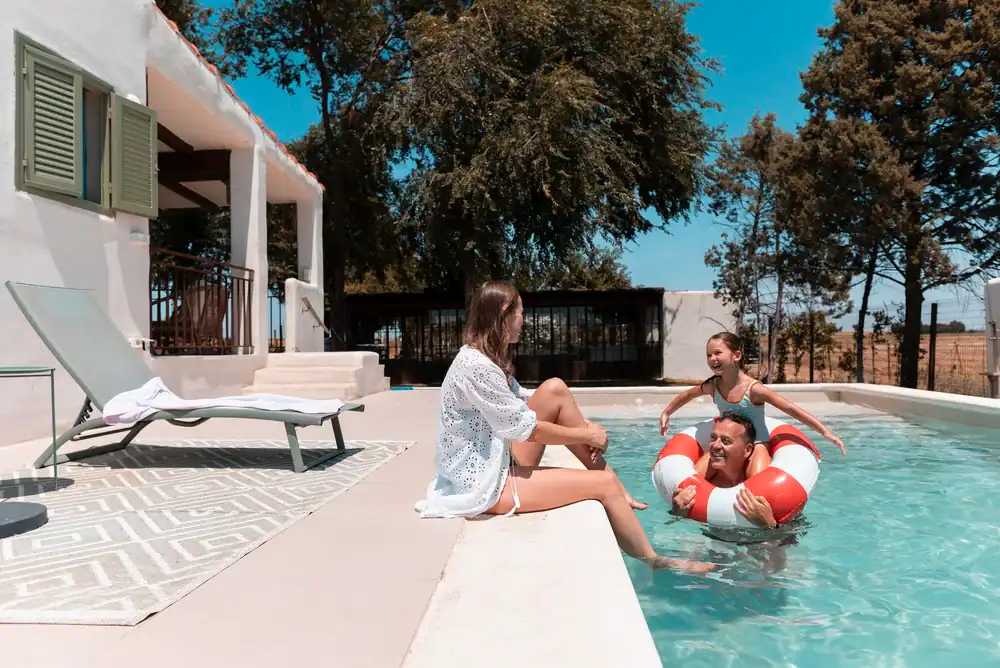

You’re not just buying a pool. You’re fixing the problem of a backyard that doesn’t work for your family, doesn’t add value to your home, and doesn’t give you a reason to stay home on weekends.
When we do the job right, you end up with a space that pulls your family outside instead of pushing them toward expensive vacations. Your property value goes up 8-15% according to the National Association of Realtors. You stop worrying about whether the structure will hold up, whether permits were pulled correctly, or whether the contractor actually understood Long Island’s soil conditions.
The difference between a pool that becomes your favorite investment and one that becomes your biggest regret comes down to who’s managing the excavation, the drainage, the masonry work, and the details that most people don’t see until something goes wrong.
We handle in-ground pool installation in Nassau County and Suffolk County because we’ve spent years figuring out what works when you’re dealing with sandy soil that shifts, clay that doesn’t drain, and setback requirements that change depending on which municipality you’re in.
We’re not the cheapest Nassau County pool installation company you’ll find. We’re the ones who show up with a plan for your specific property, pull the permits before we dig, and don’t disappear when the inspection comes around.
North New Hyde Park sits right where Nassau meets Queens, which means your project needs to account for local codes, soil composition, and drainage that’s different from properties five miles east or west. We’ve built enough custom in-ground pools in this area to know what your site needs before we break ground.
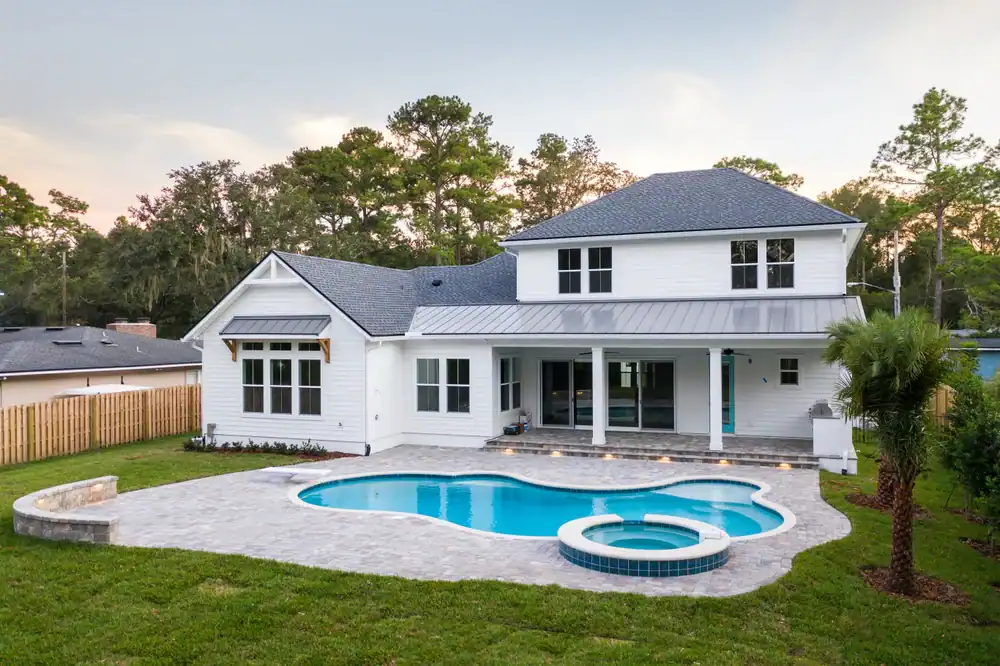
You start with a site evaluation where we look at your property’s grade, soil type, setbacks, and what you actually want to use the pool for. Not every backyard can handle every design, and finding that out after excavation is expensive.
Once we’ve mapped out a design that works with your space and budget, we handle the permit process with your local building department. Most custom in-ground pools in Nassau County take two to three weeks just for permit approval, and that’s assuming the application is done right the first time.
Excavation comes next, and this is where Long Island properties get tricky. About 70% of pools on Long Island are sand bottom construction because the soil composition demands it. We’re grading for proper drainage, setting up the structure to handle freeze-thaw cycles, and making sure your pool doesn’t become a sinkhole in five years.
From there, we’re building out your custom pool coping and tile, installing concrete pool surrounds, and handling any pool patio masonry in Nassau County that turns the area around your pool into a functional outdoor living space. The whole process typically runs six to eight weeks from excavation to final inspection, assuming weather cooperates and permits don’t hit delays.
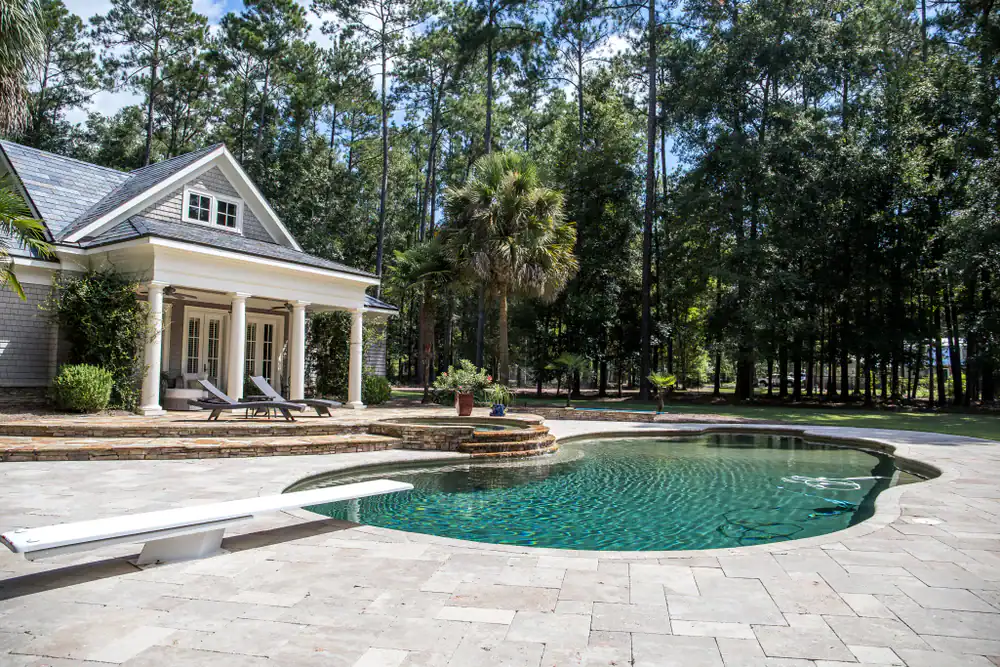
Ready to get started?
You’re getting more than a pool. Complete backyard poolscapes in Suffolk County mean we’re coordinating the entire outdoor area so it functions as one cohesive space instead of a pool surrounded by problems.
That includes pool retaining walls and grading if your property has elevation changes that need to be managed. It includes custom pool coping and tile in Suffolk County that actually matches your home’s aesthetic instead of looking like an afterthought. It includes concrete pool surrounds that handle foot traffic, furniture, and weather without cracking in the first winter.
If you want outdoor kitchens, BBQ areas, or premium pavers that tie the pool area into the rest of your yard, we’re handling that as part of the same project. Tanning ledges are still one of the most requested features going into 2026 because they give younger swimmers a safe shallow area and give adults a place to lounge without committing to full submersion.
Energy efficiency matters more now than it did five years ago. LED pool lighting cuts energy consumption by up to 80% compared to older systems. Variable-speed pumps lower your operating costs and qualify for rebates in some cases. We’re building these options into the design phase, not trying to retrofit them later.
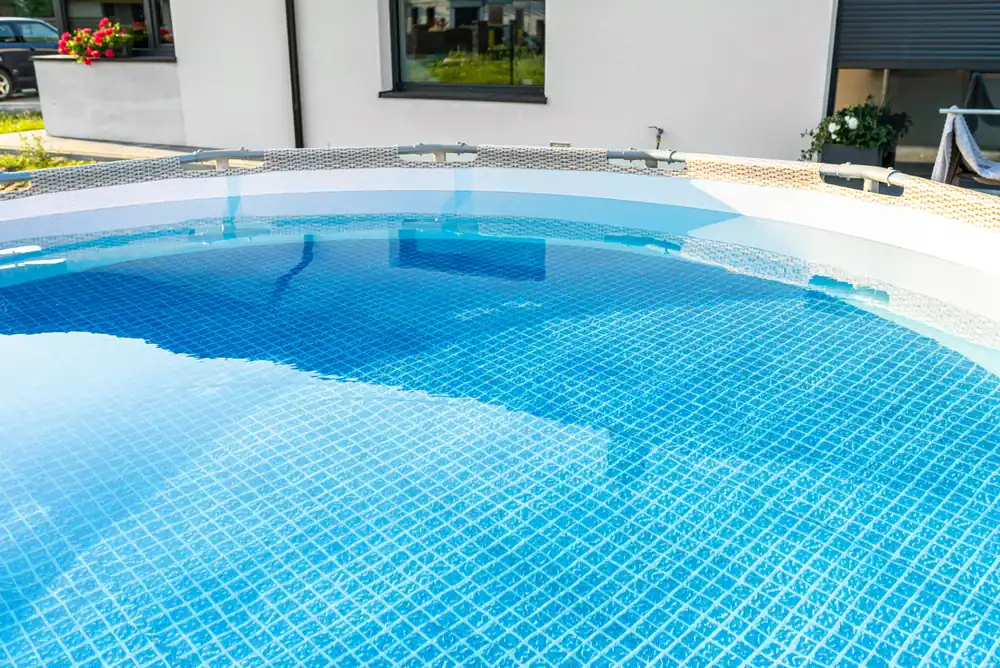
You’re looking at $30,000 to $70,000 for most custom in-ground pools in Nassau County, but that range moves depending on size, features, and how much masonry work you’re adding around the pool itself.
A basic rectangular pool with standard coping and minimal patio work sits at the lower end. Add a tanning ledge, custom tile, a sheer descent waterfall, and upgraded pool patio masonry in Nassau County, and you’re moving toward the higher end of that range. Gunite construction costs more than sand bottom, but it’s typically reserved for luxury installations now because the price difference is significant.
The number that matters more than the install cost is the total project cost, which includes permits, grading, electrical work, and any retaining walls or drainage systems your property needs. We give you that full number upfront so you’re not surprised when the bill comes in higher than the initial pool quote.
Most custom in-ground pools in Suffolk County take six to eight weeks from excavation to final inspection, assuming permits are already approved and weather doesn’t cause delays.
Permit approval usually adds two to three weeks before excavation starts. If your property needs additional grading, retaining walls, or drainage work, that can extend the timeline depending on how much site prep is required.
Spring installations often face delays because everyone wants their pool ready for summer, and that creates a backlog with inspectors and material suppliers. Fall and winter projects give you more flexibility with scheduling and often mean your pool is ready to go as soon as the weather warms up. We’re not going to tell you we can rush a six-week project into three weeks—it doesn’t work that way when you’re doing it right.
Yes. You need building, electrical, and plumbing permits for in-ground pool installation in North New Hyde Park, NY, and the approval process typically takes two to three weeks if the application is submitted correctly.
Your local building department also requires setback compliance, which means your pool needs to be a specific distance from property lines, septic systems, and structures. Those setback requirements vary depending on your lot size and zoning, and getting it wrong means you’re either moving the pool or dealing with variance applications that add time and cost.
We handle the permit process as part of the project because it’s easier to get it approved the first time when the application includes proper site plans, engineering specs, and documentation that the building department actually needs. Skipping permits or trying to DIY the application is a common way to turn a six-week project into a six-month headache.
Gunite is sprayed concrete that creates a fully customizable pool shell, while sand bottom construction uses a vinyl liner supported by sand base and walls. About 70% of pools on Long Island are sand bottom because it works better with local soil conditions and costs significantly less than gunite.
Gunite gives you more design flexibility and durability, but it’s expensive enough now that it’s really only used for luxury installations. Sand bottom pools are faster to install, easier to repair, and handle Long Island’s freeze-thaw cycles without the same risk of cracking that gunite faces if the ground shifts.
The choice comes down to budget and how much customization you need. If you want a standard rectangular or kidney-shaped pool with a vinyl liner, sand bottom makes sense. If you’re building a freeform pool with integrated spa, multiple depth levels, and custom tile throughout, gunite is the better option despite the cost.
Yes, but it’s easier and less expensive to include those features during the initial installation than to retrofit them later.
Adding a sheer descent waterfall or diving rock to an existing pool means you’re running new plumbing, potentially cutting into existing concrete pool surrounds, and coordinating the new feature with your current filtration system. It’s doable, but you’re paying for demolition and rework that wouldn’t be necessary if the feature was part of the original design.
Outdoor kitchens and BBQ areas are easier to add after the fact because they don’t require integration with the pool’s mechanical systems. You’re still looking at additional masonry work, utility connections, and permitting depending on what you’re installing, but it’s a separate project that doesn’t impact the pool structure itself. If you’re considering these features, it makes sense to at least rough in the plumbing and electrical during the pool install so you’re not tearing up finished patio work later.
You’re looking at weekly chemical balancing, regular filter cleaning, and seasonal opening and closing procedures that account for Long Island’s winter freeze cycles.
During swim season, you’re testing pH and chlorine levels at least twice a week, skimming debris, and running your filtration system enough to keep the water circulating. Automated cleaning systems reduce the manual work, but you’re still monitoring chemistry because unbalanced water damages your pool surface and equipment over time.
Winterization matters more on Long Island than it does in warmer climates. You’re draining water below the skimmer line, blowing out plumbing lines, and adding antifreeze to prevent freeze damage. Spring opening involves removing the cover, refilling, balancing chemistry, and getting your equipment back online. Most homeowners either hire this out or spend a weekend each season handling it themselves. Energy-efficient pumps and LED lighting reduce your operating costs, but the maintenance schedule stays consistent regardless of what equipment you’re running.
Other Services we provide in North New Hyde Park