
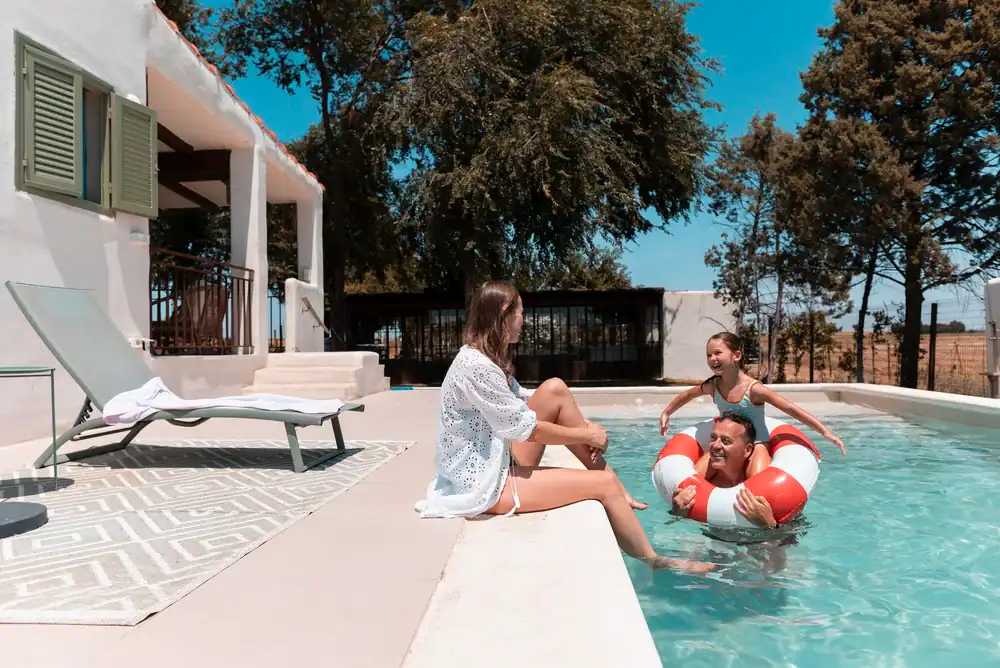

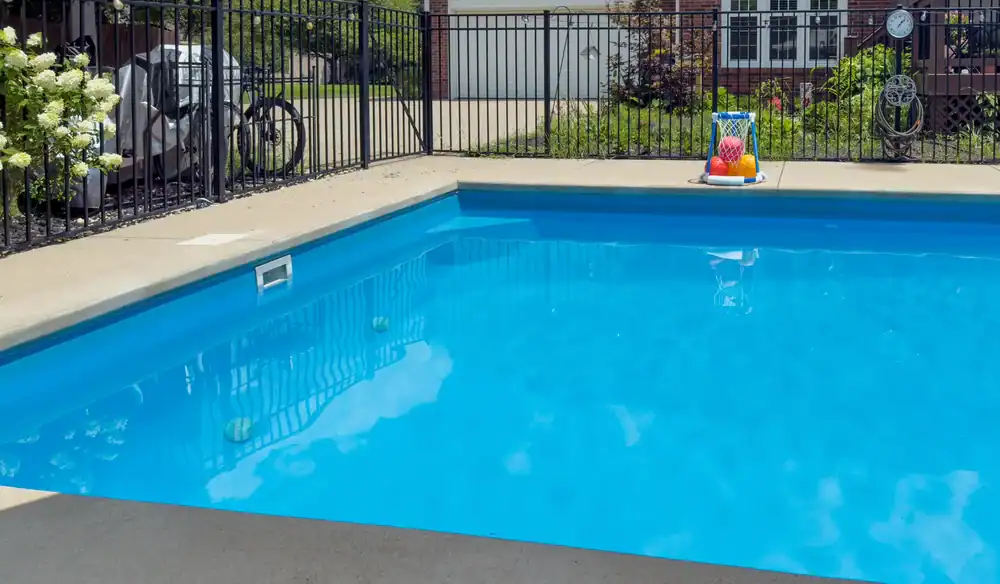
You’re not just getting a hole filled with water. You’re getting a complete backyard poolscape in Oak Beach, NY that works with your property, not against it. That means proper grading so water drains where it should. Custom pool coping and tile Suffolk County homeowners can count on to last through freeze-thaw cycles. Concrete pool surrounds that don’t crack in year two because someone rushed the cure time.
Most custom in-ground pools Suffolk County contractors build take six to eight weeks from excavation to swim-ready. That timeline holds when the crew knows what they’re doing and the permit process doesn’t stall out. You’ll know what’s happening and when, because the same people who dig are the ones who finish.
The result is a pool that doesn’t need a service call three months in. It’s built to handle Long Island’s sandy soil, high water tables, and coastal conditions without the constant maintenance headaches that come from cutting corners.
We started as a masonry company in Suffolk County and Nassau County. That foundation work—retaining walls, hardscaping, pavers—translates directly into pool construction. The skills that go into laying a patio that doesn’t settle are the same ones that go into building pool decks and surrounds that stay level.
Oak Beach sits right on the water, which means your property deals with conditions most pool companies never see. High water tables. Sandy soil. Salt air. We’ve handled those variables for years across both counties, and we know how to build for them without the trial-and-error approach that costs you money down the line.
You’re working with a crew that’s licensed, insured, and owner-operated. That means accountability. When something needs attention, you’re talking to the people who actually did the work.
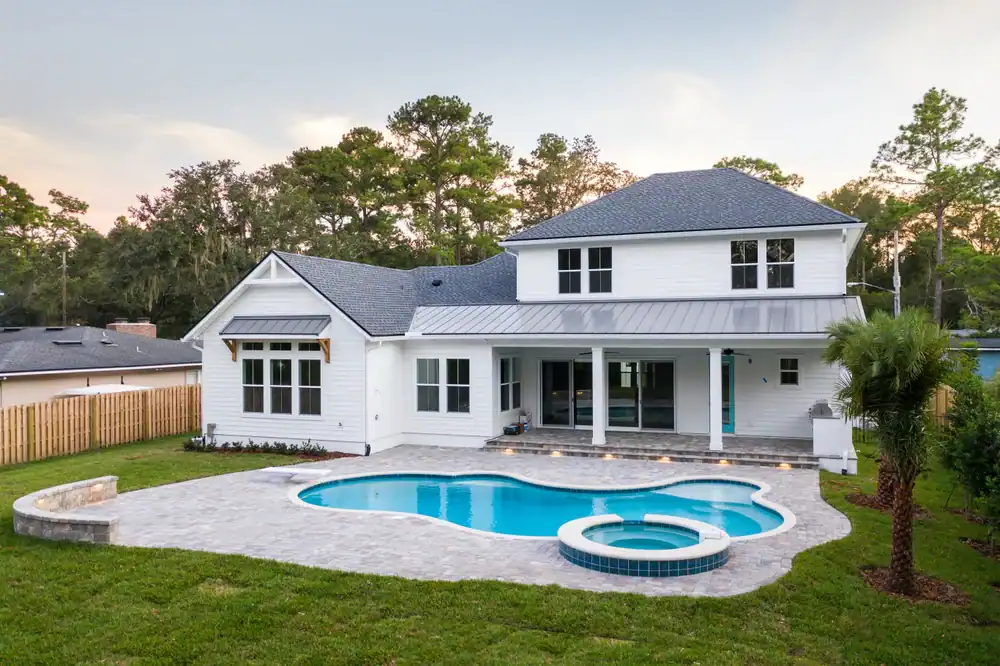
First, we handle the design and engineering. You tell us what you want, we make sure it works with your property and meets code. Then comes the permit process—Suffolk County and Nassau County each have different requirements, and we manage all of that so you don’t have to sit in a municipal office.
Once permits clear, excavation starts. On Long Island, that often means dealing with high water tables, especially in coastal areas like Oak Beach. If your property needs dewatering systems to keep the pool shell stable, that gets installed before we pour anything. No shortcuts.
After the shell is in and plumbing and electrical are roughed in, we move to the finish work. That’s your pool patio masonry Nassau County and Suffolk County homeowners see every day—coping, tile, decking. This is where craftsmanship shows up. We’re not rushing to the next job. We’re making sure your pool retaining walls and grading direct water properly and your concrete work cures correctly.
Final inspection happens, and you’re swim-ready. The whole process takes six to eight weeks if weather cooperates and permits don’t hit delays.
Ready to get started?
You’re getting complete design services, all necessary permits for Suffolk County or Nassau County, professional excavation that accounts for Long Island’s soil conditions, and full plumbing and electrical installation. That’s the baseline. But a pool isn’t much without the surrounding work.
Custom pool coping and tile Nassau County projects require attention to detail. You’re picking materials that handle freeze-thaw cycles and salt exposure without cracking or fading. We walk you through options that actually hold up, not just what looks good in a showroom.
Your pool deck and patio masonry get the same treatment. Concrete pool surrounds Suffolk County homes need have to be poured and finished correctly, or you’re looking at settling and cracking within a few years. We handle grading and drainage so water moves away from your foundation, not toward it. Pool retaining walls get built to code and engineered for Long Island’s soil conditions.
If you want water features, pool houses, or custom landscaping, that’s part of the conversation from the start. The goal is a complete backyard poolscape in Nassau County or Suffolk County that works as one cohesive space, not a pool dropped into a yard with everything else figured out later.
Permit timelines vary depending on which municipality you’re in and how backed up their review process is. In Suffolk County, you’re typically looking at four to six weeks if everything is submitted correctly the first time. Nassau County can run similar timelines, but some towns within the county have additional layers of review that can push it longer.
The permit process includes building, electrical, and plumbing approvals. You’ll also need engineered drawings that show how the pool integrates with your property’s grading and drainage. If your property is in a flood zone or has wetland restrictions—common in Oak Beach—expect additional review time.
We handle the entire permit process, which means you’re not the one calling the building department to check on status or resubmitting paperwork because something was missed. That alone saves most homeowners weeks of back-and-forth. Once permits are in hand, construction starts.
Custom in-ground pools in Nassau County and Suffolk County typically run between $60,000 and $120,000, depending on size, materials, and site conditions. That range includes excavation, the pool shell, plumbing, electrical, decking, and basic landscaping. If your property has a high water table or needs significant grading work, expect to add $5,000 to $10,000 for dewatering systems and site prep.
Permits and engineering usually add another $2,000 to $4,500. Fencing is required by New York State law and runs $3,000 to $8,000 depending on whether you go with aluminum or PVC privacy fencing. Custom features like waterfalls, pool houses, or high-end tile work will push the number higher.
The biggest cost variable is usually site conditions. Sandy soil and coastal water tables—both common in Oak Beach—require more prep work than a standard inland property. We give you a full breakdown upfront so there’s no sticker shock halfway through the project.
Yes. Oak Beach properties deal with high water tables, sandy soil, and salt air exposure. All three affect how your pool gets built. High water tables mean we often install dewatering systems during excavation to keep the hole dry while the shell is poured. Without that step, you risk the shell floating or cracking once groundwater pressure builds back up.
Sandy soil doesn’t compact the same way clay or loam does, so your pool deck and patio masonry need proper base preparation. If the base isn’t right, you’ll see settling and cracking within a couple of years. We handle compaction and grading to make sure your concrete pool surrounds stay level.
Salt air accelerates corrosion on metal components and can degrade certain tile and coping materials faster than inland installations. We recommend materials that hold up to coastal conditions without constant maintenance. That means marine-grade hardware, sealed concrete, and tile that won’t fade or flake under salt exposure. These aren’t upsells—they’re necessities for pools this close to the water.
A general contractor typically subcontracts the pool work to someone else, then subcontracts the masonry, the electrical, and the plumbing to separate crews. You’re paying a markup on each trade, and you’re dealing with coordination issues when one crew’s timeline affects another’s. If something goes wrong, you’re stuck in the middle trying to figure out who’s responsible.
An in-ground pool company in Suffolk County or Nassau County that handles everything in-house gives you one point of contact and one crew accountable for the entire project. We’re not waiting on a subcontractor to show up or dealing with miscommunication between trades. Excavation, plumbing, electrical, masonry—it’s all handled by people who work together every day.
That also means better quality control. When the same crew that digs the hole is the one finishing your pool coping and tile, they’re not blaming someone else’s work if something doesn’t line up. They fix it, because it’s their responsibility from start to finish.
Technically yes, but it’s not ideal. Excavation can happen in winter as long as the ground isn’t frozen solid, but concrete work becomes a problem once temperatures consistently drop below 40 degrees. Concrete needs time to cure properly, and cold weather slows that process or stops it entirely. Rushing a pour in cold weather leads to cracking and weak spots that show up later.
Most pool construction in Nassau County and Suffolk County happens between April and October. That’s when weather is predictable enough to keep the project on schedule. If you’re planning a pool for next summer, the best time to start the design and permit process is late fall or winter, so you’re ready to break ground as soon as weather allows in spring.
Starting early also means you’re not competing with the spring rush when every pool company is booked solid. You get better scheduling flexibility, and your project doesn’t sit in a permit queue behind twenty others. By the time summer hits, you’re swimming.
Your pool needs regular chemical balancing, filter cleaning, and surface skimming regardless of age. In the first year, you’re also watching for any settling or shifting in the deck and surrounding masonry. Long Island’s freeze-thaw cycles can expose weak points in concrete work, so you want to catch any hairline cracks early before they turn into bigger problems.
Your pool’s plumbing and equipment should be checked at the start and end of each season. That means opening the pool in spring and closing it properly in fall. Winterizing protects your plumbing from freeze damage, which can cost $5,000 to $15,000 to repair if a pipe bursts or your pump cracks.
If your pool was built correctly with proper grading and drainage, maintenance stays predictable. You’re not dealing with constant algae issues from poor circulation or water chemistry problems from a system that wasn’t balanced right from the start. Most of the first-year maintenance is just learning your pool’s rhythm and keeping up with the basics. If something does need attention, you’re calling the people who built it—not trying to find someone willing to warranty another contractor’s work.
Other Services we provide in Oak Beach