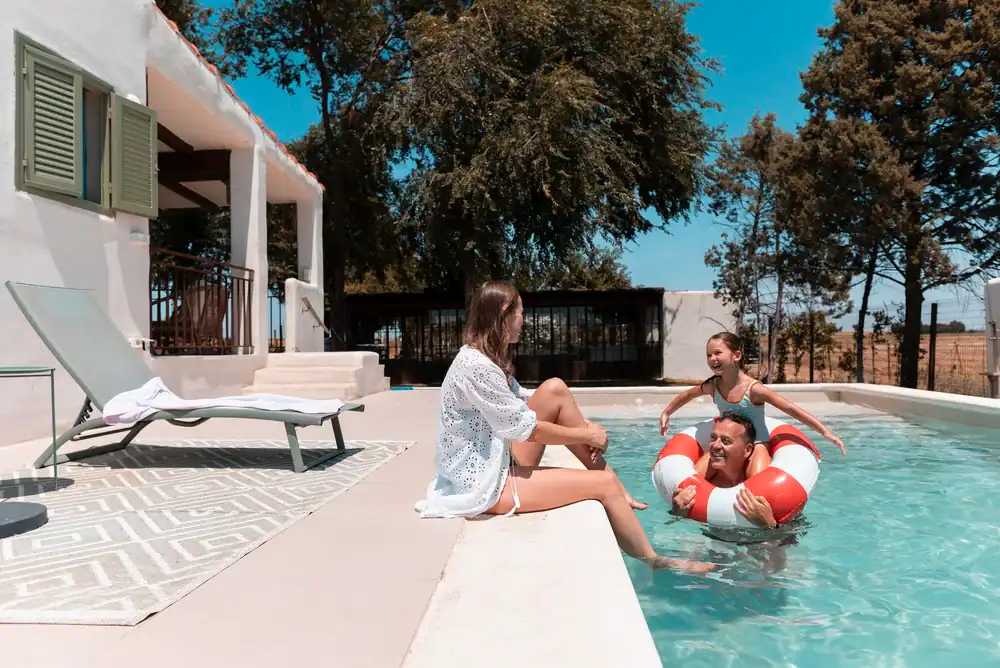

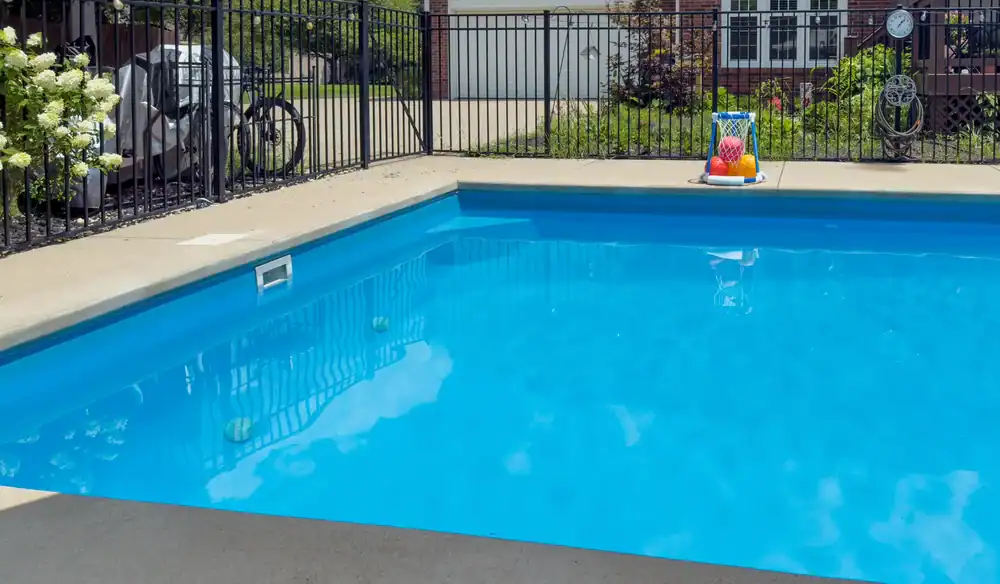
You’re not just getting a hole filled with water. You’re getting a backyard that changes how you spend your weekends, how your kids remember summer, and what your property is worth when it’s time to sell.
A professionally built in-ground pool in Nassau County adds 8-15% to your home’s value according to the National Association of Realtors. That’s real equity. But the bigger return is hosting Fourth of July without driving anywhere, cooling off after work in your own yard, and not having to leave home to feel like you’re on vacation.
The difference between a pool that becomes your favorite investment and one that becomes a maintenance headache comes down to who builds it. Long Island soil shifts. Permits take weeks. Weather throws curveballs. You need someone who’s done this enough times to see problems coming and handle them without calling you every other day.
Ageless started as a masonry company in Nassau County over 20 years ago. We’ve been working with Long Island soil, weather, and permitting ever since. That’s not marketing talk—it’s just time in the field.
We’re licensed, insured, and rated A+ with the BBB. We’ve built custom in-ground pools across Oyster Bay, handled hundreds of permits in Nassau County, and worked through every soil condition Long Island throws at contractors. Sandy lots that shift, clay that doesn’t drain, rock you didn’t know was there—we’ve seen it.
When you call, you’re talking to people who know the local building department, understand setback requirements for your zone, and won’t guess their way through your project.
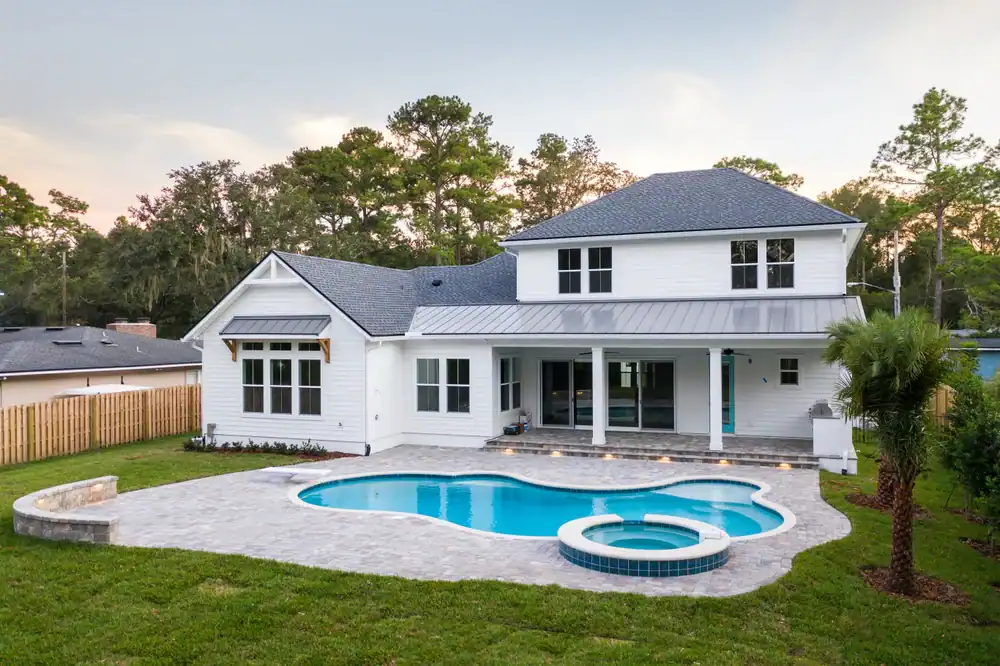
First, we walk your property and talk through what you want. Pool size, shape, depth, features—and whether your yard can handle it. We measure setbacks, check drainage, and flag anything that’ll affect the build before we talk numbers.
Next, we handle permits. Nassau County requires building, electrical, and plumbing permits. That process typically takes 2-3 weeks. We submit everything, track approvals, and keep you updated so you’re not calling the town yourself.
Once permits clear, we excavate. Long Island soil varies block to block—sand, clay, rock, high water tables. Our crews know how to dig in different conditions and install drainage systems that actually work. Then we build the pool structure, install plumbing and electrical, and finish with coping, tile, and decking.
Most custom in-ground pools in Nassau County take 6-8 weeks from excavation to completion, depending on size and features. Weather can add time—we can’t pour concrete in freezing temps. But we’ll give you a realistic timeline upfront, not an optimistic guess.
Ready to get started?
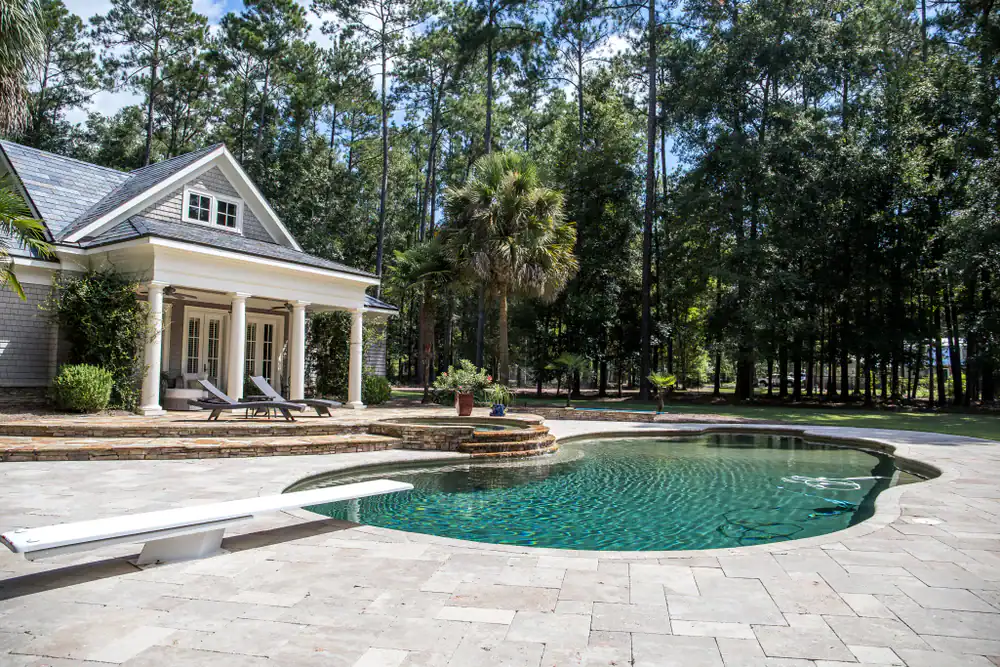
You’re getting more than just the pool. We design and build the entire poolscape—decking, patios, coping, retaining walls if your yard slopes, and grading to handle drainage. Everything needs to work together, especially on Long Island where coastal storms dump inches of rain in hours.
Pool patio masonry in Nassau County isn’t just aesthetic. Your pool deck needs textured surfaces that don’t turn into a slip hazard when wet. We use materials like travertine and textured concrete that provide grip, plus strategic drainage design so water doesn’t pool on your deck.
If you want water features—waterfalls, fountains, infinity edges—we handle that too. Same with lighting, heating systems, and automation. The goal is a finished backyard that works the way you want it to, not a pool surrounded by mud and temporary solutions.
Nassau County properties often need retaining walls and grading work to make the pool site level and stable. We handle that as part of the project. You’re not hiring three different contractors and hoping they coordinate. One crew, one timeline, one point of contact.
Permit approval in Nassau County typically takes 2-3 weeks once we submit all the paperwork. That includes building, electrical, and plumbing permits. Some towns move faster than others—Oyster Bay, Massapequa, and Levittown each have their own pace.
The timeline depends on how complete your application is and whether the building department has questions. We’ve been submitting permits in Nassau County since 2003, so we know what each town requires and how to avoid the back-and-forth that delays approvals.
Budget 3 weeks minimum, but plan for up to 3 months if you’re in a slower town or applying during peak season when building departments are slammed. We track your permit through the process and follow up so you’re not waiting blind.
Long Island soil is unpredictable. You can hit sand that shifts, clay that holds water, or bedrock that requires extra excavation. All of that affects your pool’s structural integrity and drainage. Contractors who don’t know Long Island soil often run into problems mid-project that blow budgets and timelines.
The climate is another factor. Cold winters and coastal storms stress pool equipment and structures. Your pool needs to be built to handle freeze-thaw cycles, salt air if you’re near the coast, and heavy rain that tests your drainage system.
Permitting is stricter here than in a lot of other places. Nassau and Suffolk Counties have specific zoning laws, setback requirements, and safety regulations. If your contractor doesn’t know local codes, you’ll end up with delays or worse—work that doesn’t pass inspection.
Most custom in-ground pools in Nassau County run between $30,000 and $70,000 depending on size, materials, and features. A basic 12×28 gunite pool starts around $40,000. Add custom tile, water features, upgraded decking, or a larger footprint, and you’re looking at $60,000-$70,000 or more.
Soil conditions affect cost too. If we hit rock or a high water table during excavation, that adds time and equipment. Access matters—if we can’t get machinery into your backyard easily, that slows things down. These aren’t upsells, they’re realities of building pools on Long Island.
The real cost isn’t just the build. It’s what happens after. A pool built wrong will need repairs within five years—78% of Long Island pools do. A pool built right lasts decades with normal maintenance. You’re paying for the expertise that keeps your investment from turning into a money pit.
Yes. Nassau County requires a barrier around all in-ground pools to prevent unsupervised access, especially by children. The fence must be at least 4 feet high with a self-closing, self-latching gate. Some towns have additional requirements, so we confirm local codes before your project starts.
You have options—traditional fencing, mesh safety fencing, or natural barriers like hedges combined with gates. The fence doesn’t have to kill your backyard’s look, but it does have to meet code or you won’t pass final inspection.
We coordinate fence installation as part of the project if you want. Otherwise, you’ll need to hire a fencing contractor and make sure their work meets pool barrier requirements. Either way, it’s not optional—it’s part of getting your pool approved and keeping your family safe.
We adjust. Hitting rock or unstable soil isn’t rare on Long Island—it’s something we plan for. If we encounter bedrock, we bring in equipment to break through it or adjust the pool depth if that makes more sense for your site. If the soil is too sandy or clay-heavy, we stabilize it before building the pool structure.
These situations add time and sometimes cost, but they’re not project-killers if your contractor knows what they’re doing. We’ve excavated hundreds of pools in Nassau County. When we hit an obstacle, we’ve usually seen it before and know how to handle it without derailing your timeline.
The key is communication. If we find something unexpected, we’ll explain what it is, what it means for the project, and what your options are. No surprises buried in the final invoice—just transparent updates so you can make informed decisions about your property.
Yes. We design and install custom water features, lighting, heating systems, and automation as part of your pool build. Waterfalls, fountains, infinity edges, LED lighting, saltwater systems—whatever you want, we can incorporate it into the design.
The best time to add features is during construction, not after. Running plumbing and electrical for a waterfall or installing lighting conduit is easier when the pool’s being built. Retrofitting later means tearing up finished work, which costs more and risks damaging what’s already done.
We’ll walk through your options during the design phase and explain what each feature involves—cost, maintenance, energy use. Some features make sense for every pool. Others depend on how you’ll use the space. We’re not here to upsell you on things you won’t use. We’re here to build what actually fits your backyard and your life.
Other Services we provide in Oyster Bay