

You’re not just getting a hole filled with water. You’re getting a gunite structure built on-site with steel rebar and concrete that flexes with ground movement instead of cracking apart when winter hits.
Long Island’s freeze-thaw cycles destroy poorly built pools. You’ve seen it—cracks in the shell, liner damage, thousands in emergency repairs because someone cut corners during installation. That’s not what happens here.
When we build custom in-ground pools in Suffolk County and Nassau County, we’re accounting for rocky soil, high water tables, and the kind of spring pollen and winter cold that makes pool ownership either a nightmare or a non-issue. The difference is in how it’s built from day one. Proper grading, the right materials, and construction methods that treat your property like it matters.
You end up with a pool that holds up year after year, a patio that doesn’t shift or settle, and a backyard people actually want to spend time in. No constant repairs. No regret about the investment.
We’ve been working in Nassau County, Suffolk County, and across Long Island for nearly two decades. We’re licensed and insured in both counties, and we know the permitting process, the ground conditions, and the local regulations that can derail a project if you’re not prepared.
Port Jefferson Station has its own quirks—soil composition, water table issues, zoning requirements. We’ve handled them all. You’re not explaining your property to someone who’s guessing. We’ve done the work here, and we know what it takes to get a pool project done right without the runaround.
When you call, you’re talking to people who’ve been doing this long enough to skip the sales pitch and just tell you what your project actually needs.
First, we come out and look at your property. Not a quick glance—we’re checking ground conditions, drainage, access for equipment, and any site-specific challenges that’ll affect the build. Then we handle the plans, permits, and paperwork. Nassau and Suffolk counties have different fee structures and requirements, and we manage all of that so you don’t have to chase down approvals.
Once permits clear, we excavate. If you’ve got rocky soil or a high water table, we bring in dewatering equipment and handle it. The hole gets dug, graded properly with a quarter-inch per foot slope so water drains away from your foundation, and then we start the gunite work—steel rebar framework and concrete poured on-site to create a monolithic structure.
After the shell cures, we move into finishing. That’s your tile, coping, patio pavers, any masonry work, and equipment installation. We use Cambridge, Nicolock, or Techobloc pavers depending on what you’re after, and we make sure the surface around your pool has traction and looks clean. Then we fill it, balance the water, and walk you through everything before we’re done.
You’re not left guessing what comes next. Every step has a reason, and we’re there to explain it.
Ready to get started?
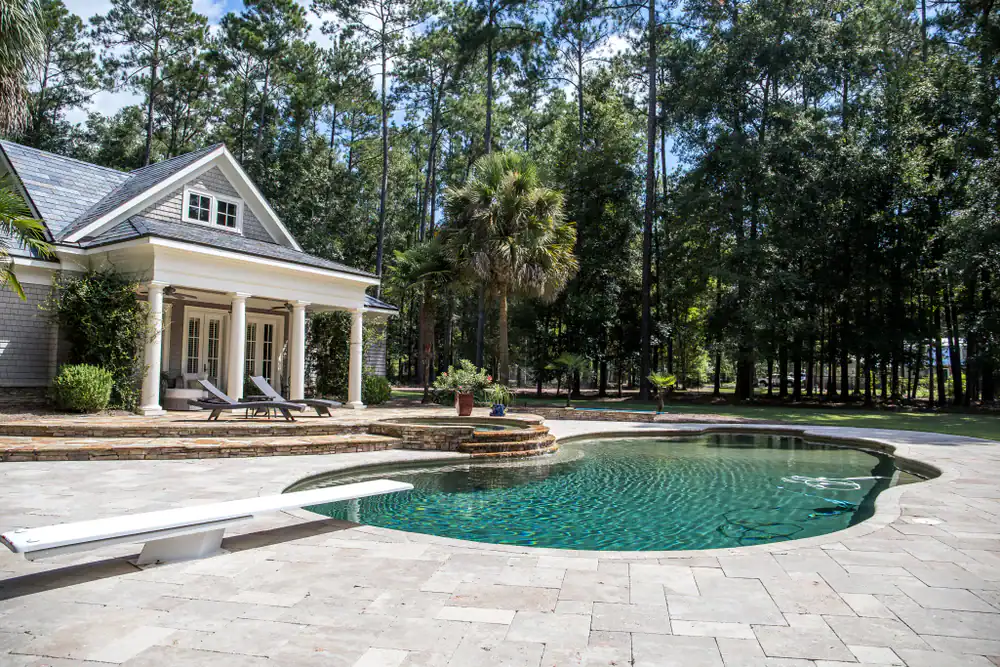
When we say complete backyard poolscapes in Nassau County and Suffolk County, we mean it. You’re getting the pool itself—gunite construction, custom shape and depth, tile and coping that matches your style. But you’re also getting the hardscape: patio pavers, walkways, retaining walls if your yard has elevation changes, and masonry work that ties everything together.
We install pool equipment from brands like Hayward, Jandy, and Pentair. Heating, filtration, automation if you want it. If your property needs grading work or drainage solutions, that’s part of the scope. We’re not handing you a pool and leaving you to figure out the rest.
In Port Jefferson Station, a lot of properties deal with water table issues, especially on the North Shore. We handle dewatering during construction and make sure your pool isn’t fighting groundwater pressure after it’s built. On the South Shore, drainage and grading become even more important to avoid pooling water that can crack your patio or damage your foundation during freeze-thaw cycles.
You’re also getting a five-year guarantee on the work. If something’s not right, we come back and fix it. That’s not a marketing line—it’s how we’ve stayed in business this long.
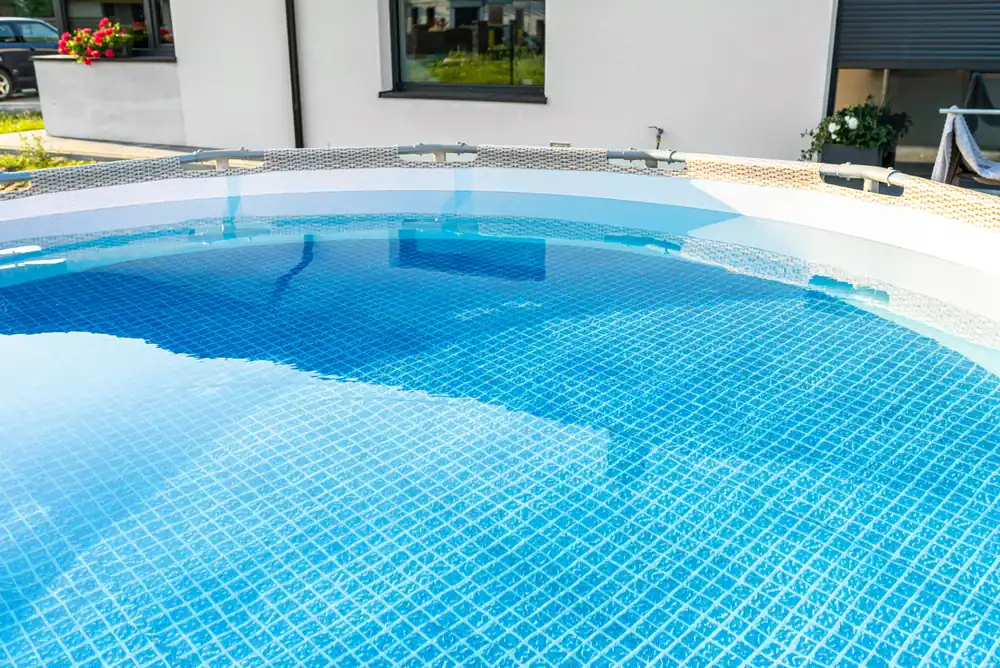
You’re looking at $50,000 to $120,000 for a gunite pool in Suffolk County, depending on size, shape, and what you’re adding around it. That’s not a scare number—it’s what it costs to build a pool the right way in this area.
The range comes down to customization. A basic rectangular pool with standard coping and minimal patio work sits on the lower end. Add a freeform shape, premium Techobloc pavers, a raised spa, custom tile, or extensive masonry work, and you’re moving up. Soil conditions matter too—if we hit rock or need dewatering equipment, that adds to excavation costs.
Long Island pricing reflects the local challenges: permitting fees, higher labor costs, and the need for materials and construction methods that can handle the climate. You’re not overpaying—you’re paying for a pool that won’t crack apart in five years or cost you $10,000 in emergency repairs the first time we get a hard freeze.
Gunite is concrete and steel rebar poured on-site to create a single, solid structure. Vinyl liner pools use a pre-fabricated shell with a replaceable liner. The difference shows up in durability, customization, and long-term cost.
Gunite handles Long Island’s freeze-thaw cycles better because it’s monolithic—it flexes with ground movement instead of cracking. You can build any shape, any depth, and finish it with tile and stone. It’s a premium feature that holds property value. The downside is higher upfront cost and a rougher surface texture.
Vinyl liners are cheaper to install and smoother to the touch, but the liner needs replacement every 7-10 years at $4,000 to $6,000 a pop. They’re more prone to punctures, and customization is limited to pre-made shapes. Vinyl pools can be insulated with wall foam for better heat retention, which is a plus if energy efficiency matters to you, but they don’t carry the same resale value as gunite.
If you’re planning to stay in your home long-term and want a pool that lasts decades, gunite makes sense. If you want lower upfront cost and don’t mind liner replacements, vinyl works.
Plan on 8 to 12 weeks from permit approval to completion, assuming decent weather and no major surprises underground. That timeline includes excavation, gunite work, curing time, finishing, and final inspection.
Permitting is the wildcard. Nassau County and Suffolk County have different processes, and if you’re in a coastal zone or need variances, it can take weeks or even months to get approval. We handle that part, but it’s out of our control once the application goes in.
Weather affects the schedule too. Heavy rain during excavation or concrete work can push things back. Spring and summer are peak construction season, so if you’re starting then, expect every contractor to be slammed. Best time to begin is late summer or fall—you avoid the rush, and your pool is ready for next year’s warm weather.
If your property has ledge rock or a high water table, excavation takes longer. If we need to bring in dewatering equipment or blast rock, that adds time. We’ll tell you upfront if your site has those issues so you’re not surprised halfway through.
Yes. You need a building permit from the Town of Brookhaven, and depending on your property, you may also need zoning approval, a variance, or environmental review if you’re near wetlands or in a flood zone.
Suffolk County has its own requirements on top of local town permits, and if your pool includes electrical work (which it will), that needs a separate electrical permit and inspection. Setback rules dictate how close the pool can be to your property lines, and those vary by zone. If you’re in a homeowners association, you’ll need their approval too.
We handle all the paperwork, plan submissions, and permit applications. It’s part of the service because most homeowners don’t have time to chase down approvals and deal with code enforcement. The process takes a few weeks to a few months depending on complexity, but once permits are in hand, we can start digging.
Skipping permits isn’t an option. You’ll get flagged during a property sale or refinance, and you’ll be forced to either remove the pool or go through after-the-fact permitting, which is a nightmare. Do it right the first time.
You’re looking at weekly cleaning and chemical balancing during swim season, plus equipment checks and winterization in the fall. Long Island’s climate makes maintenance more involved than warmer regions because you’re dealing with seasonal extremes.
Spring means pollen—lots of it. You’ll be skimming and vacuuming constantly in April and May. Summer requires regular chlorine or salt system monitoring, pH balancing, and algae prevention. If your pool gets a lot of sun, you’ll go through chemicals faster. Fall is when you winterize: lower the water level, blow out the lines, add antifreeze to the plumbing, and cover it so freeze damage doesn’t crack your pipes or equipment.
Gunite surfaces can develop algae in the porous texture if you let chemistry slip, so staying on top of chlorine levels matters. You’ll also want to brush the walls weekly and check your filter pressure. Equipment like pumps, heaters, and automation systems need occasional service—seals wear out, motors fail, sensors drift.
We offer maintenance packages if you don’t want to deal with it yourself. One-time cleanups, regular service, equipment repair, winterization—whatever level of involvement you want. Most people start doing it themselves and call us after the first season when they realize how much time it takes.
Yes. That’s actually how most of our projects go—pool, patio, and any masonry or hardscape work done together so everything’s coordinated and the site only gets torn up once.
We install patio pavers using Cambridge, Nicolock, or Techobloc products depending on your preference. Standard or XL sizes, different patterns, border details, whatever matches your home’s style. The pavers get a rough surface for traction around the pool, and we make sure the base is compacted and graded properly so you don’t get settling or shifting over time.
If your yard has elevation changes, we build retaining walls to terrace the space. If you want a fire pit, outdoor kitchen, pergola, or custom seating areas, we handle that too. The goal is a complete backyard poolscape in Suffolk County or Nassau County that feels cohesive, not a pool dropped into a yard with everything else figured out later.
Doing it all at once also saves money. We’re already on-site with equipment, materials are ordered together, and the grading and drainage work benefits both the pool and the patio. Splitting it up means mobilizing twice, which costs you more and drags the project out.
Other Services we provide in Port Jefferson Station