
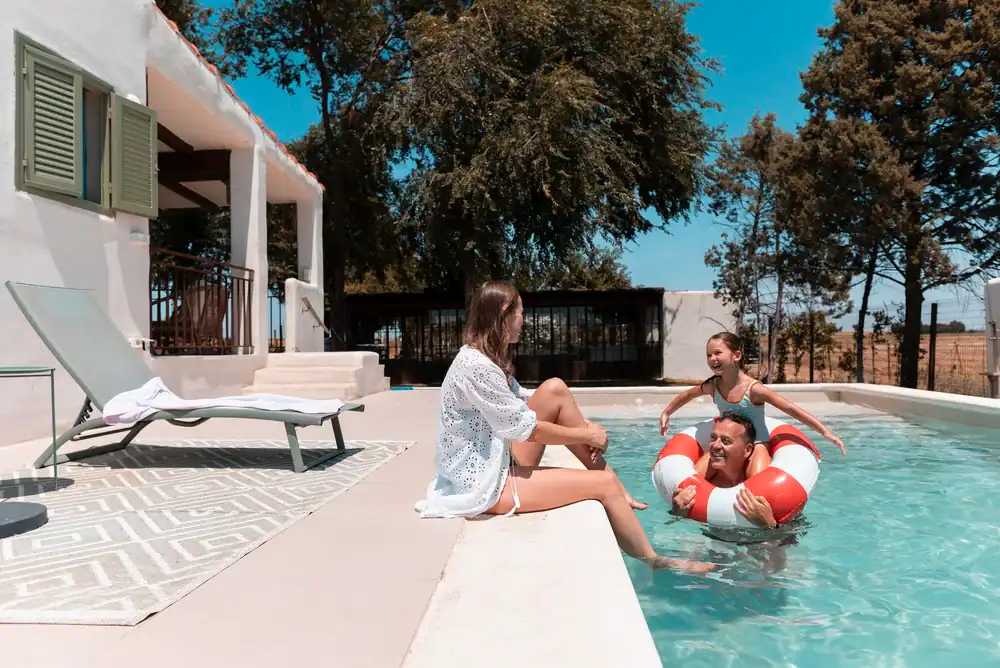

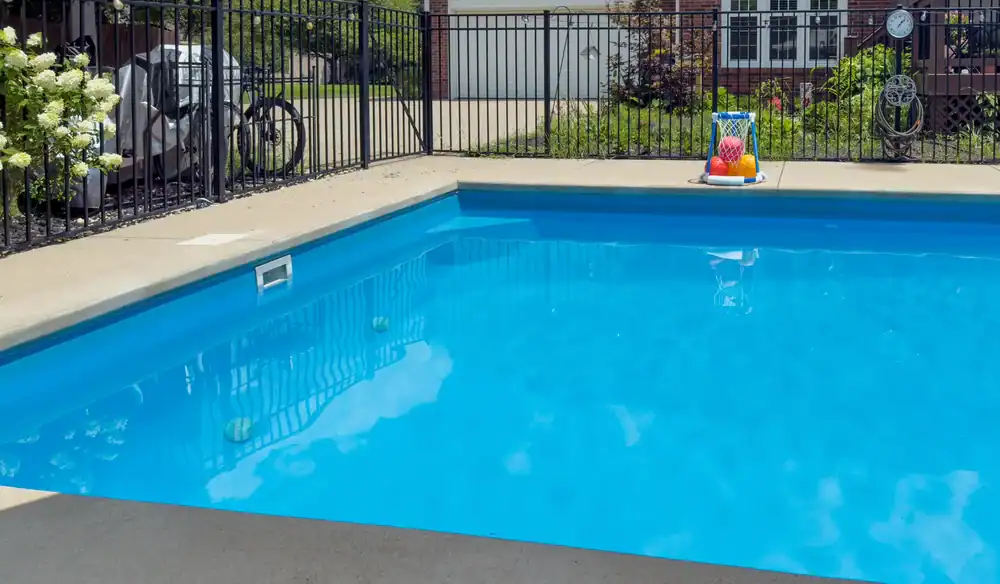
You stop worrying about slippery surfaces around your pool. The materials we use stay cooler under your feet during July heat waves, and they grip better when wet than anything concrete can offer.
Drainage works the way it should. Water moves away from the pool area instead of pooling up and creating hazards. When Long Island’s freeze-thaw cycles hit, your pool deck doesn’t crack or heave because the base was prepared correctly from day one.
If something does get damaged years down the road, you replace individual pavers instead of jackhammering and re-pouring entire sections. That’s the difference between a $300 fix and a $3,000 nightmare. You get a backyard that works for swimming, entertaining, and bare feet without constant maintenance or expensive repairs.
We’ve served Nassau County homeowners for nearly two decades. We’ve seen what happens when pool decks are installed with shortcuts, and we’ve fixed plenty of them.
Every job gets handled by an owner, not a rotating crew. We show up when we say we will, we don’t leave your property a mess, and we use materials that actually hold up to salt air and winter freeze cycles.
Village of the Branch properties deal with specific drainage challenges and soil conditions. We know how to grade properly, where water tends to collect, and what base preparation actually prevents settling. That local knowledge matters when you’re investing this kind of money into your backyard.
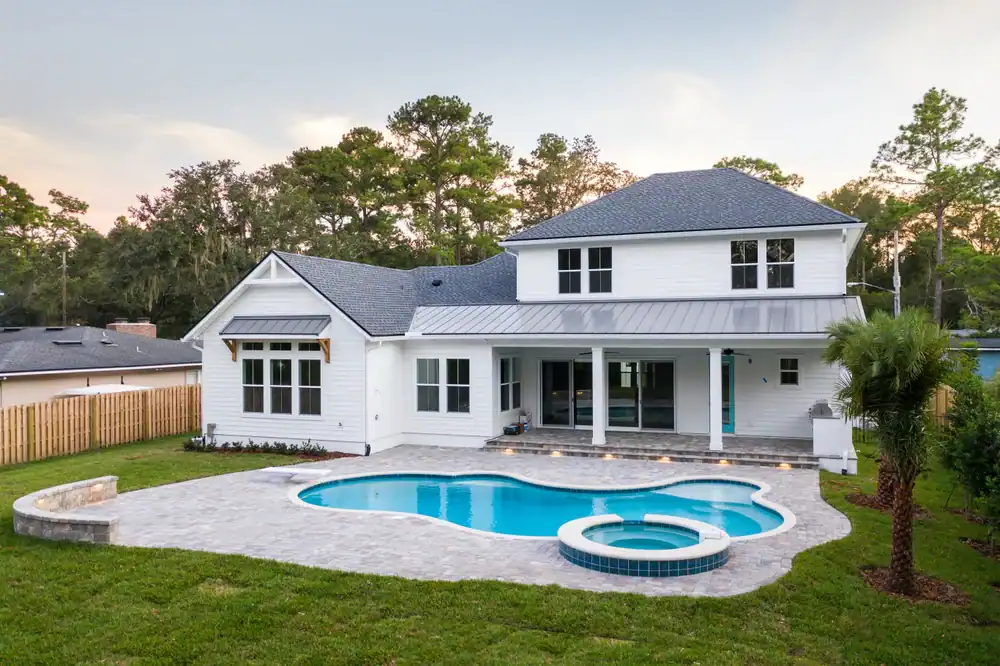
We start with your property’s drainage patterns and soil conditions. Before any materials get ordered, we map out where water flows and how to direct it away from your pool area. This prevents 90% of the problems that show up later.
Base preparation comes next. We excavate to proper depth, compact the base in layers, and create the slope that keeps water moving. Shortcuts here cause settling, cracking, and uneven surfaces within a year or two. We don’t skip steps.
Material selection happens based on your specific needs. If you have kids running around barefoot, we recommend textures that stay cooler and grip better. If you’re dealing with heavy shade and moisture, we choose pavers that resist algae growth. Then we install with proper spacing, edge restraints, and polymeric sand that actually stays in place.
You get a final walkthrough where we explain maintenance, show you how drainage works, and make sure everything meets your expectations before we consider the job done.
Ready to get started?
Complete site assessment and drainage planning specific to your property. Village of the Branch sits in an area where water tables and soil composition vary significantly from property to property. We test and plan accordingly.
Full base excavation and preparation with compacted layers and proper slope. Custom pool coping that transitions smoothly from deck to water. Tile work around the pool edge that handles constant water exposure and chemical contact without deteriorating.
Pool patio masonry using materials rated for Long Island’s climate. Concrete pool surrounds when that makes sense for your layout. Pool retaining walls and grading if your yard has elevation changes that need proper management.
We handle water features if you want them, custom lighting integration, and complete backyard poolscapes that tie everything together. You’re not coordinating multiple contractors or hoping different trades show up when they’re supposed to. One company handles it from start to finish.
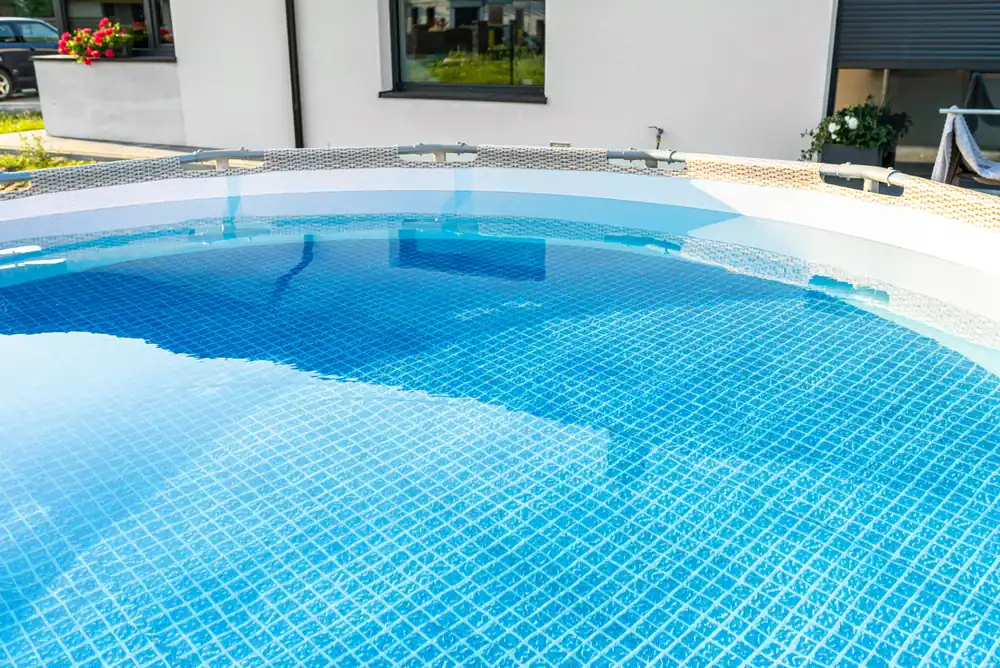
Quality pool patio pavers last 20 to 30 years with proper installation and basic maintenance. Concrete pool decks typically need major repairs within 10 to 15 years because they crack under freeze-thaw stress.
The difference comes down to how the base gets prepared and what materials you choose. Long Island’s winters are hard on anything poured as a solid slab. When water gets into small cracks and freezes, it expands and makes those cracks worse every season.
Pavers handle this better because they’re modular. They move slightly with temperature changes instead of fighting against them. The sand between pavers allows for minor shifts without creating visible damage. If you do get a stain or crack in one paver years later, you replace that one piece instead of cutting out and re-pouring sections of concrete.
Smooth surfaces become slippery when wet, and most concrete pool surrounds are too smooth for safety. Add in sunscreen, pool chemicals, and algae growth in shaded areas, and you’ve got a genuine hazard every time someone gets out of the water.
Texture matters more than anything else. We use pavers with enough surface texture to provide grip when wet, but not so rough that they’re uncomfortable barefoot. The texture needs to be consistent across the entire surface, not just brushed on top where it wears away.
Proper drainage prevents standing water, which is where algae grows and creates the slickest conditions. When water moves off your deck quickly, you don’t get those perpetually damp spots that stay slippery even on sunny days. We create slopes that direct water away from traffic areas and into proper drainage points. That combination of textured surface and good drainage keeps your pool deck safe for kids, elderly family members, and everyone in between.
Base preparation gets skipped or rushed. When the ground underneath isn’t properly compacted, it settles unevenly over time. That uneven settling creates stress points where cracks form.
Contractors who cut corners excavate to shallow depth, don’t compact in layers, or skip the gravel base entirely. They pour concrete or lay pavers directly on grade, and it looks fine for six months. Then you get your first hard winter, the ground freezes and thaws, and everything shifts.
Poor drainage makes it worse. Water that doesn’t drain away properly saturates the base material. When that water freezes, it expands and pushes everything upward. When it thaws, things settle back down, but not evenly. After a few freeze-thaw cycles, you see cracks, uneven sections, and pavers that rock when you step on them. Proper excavation depth, layered compaction, and drainage planning prevent these problems. It takes longer and costs more upfront, but you don’t end up redoing the whole project in five years.
You need materials rated for freeze-thaw cycles and salt air exposure. Long Island’s coastal location means salt in the air, and the winter temperature swings are brutal on anything that absorbs water.
Concrete pavers with low water absorption rates perform better than poured concrete. When pavers absorb less than 5% of their weight in water, freeze-thaw damage becomes minimal. Natural stone looks beautiful but some varieties absorb too much water and crack after a few winters. We test absorption rates and only use materials proven to handle local conditions.
Color matters for comfort. Dark pavers absorb more heat and get too hot to walk on barefoot during summer. Light colors reflect heat and stay cooler, but they show stains more easily. We usually recommend mid-tone colors with textured finishes that balance heat reflection, stain resistance, and slip resistance. The specific material choice depends on how much shade your pool area gets, whether you have trees dropping debris, and how much direct sun exposure you’re dealing with during peak summer months.
Expect to invest between $15 and $35 per square foot for quality pool patio masonry, depending on materials and site conditions. A typical pool deck runs 600 to 1,000 square feet, putting most projects between $9,000 and $35,000.
That range exists because every property is different. If your yard has significant slope, you need retaining walls and more extensive grading. If drainage is already problematic, we’re correcting existing issues before we build your deck. Custom pool coping and tile work adds cost but also adds durability and finished appearance.
Cheaper quotes usually mean shortcuts somewhere. Thinner base preparation, lower-grade materials, or crews that rush through installation to move on to the next job. You’ll see the difference within two years when their work starts failing. We provide written estimates that break down exactly what you’re getting, and we guarantee to beat any legitimate written competitor estimate that includes the same scope and quality level. The goal is a pool deck that lasts decades, not one that needs major repairs before your pool does.
Yes, we handle complete backyard poolscapes including water features, custom lighting, and integrated design elements. Cascading waterfalls, infinity edges, and decorative water features get built as part of the overall project.
The advantage of handling everything together is proper planning. Electrical runs for lighting get installed during base preparation, not added later by cutting into finished work. Water features get integrated into the drainage plan so they enhance your pool area instead of creating maintenance problems.
Custom lighting makes your pool usable after dark and adds safety around steps and edges. We run conduit during excavation, position lights to eliminate dark spots, and use fixtures rated for constant moisture exposure. Everything gets coordinated in one project timeline instead of you managing multiple contractors who may or may not show up when promised. You get one point of contact, one timeline, and one company responsible for the finished result.
Other Services we provide in Village Of The Branch