

A professionally installed driveway doesn’t just look better. It drains properly, so you’re not dealing with puddles or ice patches every time it rains. It holds up under the weight of your vehicles without cracking or sinking within the first few years.
You’re also protecting your property value. A crumbling, cracked driveway is one of the first things people notice, and it’s one of the hardest things to ignore when you’re trying to sell. When the installation is done right from excavation through final grading, you’re looking at 20 to 30 years of solid performance depending on the material you choose.
The difference between a driveway that lasts and one that fails early comes down to preparation. Proper base material, correct grading for drainage, and attention to the details that most contractors skip because they’re in a hurry. That’s where most DIY projects and budget installations fall apart.
We started as a masonry company, and we’ve been working on Long Island properties for over 20 years. Our team has been in the driveway crafting trade for more than 30 years combined. Every job is managed by an owner, not handed off to a crew you’ve never met.
We’re licensed, insured, and bonded. We don’t use third-party contractors, so the people who give you the estimate are the same people who show up to do the work. That matters when you’re making a decision that affects your home for the next few decades.
Coram homeowners deal with specific challenges: salt air, freeze-thaw cycles, and properties that are often 20 to 40 years old with settling issues. We’ve handled hundreds of driveways in Suffolk County, and we know what holds up here and what doesn’t.
First, we assess your property. We look at drainage patterns, the condition of your existing base, and how your driveway connects to the street and your garage. If there are underlying issues like poor grading or soil problems, we identify them before we start tearing anything up.
Next comes excavation and base preparation. This is the part that determines whether your driveway lasts 10 years or 30. We remove the old material, grade for proper drainage, and install a compacted base that can handle Long Island’s soil conditions and weather. Shortcuts here cost you thousands later.
Then we install your chosen material—whether that’s asphalt, concrete, pavers, or a combination with cobblestone aprons and Belgian block borders. We make sure transitions are smooth, edges are clean, and the final grade directs water away from your foundation. After installation, we walk you through maintenance expectations so you know exactly what to do and when.
Ready to get started?
We install asphalt, concrete, paver, and gravel stone driveways. Each material has trade-offs, and we’ll tell you exactly what those are based on your budget, your property’s conditions, and how you use your driveway.
Asphalt is the most common choice on Long Island. It costs between $7 and $15 per square foot installed, and with proper maintenance—crack filling and resealing every few years—it should last 25 to 30 years. It handles freeze-thaw cycles well and can be installed relatively quickly.
Concrete driveway installation in Suffolk County runs higher upfront but requires less maintenance. Pavers give you more design flexibility and are easier to repair if you ever need to access utilities underneath. Brick driveway replacement and cobblestone driveway aprons add a custom look that increases curb appeal, especially on older homes.
We also handle repairs: sinking driveway repair, fixing cracked concrete driveways, and driveway drainage solutions in Coram, NY when replacement isn’t necessary yet. If your driveway is failing because of a drainage problem, we fix the cause, not just the symptom.
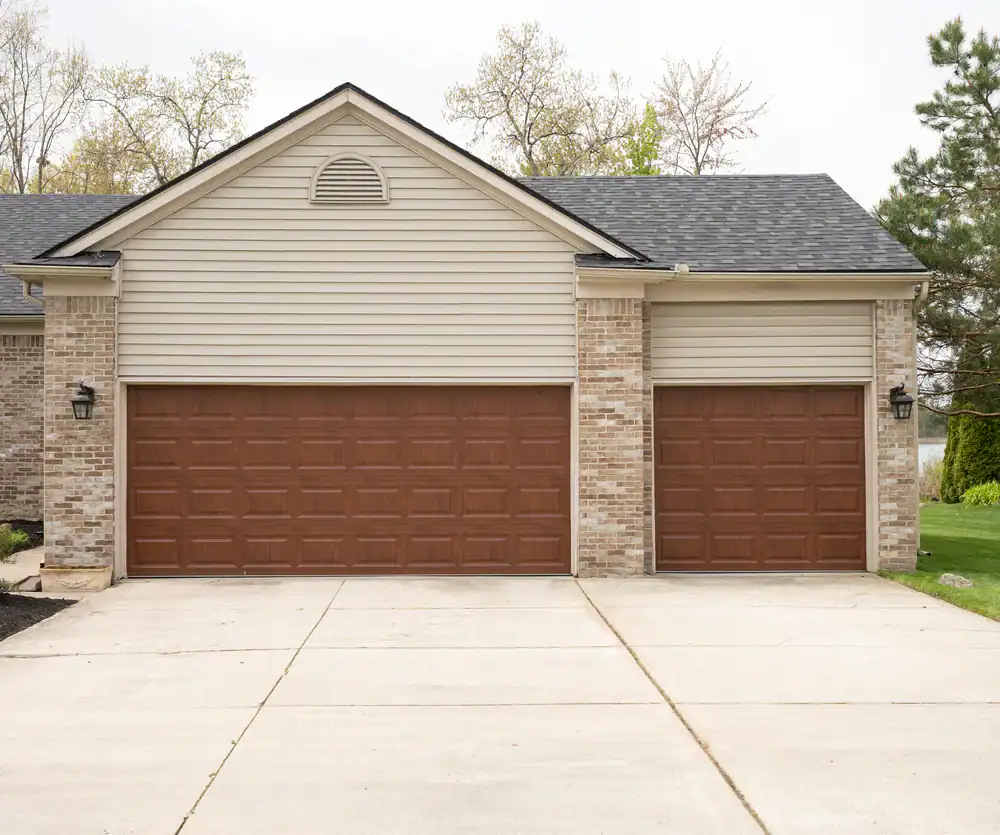
Most residential driveway installations take between three and five days from excavation to completion, depending on size and material. Asphalt driveways are typically faster—often completed in two to three days once the base is prepared. Concrete needs additional curing time, so you’re looking at closer to a week before you can drive on it.
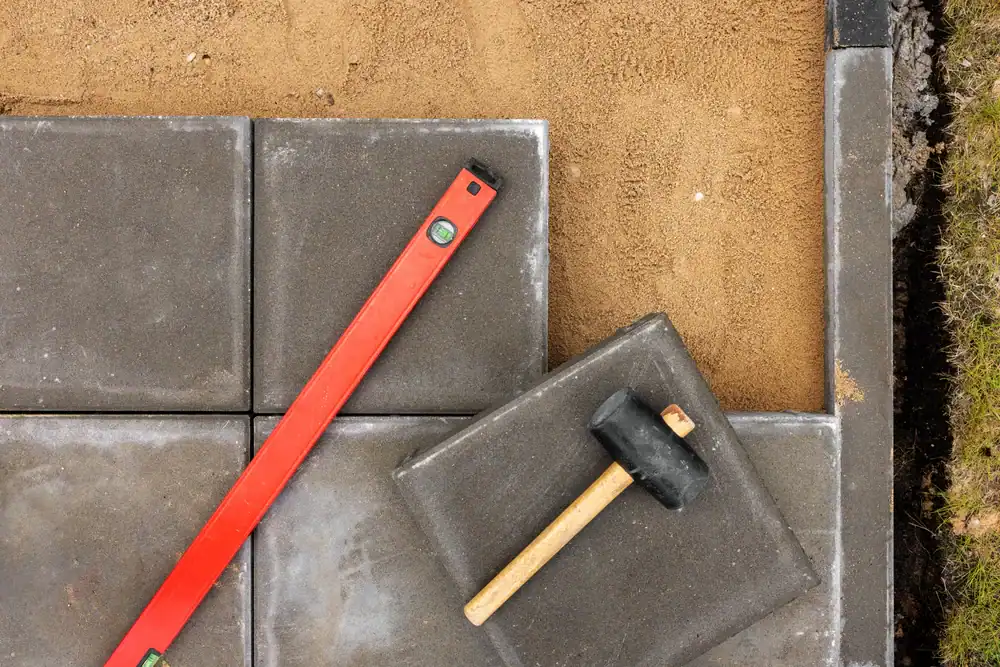
Paver installations take longer because of the precision required. Each paver needs to be set and leveled individually, and edges need to be secured properly. Weather can also affect the timeline, especially if we’re dealing with rain during excavation or base work.
We’ll give you a realistic timeline during the estimate. If there are complications—like needing to address drainage issues or remove more material than expected—we’ll let you know before it affects the schedule.
Most driveway failures come down to three things: poor base preparation, inadequate drainage, or soil movement. If the base isn’t compacted correctly or if the wrong materials are used, the driveway will settle unevenly. Water is the other major culprit—when it pools or seeps under the surface, it erodes the base and creates voids.
Long Island soil can be tricky. Some areas have clay-heavy soil that expands and contracts with moisture. Others have sandy soil that drains well but doesn’t provide stable support without proper base layers. We test and prepare for these conditions during installation.
You can’t prevent every crack—concrete will develop some hairline cracks over time, and asphalt will eventually need maintenance. But proper installation with the right base depth, correct grading, and attention to drainage will give you decades of performance instead of problems within the first five years. Regular maintenance like sealing asphalt and filling minor cracks before they spread also makes a significant difference.
Asphalt driveways typically run $7 to $15 per square foot installed, so a standard two-car driveway (about 600 square feet) costs between $4,200 and $9,000. Concrete costs more upfront—usually $10 to $18 per square foot—but requires less maintenance over its lifespan.
Paver driveways are the most expensive option, ranging from $15 to $30 per square foot depending on the paver style and pattern complexity. Custom elements like cobblestone aprons, Belgian block borders, or brick accents add to the cost but also significantly improve curb appeal.
The final price depends on your property’s specific conditions. If we need to remove a large amount of old material, address drainage problems, or work around landscaping or utilities, that affects the scope. We provide free estimates and break down exactly what you’re paying for. We’ll also beat any written estimate from a licensed, insured contractor doing comparable work—we’re not interested in being the cheapest option, but we won’t be undersold on quality work.
Asphalt performs well in Long Island’s climate because it’s flexible enough to handle freeze-thaw cycles without cracking as easily as concrete. It does require maintenance—you’ll need to seal it every few years and fill cracks as they appear—but it’s cost-effective and durable when maintained properly.
Concrete is more rigid, which means it can crack if the ground shifts or if water gets underneath and freezes. However, it holds up well to salt and doesn’t need sealing as frequently. It’s a good choice if you’re willing to pay more upfront for lower long-term maintenance.
Pavers are the most resilient option for our climate. Because they’re individual units, they can shift slightly with ground movement without cracking. If one paver does crack or stain, you can replace just that piece instead of patching or resurfacing the entire driveway. They handle salt, freeze-thaw cycles, and heavy loads without the same deterioration you see with asphalt or concrete. The trade-off is higher installation cost and the need to occasionally re-sand joints.
It depends on what’s failing and why. If you have a few cracks and the base is still solid, repairs can buy you several more years. We handle sinking driveway repair in Coram, NY by lifting and releveling settled sections, and we fix cracked concrete driveways by routing out damaged areas and filling them properly.
If your driveway has widespread cracking, multiple sunken areas, or drainage problems that are causing ongoing damage, replacement is usually the better investment. Patching a failing driveway is like putting a bandage on a broken bone—it might look better temporarily, but the underlying problem is still there.
We’ll tell you honestly whether repair or replacement makes more sense for your situation. If the base is compromised or if water is consistently pooling and causing damage, repairs won’t last. But if the structure is sound and you’re just dealing with surface wear, we can extend the life of your driveway without the cost of full replacement. We’re not in the business of selling you work you don’t need.
Yes, and we address them before we install anything. Poor drainage is one of the main reasons driveways fail prematurely. If water pools on your driveway or runs toward your foundation, we need to fix the grading before we lay new material.
Driveway drainage solutions in Long Island often involve regrading the base to create proper slope, installing channel drains or catch basins in low spots, or redirecting runoff away from problem areas. Sometimes the issue is with how the driveway connects to the street or how water flows from your roof and landscaping.
We assess drainage as part of every estimate. If we see standing water, erosion patterns, or signs that water is getting under your current driveway, we’ll explain what’s causing it and what needs to happen to fix it. Ignoring drainage problems just means your new driveway will fail the same way your old one did. We make sure water goes where it’s supposed to go—away from your driveway and your foundation—so your investment actually lasts.
Other Services we provide in Coram