

Your driveway stops being something you worry about. No more standing water that freezes into a skating rink by morning. No more cracks that spread every winter because water got in and expanded when it froze.
You get a surface built for Long Island’s freeze-thaw cycles, not just poured and hoped for the best. Proper grading means water moves away from your foundation instead of pooling near your garage. The base is compacted correctly so you’re not dealing with sinking sections two years later.
And when spring comes, you’re not staring at salt damage that’s eaten through the top layer. You’re looking at a driveway that still looks clean, drains properly, and adds value to your property instead of becoming another expensive problem you didn’t budget for.
We’ve spent over 15 years working on Long Island homes. We started with chimneys and exterior masonry, which means we already understand how coastal weather affects concrete, brick, and stone.
We’re not a crew that shows up, pours, and disappears. We’re licensed, insured, and we’ve seen what happens when drainage isn’t handled right or when someone skips proper base prep to save a few hours. Those shortcuts cost you thousands later.
East Islip homeowners deal with specific challenges: salt air, heavy snow, and soil that shifts more than people realize. We account for that in every job, from material selection to how we grade for drainage. You’re not getting a generic install. You’re getting a driveway built for this exact climate.
We start with an on-site estimate. You show us the space, we assess the current condition, talk through drainage issues, and go over material options: concrete, asphalt, pavers, Belgian block borders, cobblestone aprons. We’re not pushing one over the other. We’re telling you what works best for your situation and budget.
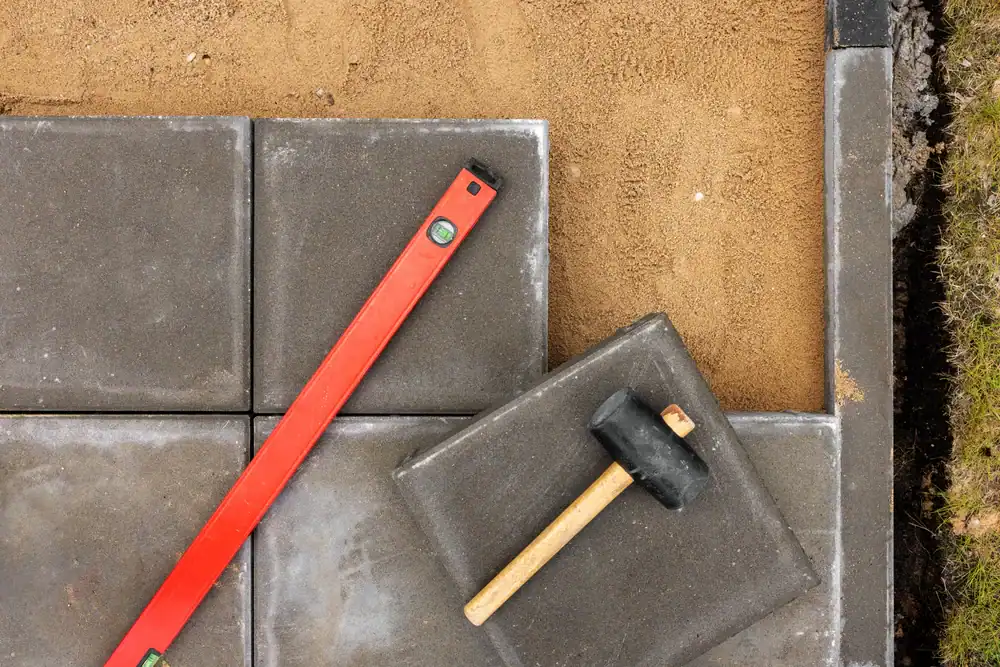
Once you’re ready to move forward, we handle excavation and base prep. This is where most problems start if it’s done wrong. We remove the old surface, grade for proper drainage, and compact the base so it won’t shift or settle unevenly. If there’s a drainage problem, we fix it now, not after the driveway is poured.
Then we install. Whether it’s concrete driveway installation in Suffolk County, asphalt, or a custom paver layout, the process is clean and efficient. We’re usually done within a few days depending on size. You’ll know the cure time, when you can park on it, and what maintenance looks like going forward. No surprises.
Ready to get started?
You’re getting full excavation and removal of the old surface if needed. We’re not paving over problems. Base prep includes grading and compaction to prevent settling, plus drainage solutions if water’s been pooling or running toward your foundation.
Material options cover concrete, asphalt, pavers, brick driveway replacement in East Islip, cobblestone driveway aprons, and Belgian block borders. We’ll walk you through what each one costs, how long it lasts, and what maintenance looks like. Concrete gives you decades of life with minimal upkeep. Asphalt is more affordable upfront but needs sealcoating every few years. Pavers offer flexibility in design and are easier to repair if one section gets damaged.
For Long Island specifically, we’re factoring in freeze-thaw cycles and salt exposure. That means using sealants that actually protect against winter damage and installing with proper joint spacing so concrete doesn’t crack when temperatures swing. If you’ve got sinking driveway repair needs or fixing cracked concrete driveways is part of the job, we’re addressing the root cause, not just patching the surface. Driveway drainage solutions on Long Island aren’t optional. They’re the difference between a driveway that lasts 20 years and one that needs major work in five.
It depends on the material and how well it’s installed. Concrete driveways typically last 30 to 40 years if they’re poured correctly and sealed regularly. Asphalt usually gives you 15 to 20 years, sometimes longer if you stay on top of sealcoating every two to three years.
But here’s the thing: Long Island winters are brutal on driveways. Freeze-thaw cycles, road salt, and heavy snow all accelerate wear. If the base wasn’t compacted right or drainage wasn’t addressed during installation, you’re looking at problems much sooner. Cracks, sinking sections, and surface deterioration can show up in just a few years when the work isn’t done properly.
That’s why the install matters more than the material. A cheap concrete pour without proper prep won’t outlast a well-installed asphalt driveway. You want someone who’s accounting for local conditions, not just following a generic process.
Concrete is the most durable option for Long Island. It handles freeze-thaw cycles better than asphalt, lasts longer, and requires less maintenance over time. You’ll pay more upfront, but you’re looking at 30-plus years of life with minimal upkeep beyond occasional sealing.
Asphalt is a solid middle-ground choice. It’s more affordable initially and still holds up well if you sealcoat it every few years. The tradeoff is more maintenance and a shorter lifespan, usually 15 to 20 years. It’s also more vulnerable to salt damage, which is a real issue here.
Pavers give you the most design flexibility and they’re easier to repair if one section gets damaged. You can pull up individual pavers and replace them without redoing the whole driveway. They cost more than asphalt but less than high-end concrete finishes. The key with pavers is making sure the base is perfect. If it shifts, you’ll see uneven sections and gaps.
There’s no universal “best” material. It comes down to your budget, how long you plan to stay in the house, and how much maintenance you’re willing to do. We’ll walk you through what makes sense for your specific situation.
For a standard two-car driveway, you’re typically looking at $3,000 to $8,000 for asphalt and $5,000 to $12,000 for concrete. Pavers run higher, usually $8,000 to $18,000 depending on the pattern and materials. Those are ballpark numbers. Your actual cost depends on size, material, site conditions, and whether we’re dealing with drainage issues or significant excavation.
If your current driveway is sinking or has major cracks, that adds to the cost because we need to address what’s causing the problem. Sometimes that means regrading, adding drainage, or removing more base material than expected. We won’t know for sure until we see the site.
The cheapest quote isn’t always the best deal. If someone’s significantly undercutting everyone else, they’re either skipping steps or using subpar materials. You’ll pay for it later in repairs. A properly installed driveway costs more upfront but saves you thousands in premature replacement and emergency fixes. We give you a detailed estimate after seeing your property so you know exactly what you’re paying for and why.
Yes, but it depends on what’s causing the problem. If you’ve got minor surface cracks and the base is still solid, we can repair those sections without replacing the whole driveway. We’ll clean out the cracks, seal them properly, and address any drainage issues that are making it worse.
Sinking sections are trickier. If part of your driveway has dropped or you’ve got noticeable low spots where water pools, that usually means the base has failed. Soil underneath has shifted, washed out, or wasn’t compacted correctly to begin with. In those cases, patching the surface won’t fix anything. You need to remove that section, recompact the base, and reinstall properly.
For concrete, we can sometimes lift sunken slabs using mudjacking or polyurethane foam injection. That’s less invasive than full replacement and works well if the concrete itself is still in good shape. But if the slab is cracked badly or the base is too far gone, replacement is the only real solution. We’ll assess what’s happening and tell you honestly whether repair makes sense or if you’re better off replacing it now instead of throwing money at a temporary fix.
Seal it. Concrete should be resealed every two to three years, asphalt every two years. Sealant creates a barrier against water, salt, and freeze-thaw damage. It’s the easiest and cheapest way to extend your driveway’s life, especially on Long Island where salt exposure is constant all winter.
Go easy on the salt. Use it sparingly and sweep off excess once ice melts. Road salt is corrosive. It eats through sealant, pits concrete, and accelerates asphalt deterioration. Sand or calcium chloride are gentler alternatives if you need traction without the same level of damage.
Fix cracks immediately. Small cracks turn into big problems fast. Water gets in, freezes, expands, and makes the crack worse with every freeze-thaw cycle. If you catch it early, it’s a simple repair. If you wait, you’re looking at replacing whole sections. Keep your driveway clear of standing water. Make sure it’s draining properly away from the surface. Pooling water is a red flag that something’s wrong with the grading, and it’ll cause damage over time if it’s not addressed.
Usually, yes. Most driveway projects in East Islip and throughout Suffolk County require a building permit, especially if you’re expanding the driveway, changing the grade, or altering drainage. The town wants to make sure water runoff isn’t directed toward neighboring properties or the street.
Permit requirements vary depending on the scope of work. A simple repaving job over the same footprint might not need one, but a full replacement, expansion, or new installation almost always does. There are also regulations around impervious surfaces and stormwater management that affect how much of your property can be paved.
We handle permit applications as part of the process. We know what the town requires, what documentation they need, and how to keep the project moving without delays. Skipping permits might seem like a shortcut, but it causes problems if you ever sell the house or if a neighbor complains. Inspectors can make you rip it out and start over, which costs way more than just doing it right the first time. We make sure everything’s up to code so you don’t have to worry about it later.
Other Services we provide in East Islip