
Water doesn’t just sit on your driveway and evaporate. It finds cracks, seeps down, freezes, and turns small problems into foundation nightmares that cost $10,000 to $40,000 to fix.
Proper drainage isn’t an upsell. It’s the difference between a driveway that lasts 25 years and one that needs emergency repairs by spring. When water flows away from your foundation instead of toward it, you’re not dealing with basement seepage, settling, or the kind of structural damage that makes you wish you’d done it right the first time.
You get a surface that handles Long Island’s humid summers and icy winters without crumbling. You get materials chosen for coastal conditions, not just whatever’s cheapest. And you get to stop worrying about whether this winter will be the one that destroys your driveway.
We’re a family-owned company that’s fully licensed, insured, and bonded. We’ve built our reputation in Farmingdale, NY and Nassau County by showing up on time, finishing on budget, and being honest about what your property actually needs.
We’re not the guys who take your money and disappear by spring. We’re the ones who understand that Long Island’s coastal moisture and temperature swings create specific challenges that require specific solutions. That’s why we’ve earned an A+ rating with the BBB and why customers keep recommending us.
You’re not hiring a company that’s learning on your driveway. You’re hiring people who’ve seen what works and what fails in this exact climate.
First, we look at your property and give you a free estimate. We’re checking drainage patterns, soil conditions, and how water moves across your driveway. We’re also looking at what’s causing the damage you’re seeing now so we don’t just cover up problems.
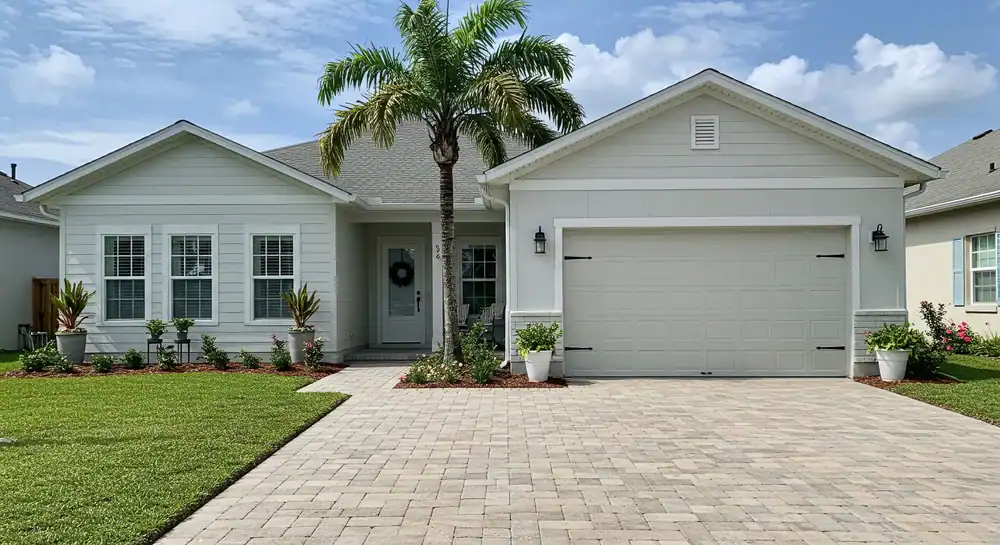
Then we talk through your options. Asphalt runs $5-9 per square foot and needs resealing every few years. Concrete costs $7-14 per square foot and handles freeze-thaw cycles better. Brick pavers are $18-23 per square foot but can last 50+ years with almost no maintenance. We’ll tell you what makes sense for your budget and how long you plan to stay in your home.
Once you’re ready, we handle permits and prep work. The installation itself usually takes a day, and we leave your property as clean as we found it. You’re not dealing with a crew that drags the job out or leaves a mess. You’re getting professional work that’s done right the first time.
Ready to get started?
You’re getting proper base preparation, which is where most cheap jobs fail. We excavate to the right depth, compact the subbase, and make sure water has somewhere to go that isn’t your foundation.
You’re getting materials chosen for Nassau County’s climate. That means understanding how salt air affects concrete, how freeze-thaw cycles impact asphalt, and why proper drainage matters more here than in other parts of the country. We’re not using the same approach we’d use in Arizona.
You’re also getting options like Belgian block borders, cobblestone driveway aprons, and decorative elements that actually add value. But we’re not pushing upgrades you don’t need. If your priority is function over aesthetics, we’ll tell you where to spend your money and where to save it.
And if you’re dealing with a sinking driveway or fixing cracked concrete driveways, we’re addressing the cause, not just the symptom. Driveway drainage solutions in Long Island aren’t optional—they’re the foundation of everything else.
It depends on the material and whether it was installed correctly. Asphalt driveways typically last 15-20 years if you reseal them every 3-5 years and fix cracks as they appear. Concrete lasts 25-30 years and handles our freeze-thaw cycles better than asphalt, but it costs more upfront.
Brick pavers can last 50-75 years because they’re individual units that can shift with ground movement without cracking. They’re the most expensive option initially, but they need almost no maintenance and you can replace individual pavers if one gets damaged.
The bigger factor is drainage. A poorly installed driveway with bad drainage will fail in under 10 years regardless of material. Long Island’s coastal moisture and temperature swings are brutal on any surface that doesn’t shed water properly. That’s why we focus on drainage first—it’s what actually determines how long your driveway lasts.
Water is the main culprit. It seeps into small cracks, freezes when temperatures drop, and expands. That expansion makes cracks bigger, which lets in more water, which causes more damage. It’s a cycle that accelerates every winter.
Sinking happens when the base underneath your driveway wasn’t compacted properly or when water washes away the supporting soil. Poor drainage makes this worse because water pools, saturates the ground, and undermines the foundation. You’ll see low spots where water collects, and those spots sink further over time.
Nassau County’s freeze-thaw cycles are especially harsh because we get enough cold weather to freeze water but enough mild days to thaw it repeatedly. That constant expansion and contraction is harder on driveways than consistent cold. Add in de-icing chemicals that eat away at concrete and asphalt, and you’re looking at a perfect storm for driveway damage. Fixing it means addressing drainage and using materials that can handle these conditions.
Asphalt typically runs $5-9 per square foot installed. For an average two-car driveway (about 600 square feet), you’re looking at $3,000-$5,400. You’ll need to reseal it every 3-5 years at $1-2 per square foot, so factor in ongoing maintenance costs.
Concrete costs $7-14 per square foot, so that same 600-square-foot driveway runs $4,200-$8,400. It needs less maintenance than asphalt and handles freeze-thaw cycles better, but cracks are harder to repair and more visible.
Brick pavers are $18-23 per square foot, putting a 600-square-foot driveway at $10,800-$13,800. That’s a bigger upfront investment, but they can last 50+ years with minimal maintenance. Individual pavers can be replaced if damaged, and they don’t crack like concrete or develop potholes like asphalt.
These prices assume proper drainage and base preparation. If your property has drainage issues or needs significant excavation, costs go up. But skimping on drainage to save money now means you’ll pay more later when you’re fixing foundation damage or replacing a failed driveway.
It depends on how much damage there is and what’s causing it. Small cracks in asphalt can be filled, and minor settling can sometimes be corrected by mudjacking or polyurethane foam injection. If the damage is isolated to one area and the rest of the driveway is solid, repair might make sense.
But if you’ve got widespread cracking, multiple low spots, or drainage problems, repair is just delaying the inevitable. You’ll spend money patching problems that keep coming back because the underlying issues haven’t been fixed. That’s especially true if the base wasn’t installed correctly or if water is undermining the foundation.
Here’s the honest assessment: if more than 30% of your driveway is damaged, replacement usually makes more financial sense than ongoing repairs. And if drainage is the root cause, no amount of patching will solve it. We’ll look at your specific situation and tell you whether repair is worth it or whether you’re better off replacing it and doing it right. We’re not going to sell you a replacement if a repair will actually work, but we’re also not going to take your money for a patch job that won’t last.
Look for standing water after it rains. If you’ve got puddles that stick around for hours or days, water isn’t draining properly. Check where that water is flowing when it finally does drain—if it’s moving toward your foundation or pooling against your garage, you’ve got a problem.
Cracks that run parallel to your house or garage often indicate settling caused by water washing away the base material. Sinking sections, especially near the edges or where the driveway meets your garage, are another red flag. And if you’re seeing erosion around the driveway or water stains on your foundation, drainage is definitely an issue.
In Nassau County, drainage problems compound fast because of our freeze-thaw cycles. Water that pools and freezes expands, making cracks bigger and washing away more base material. By spring, you’re looking at potholes and structural damage that costs thousands to fix. The time to address drainage is before it destroys your driveway and threatens your foundation. If you’re seeing any of these signs, get someone out to assess it before next winter makes it worse.
Yes, most driveway work in Farmingdale requires a permit from the Town of Oyster Bay. You’ll need one if you’re installing a new driveway, expanding an existing one, or changing the material. Even some repair work requires permits if it involves significant excavation or changes to drainage.
The permit process ensures your driveway meets local building codes, especially regarding drainage and setbacks. Inspectors want to make sure water isn’t flowing onto neighboring properties or into the street, and that your driveway isn’t encroaching on easements or right-of-ways.
We handle permits as part of the job. You’re not filling out paperwork or dealing with the town building department—we take care of it. And we make sure the work meets code so you’re not dealing with violations or problems when you sell your house. Some contractors skip permits to save time or avoid inspections, but that leaves you holding the bag if there’s ever an issue. We do it right from the start.
Other Services we provide in Farmingdale