
You’re tired of looking at cracks that keep spreading. Tired of water pooling where it shouldn’t. Tired of wondering when the next pothole will show up after another Long Island winter.
Here’s what changes when your driveway is installed right. Water drains where it’s supposed to go because the base was built to handle Great River’s freeze-thaw cycles and coastal conditions. The surface stays level because we excavate to stable soil and don’t cut corners with the foundation. You stop worrying about what your driveway says about your home.
A properly installed paver driveway in Great River, NY can last 50-plus years. That’s not marketing talk—that’s what happens when interlocking pavers flex with ground movement instead of cracking like concrete. When one paver needs replacing, you replace one paver. When concrete cracks, you’re looking at the whole slab.
Your driveway either adds value to your property or it doesn’t. In a market where Great River homes average $1.6 million, a quality driveway installation can add $10,000 in perceived value. More importantly, it stops being something you apologize for.
We started with chimneys and masonry work throughout Suffolk County. Over 15 years, we’ve learned how Long Island’s weather beats up everything from rooflines to driveways. Great River’s coastal location makes those problems worse—salt air, temperature swings, sandy soil that shifts.
We’re the company homeowners call when they want it done right the first time. Every project gets managed by the owner because your driveway creates the first impression of your home. We show up when we say we will, we answer the phone, and we don’t disappear after the deposit clears.
Most of our driveway work in Great River, NY comes from referrals. That happens when you leave properties cleaner than you found them and deliver what you promised without excuses.
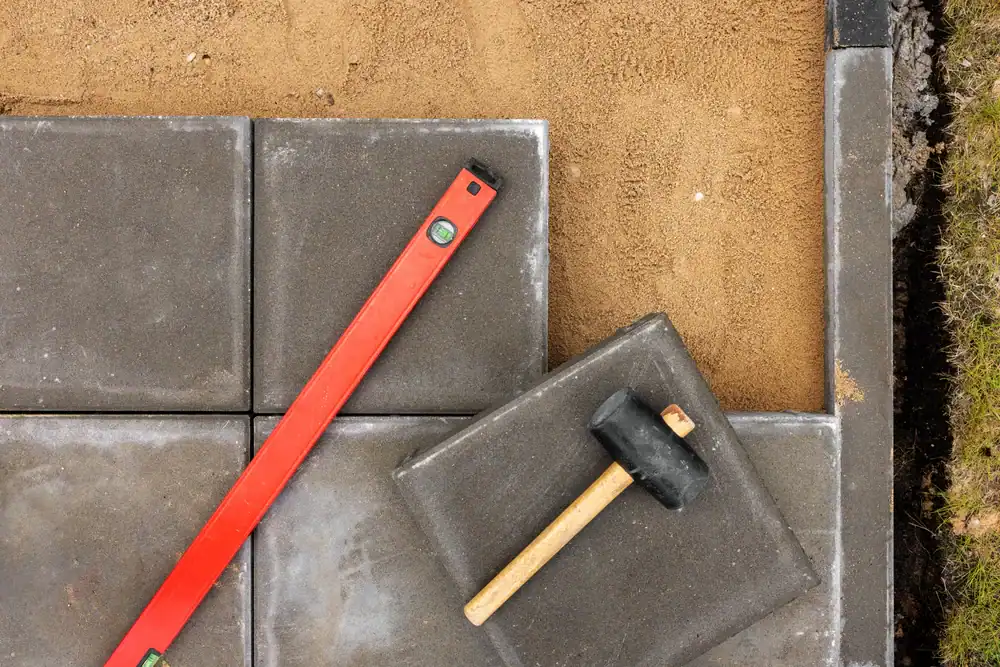
First, we excavate to stable soil. That means going 8-10 inches deep in most Great River properties because Suffolk County’s sandy soil needs proper base preparation. We don’t lay pavers over failing concrete or skip the foundation work. If the base isn’t right, nothing else matters.
Next comes the graded stone base in compacted layers. This is where drainage gets handled—before you ever see a paver. Water needs somewhere to go during Long Island’s storms and spring thaws. We slope everything correctly and build the foundation to handle freeze-thaw cycles that destroy cheaper installations.
Then we install the pavers with proper edge restraints and polymeric sand. Belgian block borders go in if you want that professional transition and added curb appeal. The interlocking design means your driveway flexes with ground movement instead of cracking.
Most residential driveway projects in Great River, NY take three to five days. We’re not rushing to get to the next job. We’re building something that’ll outlast concrete by decades and handle whatever weather comes next. You’ll know the timeline upfront, and we follow town of Islip guidelines for materials and drainage.
Ready to get started?
When we install a driveway in Great River, NY, you’re getting complete excavation to stable soil, proper base preparation with compacted gravel layers, and pavers designed to handle coastal weather. We’re talking about materials that excel in freeze-thaw conditions because of their flexible, interlocking design.
Belgian block borders aren’t just aesthetic—they prevent material migration and create clean transitions that add serious curb appeal. Cobblestone driveway aprons give you that timeless look while serving a functional purpose. These details matter in a community where homes reflect the owner’s standards.
Drainage solutions get built into the foundation because Long Island’s variable climate demands it. Temperature swings from below freezing to over 90°F put stress on every driveway material. We handle that with proper slope, base preparation, and materials proven to last in Great River’s specific conditions.
You’re also getting realistic expectations. We’re not the cheapest driveway contractors in Nassau County, and that’s intentional. Quality base preparation costs more upfront. Premium pavers cost more than basic asphalt. But you’re investing in fewer repairs, no recurring cracks, and a driveway that looks better as it ages instead of falling apart. The ROI on a properly installed driveway runs 60-80% in property value increase. More importantly, you stop dealing with sinking slabs and safety hazards every winter.
A properly installed paver driveway in Great River, NY lasts 50-plus years. That’s significantly longer than concrete or asphalt because of how pavers handle Long Island’s freeze-thaw cycles.
Concrete cracks when water seeps in, freezes, and expands. Asphalt develops alligator cracking when the base fails. Pavers flex with ground movement because they’re individual units, not one solid slab. When ground shifts or frost heaves happen, the interlocking design absorbs that movement without cracking.
The longevity depends entirely on base preparation. If we excavate to stable soil, build proper graded stone layers, and handle drainage correctly, your driveway will outlast cheaper installations by decades. If someone lays pavers over failing concrete or skips the foundation work, you’ll have problems within years.
Great River’s coastal location and sandy soil make proper installation even more critical. We see driveways fail all the time because contractors rushed the base work or didn’t account for how water moves through this area. When it’s done right, you’re looking at a lifetime installation that requires minimal maintenance and can have individual pavers replaced if ever needed.
Freeze-thaw cycles and poor base preparation cause most driveway failures in Great River, NY. Long Island’s temperature swings are brutal on concrete and asphalt. Water gets into small cracks, freezes, expands, and makes those cracks bigger. That cycle repeats every winter until you’ve got potholes and structural damage.
Sinking happens when the subgrade wasn’t compacted properly or when soil erodes underneath. Suffolk County’s sandy soil shifts more than other areas, which means the base needs extra attention during installation. If contractors skip proper excavation or don’t build adequate stone base layers, the driveway will settle unevenly and create those dangerous lips and cracks.
Drainage problems accelerate everything. When water pools on your driveway or doesn’t have anywhere to go, it saturates the base and weakens the foundation. Coastal weather in Great River makes this worse—you’re dealing with salt air, seasonal storms, and ground that stays wet longer than inland properties.
The fix isn’t patching cracks or sealing asphalt every few years. Those are temporary bandages on structural problems. The fix is excavating to stable soil, building a proper foundation with correct drainage, and using materials designed to handle freeze-thaw cycles. That’s why we recommend pavers for Great River installations—they’re built for these exact conditions.
Driveway installation costs in Great River, NY depend on size, materials, and how much excavation is needed. Asphalt runs $5-8 per square foot. A standard two-car driveway (24×40 feet) costs $4,600-$8,100 for basic blacktop. Paver installations cost more upfront but last significantly longer.
Here’s what affects the price: how deep we need to excavate to reach stable soil, how much base material is required, whether we’re removing old concrete or asphalt, and what drainage solutions are needed for your specific property. Great River’s sandy soil often requires more base preparation than other areas, which adds to material and labor costs.
Belgian block borders, cobblestone aprons, and premium paver selections increase the total. But you’re also increasing property value and eliminating recurring maintenance costs. A quality paver driveway adds up to $10,000 in perceived market value in Great River’s real estate market, where homes average $1.6 million.
The real cost comparison isn’t just installation price—it’s what you spend over the driveway’s lifetime. Asphalt needs sealing every few years and replacement every 15-20 years. Concrete cracks and requires full slab replacement when it fails. Pavers last 50-plus years with minimal maintenance, and individual units can be replaced without redoing the entire driveway. We give you realistic pricing upfront with no surprises, and we explain exactly what you’re paying for.
We can fix sinking driveway issues and cracked concrete in Great River, NY, but the right solution depends on what’s causing the problem. If your driveway is sinking because of poor base compaction or soil erosion, patching won’t solve anything. You need to address the foundation.
For driveways with extensive cracking—that spider-web or alligator pattern across the surface—the base has failed. Sealing those cracks or resurfacing is throwing money at a structural problem. The fix is excavation, proper base preparation, and reinstallation with materials that handle Long Island’s freeze-thaw cycles.
Sometimes we can repair sections if the damage is localized and the rest of the base is solid. But most driveways we see in Great River with serious cracking or sinking need complete replacement. That sounds like bad news, but it’s actually good news—you’re fixing the problem once instead of paying for repairs every few years.
Paver driveways make future repairs easier. If one section settles or a paver cracks, we lift that area, adjust the base, and replace the pavers. The rest of your driveway stays intact. With concrete, any significant repair means replacing entire sections or the whole slab. We’ll assess your specific situation honestly and tell you whether repair makes sense or whether you’re better off with a proper installation that solves the drainage and base issues causing your current problems.
Driveway installation in Great River, NY typically requires following town of Islip guidelines for materials and drainage, and permits may be needed depending on the scope of work. If you’re replacing an existing driveway within the same footprint, the requirements differ from expanding your driveway or changing drainage patterns.
Suffolk County has specific regulations about stormwater management and how water runoff gets handled. Your driveway can’t direct water onto neighboring properties or into the street in ways that violate local codes. Proper drainage solutions need to be part of the installation plan, especially in Great River where coastal weather and sandy soil create unique challenges.
We handle permit requirements as part of the project. We know what Islip requires, what documentation needs to be submitted, and how to ensure your installation meets code. You don’t need to figure out the bureaucracy—that’s part of what you’re paying us for.
The bigger issue isn’t the permit—it’s making sure your driveway installation is done right regardless of what minimum code requires. Code is the floor, not the ceiling. We build driveways in Great River, NY to handle freeze-thaw cycles, coastal conditions, and Long Island weather that exceeds basic permit requirements. Your driveway needs to last decades, not just pass inspection. We make sure it does both.
Pavers outperform concrete and asphalt in Great River, NY because of how they handle freeze-thaw cycles and coastal weather. Concrete cracks when water penetrates and freezes. Asphalt develops that alligator cracking pattern when the base fails or temperature swings stress the material. Pavers flex with ground movement because they’re individual interlocking units, not one solid surface.
When ground shifts from frost heaves or soil settlement—common in Suffolk County’s sandy soil—pavers absorb that movement without cracking. If a paver does crack or stain, you replace that one unit. When concrete cracks, you’re looking at replacing entire sections or the whole driveway. When asphalt fails, you’re repaving everything.
Pavers also look better as they age instead of deteriorating. Concrete stains, cracks, and eventually needs replacement. Asphalt fades and requires sealing every few years. Quality pavers maintain their appearance for decades and can even be lifted, cleaned, and reinstalled if needed.
The upfront cost is higher—no question. But the lifetime cost is lower because you’re not paying for recurring repairs, sealcoating, or replacement every 15-20 years. In Great River’s real estate market, a quality paver driveway adds significant curb appeal and property value. More importantly, it handles Long Island’s brutal winters and coastal conditions better than any other driveway material. That’s why we recommend pavers for homeowners who want to fix their driveway problem once instead of dealing with it every few years.
Other Services we provide in Great River