
You’re tired of resealing asphalt every few years. Tired of cracks spreading after one bad winter. Tired of water pooling near your foundation because the slope wasn’t done right the first time.
A properly installed driveway in Greenvale, NY doesn’t just look better. It drains correctly, holds up through temperature swings, and doesn’t need constant patching. That means fewer repair calls, no emergency fixes after storms, and a surface that actually adds value when you sell.
Whether you’re replacing a failing asphalt driveway or starting fresh with pavers, the right materials and installation process make the difference between a 15-year headache and a 50-year investment. You shouldn’t have to think about your driveway every spring. When it’s done right, you won’t.
Ageless Chimney started with masonry and chimney work, but homeowners in Nassau County kept asking us about driveways, patios, and walkways. So we expanded. Now we handle the full scope: paver driveways, concrete installations, brick replacements, Belgian block borders, and drainage repairs across Greenvale, NY and surrounding areas.
Every job is managed by the owners. You’re not getting a different crew every day or a project manager who’s never held a trowel. We’re licensed, insured, and A-rated with the BBB. We also offer true 24-hour emergency service, which matters when a sinking driveway or drainage failure threatens your foundation.
Greenvale’s mix of older homes and newer construction means we see everything: driveways installed decades ago that need full replacement, newer installs done wrong that are already failing, and properties where the original contractor never accounted for Long Island’s soil conditions. We fix all of it.
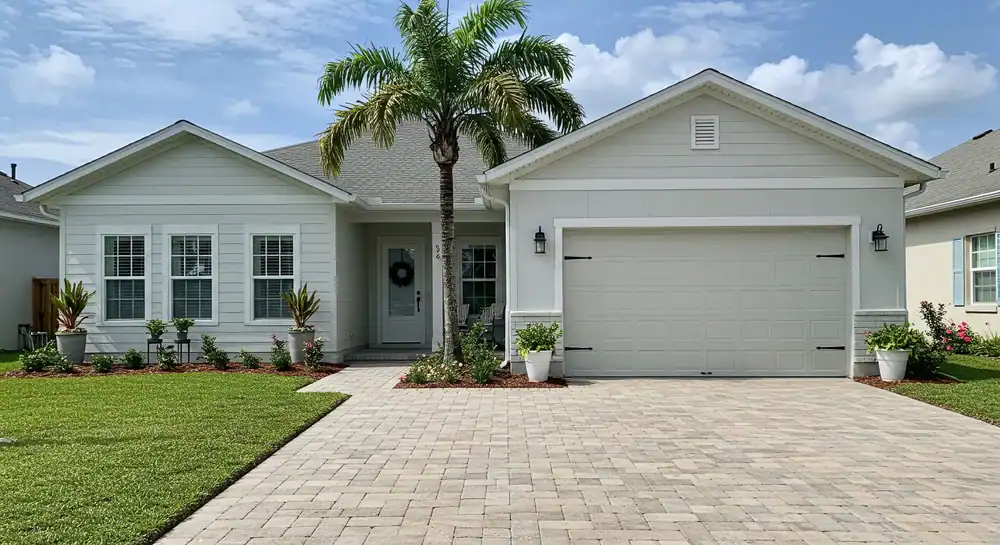
First, we assess your property’s drainage, soil type, and slope. Greenvale sits on varied ground—some areas have sandy soil, others have clay. That affects how we prep the base. If water’s pooling now, we identify where it’s going and design proper runoff before we touch the surface.
Next, we excavate and build the sub-base. This is where most driveway failures start. If the base isn’t compacted correctly or the materials are wrong for your soil, you’ll see settling and cracks within a few years. We use the right aggregate depth and compaction for Long Island conditions, not a one-size-fits-all approach.
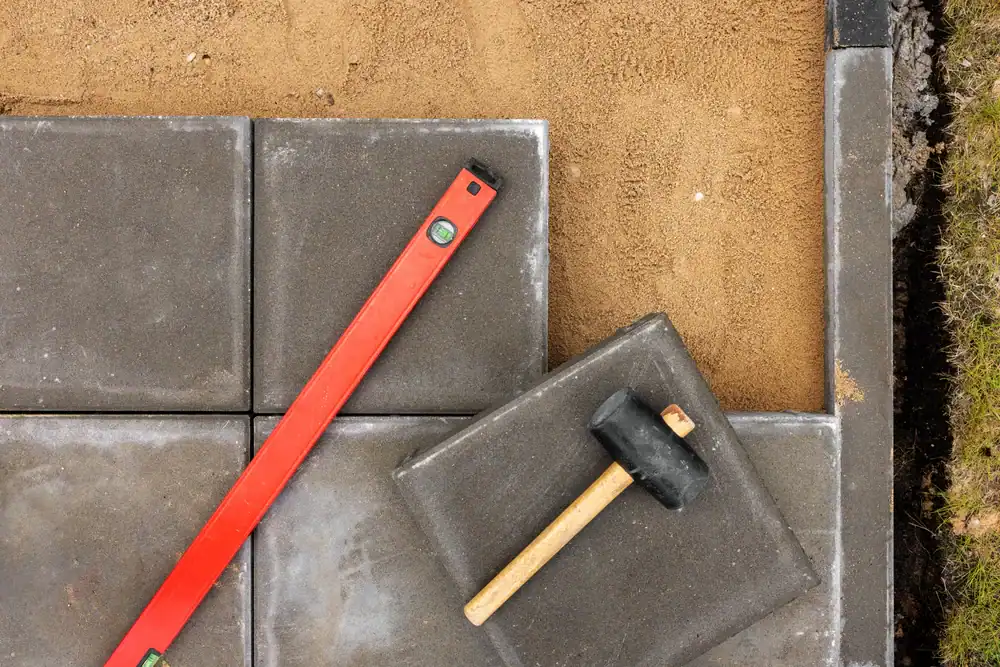
Then we install your surface—pavers, concrete, or brick—with attention to joints, borders, and edge restraints. For paver driveways in Greenvale, NY, we ensure each unit can move independently during freeze-thaw cycles, which prevents the large-scale cracking you see in solid concrete. For poured concrete, we control curing conditions and use proper reinforcement.
Finally, we test drainage, clean up completely, and walk you through maintenance. You’ll know what to expect in year five, year ten, and beyond. No surprises.
Ready to get started?
We handle full driveway installations, partial replacements, and repairs. That includes paver driveways, poured concrete, brick driveways, cobblestone aprons, and Belgian block borders. If you’re dealing with a sinking driveway, we’ll assess whether you need a full replacement or if we can stabilize and relay the surface.
Drainage solutions are part of every job. In Nassau County, poor drainage is the number one cause of premature driveway failure. We install proper grading, channel drains, and catch basins where needed. If your current driveway is directing water toward your foundation or creating ice patches in winter, we fix that.
For fixing cracked concrete driveways, we evaluate whether the damage is surface-level or structural. Surface cracks can sometimes be sealed and resurfaced. But if you’re seeing alligator cracking or large sections settling, that’s base failure—and patching won’t solve it. We’ll tell you what’s worth repairing and what needs replacement.
Greenvale homeowners also ask about custom driveway replacement when they’re updating their property’s curb appeal. We work with brick patterns, paver colors, decorative borders, and apron designs that match your home’s style. The goal is a driveway that looks intentional, not like an afterthought.
Pavers typically last 50+ years with minimal maintenance. Asphalt driveways last 15 to 20 years and need resealing every 3 to 5 years. That resealing costs $1 to $2 per square foot, and you’ll still face cracks, potholes, and eventual replacement.
Pavers handle Long Island’s freeze-thaw cycles better because each unit moves independently. When the ground shifts or temperatures swing, asphalt cracks. Pavers flex. If one paver does crack, you replace that single unit—no visible patches, no mismatched sections.
The upfront cost is higher for pavers, but over 20 years, you’re spending less on maintenance and getting a surface that still looks good when you sell. Asphalt deteriorates visibly. Pavers don’t.
Freeze-thaw cycles and poor base preparation. Long Island’s weather swings above and below freezing constantly in winter. Water seeps into small cracks during the day, freezes overnight, expands, and makes the crack bigger. Repeat that a hundred times per season and you get structural failure.
If the sub-base wasn’t compacted correctly or the wrong materials were used, the driveway settles unevenly. That creates stress points where cracks start. Add in poor drainage—water sitting on or under the surface—and you’re accelerating the damage.
Some soil types in Greenvale also shift more than others. Clay soil expands when wet and contracts when dry. If your contractor didn’t account for that during installation, your driveway is moving with the ground. That’s why proper excavation depth, aggregate choice, and compaction matter more than the surface material.
Sometimes, yes. If the sinking is isolated to one section and the base is still solid elsewhere, we can lift and relay that area. For paver driveways, this is straightforward—we remove the affected pavers, add and compact base material, and reinstall them. For concrete, it’s more complicated.
Concrete driveways that are sinking usually need slab jacking or mudjacking, where we pump material underneath to lift the slab. But if the concrete is also cracked or the base has failed in multiple spots, lifting it won’t solve the problem. You’re just raising a broken slab.
We assess the cause of the sinking first. Is it soil erosion from poor drainage? Settling from inadequate compaction? Tree roots? Once we know why it’s sinking, we can tell you if a repair will hold or if you’re better off replacing that section. We’re not going to sell you a temporary fix if it won’t last.
Proper slope and drainage design before we install anything. Your driveway needs to slope away from your house and toward a drainage point—either the street, a drain, or a designated runoff area. We calculate the grade during the site assessment and build the base to match.
For properties where the natural slope doesn’t work, we install channel drains or catch basins. These collect water before it pools and direct it away from your foundation. In Greenvale, NY, where some lots are flatter, this is often necessary.
We also make sure the driveway’s surface is higher than the surrounding grade. If your lawn or garden beds are level with or above your driveway, water will run onto it instead of off it. That’s a common mistake we see with older installations. Fixing drainage isn’t just about the driveway itself—it’s about how water moves across your entire property.
Pavers flex with ground movement and temperature changes. Concrete doesn’t. That makes pavers more durable in freeze-thaw conditions. When water freezes under a concrete slab, it can crack the entire surface. When it freezes under pavers, each unit shifts slightly and then settles back. No cracking.
Concrete driveways are faster to install and initially cheaper. But once they crack—and they will—repairs are visible and often don’t match the original color. With pavers, you replace individual units without anyone noticing.
Concrete also requires more maintenance in Long Island’s climate. You’ll need to reseal it periodically to prevent water infiltration and surface degradation from salt and freeze-thaw cycles. Pavers don’t need sealing unless you want to enhance color, and even then, it’s optional. If you’re planning to stay in your Greenvale home long-term, pavers are the better investment.
It depends on size, material, and site conditions. A standard two-car paver driveway typically runs higher than asphalt but delivers better ROI. Concrete falls in the middle. Custom features like Belgian block borders, cobblestone aprons, or brick patterns add cost but also significantly boost curb appeal and resale value.
Site prep affects price more than most homeowners expect. If we’re removing an old driveway, dealing with drainage issues, or working with difficult soil, that adds labor and materials. Properties in Greenvale with clay soil or poor drainage require more base work than homes with sandy, well-draining soil.
We provide free estimates and break down exactly what you’re paying for—excavation, base materials, surface materials, labor, and any drainage work. We’ll also tell you what your options are at different price points. Some homeowners want the full custom install with decorative borders. Others want a durable, straightforward driveway that’ll last 30 years without fuss. Both are fine. We just make sure you know what you’re getting.
Other Services we provide in Greenvale