
You’ve probably noticed the cracks getting worse each spring. That’s what happens when water gets trapped under asphalt or concrete during Long Island winters—it freezes, expands, and breaks everything apart from underneath.
Here’s what changes when your driveway is built correctly from the start. No more standing water after storms because the grading actually works. No more embarrassing potholes when guests pull up. No more wondering if this winter will be the one that finally destroys it.
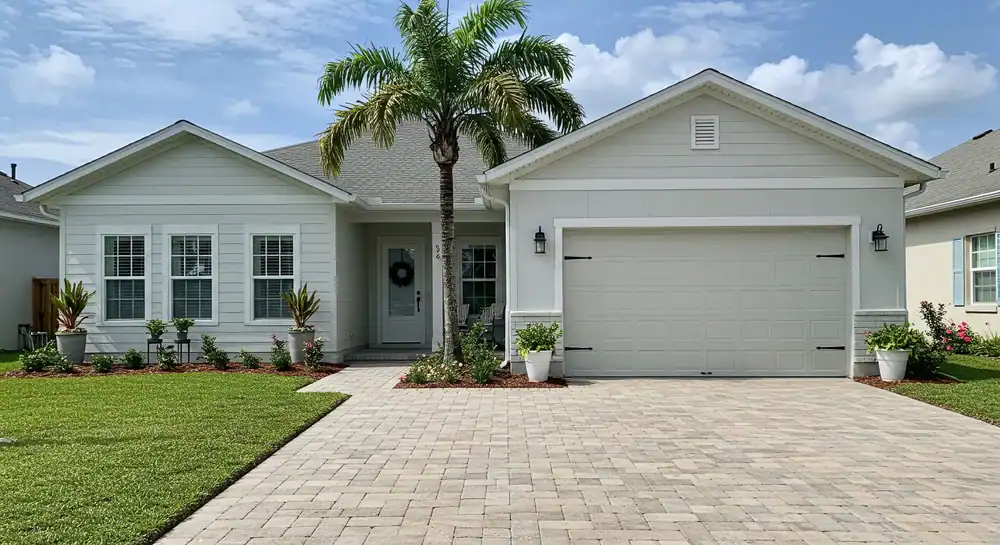
Paver driveways handle freeze-thaw cycles differently than concrete or asphalt. When the ground shifts, individual pavers adjust instead of cracking. If one ever does get damaged, you replace that piece—not the entire surface. That’s decades of durability instead of constant maintenance costs.
The difference isn’t just how it looks. It’s how long it lasts and how little you’ll think about it once it’s done right.
Ageless Chimney has been working on Long Island homes since 2003. We started with chimney work, but homeowners kept asking us to handle their outdoor masonry projects too—driveways, walkways, patios, Belgian block borders.
Every job gets managed by an owner, not just a crew. We’re licensed and insured in Suffolk County, and we’ve completed over 200 driveway projects across Nassau and Suffolk counties. We know Islip’s soil conditions, drainage challenges, and building requirements because we’ve been working here for over 15 years.
You’re not getting a sales pitch from someone who disappears after signing. You’re getting the same people from estimate to completion, and we’re still here when you call five years later.
First, we excavate deeper than most contractors bother with—usually 12 to 18 inches depending on your soil conditions. That’s where drainage problems get solved or ignored. We’re solving them.
Next comes the base layer: crushed stone that gets compacted in lifts, not dumped all at once. This creates a stable foundation that won’t shift when the ground freezes. We grade everything so water moves away from your house and doesn’t pool on the driveway surface.
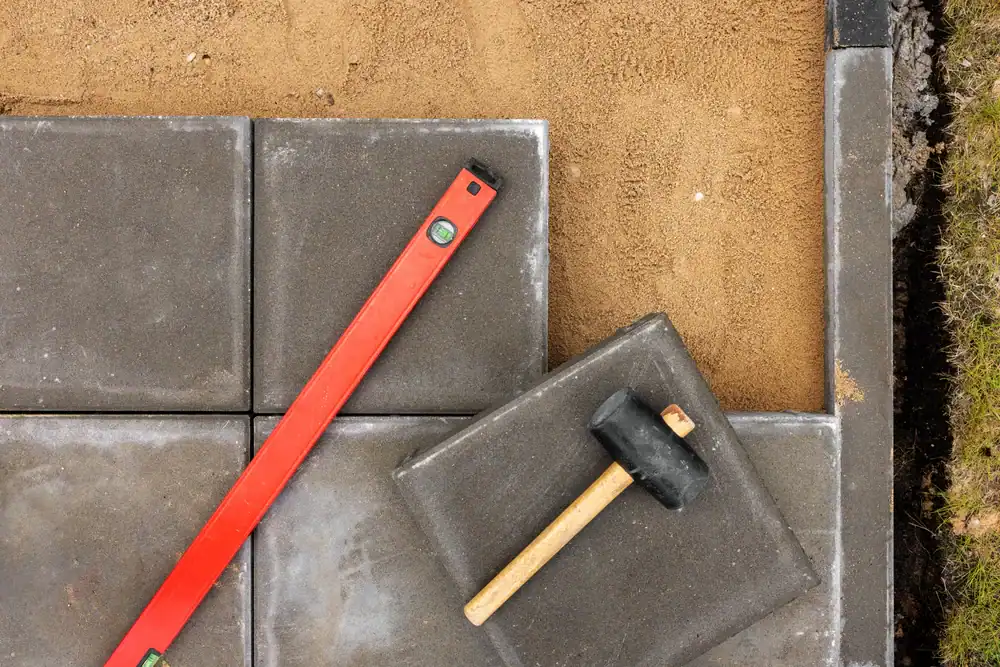
Then we install the pavers, concrete, or asphalt depending on what you chose. For paver driveways, we add edge restraints and polymeric sand between joints to lock everything in place. For concrete driveway installation in Suffolk County, we use proper reinforcement and control joints to manage cracking.
Belgian block borders get set in concrete if you want that classic Long Island look with clean transitions. The whole process takes about a week for most residential driveways, weather depending. You’ll know the timeline before we start, and we’ll tell you if anything changes.
Ready to get started?
Most driveway problems in Islip, NY come from water that doesn’t drain properly. We integrate drainage solutions into every installation—catch basins, French drains, or proper grading depending on your property’s layout.
You’re also getting excavation that accounts for Long Island’s soil composition. Clay-heavy soil needs different base preparation than sandy soil. We adjust the approach based on what’s actually under your existing driveway, not a one-size-fits-all method.
For paver driveway contractors, the details matter: edge restraints that prevent spreading, polymeric sand that resists washout, and base material that stays stable through freeze-thaw cycles. For concrete work, that means proper reinforcement, control joints every 10 feet, and a finish that provides traction without being rough.
If you’re adding Belgian block borders or cobblestone driveway aprons, those get set properly in concrete—not just placed on sand where they’ll shift in six months. Sinking driveway repair starts with figuring out why it sank in the first place, then fixing that issue before resurfacing.
Everything comes with a 10-year warranty because we’re not cutting corners on the parts you can’t see.
It depends entirely on what material you choose and whether it was installed correctly from the start.
Asphalt driveways typically last 15 to 20 years on Long Island, but they need sealcoating every 2-3 years to reach that lifespan. That’s $200-400 each time, which adds up to a few thousand dollars in maintenance. Concrete lasts 25-30 years if it’s reinforced properly and has control joints to manage cracking from freeze-thaw cycles.
Paver driveways last the longest—usually 25 to 50 years—because they flex with ground movement instead of cracking. When Long Island’s freeze-thaw cycles cause the ground to shift, pavers adjust individually. One damaged paver gets replaced without tearing up the whole driveway.
The real lifespan comes down to what’s underneath. If the base wasn’t excavated deep enough or the drainage wasn’t addressed, even the best surface material will fail early. That’s why we excavate 12-18 inches and build a proper stone base that stays stable through winter.
Water is the main culprit, especially during winter freeze-thaw cycles that hit Islip, NY hard every year.
When water gets under your driveway and freezes, it expands with serious force. That expansion pushes everything upward and creates cracks. When it thaws, the ground settles unevenly, which causes sinking and more cracking. This cycle repeats every winter, and the damage compounds.
Poor drainage makes it worse. If water pools on your driveway or doesn’t flow away from the surface, it finds its way underneath. Clay-heavy soil holds water longer, which means more freeze-thaw damage. Sandy soil drains better but can wash out and create voids under the surface.
Fixing cracked concrete driveways or sinking driveway repair isn’t just about patching the surface. You have to address why water is getting underneath in the first place. That means proper excavation, a stable base layer, and grading that moves water away from the driveway and your foundation. Without fixing the drainage, you’re just delaying the same problem.
Each material has trade-offs depending on your budget, how long you plan to stay in your home, and how much maintenance you want to deal with.
Asphalt is the cheapest upfront—usually $3-5 per square foot installed. But it needs sealcoating every few years and typically needs replacement after 15-20 years. It’s a good choice if you’re on a tight budget or not planning to stay long-term.
Concrete costs more initially at $6-10 per square foot, but it lasts longer and needs less maintenance. The downside is that cracks are harder to repair and more visible. In Long Island’s climate, you’ll likely see some cracking from freeze-thaw cycles even with proper installation.
Paver driveways cost the most upfront—$10-20 per square foot depending on the style—but they last the longest and give you the most flexibility. Individual pavers can be replaced if damaged, and they handle ground movement better than solid surfaces. You can also add Belgian block borders or extend the driveway later without obvious patch jobs.
For most Islip, NY homeowners who plan to stay long-term, pavers offer the best return on durability and curb appeal. For shorter timelines or tighter budgets, concrete is the middle ground.
Most residential driveway projects in Islip, NY run between $8,000 and $25,000 depending on size, material, and site conditions.
A standard two-car asphalt driveway (about 600 square feet) typically costs $3,000-5,000. The same size in concrete runs $5,000-8,000. Paver driveways for that size start around $10,000 and can go higher depending on pattern complexity and border details like Belgian block.
Site conditions affect the price significantly. If your property has drainage issues, poor soil, or needs extensive excavation, expect to add $2,000-5,000 to address those problems properly. Skipping that work to save money upfront just means you’ll pay for repairs sooner.
Driveway widening, extensions, or adding cobblestone driveway aprons add to the total based on square footage. Most contractors price by the square foot, but the real cost comes from how much prep work your specific property needs.
We give you a detailed estimate that breaks down material, labor, excavation, and drainage work so you know exactly what you’re paying for. No surprises when the job is done.
Late spring through early fall—roughly May through September—gives you the most reliable installation conditions in Islip, NY.
Temperatures need to stay consistently between 50-75°F for asphalt and concrete to cure properly. Too cold and the material won’t set correctly. Too hot and it can dry too fast, causing surface issues. Pavers are more forgiving with temperature but still need dry conditions for base compaction.
Rain delays are the biggest issue. If the base layer gets soaked during installation, it won’t compact properly, and you’ll have settling problems later. We can’t control the weather, but we can time the work to avoid Long Island’s wettest months.
Winter installations are possible for pavers in some cases, but concrete and asphalt are off the table once temperatures drop consistently below 50°F. Some contractors offer winter discounts, but that’s usually because they’re rushing work in poor conditions. You’ll pay for those shortcuts by spring.
If you’re planning a driveway project, reach out in early spring to get on the schedule for late spring or summer installation. That’s when conditions are most stable and you’ll get the best results.
Yes, most driveway installation and replacement projects in Islip, NY require a permit from the Town of Islip Building Department.
You’ll need a permit if you’re installing a new driveway, replacing an existing one, or significantly expanding the size. The town wants to make sure the work meets drainage requirements, setback regulations, and doesn’t create runoff problems for neighboring properties.
The permit process involves submitting a site plan that shows the driveway location, dimensions, materials, and drainage plan. The building department reviews it to confirm everything meets local codes. Approval usually takes 2-4 weeks depending on how busy they are.
Some homeowners try to skip the permit to save time or money, but that’s a mistake. If the town finds out, they can make you rip out the work and start over with proper permits. It also creates issues when you sell the house—unpermitted work shows up in title searches and can kill a sale.
We handle the permit process as part of our service. We know what the Town of Islip requires, and we make sure everything is submitted correctly the first time. You don’t have to deal with the paperwork or follow up with the building department.
Other Services we provide in Islip