

You’re tired of watching your driveway sink in spots or crack every winter. Water pools near your foundation after storms. Snow plowing tears up the edges. These aren’t cosmetic issues—they’re expensive problems that get worse every season.
A properly installed driveway in Long Beach, NY handles the soil movement, drainage challenges, and temperature swings that destroy shortcuts. That means proper excavation depth, the right base materials, and installation methods that account for Long Island’s clay soils and freeze-thaw patterns.
When your driveway is done right, water drains away from your foundation. The surface stays level through winters. Belgian block borders hold their position under plow blades. You’re not calling for repairs two years later because someone skipped the base prep or used inadequate materials for coastal conditions.
We’ve been handling masonry and paving work across Long Island since 2003. We’ve completed over 200 residential projects in Nassau and Suffolk Counties, which means we’ve seen what fails and what lasts in this specific climate.
Every job is handled by the owners. We’re licensed, insured, and bonded. You’re not getting a crew that disappears halfway through or a salesperson who never shows up after signing.
Long Beach homeowners deal with unique challenges—sandy soils, salt air exposure, storm drainage issues. We account for those factors in every installation because we’ve worked here long enough to know what holds up and what doesn’t.
First, we excavate to the proper depth—typically 8 to 12 inches depending on your soil conditions and what material you’re installing. This isn’t optional in Long Island. Shallow excavation is why driveways sink and crack within a few years.
Next comes the base layer. We use compacted gravel or crushed stone that provides stable support and allows water to drain instead of pooling under your surface. This layer gets compacted in stages, not dumped and flattened once.
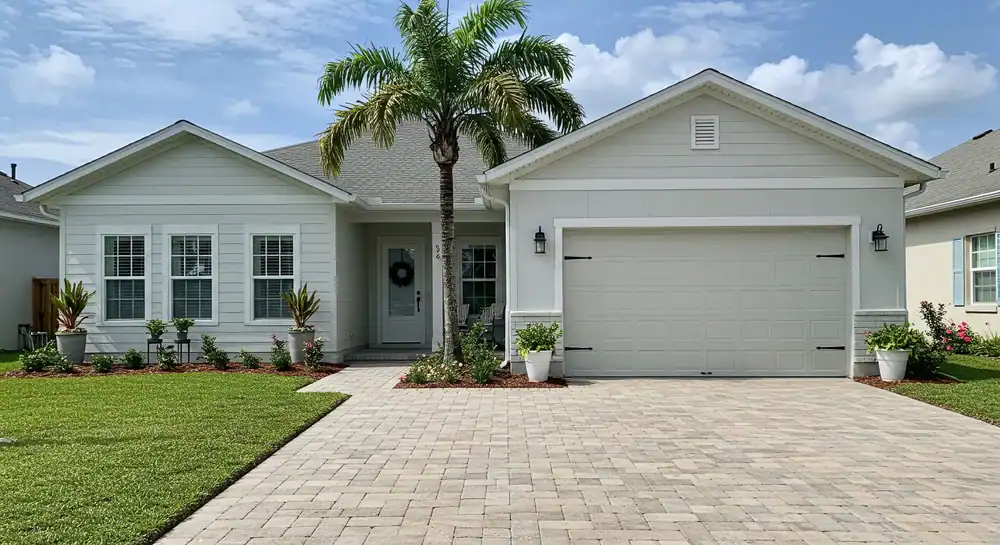
Then we install your chosen surface—asphalt, concrete, pavers, brick, or stone. If you’re adding Belgian block borders or cobblestone aprons, those go in with proper bedding so they don’t shift when plows hit them. Every material gets installed according to what works in coastal climates with freeze-thaw cycles.
Finally, we grade everything so water drains away from your house and garage. Poor drainage is the number one reason driveways fail early in Long Beach, NY. We make sure water goes where it should from day one.
Ready to get started?
You’re getting a driveway designed for Long Island’s conditions. That means accounting for the freeze-thaw cycles that crack concrete, the soil movement that causes sinking, and the drainage challenges that lead to foundation problems.
We work with asphalt, concrete, brick, pavers, stone, and granite. If you want Belgian block borders or cobblestone aprons, we install those to handle snow plowing and heavy traffic. These aren’t decorative—they’re functional elements that protect your driveway edges and create clean lines that last.
For homes in Long Beach, NY, drainage is critical. Properties here deal with storm runoff, high water tables, and soil that doesn’t drain well naturally. We build proper drainage solutions into every installation so water moves away from your foundation instead of pooling on your driveway or seeping into your basement.
You’re also getting contractors who’ve worked in Nassau County long enough to know what fails. We’ve seen the $49 special jobs that turn into $3,000 repairs. We’ve fixed driveways where crews skipped the base prep or used the wrong materials. Our installations are designed to avoid those problems for 25 to 30 years, not just pass inspection.
It depends entirely on the material and installation quality. Asphalt typically lasts 15 to 20 years with proper maintenance like sealcoating every few years. Concrete runs 25 to 30 years if it’s installed with adequate base prep and proper drainage.
Brick and paver driveways can last 25 to 75 years because individual units can be replaced if damaged, and they handle freeze-thaw cycles better than poured surfaces. The key is proper installation—adequate excavation depth, compacted base layers, and drainage that prevents water from undermining the foundation.
In Long Beach, NY, your biggest threats are freeze-thaw damage and water infiltration. When water gets under your driveway and freezes, it expands and causes cracking or heaving. Proper base preparation and drainage design prevent this, which is why installation quality matters more than material choice for longevity.
Poor base preparation is the main culprit. Long Island has clay soils that expand when wet and contract when dry. If your contractor doesn’t excavate deep enough or doesn’t properly compact the base layers, the soil movement causes settling and cracking.
Water infiltration is the second major cause. When drainage isn’t designed correctly, water pools under your driveway or along the edges. That water freezes in winter, expands, and creates cracks or causes sections to heave. Over time, the freeze-thaw cycle makes small cracks worse until you’re looking at major structural failure.
Shortcuts during installation—like inadequate excavation, poor compaction, or skipping proper drainage—show up within two to five years. You’ll see sinking near the edges, cracks spreading from the center, or water pooling in the same spots after every rain. Fixing these issues costs more than doing it right the first time because you’re essentially starting over.
Each material has specific advantages depending on your priorities. Asphalt costs less upfront—typically $3 to $7 per square foot installed—and handles freeze-thaw cycles well because it’s flexible. You’ll need to sealcoat every two to three years to maintain it, and it lasts 15 to 20 years with proper care.
Concrete costs more—around $8 to $15 per square foot—but requires less maintenance and lasts 25 to 30 years. It can crack in Long Island’s climate if the base isn’t prepared correctly or if drainage is poor. Once concrete cracks, repairs are visible and don’t blend well.
Pavers and brick run $18 to $23 per square foot but offer the longest lifespan and easiest repairs. Individual pavers can be replaced if damaged, and they handle freeze-thaw cycles better than poured surfaces because there’s no large slab to crack. They also add more to your property value in Nassau County, where buyers appreciate quality hardscaping.
Proper grading is the foundation of good drainage. Your driveway needs to slope away from your house and garage so water runs toward the street or designated drainage areas. Even a small slope—about 1% grade—makes a significant difference in preventing pooling.
The base layer also plays a role in drainage. We use crushed stone or gravel that allows water to percolate through instead of sitting under your surface. This prevents water from undermining your driveway during heavy rains or when snow melts.
In some Long Beach, NY properties, we install drainage systems like French drains or catch basins if the natural grading isn’t sufficient. This is common in areas with high water tables or properties where water naturally flows toward the driveway. These systems capture water and redirect it before it causes problems with your foundation or creates ice patches in winter.
Minor sinking—less than two inches—can sometimes be addressed with mudjacking for concrete or adding asphalt overlay. These are temporary fixes that buy you a few years but don’t address the underlying base problems that caused the sinking.
Major sinking or widespread cracking requires removal and reinstallation. You’re looking at excavating the failed sections, fixing the base issues that caused the problem, and installing new surface material. This typically costs $3,000 to $10,000 depending on the size and extent of damage.
For paver or brick driveways, repairs are simpler. You can remove and reset sunken sections without replacing the entire driveway. This is one reason pavers cost more upfront but can be more economical over 25 years—you’re repairing sections instead of replacing everything when problems develop.
Belgian block serves a functional purpose in Long Island driveways. These granite blocks create a solid edge that contains your driveway material and prevent asphalt or pavers from spreading over time. They also handle snow plowing much better than thin aluminum or plastic edging.
When plows hit your driveway in winter, they put significant force on the edges. Belgian block borders absorb that impact without shifting or breaking. This protects your driveway surface and prevents the edge damage that leads to crumbling and requires repairs.
They also improve drainage by creating a defined channel where water can flow along the edge instead of spreading across your driveway or into your lawn. In Long Beach, NY, where storm drainage is critical, this edge definition helps direct water where you want it to go. The upfront cost is higher, but you’re avoiding edge repairs and extending your driveway’s lifespan.
Other Services we provide in Long Beach