

You’ve seen what happens to driveways around here. Cracks appear after one winter. Water pools near the garage. Sections start sinking within a few years.
That’s what happens when the base isn’t done right or when someone doesn’t account for Nassau County’s clay soil and brutal freeze-thaw cycles. Water gets in, freezes, expands, and destroys even decent materials from underneath.
A properly installed driveway in Merrick, NY starts with 8-12 inches of excavation and a compacted stone base that won’t shift. It includes drainage solutions that move water away before it becomes a problem. And it uses materials rated for our climate—not whatever’s cheapest that week.
You get a driveway that doesn’t need major repairs every few years. You get a surface that handles winter without crumbling. And you stop worrying every time the temperature drops below freezing.
We’ve been working on Long Island properties for nearly two decades. We started with chimneys and masonry, which means we already know how materials perform in this climate and how water moves around structures.
When we expanded into driveway work, we brought that same approach: owner-managed projects, no shortcuts on base prep, and materials chosen for durability instead of profit margin. Every job gets handled by someone who’s been doing this long enough to know what fails and why.
We’re licensed, insured, and based right here in Nassau County. We’ve seen every soil condition, every drainage issue, and every type of winter damage you can imagine. That experience shows up in how your driveway performs five years from now.
First, we look at your property’s drainage, soil type, and how you’ll use the driveway. A single-car driveway with light use needs different prep than a multi-vehicle setup that sees daily traffic. We measure, assess the existing base if there is one, and talk through material options that make sense for your situation and budget.
Then comes excavation. We dig down 8-12 inches depending on soil conditions, because Nassau County’s clay soil needs proper depth to prevent shifting. We install a compacted stone base in layers, not all at once. Each layer gets compacted separately so you don’t end up with settling and sinking later.
Drainage gets built in at this stage—not added as an afterthought. We grade everything so water moves away from your foundation and doesn’t pool on the surface. If your property has drainage challenges, we address them now with proper solutions.
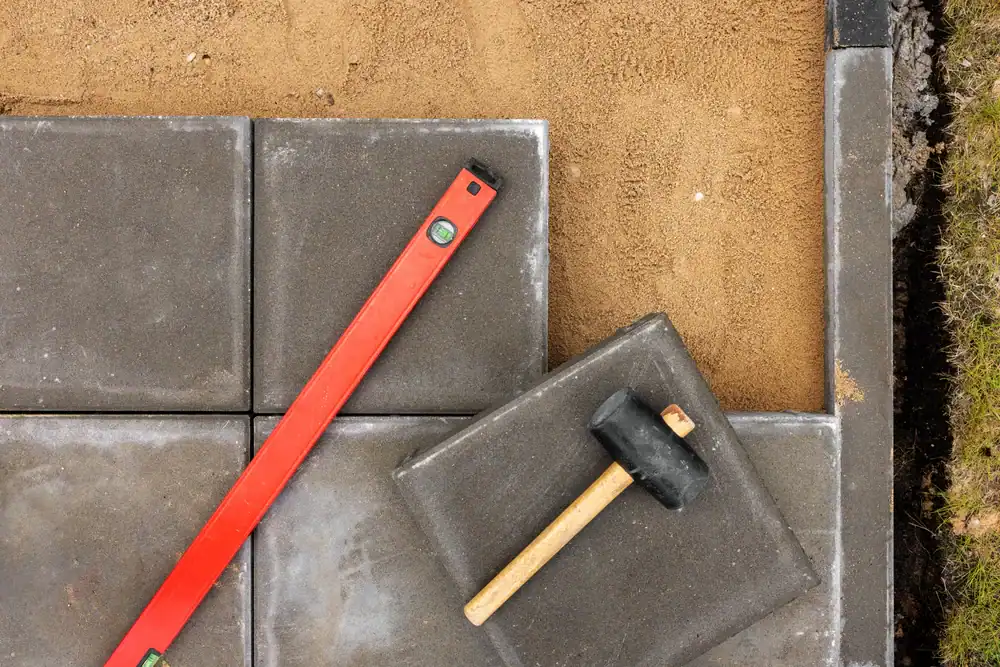
Finally, we install your chosen material: asphalt, concrete, pavers, or stone. Each material has specific installation requirements, and we follow them. Asphalt needs proper temperature and compaction. Pavers need edge restraints and joint sand. Concrete needs control joints and proper curing time. We don’t rush any of it.
Ready to get started?
We install asphalt, concrete, pavers, brick, cobblestone aprons, and Belgian block borders. Each material has trade-offs you should know about before deciding.
Asphalt costs less upfront—usually $7-15 per square foot installed in Nassau County—and goes in faster. But it needs resealing every 3-5 years and shows cracks sooner than other options. It’s a solid choice if you want a clean look without the higher initial cost.
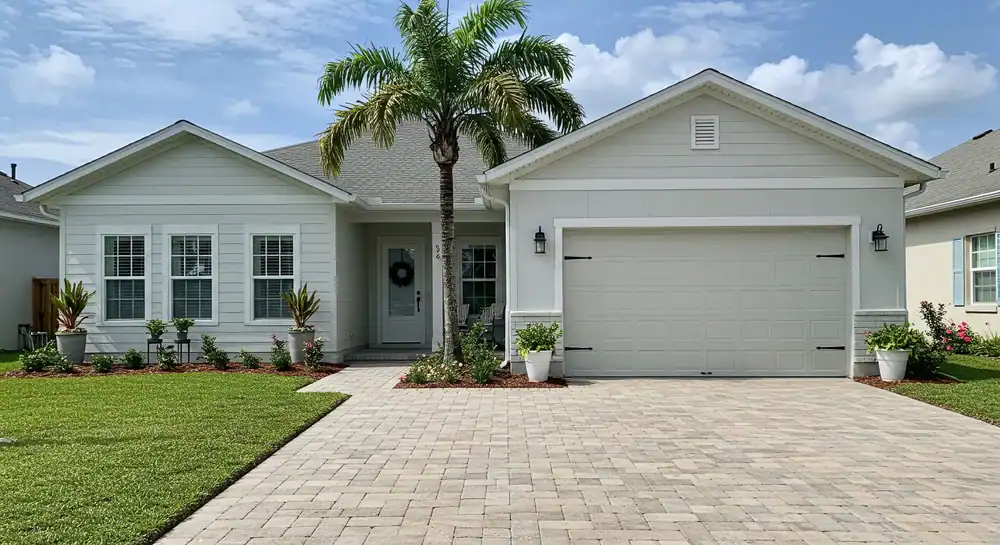
Concrete lasts longer and needs less maintenance, but it costs more initially and can crack if the base isn’t perfect. Pavers cost the most upfront but give you the longest lifespan—often 50+ years—and individual pavers can be replaced if damaged. They also handle freeze-thaw cycles better than solid surfaces because they flex slightly instead of cracking.
For driveway repair in Merrick, NY, we handle sinking sections, extensive cracking, and drainage problems that are undermining your existing driveway. Sometimes a repair makes sense. Sometimes replacement is actually cheaper long-term. We’ll tell you which one applies to your situation.
We also handle concrete driveway installation in Suffolk County and throughout Long Island, along with custom features like cobblestone aprons at the street or Belgian block borders that define edges and prevent asphalt crumbling.
It depends entirely on the material and how well it’s installed. Asphalt typically lasts 15-20 years here if you reseal it every 3-5 years and fix cracks promptly. Skip the maintenance and you’re looking at 10-12 years before it needs replacement.
Concrete lasts 25-30 years with minimal maintenance, but it’s less forgiving if the base settles. Once concrete cracks, repairs are visible and don’t always hold. Pavers last 50-75 years because individual stones can be lifted and reset if the base settles, and they handle freeze-thaw cycles without cracking the way solid surfaces do.
The bigger factor is installation quality. A driveway with proper excavation, a compacted stone base, and good drainage will outlast a cheaper installation by decades. Long Island’s freeze-thaw cycles destroy anything that’s not built right from the start. Water gets into small cracks, freezes, expands, and turns minor issues into major failures within a few winters.
Two main culprits: inadequate base preparation and poor drainage. Nassau County has clay soil that expands when wet and contracts when dry. If your driveway doesn’t have enough excavation depth and a proper stone base, the clay movement causes settling and cracking.
Freeze-thaw cycles make everything worse. Water seeps into any crack or gap, freezes overnight, and expands with enough force to widen cracks and lift sections. Do that 30-40 times per winter and small cracks become potholes. This is why proper base depth matters so much here—you need 8-12 inches of compacted stone to create a stable platform that doesn’t shift with temperature and moisture changes.
Drainage problems accelerate everything. If water pools on your driveway or along the edges, it’s constantly working its way underneath. Once water gets under the surface, it undermines the base and creates voids. Then sections sink into those voids. Fixing drainage issues during installation prevents this entirely, but adding drainage after the fact means tearing everything up.
Asphalt makes sense if you want lower upfront cost and don’t mind maintenance. You’ll pay $5,000-$12,000 for a standard residential driveway in Merrick, NY, and it’ll look clean and professional. But plan on resealing every few years and dealing with cracks sooner than other materials.
Concrete costs more initially but needs less ongoing maintenance. It lasts longer than asphalt and handles heavy vehicles well. The downside is that cracks are harder to repair invisibly, and if sections settle, you’re looking at either grinding down lips or replacing panels.
Pavers cost the most upfront—sometimes $15+ per square foot for premium materials—but they last the longest and handle our climate best. Individual pavers can be lifted and reset if settling occurs. They don’t crack like solid surfaces. And they give you design flexibility with patterns, colors, and borders. If you’re planning to stay in your home long-term, pavers often end up being the best value despite higher initial cost.
Your decision should factor in budget, how long you plan to stay in the home, and how much maintenance you’re willing to do. We can walk through the actual numbers for your specific driveway size and help you decide what makes sense.
Drainage gets built into the installation from the start—it’s not something you add later. We grade the base so water flows away from your foundation and toward the street or another drainage point. The driveway surface itself gets sloped slightly, usually about 1-2% grade, so water doesn’t pool.
If your property has challenging drainage—maybe water naturally flows toward your garage or you’re at the bottom of a slope—we install additional solutions. That might mean a catch basin and drainage pipe, a French drain along one edge, or a channel drain across the driveway entrance. The specific solution depends on where the water’s coming from and where it needs to go.
For properties in Merrick, NY with high water tables or clay soil that doesn’t drain well, we sometimes install a thicker stone base that acts as a drainage reservoir. Water can percolate down into the stone instead of sitting on top of the driveway surface. This is especially important for paver installations where you want water to drain through the joints rather than running off into landscaping or pooling near the foundation.
The key is addressing drainage before we install the surface material. Once the driveway is in, fixing drainage problems means tearing things up. Do it right the first time and you won’t have water issues.
Sometimes repair makes sense. Sometimes it doesn’t. If your driveway has a few cracks but the base is still solid and there’s no widespread settling, we can fill cracks, patch damaged areas, and reseal asphalt to extend its life another 5-10 years.
But if you’ve got extensive cracking, multiple sunken sections, or drainage problems that are undermining the base, repair is usually just delaying the inevitable. You’ll spend money on fixes that only last a year or two, then end up replacing everything anyway. At that point, replacement is actually cheaper long-term.
Here’s what we look for: Are cracks wider than a quarter-inch? Are there multiple areas where the surface has sunk or heaved? Is water pooling in spots? Can you see base material through cracks or along edges? If you’re answering yes to several of those, replacement probably makes more sense.
We’ll come look at your specific situation and give you an honest assessment. If repair will actually solve your problems and last, we’ll tell you that. If you’re throwing money at something that needs replacement, we’ll tell you that too. The goal is helping you make the right decision for your property and budget, not selling you the most expensive option.
For a standard residential driveway in Nassau County, you’re typically looking at $5,000-$12,000 for asphalt, depending on size and site conditions. Concrete runs higher, usually starting around $8,000 and going up from there. Pavers start around $12,000 for basic materials and can reach $20,000+ for premium stone with custom borders and patterns.
The biggest cost variables are size, material choice, excavation requirements, and drainage complexity. A simple replacement on flat ground with good drainage costs less than a new driveway on a sloped property with clay soil and drainage challenges. If we need to remove old material, add extra base depth, or install drainage systems, that adds to the total.
Material quality creates another cost spread. Basic concrete pavers start around $4 per square foot for materials alone. Premium natural stone can hit $15 per square foot just for materials. Installation labor typically equals or exceeds material cost, so a $4 paver might cost $8-10 installed, while a $15 stone might cost $25-30 installed.
We provide free estimates that break down exactly what you’re paying for: excavation, base material, drainage work, surface material, and labor. No surprises, no hidden costs. You’ll know the total before we start, and that number won’t change unless you change the scope of work.
Other Services we provide in Merrick