
You’ve already patched the cracks. You’ve sealed it again. And six months later, you’re back to square one because the real problem was never addressed.
When your driveway is built right from the start, you’re not calling someone every spring to fix new damage. The base is properly compacted. The drainage actually works. And the materials you choose can flex with temperature swings instead of cracking under pressure.
That means no more standing water after storms. No more watching small cracks turn into major problems every winter. And no more wondering if this repair will actually hold or if you’re just buying another year before the whole thing needs to be replaced. You get a driveway that handles what Long Island throws at it without falling apart.
We’ve been working on driveways across Nassau County long enough to know exactly what fails and why. It’s not just about pouring concrete or laying pavers. It’s about understanding how coastal humidity, salt air, and that brutal freeze-thaw cycle work together to destroy driveways that weren’t built for this environment.
North Lynbrook homes sit in a coastal climate where the water table is high and temperature swings happen weekly in winter. That’s not a forgiving combination. We’ve seen what happens when contractors skip proper base prep or ignore drainage, and we’ve fixed enough of those mistakes to know how to avoid them from the start.
Every project gets walked by an owner. Every estimate is free. And we’re fully licensed and insured because this is how we’ve built our reputation in this area.
First, we come out and look at what you’re dealing with. We check the existing surface, look at how water moves across your property, and talk through what you actually need. Not what sounds good in a brochure, but what makes sense for your home and how you use the space.
Then we remove the old surface and excavate down to stable soil. This is where most problems start, so we don’t cut corners here. We install 10-12 inches of compacted base material in layers, making sure each one is properly compacted before adding the next. If drainage is an issue, we add edge drains or adjust grading to move water away from your foundation.
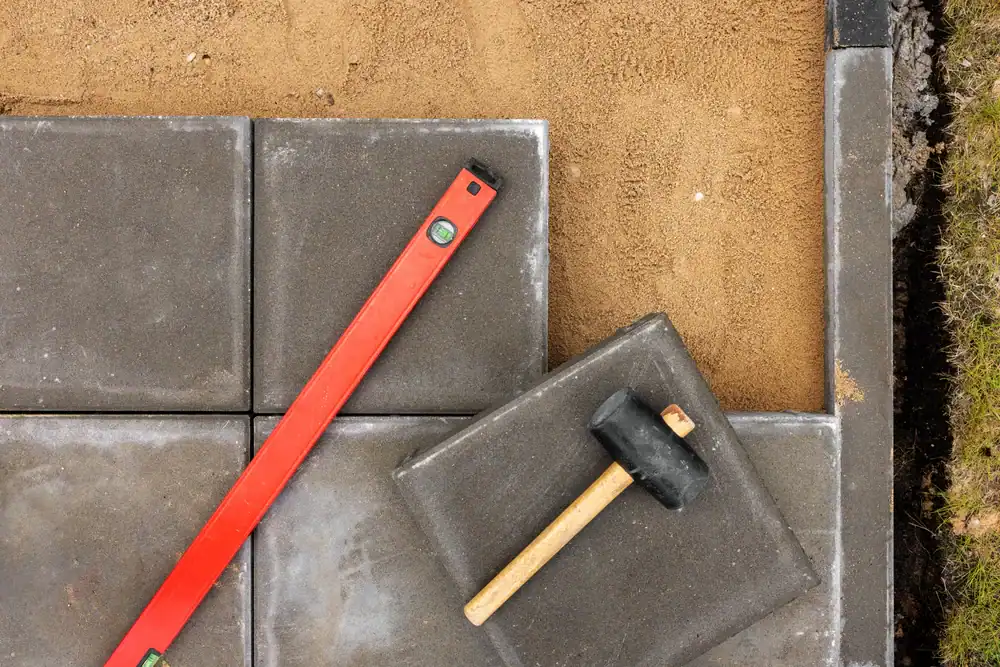
Once the base is solid, we install your surface material—whether that’s pavers, concrete, or asphalt. If you’re going with pavers or Belgian block aprons, we make sure every unit is level and properly spaced. Then we clean up, haul away the old material, and walk you through any maintenance you’ll need to know about. Most projects wrap up in a few days, depending on size and complexity.
Ready to get started?
You’re getting a properly engineered base that won’t shift or settle over time. That’s the foundation of everything, and it’s where most driveway failures start. We’re talking about real compaction, proper depth, and materials that can handle groundwater and freeze-thaw cycles without turning into a mess.
You’re also getting drainage that actually works. In North Lynbrook, with the high water table and frequent coastal storms, water management isn’t optional. We grade your driveway to move water away from your home and install edge drains where needed so you’re not dealing with standing water or ice patches every winter.
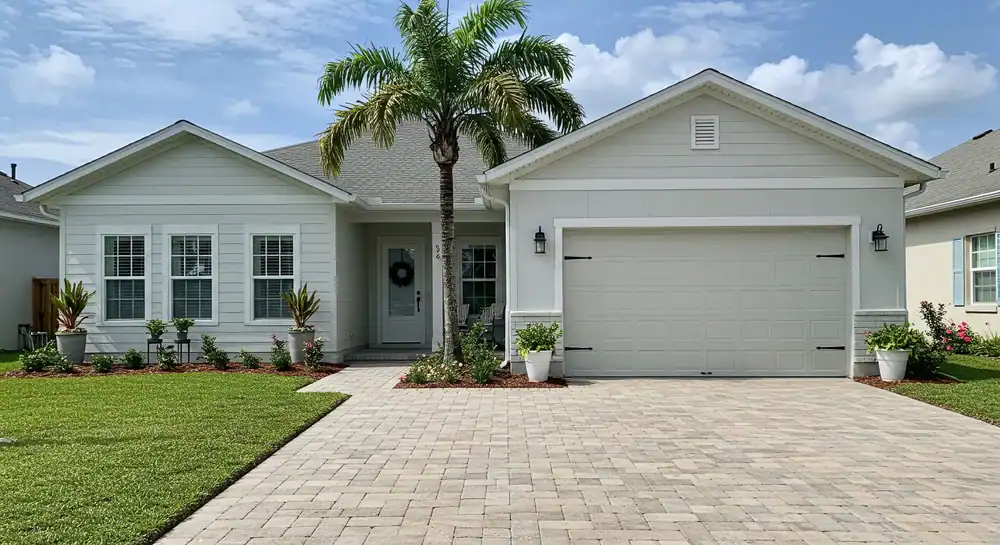
If you’re going with pavers, you’re getting individual units that can flex with temperature changes instead of cracking like a solid slab. That means when the ground shifts or freezes, your driveway moves with it. And if a paver ever gets damaged, you can replace just that one piece without tearing up the whole surface. Add a Belgian block apron, and you’ve got a classic Long Island look that also prevents edge erosion and adds real curb appeal—the kind that buyers notice when it’s time to sell.
A properly installed paver driveway can last 50 years or more in this climate, which is significantly longer than asphalt or concrete. The key word there is “properly installed.”
Pavers work well here because they’re individual units that can move independently when the ground shifts or temperatures swing. That flexibility prevents the large-scale cracking you see with solid surfaces. But they only perform that way if the base underneath is done right—10 to 12 inches of compacted material in layers, not just dumped and smoothed over.
The other advantage is maintenance. You’re not resealing every few years like you would with asphalt. A power wash once a year and occasional joint sand is about it. And if a paver does crack or stain, you replace that one piece. You’re not looking at a visible patch or a full resurfacing job.
It’s almost always the freeze-thaw cycle combined with poor drainage. Water gets into small cracks or under the surface, freezes overnight, expands, and makes the crack bigger. Then it thaws, more water gets in, and the cycle repeats all winter.
Long Island’s coastal location makes this worse because temperatures swing above and below freezing multiple times per week during winter. That’s a lot of expansion and contraction. Add in the high water table and frequent rain, and you’ve got water constantly working its way under your driveway.
If the base wasn’t compacted properly or if drainage wasn’t addressed during installation, that water has nowhere to go. It sits under the surface, freezes, and causes heaving or cracking. This is why proper base prep and grading matter more than the surface material you choose. You can pour the best concrete or lay premium pavers, but if water is trapped underneath, it’s going to fail.
Sometimes, but it depends on why it’s sinking. If it’s a small settled area and the base is otherwise stable, we can lift and relay pavers or use slabjacking for concrete. But if the base has failed or wasn’t installed correctly to begin with, a repair is just delaying the inevitable.
Most sinking happens because the base wasn’t compacted in layers or because water has eroded the material underneath. If that’s the case, you’re looking at the same problem again in a year or two unless you address what’s causing it. That usually means excavating, rebuilding the base properly, and fixing the drainage issue.
With paver driveways, repairs are more straightforward because you can pull up the affected section, add and compact base material, and relay the same pavers. It’s invisible when done right. With concrete or asphalt, you’re cutting, patching, and hoping it blends in. It rarely does.
Concrete is a solid slab, so when the ground shifts or freezes, the whole thing has to move together. That creates stress points, and eventually, cracks. In coastal areas like North Lynbrook, salt air also breaks down concrete faster, causing surface deterioration and discoloration over time.
Pavers are individual units, so they can shift independently without cracking. That flexibility is a huge advantage when you’re dealing with freeze-thaw cycles and ground movement. They also handle salt exposure better because the joints between pavers allow for some movement and drainage, reducing the pressure that causes cracking.
The other practical difference is repairs. If part of your concrete driveway cracks, you’re either living with it, patching it (and it’ll show), or replacing the whole section. With pavers, you pull up the damaged ones and drop in new ones. No one can tell. Concrete driveways also need regular sealing to protect against moisture and salt, while pavers just need occasional cleaning and joint sand.
It depends on size, material, and site conditions, but here’s a realistic range. Asphalt runs $3 to $6 per square foot, concrete is $8 to $12, and pavers are typically $17 to $23. For a standard two-car driveway around 600 square feet, you’re looking at $1,800 to $3,600 for asphalt, $4,800 to $7,200 for concrete, or $10,200 to $13,800 for pavers.
Those numbers shift if you need significant drainage work, excavation beyond the normal depth, or if access is difficult. Belgian block aprons, borders, or custom patterns also add to the cost. But the bigger question isn’t just upfront price—it’s how long it lasts and what you’ll spend maintaining it.
Asphalt needs resealing every three to five years, plus crack repairs, and typically needs replacement in 15 to 20 years. Concrete lasts longer but cracks are harder to fix invisibly. Pavers cost more up front but can last 50+ years with minimal maintenance, and repairs are straightforward. When you factor in the lifespan and maintenance costs, the gap narrows significantly.
Yes, and not just for looks. A Belgian block apron is that row of stone blocks installed where your driveway meets the street. It creates a defined edge that prevents your driveway from crumbling or eroding at the sides, which is a common problem with asphalt and even concrete over time.
They also add serious curb appeal. It’s a classic Long Island detail that buyers recognize as quality workmanship. When someone pulls up to your house, that apron signals that the driveway was done right, not just paved over quickly.
From a functional standpoint, Belgian block holds up better than most edging materials. It doesn’t shift, rot, or break down like plastic or wood edging. And because each block is individual, if one ever gets damaged, you replace just that block. It’s a detail that makes your driveway look finished and helps it last longer without edge damage.
Other Services we provide in North Lynbrook