

You’re tired of patching the same cracks every spring. Water pools near your foundation after every storm. Your driveway looks worse every year, and you know it’s only getting more expensive to ignore.
Here’s what changes when the work is done right. Water drains away from your foundation instead of toward it. Pavers flex during freeze-thaw cycles instead of cracking apart. Individual pieces get replaced if damaged, not the entire surface.
You stop worrying about foundation damage, vehicle scrapes, and embarrassing potholes. Your driveway becomes something that adds value to your property instead of subtracting from it. And you’re not calling someone back in three years to redo the whole thing.
That’s the difference between a quick fix and a driveway installation company in Oceanside, NY that knows what holds up in Nassau County.
We started with masonry and chimney work. Homeowners kept asking us to handle their driveways too, so we expanded. Over 200 completed driveway projects across Nassau County later, we’re still here because the work holds up.
Every job gets an owner on-site, not just a crew. We handle permits, know Oceanside’s soil conditions, and understand what materials survive Long Island winters. Licensed, insured, and A-rated with the BBB.
We’re not the cheapest driveway builders in Nassau County, and that’s intentional. You’re paying for proper excavation, drainage planning, and materials that last 25 to 50 years. Cheaper options exist if you want to replace your driveway again in 10 years.
First, we assess your current driveway and drainage situation. Most sinking driveway repair in Oceanside, NY starts with understanding where water goes and why your base is failing. We measure, check grades, and explain what’s causing the damage.
Next comes excavation and base preparation. We remove the old surface, address any soil issues, and build a proper base with drainage solutions built in. This step determines whether your driveway lasts 15 years or 50.
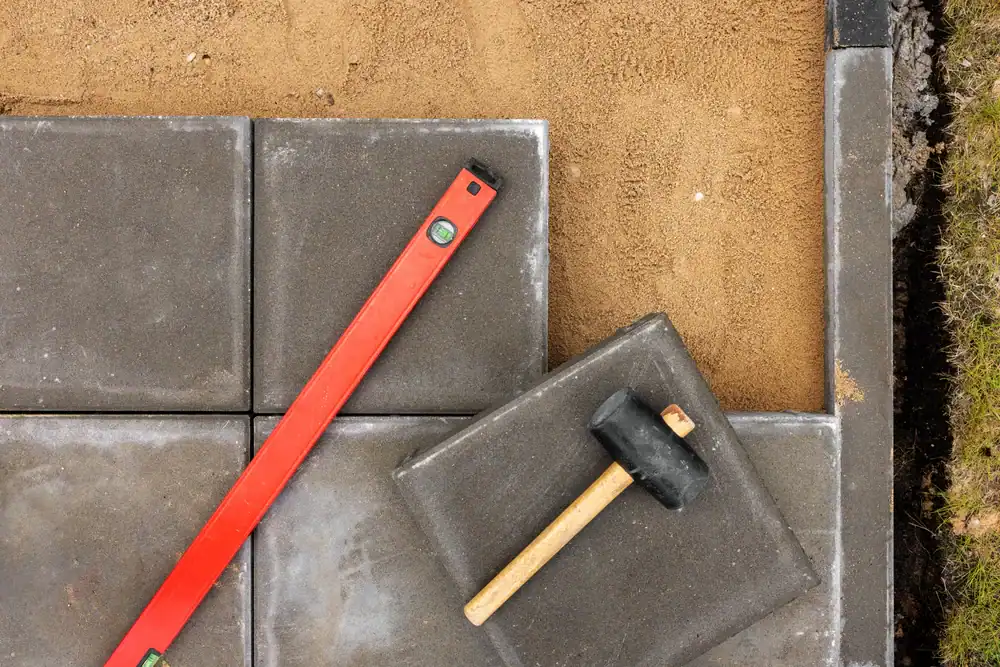
Then we install your chosen material—pavers, concrete, or brick—with Belgian block borders if you want that classic Long Island look. Polymeric sand goes between pavers to lock them in place while allowing flex. Everything gets compacted and graded correctly.
Final step is cleanup and a walkthrough. We handle all debris removal, explain maintenance, and make sure you understand your warranty. Most installations take three to five days depending on size and complexity.
Ready to get started?
You get complete excavation, proper base preparation, and drainage planning specific to Oceanside’s soil conditions. We’re not just laying pavers on top of dirt. The base work determines everything.
Material options include concrete pavers, brick pavers, and cobblestone driveway aprons with Belgian block borders. Concrete driveways are an option too, though pavers handle Long Island’s freeze-thaw cycles better. We’ll explain the cost difference and longevity of each.
Permit handling is included. Every Nassau County town has different requirements, and we know them. You don’t deal with the paperwork.
Driveway drainage solutions in Long Island are critical. We grade everything to move water away from your foundation, not toward it. Poor drainage causes the foundation issues that cost $10,000 to $40,000 to fix later. Getting this right now saves you that headache.
You also get a 10-year warranty on installation. If something fails because of our work, we fix it. Most issues come from skipped steps during installation—steps we don’t skip.
Properly installed paver driveways last 25 to 50 years in Oceanside, NY. Asphalt needs resealing every three to five years and full replacement around 15 to 20 years. Concrete falls somewhere in between at 15 to 20 years before cracking becomes a real problem.
The difference comes down to how each material handles freeze-thaw cycles. Long Island winters cause moisture in the ground to freeze and expand, then thaw and contract. Asphalt and concrete are rigid, so they crack. Pavers flex individually, which means they adapt instead of breaking.
When one paver does get damaged—from a heavy vehicle or settling—you replace that one piece. With asphalt or concrete, you’re patching or replacing entire sections. That flexibility is why we recommend pavers for longevity.
Soil movement and poor drainage cause most sinking driveway issues in Oceanside, NY. Water gets under your driveway, softens the soil, and creates voids. Your driveway settles into those voids. Freeze-thaw cycles make it worse—water freezes, expands, and pushes everything apart.
Nassau County soil tends to be clay-heavy in some areas, which holds water and shifts more than sandy soil. If your driveway wasn’t built with proper base preparation and drainage, water has nowhere to go except under your surface.
Fixing cracked concrete driveways in Oceanside means addressing the base and drainage first. Patching the surface without fixing what’s underneath just delays the problem. You’ll be patching again next year. Proper excavation, a compacted stone base, and grading that moves water away from your driveway solves it permanently.
Paver driveway costs in Oceanside typically run $17 to $21 per square foot for concrete pavers. A standard two-car driveway around 600 square feet costs $10,000 to $12,600. Brick driveway replacement in Oceanside runs slightly higher depending on the brick style you choose.
Concrete driveway installation in Suffolk County and Nassau County costs less upfront—around $8 to $12 per square foot—but needs replacement sooner. Asphalt is the cheapest at $4 to $9 per square foot, but you’re resealing every few years and replacing in 15 years.
The real cost comparison isn’t just installation. It’s installation plus maintenance plus replacement timeline. Pavers cost more now but require almost no maintenance and last twice as long. Asphalt costs less now but needs constant attention. Most Oceanside homeowners who plan to stay in their homes long-term choose pavers for that reason.
Yes, most driveway work in Oceanside, NY requires a permit from the Town of Hempstead. Requirements vary depending on whether you’re replacing an existing driveway, expanding it, or changing materials. The town wants to ensure proper drainage and setbacks.
We handle the permit process for our clients. Every Nassau County municipality has different application methods and approval timelines. Some require engineered drainage plans. Others just need a site plan and material specs.
Skipping permits causes problems later—especially if you sell your home. Unpermitted work shows up during home inspections and can delay or kill sales. Buyers get nervous, and you end up either getting permits retroactively (which is harder) or reducing your sale price. Getting it permitted from the start avoids that mess entirely.
Late spring through early fall—May to September—is ideal for driveway installation in Oceanside, NY. Materials cure properly, the ground is stable, and you avoid freeze-thaw complications during installation.
Winter installations are possible but riskier. Concrete won’t cure correctly in freezing temperatures. Even pavers can have issues if the ground freezes during base preparation. You end up with a weaker foundation that causes problems later.
Early spring can be tricky too because the ground is still saturated from winter snow and rain. Wet soil doesn’t compact well, which affects your base stability. Waiting until things dry out in May gives you better long-term results. We schedule most of our projects between May and September for this reason.
We do both. Driveway widening is common in Oceanside—homeowners want more parking space or easier access for larger vehicles. We can extend your current driveway or add a parking pad without tearing out everything.
The challenge with widening is matching materials and ensuring the new section ties into the old one properly. If your existing driveway is asphalt and already failing, widening it just means you’ll have a bigger failing driveway. Sometimes replacement makes more sense.
We’ll assess your current driveway condition and let you know whether widening works or whether you’re better off replacing the whole thing. If the base is solid and drainage is fine, widening saves money. If the base is shot and water pools everywhere, replacement fixes both issues at once. Either way, you get an honest assessment before we start.
Other Services we provide in Oceanside