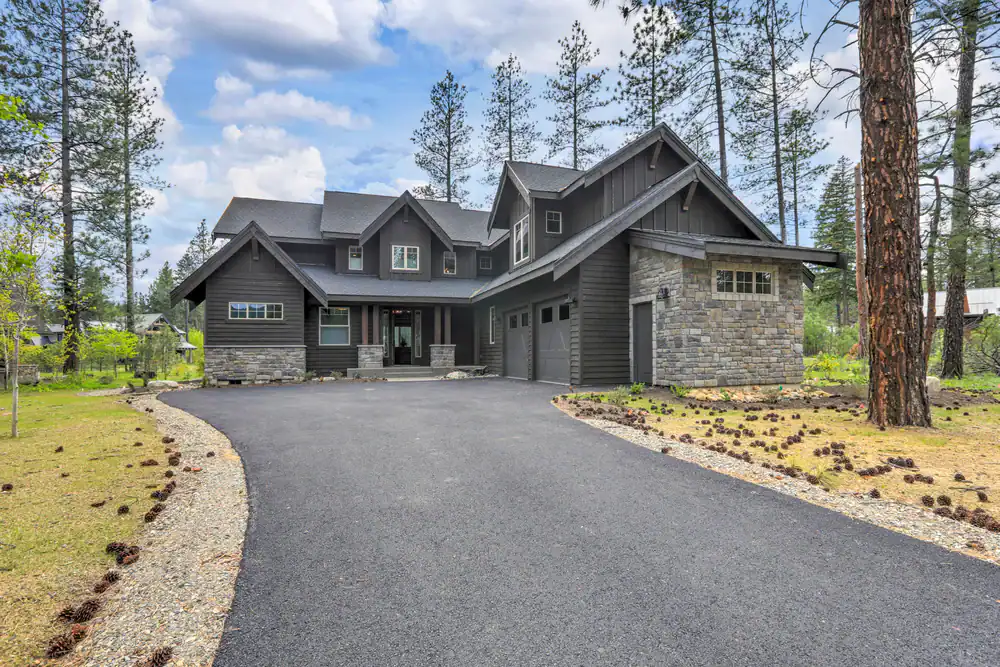

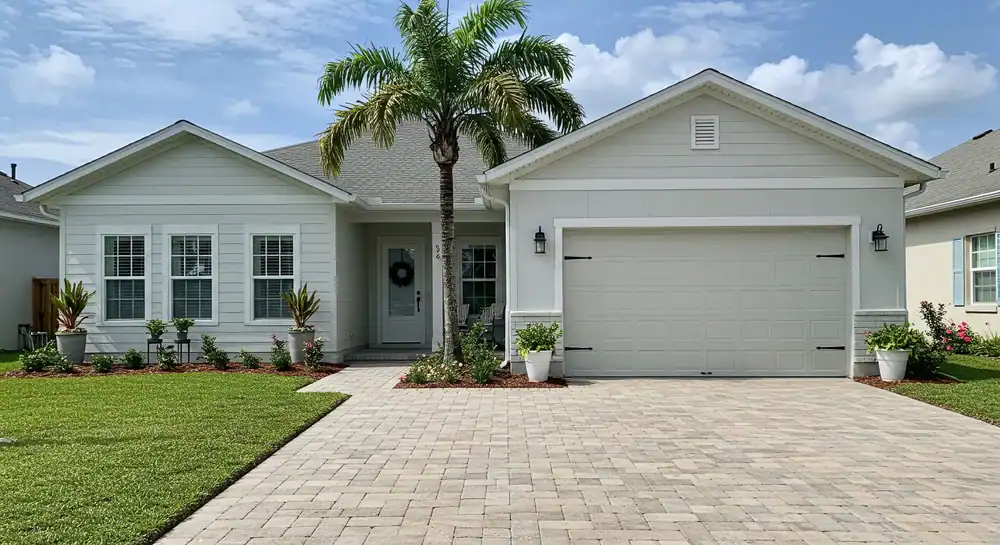
Your driveway stops being something you apologize for. No more cracks snaking across the entrance. No more patches that announce “quick fix” to everyone who pulls up.
You get materials engineered for freeze-thaw cycles that hit Long Island 25 to 40 times each winter. Cambridge and Nicolock pavers over a 6-inch reinforced concrete foundation—not sand, not gravel. The kind of base that handles vehicle weight without settling or shifting when the ground moves.
Snow removal gets easier. Salt doesn’t eat through the surface. Individual pavers can be replaced if one gets damaged, instead of tearing out and replacing entire sections like you would with concrete.
Your entrance finally matches what the rest of your property says about you.
We’ve worked on over 200 homes across Nassau County. Most of our work comes from referrals—homeowners who know what it looks like when a driveway contractor in Old Westbury, NY actually understands local soil conditions and doesn’t cut corners.
Old Westbury properties demand more than standard installation. Clay soil, coastal weather, freeze-thaw cycles that wreck poorly installed driveways within three years. You need someone who knows how water moves through Long Island properties and what happens when drainage isn’t handled correctly from the start.
We’re licensed, insured, and we’ve been serving this area long enough to know what holds up and what fails.
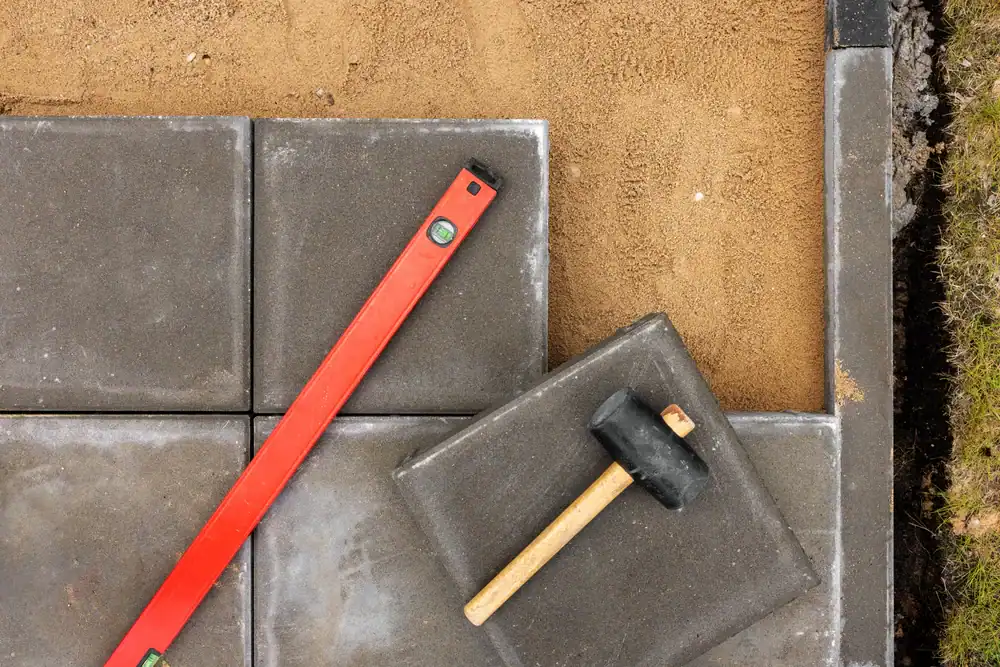
First, we remove your existing driveway completely. No overlays. No “we can work with what’s there” shortcuts that fail in two years.
Then we grade for proper drainage. Long Island’s clay soil doesn’t drain naturally, so we install the system that keeps water from pooling, infiltrating, or turning your driveway into a skating rink every winter. Dry wells, re-grading, whatever your property needs.
Next comes the foundation—6 inches of reinforced concrete. This is what separates driveways that last decades from ones that start sinking after the first winter. Vehicle traffic needs structural support. Sand and gravel bases can’t provide it.
Finally, we install your pavers. Cambridge or Nicolock, depending on what matches your home’s architecture. Belgian block borders if you want them. Cobblestone aprons. Whatever fits the look you’re going for.
You get a written estimate that breaks down exactly what’s happening and why. No surprises. No “additional problems” discovered once we start.
Ready to get started?
Complete excavation and removal of your existing driveway. Proper drainage solutions designed for your specific property—not a one-size-fits-all approach. A 6-inch reinforced concrete foundation that won’t shift or settle under vehicle weight.
Premium paver installation using materials rated for Northeast freeze-thaw cycles. Belgian block borders and cobblestone driveway aprons if that’s what your property calls for. Protection of your existing landscaping throughout the project.
Old Westbury properties average over $3 million in value. Your driveway installation should reflect that. We’re not the cheapest option, and that’s intentional. You’re paying for materials that last, installation that doesn’t need repair in three years, and contractors who show up when they say they will.
Most asphalt driveways need resealing every 3 to 5 years at $1 to $2 per square foot, plus crack repairs, plus full replacement every 15 to 20 years. Properly installed pavers last decades with minimal maintenance.
Most driveway installations take 5 to 10 days, depending on size and complexity. That includes complete removal of your existing driveway, drainage work, foundation installation, and paver placement.
Weather can extend timelines. We don’t pour concrete foundations when temperatures drop below 40 degrees or when heavy rain is forecast. Long Island’s coastal climate means we sometimes have to pause and wait for conditions that let the concrete cure properly.
Larger driveways or properties that need significant drainage work take longer. If we’re installing dry wells, re-grading for water management, or working around existing landscaping that needs protection, expect the upper end of that timeline. We’ll give you a specific estimate based on your property before we start.
Water and poor foundation work. Long Island has clay soil that expands when wet and contracts when dry. Without proper drainage, water sits under your driveway, weakens the base, and creates voids that cause sinking.
Freeze-thaw cycles make it worse. Water expands by 9% when it freezes, creating up to 30,000 pounds per square inch of pressure. That’s enough force to crack concrete and shift pavers if the foundation isn’t built to handle it. Old Westbury sees temperatures fluctuate above and below freezing dozens of times each winter.
Most cracking and sinking comes from shortcuts during installation. Sand or gravel bases instead of reinforced concrete. No drainage system. Overlay work instead of complete removal and proper foundation prep. Those driveways fail within a few years, and you end up paying twice—once for the bad installation, once to fix it correctly.
If you’re seeing multiple cracks, sinking sections, or drainage problems, replacement makes more sense than repair. Patching cracks is a temporary fix that doesn’t address the underlying foundation or drainage issues causing the damage.
Concrete driveways with extensive cracking need full replacement. You can’t patch your way out of a foundation problem. Same with asphalt that’s heavily cracked or showing significant deterioration—resurfacing only buys you a few years before the base issues resurface.
Paver driveways have an advantage here. If a few pavers are damaged or stained, we can replace individual units without disturbing the rest of the driveway. But if you’re seeing widespread settling or movement, that points to foundation problems that require starting over with proper excavation and base work.
Concrete cracks. It’s not a question of if, but when. Temperature changes, ground movement, and water infiltration all cause concrete to crack over time. When it does, you’re looking at visible damage that’s difficult and expensive to repair without it being obvious.
Pavers flex with ground movement instead of cracking. They’re individual units, so if one gets damaged, you replace that paver—not the entire driveway. They handle freeze-thaw cycles better because there’s space between units for expansion and contraction.
Maintenance differs too. Concrete needs crack sealing and eventual replacement. Pavers need occasional re-sanding of joints and cleaning, but the actual surface lasts decades. For Old Westbury properties where appearance matters, pavers offer more design options—different colors, patterns, and textures that concrete can’t match. They cost more upfront, but you’re not dealing with the same maintenance cycle or replacement timeline.
Brick and paver driveway replacement in Old Westbury typically runs $18 to $23 per square foot for professional installation. A standard two-car driveway averages $8,640 to $11,040. Concrete driveway installation costs less upfront—$7 to $13 per square foot—but factor in resealing every few years and replacement in 15 to 20 years.
Demolition and removal of your existing driveway adds $1.50 to $2.40 per square foot. Drainage work, dry wells, and re-grading cost extra but prevent the water damage that ruins driveways prematurely.
The lowest bid usually means shortcuts. Sand or gravel base instead of reinforced concrete. No real drainage solution. Overlay work that fails quickly. You’ll spend less now and more later when it needs to be redone correctly. Most of our work comes from fixing installations that were done cheaply the first time.
Long Island’s clay soil doesn’t drain naturally. Water sits, pools, and eventually works its way under your driveway. That creates the conditions for freeze-thaw damage, foundation settling, and premature failure.
Old Westbury properties need drainage systems designed for local soil conditions—dry wells, French drains, or re-grading that directs water away from your driveway and foundation. Without it, you’re fighting a losing battle against water infiltration every time it rains or snow melts.
Poor drainage also affects everything around your driveway. Standing water breeds mosquitos, prevents healthy lawns, and can cause foundation problems for your home. Fixing drainage during driveway installation costs less than dealing with the compounding problems that come from ignoring it. We assess your property’s specific drainage needs before installation and build the solution into the project from day one.
Other Services we provide in Old Westbury