
You’ve probably noticed the cracks spreading. Maybe water pools near your foundation after heavy rain. Or the surface has that alligator-skin pattern that means the base is failing.
Here’s what happens when you get it done right: proper drainage keeps water away from your foundation. Materials rated for coastal conditions don’t crack apart after one winter. And the base work—the part most contractors rush through—actually supports the weight of your vehicles year after year.
You’re not just getting a smoother surface. You’re eliminating the cycle of resealing every few years, patching cracks that come back, and eventually facing the same replacement decision all over again. When the installation accounts for Long Island’s weather patterns from day one, your driveway stops being a maintenance problem.
Bobby Bruno and Sherwood Adams started Ageless Chimney as childhood friends who wanted to run a different kind of contracting company. One where the owners actually show up. One where you’re not handed off to a crew that’s never met the person who gave you the estimate.
We’re licensed, insured, and A-rated with the BBB. We’ve been serving Nassau County homeowners for over 15 years, and we’re still small enough that Bobby or Sherwood is on-site for every job we take. That’s not a marketing line—it’s how we operate.
Plandome homeowners deal with specific challenges: coastal salt air, freeze-thaw cycles that destroy inferior materials, and property values that demand quality work. We’ve handled enough driveways in this area to know what holds up and what fails in three years.
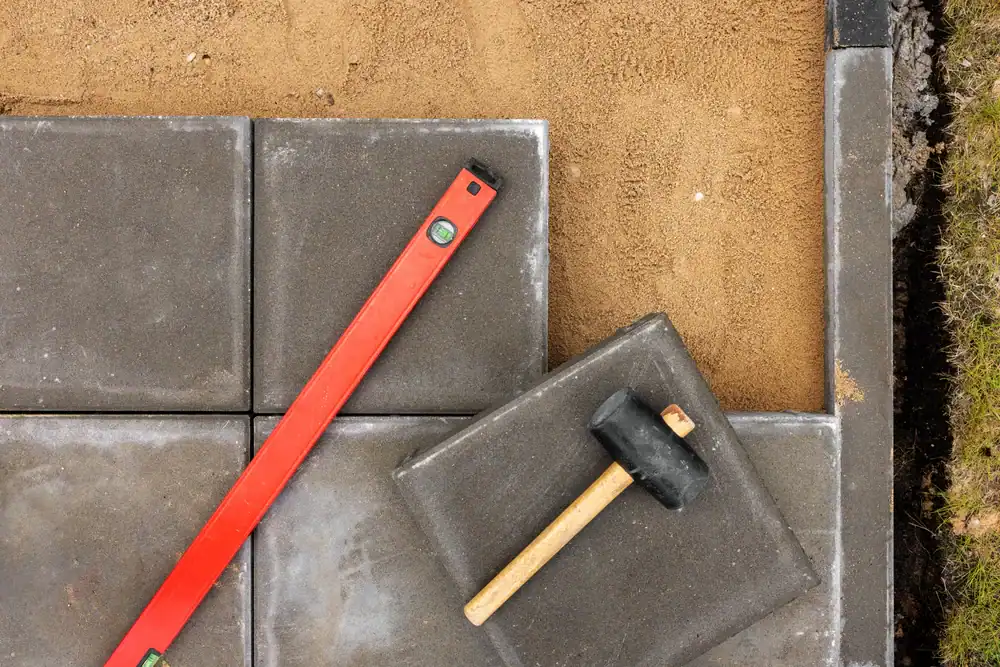
First, we excavate to the right depth—usually 12 to 18 inches depending on your soil conditions and what’s being installed. This isn’t optional. Shallow base work is why driveways fail early.
Next comes the base layer: crushed stone that gets compacted in lifts. This is where drainage gets built in, not added later as an afterthought. We grade everything so water moves away from your foundation and doesn’t pool on the surface.
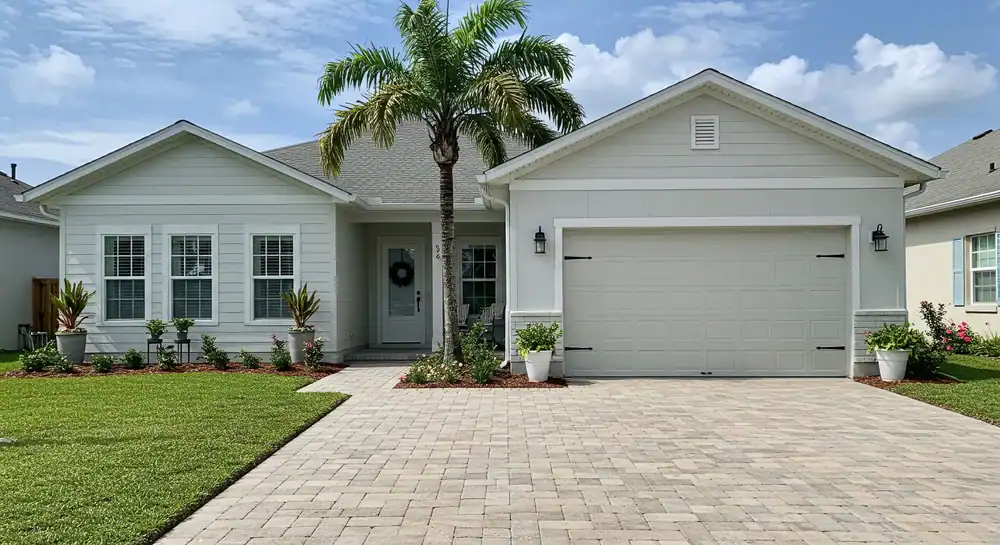
Then we install your surface material—whether that’s pavers, concrete, or brick. If you’re going with pavers, we add edge restraints and polymeric sand. If it’s concrete, we’re controlling the pour in sections with proper joints to manage expansion and contraction.
The final step is cleanup and a walkthrough. You’ll know how to maintain what we installed, what to watch for, and how to reach us if anything needs attention. Most of our work comes from referrals, so we’re not disappearing after the check clears.
Ready to get started?
You’re getting a full tear-out and rebuild, not a surface-level fix. That includes excavation, proper base installation, drainage solutions if needed, and your choice of materials: concrete, pavers, brick, or cobblestone aprons with Belgian block borders.
We handle sinking driveway repair, which usually means addressing the base failure causing the problem. We fix cracked concrete driveways when the damage is isolated, but we’ll tell you honestly when replacement makes more sense than patching.
Nassau County driveways typically run between $5,000 and $12,000 depending on size, materials, and site conditions. Plandome properties often have specific drainage challenges because of lot grading and proximity to the water. We account for that in every estimate.
If you’re dealing with water management issues—pooling, foundation concerns, or runoff problems—we install French drains and proper grading as part of the driveway work. It’s not an upsell. It’s what keeps your investment from washing out in two years.
It depends entirely on the material and the base work. Concrete driveways last 25 to 30 years if the base is done right and the concrete is rated for freeze-thaw cycles. Asphalt typically needs replacement every 15 to 20 years, and it requires resealing every three to five years.
Paver driveways outlast both when installed correctly—often 30 to 40 years—because individual pavers can shift with ground movement without cracking. They also handle Long Island’s coastal salt air better than concrete or asphalt.
The real variable is the base. If a contractor skips proper excavation or uses inadequate stone depth, even the best surface material will fail early. That’s why you see driveways cracking in five years in some homes and lasting decades in others. It’s not luck—it’s base preparation and drainage.
Freeze-thaw cycles are the main culprit. Water seeps into small cracks, freezes, expands, and makes the crack bigger. This happens over and over every winter. Eventually you get that alligator-skin pattern that means the base has failed.
Poor drainage accelerates everything. If water pools on your driveway or doesn’t move away from the surface, it’s constantly working its way into the base material. Once the base is compromised, the surface—whether it’s concrete, asphalt, or pavers—has nothing solid supporting it.
Sinking happens when the soil underneath wasn’t compacted properly during installation, or when water washes away base material over time. You’ll notice it first near edges or where the driveway meets the garage. That’s usually where drainage problems start. Fixing it means excavating and rebuilding the base, not just patching the surface.
If the cracks are isolated and the rest of the surface is solid, repair makes sense. We’re talking about a few linear cracks without widespread surface damage or base failure.
But if you’re seeing spiderweb cracking, multiple sunken areas, or that alligator-skin texture across large sections, the base has failed. Patching might buy you a year or two, but you’re just delaying the inevitable replacement. And you’re spending money on repairs that won’t add any value to the property.
Here’s the honest test: if more than 30% of your driveway surface shows damage, replacement is almost always the better investment. You’ll spend less over the next ten years than you would on repeated repairs, and you’ll actually fix the drainage and base issues causing the problem. We’ll tell you which situation you’re in during the estimate—we’re not interested in selling you work you don’t need.
Pavers hold up best in coastal areas with freeze-thaw cycles. They’re designed to flex slightly with ground movement, so they don’t crack like concrete. They also handle salt exposure better, which matters if you’re near the water or use salt for snow removal.
Concrete works well if it’s the right mix—you need air-entrained concrete rated for freeze-thaw. Standard concrete will crack. The other advantage of concrete is cost: it’s usually less expensive than pavers for the same square footage.
Asphalt is the most affordable option, but it requires the most maintenance. You’ll need to reseal it every few years, and it typically needs replacement sooner than concrete or pavers. It also softens in extreme heat, which can cause surface damage if heavy vehicles sit on it.
For Plandome properties, most homeowners choose between pavers and concrete. Both last decades when installed properly. It comes down to your budget, the look you want, and how much maintenance you’re willing to do long-term.
Yes, you need a permit from the Village of Plandome for driveway work. The village requires permits for any driveway replacement, expansion, or significant repair work. This isn’t optional, and working without one can create problems when you sell the property.
The permit process ensures the work meets local building codes, includes proper drainage, and doesn’t create runoff issues for neighboring properties. It also verifies that the contractor is licensed and insured.
We handle the permit application as part of the job. You shouldn’t have to deal with village offices or paperwork—that’s on us. The permit adds a few days to the timeline before we start work, but it protects you legally and ensures everything is documented correctly. Any contractor who tells you a permit isn’t necessary is either uninformed or cutting corners you’ll pay for later.
Drainage problems usually mean water isn’t moving away from the driveway surface or it’s pooling near your foundation. The fix depends on what’s causing it. If the driveway surface is graded wrong—sloping toward the house instead of away—that needs to be corrected during replacement.
If water is coming from uphill or from your property’s natural grade, you need a drainage system. That typically means installing a French drain along the driveway edge or across the problem area. The drain captures water and redirects it away from the foundation and driveway base.
Sometimes the issue is simpler: clogged or inadequate drainage at the street connection. We check all of this during the estimate. Fixing drainage isn’t a separate project—it’s part of doing the driveway installation correctly. If we’re excavating anyway, adding drainage where it’s needed costs a fraction of what it would to dig everything up again later. Most Plandome properties need some level of drainage work because of lot grading and Long Island’s heavy spring rains.
Other Services we provide in Plandome