

You’re tired of explaining those embarrassing cracks to visitors. Tired of throwing money at patches that fail within months. That’s what happens when asphalt meets Long Island winters—water seeps in, freezes overnight, expands, and turns hairline cracks into structural problems.
Paver driveways work differently. Individual units move with freeze-thaw cycles instead of fighting them. The joint sand allows thermal expansion while maintaining stability. That’s why properly installed pavers deliver 25-30 years in our climate, compared to 15-20 for asphalt.
You get a driveway that looks sharp year-round. No more avoiding the plow guy because you’re worried he’ll rip up chunks. No more temporary fixes that waste your time and money. Just a surface that handles what Sea Cliff throws at it—coastal moisture, temperature swings, and heavy snow equipment—without falling apart.
Bobby Bruno and Sherwood Adams started Ageless Chimney with fifth-generation masonry knowledge. Childhood friends who actually do the work themselves. That means every project gets owner attention, not a rotating crew who’s never seen your property before.
Fifteen years serving Sea Cliff means we’ve seen what fails and what lasts. We know which installation methods perform in your neighborhood’s conditions—the coastal drainage challenges, the freeze-thaw patterns, the materials that handle salt air. That’s why we’ve earned an A+ BBB rating and Angie’s List Super Service awards for six straight years.
You’re hiring local contractors who understand Nassau County. Not a franchise following a manual written for different climates.
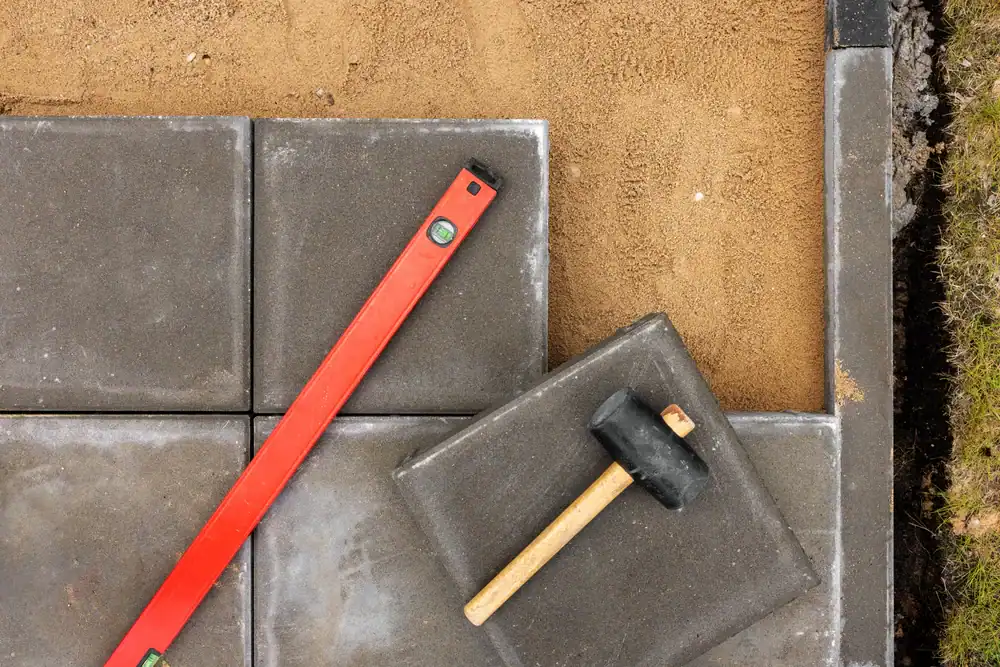
We start by excavating to proper depth—usually 10-12 inches depending on your soil conditions and drainage needs. This isn’t optional. Shortcuts here cause settling and failure within years.
Next comes the compacted stone base. Multiple layers, each compacted separately, with drainage grading that handles Sea Cliff’s water challenges. We’re creating a stable foundation that won’t shift when the ground freezes or spring rains hit.
Then we install edge restraints—Belgian block borders work best because they handle vehicle loads that crush regular concrete edging. The pavers go down in your chosen pattern, cut precisely at edges and curves. We sweep polymeric sand into joints, which hardens to lock everything together while still allowing the slight movement that prevents cracking.
Most custom driveway replacement projects take 3-7 days depending on size and complexity. You’ll see the excavation, base prep, and final installation happen in clear stages. No mysteries, no surprises.
Ready to get started?
You’re getting materials selected for Sea Cliff’s conditions. Pavers that handle freeze-thaw cycles. Colors and textures that complement your home’s architectural style—important in a neighborhood where the median construction year is 1938 and Victorian homes require thoughtful material choices.
You’re getting proper drainage solutions. Not just sloping the surface, but addressing how water moves through and around your property. Sea Cliff’s coastal location creates unique drainage stresses that generic installations ignore.
You’re getting Belgian block aprons where your driveway meets the street. These granite blocks solve the transition problem while preventing material migration. They handle the vehicle loads and plow strikes that destroy cheaper edging options.
And you’re getting installation that meets Long Island’s stormwater management requirements. Permeable options are available if your property needs them. We handle the technical compliance so you don’t have to think about it.
Properly installed paver driveways deliver 25-30 years in Nassau County conditions. That’s significantly longer than asphalt’s 15-20 year lifespan here.
The difference comes down to how materials handle freeze-thaw cycles. Asphalt is a monolithic surface—when water penetrates and freezes, it has nowhere to go except to crack the pavement. Once cracks start, they accelerate every winter.
Pavers are individual units with sand joints. When temperatures drop and the ground shifts, each paver can move slightly without cracking. The joint sand accommodates thermal expansion while maintaining stability. You’re working with the climate instead of fighting it.
That said, longevity depends on proper installation. Shortcuts on base depth, compaction, or drainage will cause problems regardless of surface material. That’s why the driveway builders you hire matter as much as the materials we use.
Sinking happens when the base wasn’t properly compacted or drainage wasn’t addressed. Water is usually the culprit.
Sea Cliff’s coastal location means you’re dealing with higher water tables and more moisture than inland properties. When water saturates the base material, it loses load-bearing capacity. Vehicle weight then compresses the weakened base, creating low spots and settling.
Poor compaction during installation has the same result. If base layers aren’t compacted to proper density—usually 95% or higher—they’ll compress under use. You’ll see settling within the first year or two.
Fixing sinking driveways means excavating the affected area, addressing the drainage problem, rebuilding the base correctly, and reinstalling the surface. It’s not a quick patch job. You’re essentially redoing the installation the right way, which is why choosing experienced paver driveway contractors matters from the start.
Belgian block borders aren’t required, but they solve problems that cheaper edging options can’t handle. If your driveway sees regular vehicle traffic and snow plow activity, they’re worth it.
The apron where your driveway meets the street takes the hardest hits. Vehicles enter and exit at angles, putting stress on edges. Snow plows catch edges and rip up anything that’s not solidly anchored. Standard concrete edging cracks under these loads within a few seasons.
Belgian blocks are solid granite set in concrete. They create a transition that handles vehicle loads and plow strikes without failing. They also prevent your paver base material from migrating out at the edges, which causes settling and surface problems.
For driveways in Sea Cliff where snow removal is aggressive and properties have been maintained for decades, Belgian block aprons are the detail that separates installations that last from ones that need repairs within years. The upfront cost is higher, but you’re not replacing failed edging every few seasons.
Drainage starts with proper grading during base installation. We slope the base to direct water away from your home and toward appropriate drainage points. This isn’t just about the surface—the base itself needs to shed water.
For properties with challenging drainage, we install subsurface solutions. That might mean perforated pipe in stone trenches that collect and redirect water. Or catch basins that capture runoff before it causes problems. Each property is different based on lot grading, water table, and existing drainage patterns.
Sea Cliff’s coastal location means you’re dealing with more moisture than inland properties. Your driveway installation needs to account for this. Water that sits in the base will cause settling, frost heave, and premature failure regardless of surface material.
Permeable pavers are another option. These allow water to drain through the surface into the stone base below, reducing runoff and helping meet stormwater regulations. They work well for properties where managing water volume is important, though they require specific base construction to function correctly.
“Brick” usually refers to clay pavers, while “paver” is a broader term that includes concrete pavers, natural stone, and clay. The installation process is similar, but material choice affects durability and cost.
Clay pavers are traditional brick—fired clay that’s been used for centuries. They’re durable and develop a patina over time that some homeowners prefer. They’re also more expensive than concrete pavers and can be slippery when wet.
Concrete pavers are engineered for driveways. They’re manufactured to specific strength standards, come in more colors and textures, and typically cost less than clay. Modern concrete pavers are extremely durable—often more so than clay in freeze-thaw conditions.
For Sea Cliff properties, especially homes with historic character, the choice often comes down to aesthetics. What complements your home’s architecture? Clay pavers suit Victorian and older homes. Contemporary concrete pavers work well with updated or modern properties.
Either way, installation quality matters more than material choice. Proper base prep, compaction, and drainage determine whether your driveway lasts decades or needs repairs within years. That’s where working with us makes the difference.
Professional paver installation in Sea Cliff typically runs $30-45 per square foot. A standard two-car driveway of 600 square feet would cost $18,000-27,000 depending on material choice, site conditions, and design complexity.
That’s higher than asphalt at $4-10 per square foot. But you’re comparing different lifespans and maintenance requirements. Asphalt needs seal coating every 2-3 years and typically requires replacement after 15-20 years in Long Island’s climate. Pavers last 25-30 years with minimal maintenance beyond occasional joint sand replenishment.
Belgian block aprons, custom patterns, and challenging drainage solutions add cost. Properties with difficult access, significant grading work, or extensive excavation needs will be toward the higher end of the range.
Sea Cliff’s median property values around $926,000 mean quality outdoor improvements deliver real returns. Professional paver installations typically add 8-12% to property value—more if the old driveway was visibly failing. You’re not just fixing a problem, you’re investing in your home’s curb appeal and functionality for decades.
Other Services we provide in Sea Cliff