
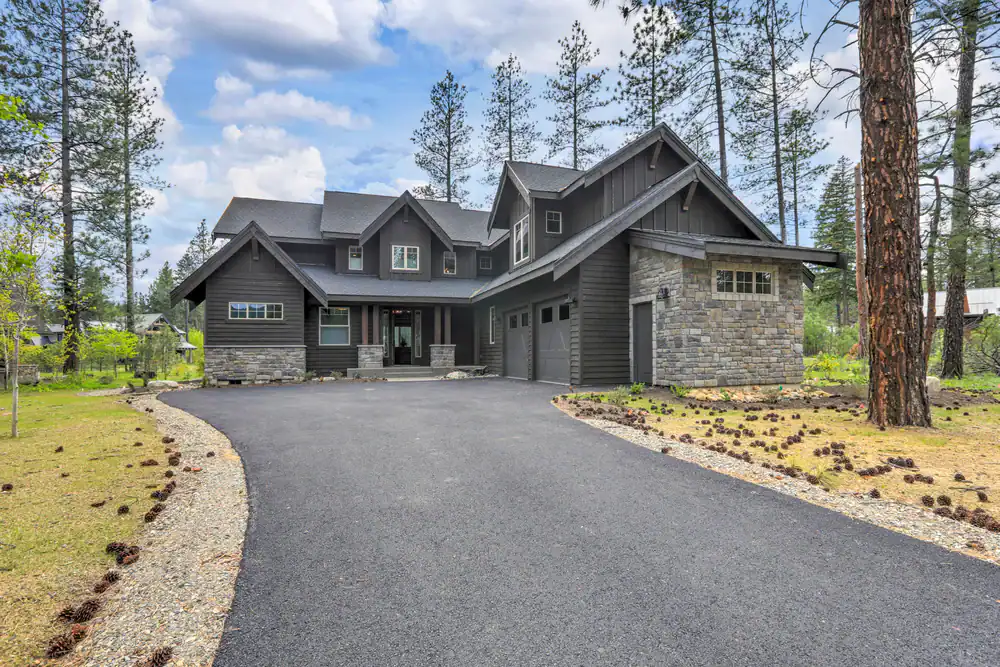

You pull up to your house and the entrance actually looks good. The surface is smooth. Water drains where it should. And you’re not wondering when the next crack will show up.
That’s what happens when your driveway is built for Sound Beach conditions from the start. The base is excavated deep enough—8 to 10 inches—and filled with compacted gravel that won’t shift when the ground freezes. The drainage is planned around your property’s slope and soil type, not guessed at. And the materials are chosen because they hold up to coastal humidity and temperature swings, not because they’re cheap.
You’re not dealing with repairs two winters later. You’re not calling someone back to fix what should’ve been done correctly the first time. The driveway works, it lasts, and it doesn’t become another thing on your list.
Ageless Chimney started in 2006 with two childhood friends who wanted to build something real. Bobby Bruno and Sherwood Adams built the company on showing up, doing the work right, and making sure an owner is there for every job.
We’re not a call center. We’re not subbing out your project. When you work with us, you’re working with people who’ve spent years handling driveway installation in Sound Beach, NY and across Suffolk County. We know what the sandy soil does. We know how freeze-thaw cycles destroy driveways that weren’t prepped correctly. And we know what it takes to build something that actually lasts here.
We’re licensed, insured, and we guarantee the work. If something goes wrong, we fix it.
First, we come out and look at what you’re dealing with. We check the current surface, the drainage, the soil underneath. We talk through what’s realistic for your property and your budget.
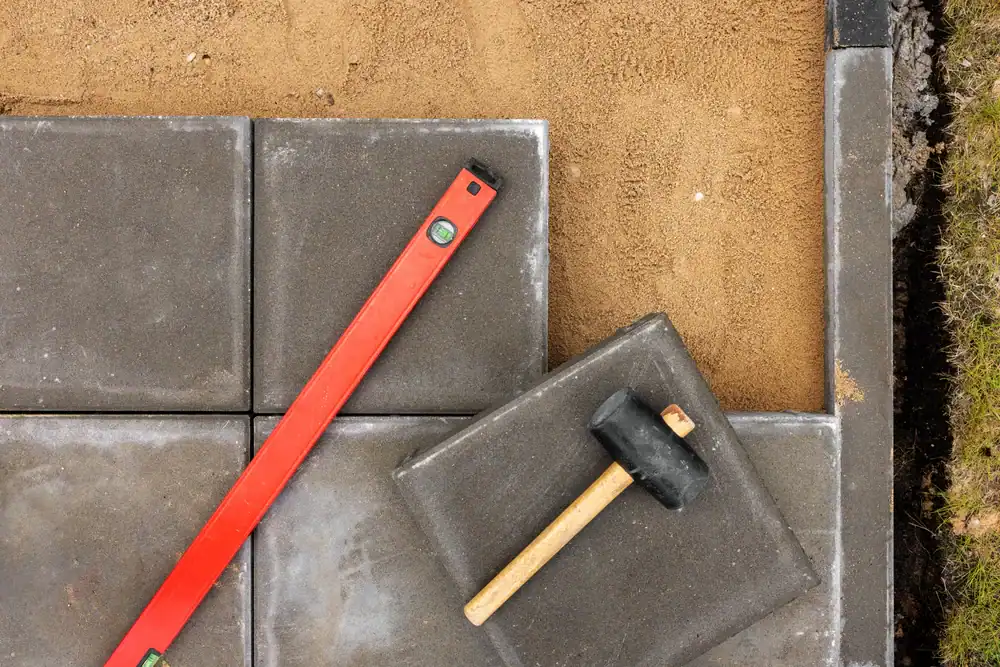
If you move forward, we excavate the old driveway and dig down to stable ground—usually 8 to 10 inches. We remove anything that’s going to shift or settle. Then we bring in gravel, compact it in layers, and build a base that won’t move when the temperature drops or the ground gets saturated.
Next comes the surface. Whether it’s asphalt, pavers, or concrete, we install it with proper slope for drainage and transitions that match your existing surfaces. We don’t rush the curing process. We don’t cut corners on edge work. And when we’re done, we clean up and walk you through what to expect in the first few weeks.
You can usually drive on it within 24 to 48 hours, depending on the material and weather. After that, it’s yours—and it’s built to last.
Ready to get started?
You’re getting a driveway built for Long Island’s conditions. That means proper excavation, a compacted gravel base, and materials that can handle freeze-thaw cycles without falling apart. It also means drainage solutions that account for Sound Beach’s soil and water table, not just a standard slope.
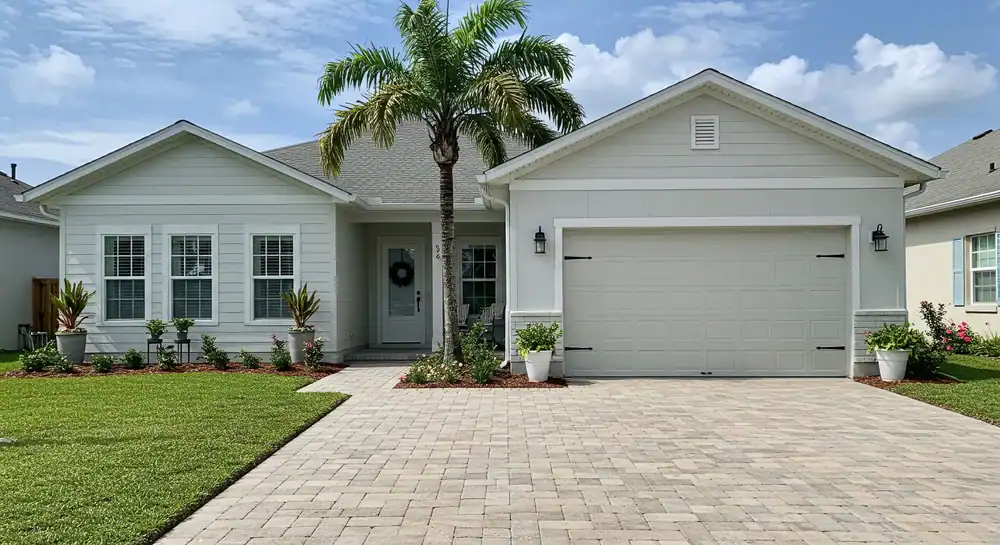
If you’re going with pavers, you’re getting interlocking stones that resist cracking and can be replaced individually if something happens. They come in different colors and patterns, and they don’t need the same maintenance schedule as asphalt. If you’re going with asphalt or concrete, we’re using the right thickness for residential traffic and making sure it’s sealed properly from the start.
We also handle the details most people don’t think about until it’s too late: Belgian block borders that keep edges clean, cobblestone aprons that transition smoothly to the street, and grading that prevents water from sitting against your foundation. If your driveway is sinking or you’ve got cracks spreading from poor drainage, we fix that too—not just patch it.
This is a full installation, not a surface job. And it’s done by people who’ve been doing driveway installation in Suffolk County long enough to know what works and what doesn’t.
If it’s installed correctly, you’re looking at 15 to 20 years for asphalt with regular maintenance, and 20 to 30 years for pavers or concrete. The key word is “correctly.” Most driveways that fail early weren’t built with the right base or drainage for Long Island’s conditions.
Sound Beach sits in a coastal area with sandy soil, high humidity, and constant freeze-thaw cycles in winter. Water gets into small cracks, freezes overnight, and expands with enough force to widen those cracks into real damage. If the base wasn’t compacted properly or the drainage wasn’t planned around your property’s slope, that damage happens faster.
A quality installation accounts for all of that. The base is deep enough to stay stable. The surface is thick enough to handle temperature swings. And the drainage is designed so water moves away from the driveway instead of pooling or seeping underneath. That’s what makes the difference between a driveway that lasts two decades and one that needs major repairs in five years.
Freeze-thaw damage is the biggest culprit. Water seeps into tiny cracks during the day when temperatures are above freezing. Then overnight, when it drops below 32 degrees, that water freezes and expands. Ice takes up more space than water, so it pushes the crack wider. This happens over and over all winter long.
The other major issue is poor base preparation. Suffolk County has sandy soil that shifts when it gets wet or freezes. If the contractor didn’t excavate deep enough or didn’t compact the gravel base in layers, the ground underneath your driveway is going to move. That creates voids, and voids lead to sinking and cracking.
Coastal humidity makes it worse. Salt air accelerates weathering, and the high water table means moisture is always present. If your driveway wasn’t built with materials that resist both temperature changes and the corrosive effects of a marine environment, it’s going to break down faster than it should. That’s why local expertise matters—contractors who don’t understand Sound Beach conditions can’t build driveways that last here.
For asphalt, you’re looking at $5 to $9 per square foot in Nassau and Suffolk Counties. A standard two-car driveway is around 600 square feet, so that’s $3,000 to $5,400 for basic asphalt installation. Concrete runs higher—$7 to $14 per square foot—and pavers are typically $18 to $23 per square foot, which puts a two-car driveway between $10,800 and $13,800.
The price depends on the material, the size of your driveway, and what kind of prep work is needed. If we’re tearing out an old driveway, dealing with drainage issues, or working around landscaping, that adds to the cost. But it also adds to how long the driveway lasts.
Cheaper installations skip steps. They don’t excavate as deep. They don’t compact the base properly. They use thinner asphalt or lower-grade materials. And you end up paying for repairs or a full replacement years earlier than you should. A quality installation costs more upfront, but it saves you money over the life of the driveway because you’re not constantly fixing it.
Sometimes, yes. If the damage is isolated and the base is still stable, we can repair specific sections without tearing out the whole driveway. But if the sinking or cracking is widespread, or if it’s caused by a failed base, a repair is just going to be temporary.
Sinking usually means the soil underneath has shifted or eroded. If that’s happening in one spot, we can excavate that section, recompact the base, and repave it. But if it’s happening across the whole driveway, the base was never stable to begin with, and you’re better off replacing it.
Cracks depend on the cause. Surface cracks from normal wear can be filled and sealed. Cracks that run deep or keep spreading are a sign of bigger problems—usually poor drainage or freeze-thaw damage that’s compromising the structure. We’ll come out, assess what’s actually going on, and tell you whether a repair makes sense or whether you’re throwing money at something that’s going to fail again. We’re not going to sell you a fix that won’t hold.
It depends on your priorities. Asphalt is the most common because it’s affordable and handles freeze-thaw cycles well if it’s maintained. You’ll need to reseal it every 3 to 5 years, and it typically lasts 15 to 20 years. It’s a solid choice if you want something cost-effective that works with Long Island’s climate.
Pavers are more expensive upfront, but they’re extremely durable and easy to repair. If one paver cracks, you replace that one piece—you don’t have to repave a whole section. They also resist damage from salt air and freeze-thaw cycles better than asphalt. And they look good, which matters if curb appeal is a priority.
Concrete is somewhere in between. It lasts longer than asphalt—20 to 30 years—but it’s more prone to cracking in freeze-thaw conditions if it’s not reinforced properly. It also costs more than asphalt but less than pavers. The best material for your driveway depends on your budget, how much maintenance you want to deal with, and how long you plan to stay in the house. We’ll walk you through the pros and cons based on your specific property.
Yes. Drainage is part of every installation we do, because it’s one of the main reasons driveways fail. If water doesn’t have somewhere to go, it pools on the surface, seeps into cracks, and eventually undermines the base. In Sound Beach, where the water table is high and the soil is sandy, drainage problems show up fast.
We grade the driveway so water runs off toward the street or into a drainage system, not toward your foundation or into low spots where it can sit. If your property has unique drainage challenges—like a slope that directs water onto the driveway or soil that doesn’t absorb water well—we design around that.
Sometimes that means installing a catch basin or a French drain. Sometimes it just means adjusting the slope and making sure the edges are sealed properly. Either way, we’re not installing a driveway that’s going to flood every time it rains or develop ice patches in winter because water has nowhere to go. Drainage isn’t an add-on—it’s part of building a driveway that works.
Other Services we provide in Sound Beach