
You’ve probably noticed the pattern. Small cracks appear after winter. Water gets in. The freeze-thaw cycle makes them worse. By spring, you’re looking at another repair bill.
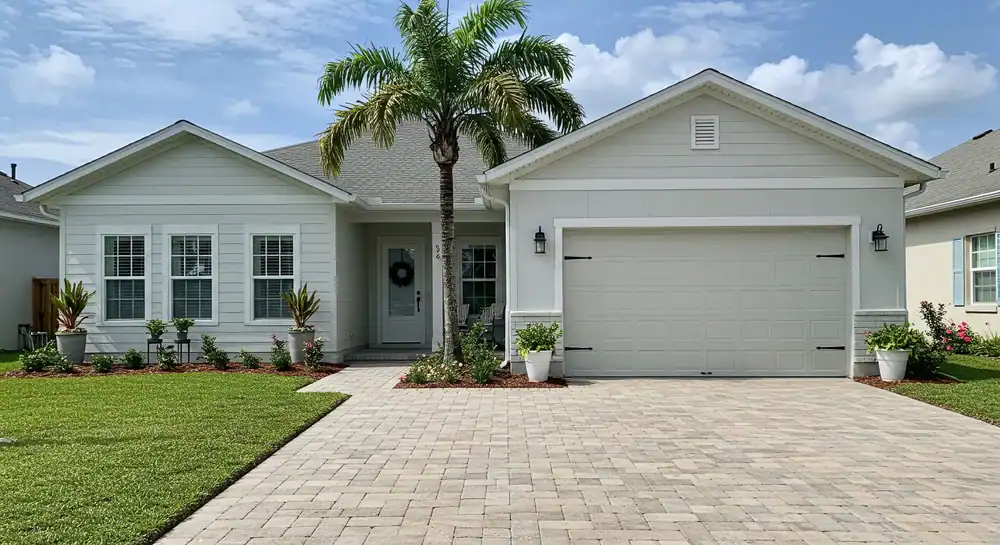
Properly installed paver driveways in Wantagh, NY handle this differently. When water freezes and expands, individual pavers can shift slightly without cracking. If one does get damaged, you replace that piece—not an entire section like you would with concrete.
The foundation matters more than the surface material. We excavate down 12 inches minimum, install geotextile fabric to prevent shifting, add 6-8 inches of compacted crushed stone, then a leveling layer before any pavers go down. Each layer gets compacted with heavy equipment because shortcuts here mean problems in two years.
In a market where homes start at $650,000, your driveway isn’t just functional. It’s part of what your property says about how you maintain things.
We’ve been handling driveway installation in Nassau County for over 20 years. That means we’ve seen what works through Long Island winters and what fails by spring.
Every project gets owner supervision. Not because we don’t trust our crews, but because we understand what’s at stake when you’re investing in your property. You’re not getting a different team than the one we’d send to our own homes.
Wantagh homeowners deal with specific challenges—high water tables in some areas, soil that shifts, and coastal weather that’s harder on materials than inland properties face. We account for these factors during the planning phase, not after problems show up.
First, we assess your current driveway and drainage situation. If water pools anywhere or runs toward your foundation, that gets addressed in the design phase. Poor drainage destroys driveways faster than traffic does.
Next comes excavation. We remove the old surface and dig down to create a proper base—usually 12 inches for residential driveways in Wantagh, NY. The base gets built in layers: geotextile fabric first to prevent the base from mixing with soil, then crushed stone compacted in lifts, then leveling sand.
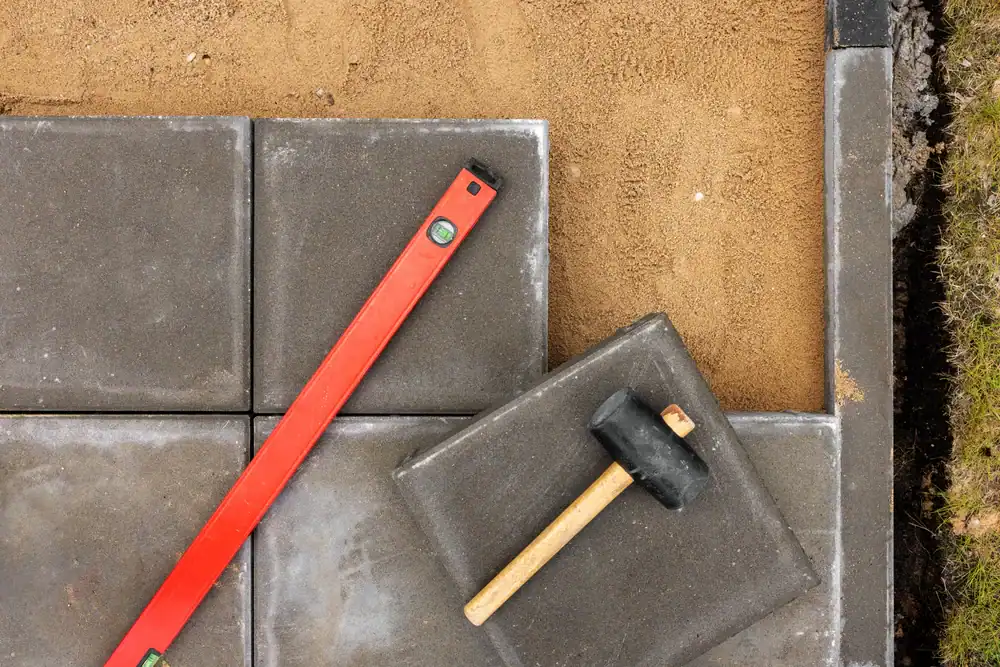
Edge restraints go in before pavers. These keep everything from shifting outward over time. Then pavers get laid in your chosen pattern, cut to fit around edges and obstacles, and locked in place with polymeric sand that hardens when wet.
The final step is compacting everything together with a plate compactor. This makes the pavers settle into the sand bed and locks the joints. Most driveways are ready for vehicle traffic within 24 hours.
Ready to get started?
Material selection matters for Long Island weather. We use pavers rated for freeze-thaw cycles—not every paver product handles this well. Concrete pavers, clay brick pavers, and natural stone each have different performance characteristics in coastal climates.
You’ll get proper drainage solutions built into the design. That might mean permeable pavers that let water drain through, or it might mean strategic grading and catch basins. Depends on your property’s specific situation and local water table levels.
Belgian block borders and cobblestone driveway aprons are popular in Wantagh because they add definition and handle the transition between driveway and street better than standard pavers. These also make snow removal easier because you can see exactly where your driveway ends.
For homes with sinking driveway sections, we address the base failure causing the problem. Lifting and releveling pavers only works if the underlying issue gets fixed. Otherwise you’re back to the same problem in a year.
Driveway extensions are common requests from Wantagh homeowners. Two cars, long commutes, and limited street parking mean you need more space than the original driveway provided. We match existing materials when possible or create a complementary design if you’re updating the whole look.
Properly installed paver driveways last 25-50 years in Wantagh, NY, compared to 15-25 years for concrete. The difference comes down to how each material handles freeze-thaw cycles.
Concrete is a single solid surface. When water gets into small cracks, freezes, and expands, it creates bigger cracks. Each winter makes this worse. Eventually you’re looking at replacement because patching only buys you a year or two.
Pavers are individual units with sand joints that allow slight movement. When ground shifts or water freezes, pavers can adjust without cracking. If one does get damaged—say from a snowplow or heavy impact—you replace that single paver. With concrete, you’d need to replace an entire section to avoid visible patches.
The base construction matters more than the surface material. A paver driveway installed over a thin base will fail just as fast as concrete. That’s why we excavate properly and build the foundation in compacted layers.
Long Island’s freeze-thaw cycles are brutal on concrete driveways. Water penetrates small surface cracks, freezes overnight when temperatures drop, expands, and creates bigger cracks. This happens dozens of times each winter.
Your soil type matters too. Parts of Wantagh have clay-heavy soil that expands when wet and contracts when dry. This movement stresses whatever’s sitting on top of it. Without a proper base that accounts for this movement, your driveway will crack regardless of surface material quality.
Poor drainage accelerates everything. If water pools on your driveway or doesn’t drain away from the surface, you’re giving freeze-thaw cycles more ammunition. Standing water also weakens the base over time, leading to settling and cracking.
Salt makes it worse. The same salt that melts ice also breaks down concrete sealers and works its way into small cracks, expanding them. Coastal proximity means you’re getting salt from the air too, not just what you spread in winter.
Concrete driveway installation in Suffolk County and Nassau County typically runs $4-15 per square foot installed. Asphalt costs $5,000-12,000 for a standard residential driveway. Paver driveway contractors in Nassau County charge $10-30 per square foot depending on material choice and site conditions.
The wide range comes from variables you might not consider. Excavation depth, soil conditions, drainage requirements, and access for equipment all affect pricing. A driveway that needs 18 inches of excavation because of poor soil costs more than one where 12 inches works fine.
Material quality varies significantly. Budget pavers and premium pavers both go on top of the same base, but premium materials last longer and look better throughout their lifespan. Same goes for concrete—there’s a difference between basic mix and concrete with additives that improve freeze-thaw resistance.
For a typical Wantagh driveway around 600 square feet, you’re looking at $6,000-18,000 depending on materials and site prep requirements. That’s not a small investment, which is why getting it done right the first time matters more than getting it done cheaply.
Sinking driveway repair in Wantagh depends on what’s causing it to sink. If the base has failed or washed away, lifting and releveling the surface only buys you temporary time. The sinking will return because the underlying problem hasn’t been addressed.
For paver driveways, we can often lift the affected section, add and compact base material, then relay the same pavers. This works when the pavers themselves are still in good condition and the problem is isolated to one area.
Concrete driveways with sinking sections are harder to fix permanently. Mudjacking or foam injection can lift sunken concrete, but if the base continues to settle or wash away, you’ll see the same problem again. Sometimes the math favors replacement over repeated repairs.
The real question is why it’s sinking. Poor drainage that washes away base material? Soil settlement that wasn’t accounted for during original installation? Tree roots undermining the base? We identify the cause first, then recommend whether repair or replacement makes more sense for your specific situation.
Pavers handle Long Island’s freeze-thaw cycles better than concrete or asphalt for most residential driveways in Wantagh, NY. The individual units can shift slightly without cracking, and you can replace damaged pieces instead of entire sections.
Concrete works if it’s properly installed with adequate thickness, reinforcement, control joints, and a quality base. But even well-installed concrete will eventually crack from freeze-thaw cycles. Plan on 15-25 years before replacement becomes necessary.
Asphalt is the most affordable option and handles temperature swings well, but it needs resealing every 3-5 years and shows wear faster than other materials. For homes in Wantagh’s price range, asphalt often doesn’t match the aesthetic expectations.
Permeable pavers are gaining popularity for driveway drainage solutions in Long Island. They let water drain through instead of running off, which reduces pooling and ice formation. This matters more in areas with poor drainage or high water tables.
The “best” material depends on your priorities. Lowest upfront cost? Asphalt. Longest lifespan with easiest repairs? Pavers. Most traditional look? Concrete. We help you weigh these factors against your specific property conditions and budget.
Most driveway installation projects in Wantagh, NY take 3-7 days depending on size, material choice, and weather. That’s actual work days—the timeline can stretch longer if rain delays things or if we’re waiting on material delivery.
Day one is usually demolition and excavation. We remove your old driveway, haul away debris, and dig down to create the proper base depth. This is the messiest day and the one that impacts your access most.
Days two and three involve base installation. We bring in crushed stone, spread it in layers, compact each layer, add more stone, compact again. This can’t be rushed—proper compaction is what prevents settling and failure later.
Days four and five are for paver installation, cutting, and finishing. Concrete driveways need several days to cure before you can drive on them. Paver driveways are usually ready for light vehicle traffic within 24 hours of completion.
Complex projects with extensive drainage work, retaining walls, or Belgian block borders take longer. We’ll give you a realistic timeline during the estimate phase based on your specific project scope and current weather forecast.
Other Services we provide in Wantagh